

Maintaining proper tire pressure during summer heat is essential for safe driving. Aim for 30 to 35 PSI, but remember, temperatures can increase tire pressure by about 1 PSI for every 10°F rise. Check your tires in the morning when they’re cool for accurate readings. Both under-inflation and over-inflation can lead to handling issues and decreased fuel efficiency. Stay tuned to discover tips for checking tire pressure and recognizing signs of tire problems before they become serious.
The Importance of Proper Tire Pressure in Summer
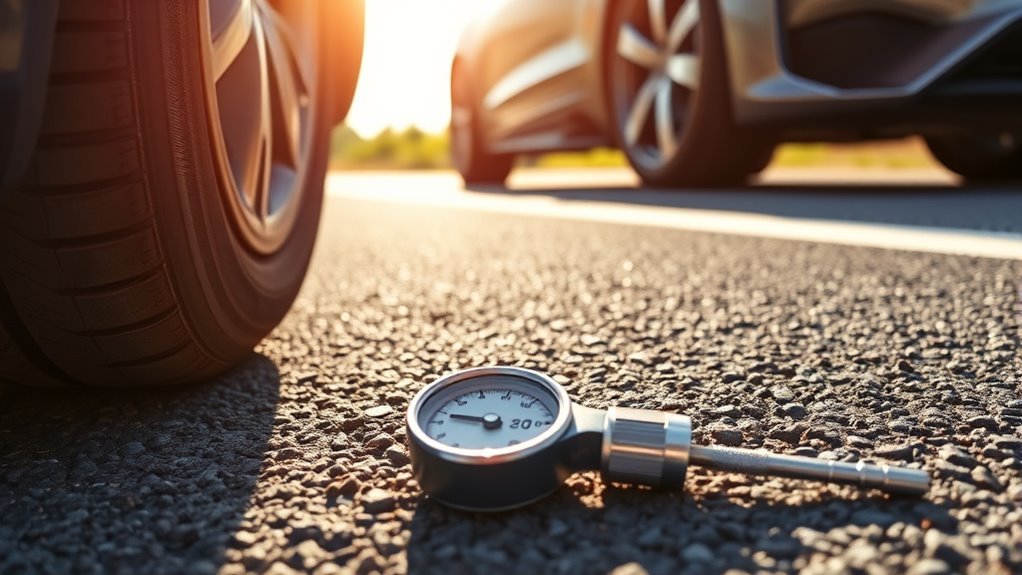
When the temperatures rise, maintaining proper tire pressure becomes essential for safe summer driving. The recommended range typically falls between 30 to 35 PSI, depending on your vehicle. As the heat intensifies, tire pressure can increase by 1 PSI for every 10°F rise, making regular checks important. Under-inflated tires lead to poor handling, increased wear, and reduced fuel efficiency—losing 0.2% mileage for every 1 PSI drop. Always check tire pressure when your tires are cold; driving heats them up, resulting in inaccurate readings. Adjusting for heat-related air expansion is critical to prevent blowouts and guarantee maximum road contact. Prioritizing tire pressure not only enhances safety but also liberates you from the worry of potential summer driving hazards.
Recommended Tire Pressure for Different Vehicles
When it comes to tire pressure, every vehicle has its unique specifications that you need to follow for ideal performance. You can usually find the recommended psi on a placard inside the driver’s door or in your owner’s manual, and remember that front and rear tires may require different pressures. Additionally, if you’re carrying a heavy load, adjusting the tire pressure accordingly is essential for maintaining safety and efficiency on the road.
Vehicle-Specific Recommendations
Understanding the recommended tire pressure for your specific vehicle is vital for ensuring peak performance and safety on summer drives. Vehicle manufacturers provide precise tire pressure guidelines, typically found on a placard inside the driver’s door or in the owner’s manual. For most passenger cars, the recommended PSI generally ranges from 30 to 35 psi, while SUVs and trucks may require higher pressures, often exceeding 35 psi, especially under load or towing. Performance vehicles demand unique tire pressure settings to maintain ideal handling and grip. Adhering to these specifications is critical; improper inflation can lead to increased tire wear, reduced fuel efficiency, and compromised safety. Always check your vehicle’s recommendations to drive confidently this summer.
Load and Usage Considerations
After establishing the importance of vehicle-specific tire pressure, it’s important to contemplate how load and usage affect those recommendations. The recommended tire pressure typically ranges from 30 to 35 psi, but this can change based on load distribution. If you’re carrying heavier cargo or towing, you’ll need to adjust your tire pressure accordingly to maintain safety and performance. Manufacturers provide specific guidelines, usually found on the placard inside your driver’s door or in the owner’s manual. Regularly check and adjust your tire pressure to guarantee optimal handling and fuel efficiency. Remember, under-inflation can lead to poor performance and increased tire wear, so staying aware of load and usage is vital for a liberating driving experience.
How Heat Affects Tire Pressure
As temperatures rise during summer, you might not realize how considerably heat affects tire pressure. Here’s what you need to know:
- Pressure Increase: Tire pressure rises about 1 PSI for every 10°F increase, potentially leading to overinflation.
- Morning Checks: It’s best to check tire pressure in the morning before driving, as heat from the sun or driving can skew readings.
- Avoid Under-Inflation: Don’t reduce pressure on hot tires to match cooler readings; this can lead to unsafe driving conditions.
Maintaining proper tire pressure is essential during hot months to enhance fuel efficiency and vehicle handling. Ignoring heat effects on tire pressure can increase the risk of blowouts, compromising your safety on the road.
Checking Your Tire Pressure: A Simple Guide
To check your tire pressure properly, you’ll need a reliable tire pressure gauge and a few minutes of your time. Start by locating the valve stems on each tire, then follow a simple set of steps to guarantee accurate measurements. This quick process can help you maintain peak tire performance and safety during summer driving.
Tools Needed For Checking
Checking your tire pressure requires a few essential tools to guarantee accuracy and safety on the road. Here’s what you’ll need:
- Tire Pressure Gauge: Choose between dial, digital, or pencil types. Each has its pros and cons, so pick one that suits your style.
- Valve Stem Tool: This helps remove the dust cap from the valve stem easily, ensuring quick access.
- Owner’s Manual: Keep it handy to refer to the manufacturer’s recommended tire pressure for ideal safety and performance.
With these tools, you can effortlessly check your tire pressure and maintain the correct tire pressure. Regularly checking your tires not only enhances your safety but also improves your vehicle’s performance.
Steps To Measure Pressure
Measuring your tire pressure is a straightforward process that can greatly enhance your vehicle’s safety and performance. First, park on a level surface and let your tires cool for at least 30 minutes. This guarantees an accurate reading. Next, grab your reliable tire pressure gauge and locate the valve stems on each tire. Remove the dust caps and firmly press the gauge onto the valve to obtain a PSI (pounds per square) reading. Ideally, your tire pressure should fall between 30 to 35 PSI, but always check your vehicle’s owner’s manual or the door sticker for specifics. For the best accuracy, check tire pressure in the morning, and remember to monitor it at least once a month or before long trips.
Mistakes to Avoid When Adjusting Tire Pressure
While ensuring your tires are properly inflated is essential for safety and performance, several common mistakes can undermine your efforts. Avoid these pitfalls when adjusting tire pressure:
- Checking When Hot: Always check tire pressure when tires are cold. Heat from driving can give falsely high readings.
- Ignoring Specific PSI: Don’t assume all tires have the same pressure. Refer to your vehicle’s manual or door placard for the recommended pressure for both front and rear tires.
- Overinflating Tires: Be cautious not to exceed the recommended PSI. Overinflation can lead to premature wear and increase the risk of blowouts.
Regularly monitor your tire pressure, especially during temperature changes, to maintain ideal safety and performance.
Recognizing Signs of Underinflation or Overinflation

Recognizing the signs of underinflation or overinflation is essential for maintaining your tires’ performance and safety. Underinflated tires often wear unevenly at the edges and can decrease your gas mileage by 0.2% for every 1 PSI drop in pressure. On the other hand, overinflated tires typically show accelerated wear in the center tread, leading to a harsher ride and increased blowout risks due to less road contact. Regularly inspect for bulging or abnormal shapes, which indicate overinflation, while a flat appearance suggests underinflation. A tire pressure monitoring system (TPMS) can alert you to low tire pressure, but it’s vital to check PSI manually for moderate under-inflation, especially when tires are cold, ensuring they stay within the ideal 30-35 psi range.
Benefits of Maintaining Correct Tire Pressure
Maintaining the correct tire pressure is essential for peak vehicle performance, especially during summer driving. When your tires are properly inflated, you experience numerous benefits:
Proper tire pressure is crucial for optimal vehicle performance, especially in summer, enhancing safety and efficiency on the road.
- Enhanced Fuel Efficiency: Correct tire pressure reduces rolling resistance, potentially improving gas mileage by 0.2% for every 1 PSI drop.
- Improved Handling and Safety: Well-inflated tires guarantee better control and shorter braking distances, keeping you and others safer on the road.
- Extended Tire Lifespan: Regularly checking tire pressure prevents uneven wear and premature replacement, saving you money in the long run.
Always refer to your vehicle manufacturer’s recommendations for ideal tire pressure. By taking these simple steps, you can enjoy a smoother, safer, and more efficient ride this summer.
How Temperature Changes Impact Tire Pressure
As temperatures rise during summer, it’s essential to understand how these fluctuations can impact your tire pressure. Tire pressure can change by about 1 PSI for every 10°F shift in ambient temperature. So, when summer heat hits, a 20°F increase might raise your tire pressure by roughly 2 PSI. This makes it vital to regularly check and adjust your tire pressure to maintain ideal levels. On the flip side, if temperatures drop, a 10°F decrease can lead to a 1 PSI drop in pressure. Both under-inflation and over-inflation can compromise your vehicle’s safety and performance. Staying vigilant about these temperature changes will help you enjoy a safer, more liberating driving experience all summer long.
Knowing When to Seek Professional Tire Services

With summer’s heat causing tire pressure to fluctuate, it’s important to know when it’s time to seek professional tire services. Here are three key scenarios to reflect upon:
- Consistently Low or High Tire Pressure: If your tire pressure remains outside the recommended range despite adjustments, it’s essential to get professional assistance to uncover any underlying issues.
- Increased Tire Wear or Handling Problems: Noticeable changes in tire wear or vehicle handling may indicate improper inflation or alignment problems, warranting a maintenance appointment.
- Temperature Fluctuations: When temperatures swing dramatically, professional advice can help you adjust tire pressure for ideal tire health and safety.
Don’t hesitate to reach out to qualified technicians—they can keep your tires in top shape for safe summer driving!
Frequently Asked Questions
What Is the Best Tire Pressure for Hot Weather?
For hot weather, you should maintain tire pressure between 30 to 35 psi. Regular tire pressure adjustments and summer tire maintenance are essential to counteract heat tire effects, ensuring safety and performance on the road.
What Is the 3% Tire Rule?
When temperatures soar, remember the 3% Tire Rule: for every 10°F rise, tire pressure increases 1 PSI. This enhances summer driving safety, so monitor pressure regularly for peak performance and effective tire maintenance tips.
Is 40 PSI Too High for Car Tires?
Yes, 40 PSI is too high for car tires. Tire pressure myths can lead to safety concerns. Remember, heat expansion increases pressure. Always check recommended levels to guarantee peak performance and a smooth ride.
What Is the 5 PSI Rule?
The 5 PSI rule suggests you adjust tire pressure by 1 PSI for every 10°F temperature increase. This is essential for summer driving, ensuring safety and performance despite heat impact effects on tire inflation.
Conclusion
Maintaining the right tire pressure this summer isn’t just important—it’s a game-changer for your safety and performance on the road. With heat causing pressure fluctuations, regularly checking your tires can prevent blowouts and improve fuel efficiency. Don’t underestimate the impact of proper inflation; it’s like giving your vehicle a turbo boost! Stay vigilant, and remember, a little attention now can save you from a world of trouble later. Your tires will thank you!
[…] If you want more freedom, rent a bike from local shops at low rates and pedal along coastal paths or to nearby sights. Walking the beach or through parks is another free, enjoyable way to explore while keeping costs down. If you’re driving yourself, remember to check your tire pressure before you head out — proper inflation improves fuel efficiency and safety on those warm summer roads. For the latest recommendations, see this guide on the best tire pressure for summer driving. […]