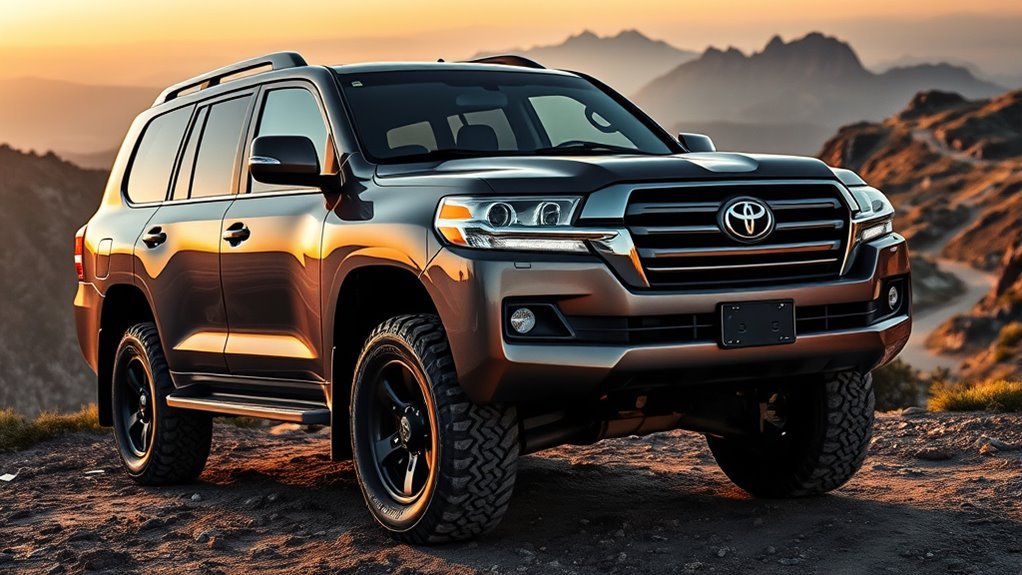
For Land Cruiser buyers, TNGA-F is not just a platform name. It explains why the latest Land Cruiser feels more modern on-road while still keeping the rugged body-on-frame layout that made the nameplate famous. In the U.S. market, the current Land Cruiser pairs this truck platform with Toyota’s i-FORCE MAX hybrid powertrain, full-time four-wheel drive, and trail-focused control systems.
Quick Answer
TNGA-F gives the Land Cruiser a stronger, more modern body-on-frame foundation. It supports hybrid torque, full-time 4WD, improved off-road electronics, better packaging, and a tougher boxed frame while keeping the durability and modification potential buyers expect from a Land Cruiser.
Key Takeaways
- TNGA-F is Toyota’s global truck platform family used for body-on-frame models, including the U.S.-market Land Cruiser, Tundra, Sequoia, Tacoma, and 4Runner.
- The U.S. Land Cruiser uses a turbocharged 2.4-liter i-FORCE MAX hybrid system rated at 326 horsepower and 465 lb-ft of torque, not a V8.
- The platform helps improve frame strength, ride control, steering feel, crash structure, and packaging without abandoning off-road durability.
- Off-road benefits come from the platform plus full-time 4WD, a two-speed transfer case, locking differentials, Crawl Control, Multi-Terrain Select, skid protection, and available stabilizer disconnect hardware.
- Aftermarket upgrades can work well on TNGA-F, but suspension, tire, armor, and electrical changes should be chosen carefully to protect reliability, safety systems, and warranty coverage.
Quick Verdict: Is TNGA-F Good for Land Cruiser Buyers?
Yes. TNGA-F is good for Land Cruiser buyers because it keeps the old-school strength of a body-on-frame SUV while adding the engineering needed for modern hybrid power, safety systems, ride comfort, and trail control. Toyota’s 2026 Land Cruiser page lists a turbocharged i-FORCE MAX hybrid powertrain that produces 326 net combined horsepower and 465 lb-ft of torque.
That matters because low-speed torque is one of the most useful traits in a serious off-roader. Instead of relying on a large-displacement V8, the current U.S.-market Land Cruiser uses a 2.4-liter turbocharged four-cylinder hybrid system with an electric motor integrated between the engine and 8-speed automatic transmission. The result is strong low-end response, full-time 4WD traction, and better fuel economy than many older large SUVs.
TNGA-F also gives Toyota a shared truck architecture for multiple body-on-frame models. Toyota says the 2026 Land Cruiser is built on the TNGA-F global truck platform shared with the Tundra, Sequoia, Tacoma, and 4Runner. For buyers, that means the Land Cruiser benefits from Toyota’s latest frame design, powertrain packaging, electronics, and manufacturing scale without becoming a unibody crossover.
The biggest TNGA-F benefit is balance: the Land Cruiser gains modern hybrid performance and trail technology while keeping the body-on-frame toughness buyers expect.
TNGA-F Foundation: What Changed for the Land Cruiser
TNGA-F changes the Land Cruiser by giving it a newer frame, improved packaging, better integration for hybrid hardware, and more refined on-road behavior. Toyota’s global materials often refer to the related truck architecture as GA-F, while Toyota’s U.S. materials commonly use TNGA-F. In buyer terms, both point to Toyota’s modern body-on-frame truck platform strategy.
Lighter, Stronger Frame
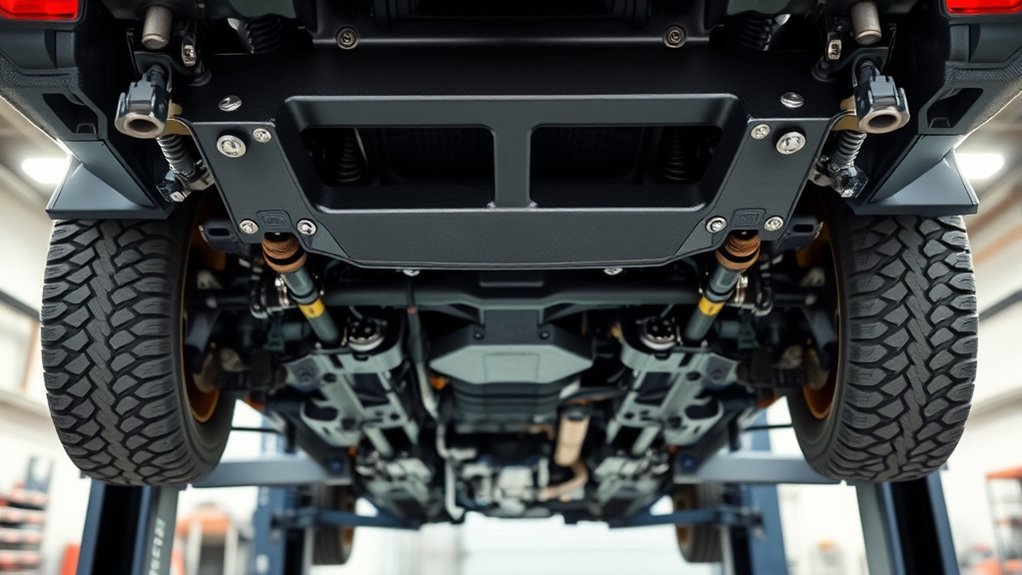
The Land Cruiser still uses a body-on-frame structure, but TNGA-F modernizes the way that frame is engineered. Toyota describes the 2026 Land Cruiser frame as a high-strength boxed frame, with manufacturing methods such as laser blank welding used to reduce weight where possible while reinforcing critical areas.
That gives you a stronger foundation for rough-road impacts, towing loads, recovery points, skid plates, and suspension movement. A stiffer frame also helps the suspension do its job more precisely because less unwanted flex is happening in the structure underneath the cabin.
| TNGA-F Attribute | Buyer Benefit | Real-World Impact |
|---|---|---|
| Body-on-frame layout | Strength and separation between frame and cabin | Better suited to towing, trails, armor, and recovery loads than most unibody SUVs |
| High-strength boxed frame | Improved rigidity and durability | More stable steering, suspension response, and long-term toughness |
| Modern platform packaging | Room for hybrid components and safety systems | Hybrid torque without giving up full-time 4WD hardware |
| Shared Toyota truck architecture | Broader parts and engineering ecosystem | More aftermarket and service familiarity over time |
| Trail-focused geometry | Better off-road control | More confidence on uneven, loose, or steep terrain |
Hybrid Power Integration
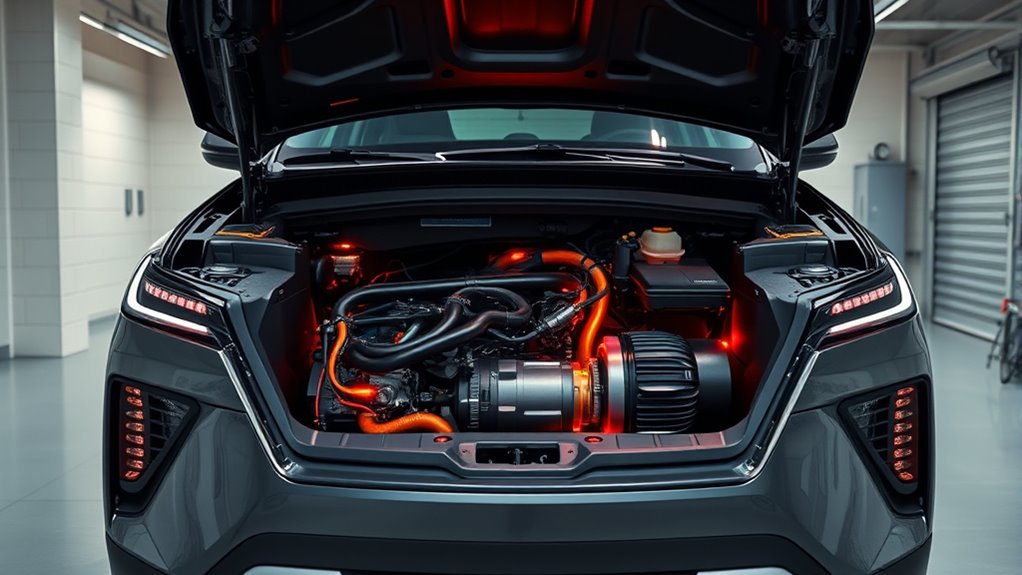
One of the biggest changes is how TNGA-F supports hybrid power. The current U.S.-market Land Cruiser uses Toyota’s i-FORCE MAX system, which combines a turbocharged 2.4-liter four-cylinder engine, an electric motor, and an 8-speed automatic transmission. Toyota lists output at 326 horsepower and 465 lb-ft of torque.
This is important because off-road driving often happens at low speed, where smooth torque delivery matters more than peak horsepower. The electric motor helps the Land Cruiser respond quickly when you need to climb, crawl, merge with a trailer, or maintain momentum on loose surfaces.
The 2026 Land Cruiser is also EPA-rated at 22 mpg city, 25 mpg highway, and 23 mpg combined. Actual mileage will vary with tires, roof racks, speed, load, weather, towing, and terrain, but those ratings show why Toyota moved away from a thirsty V8 in the U.S. model.
Note: The U.S.-market Land Cruiser’s i-FORCE MAX is a turbocharged 2.4-liter hybrid four-cylinder. Some global Land Cruiser 250 models use different engines, including diesel options, depending on market.
Improved Off-Road Tech
TNGA-F does not make the Land Cruiser capable by itself. The real improvement comes from the way the platform works with the SUV’s full-time 4WD system, two-speed transfer case, locking differentials, suspension hardware, and driver-assist trail systems.
Toyota’s owner materials describe Crawl Control as a system that allows travel over extremely rough off-road surfaces at a fixed low speed without pressing the accelerator or brake pedal. Toyota also describes Multi-Terrain Select as a system that optimizes brake control, drive force control, and suspension control for different off-road surfaces when equipped.
For the buyer, that means TNGA-F is the foundation, but the whole package is what matters. The frame, hybrid torque, gearing, traction controls, tires, skid plates, cameras, and locking hardware all work together to make the Land Cruiser easier to place and control off pavement.
How TNGA-F Boosts Land Cruiser Off-Road Ability
TNGA-F improves Land Cruiser off-road ability in three main ways: it gives the vehicle a stronger structure, it supports modern low-speed torque delivery, and it allows Toyota to integrate advanced traction systems without weakening the traditional truck layout.
Body-On-Frame Strength
Body-on-frame construction remains central to the Land Cruiser’s identity. This layout is useful for off-roaders because the frame carries major loads from the suspension, drivetrain, tow hitch, and recovery points. The body sits on top rather than acting as the only main load-bearing structure.
That does not mean every body-on-frame SUV is automatically better off-road than every unibody SUV. Suspension design, ground clearance, gearing, tire choice, traction control, weight, and driver skill still matter. But for the Land Cruiser’s mission, a strong frame gives Toyota a durable base for repeated rough-road use, trail impacts, heavy accessories, and long service life.
Hybrid Torque Advantage
The i-FORCE MAX hybrid system gives the Land Cruiser a clear torque advantage at low speeds. With 465 lb-ft of torque, the Land Cruiser has the pulling force buyers want for climbing, crawling, sand driving, and towing. The electric motor’s assistance helps the powertrain respond smoothly instead of forcing the driver to use heavy throttle input.
This matters on technical trails because abrupt throttle can cause wheelspin. Smooth torque lets the tires work instead of digging, bouncing, or breaking traction. When paired with low-range gearing, full-time 4WD, and traction systems, the hybrid setup helps turn power into controlled movement.
Traction Systems and Driver Control
Modern Land Cruiser capability is not just mechanical. Crawl Control, Multi-Terrain Select, a center locking differential, an available rear locker, and camera-based trail visibility all reduce workload in difficult terrain. These systems do not replace careful driving, but they can help keep the vehicle steady when the surface changes quickly.
For example, Crawl Control can help maintain a low, steady speed on rocky or slippery surfaces. Multi-Terrain Select can adjust vehicle systems to match mud, sand, rock, or mixed terrain when equipped. The available stabilizer disconnect mechanism can improve wheel articulation by allowing more front suspension movement on uneven trails.
Warning: Off-road systems improve control, but they do not override physics. Tire pressure, recovery gear, trail conditions, water depth, approach angle, breakover angle, departure angle, and driver judgment still decide whether a route is safe.
i-FORCE MAX Hybrid on TNGA-F: Buyer-Focused Performance and Efficiency
If you are comparing the current Land Cruiser with older V8 Land Cruisers, the powertrain change is the first thing you will notice on paper. The old formula was simple: large naturally aspirated engine, heavy frame, high fuel use, and legendary durability. The newer formula is different: smaller turbo hybrid engine, strong torque, improved efficiency, and more electronics.
That tradeoff will appeal to some buyers more than others. If you want the smooth character and simplicity of an older V8, TNGA-F with i-FORCE MAX may feel more complex. If you want torque, range, modern safety technology, and daily-driving refinement, the current setup makes a strong case.
| Buyer Priority | What TNGA-F Helps With | What to Check Before Buying |
|---|---|---|
| Daily comfort | Stiffer frame, improved steering feel, modern suspension tuning | Test-drive on rough pavement and highway speeds |
| Trail use | Full-time 4WD, low-range gearing, trail controls, skid protection | Confirm trim equipment, tires, lockers, and stabilizer disconnect availability |
| Towing | Strong hybrid torque and boxed-frame construction | Check your exact tow rating, payload, tongue weight, and owner’s manual guidance |
| Fuel economy | Hybrid efficiency versus many older large SUVs | Factor in tire upgrades, roof racks, armor, and towing |
| Long-term ownership | Toyota truck-platform engineering and broad service ecosystem | Follow maintenance intervals and inspect hybrid, cooling, driveline, and suspension components |
For many buyers, the best way to think about the i-FORCE MAX system is not “small engine versus big engine.” It is “usable torque versus old displacement.” The Land Cruiser no longer needs a V8 to deliver strong low-speed pulling power, but it does require owners to respect hybrid-specific maintenance, cooling, battery, and electronic systems.
TNGA-F: Durability, Maintenance, and Resale Impact
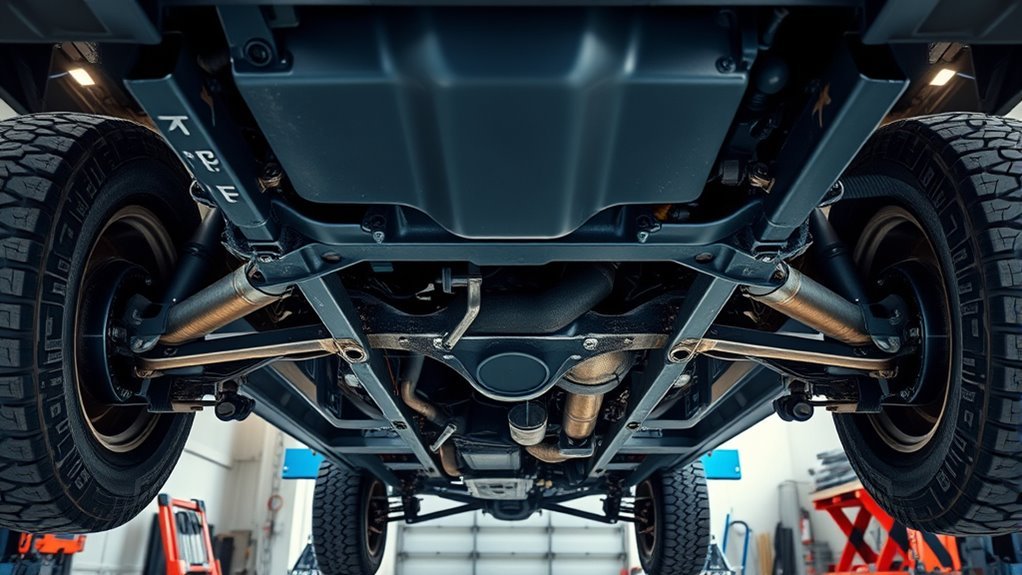
TNGA-F should help the Land Cruiser remain durable because it keeps the body-on-frame structure, uses modern frame engineering, and supports powertrain and safety systems designed for Toyota’s newest truck family. Still, durability is not automatic. It depends on maintenance, climate, driving style, towing habits, off-road use, and the quality of any modifications.
A well-maintained Land Cruiser has historically been valued for long service life, but it is better to avoid unsupported mileage promises. Instead of assuming any vehicle will reach a specific number, focus on the behaviors that actually protect the platform: regular fluid service, underbody cleaning, corrosion prevention, cooling-system care, suspension inspections, and correct repair procedures after hard off-road use.
Maintenance Priorities for TNGA-F Land Cruiser Owners
- Inspect the frame and underbody: Check skid plates, frame rails, weld areas, mounting points, and exposed hardware after trail use.
- Watch corrosion-prone areas: Wash mud, salt, and sand from the underbody, especially if you drive in winter climates or coastal areas.
- Service fluids based on use: Towing, water crossings, dust, and low-speed off-road driving can justify more frequent checks than normal commuting.
- Check suspension and steering parts: Bushings, ball joints, tie rods, shocks, and alignment take more abuse after larger tires or trail impacts.
- Protect hybrid cooling: Keep vents, radiators, and cooling paths clear. Heat is the enemy of long-term hybrid and drivetrain reliability.
- Document maintenance: Records help with warranty conversations, resale value, and diagnosing problems later.
Pro Tip: If you plan to add armor, larger tires, roof storage, or towing accessories, weigh the vehicle afterward. Payload disappears quickly on overland builds, and an overloaded Land Cruiser will brake, steer, ride, and wear parts worse than Toyota intended.
Resale Value Impact
TNGA-F can help resale value because it ties the Land Cruiser to Toyota’s current truck architecture and keeps the vehicle’s core identity intact. Buyers shopping used Land Cruisers usually care about durability, service history, rust condition, accident history, factory equipment, and modification quality.
Conservative, high-quality upgrades may help resale if they match what the next buyer wants. Poor wiring, extreme lifts, cut bodywork, cheap suspension parts, oversized tires, and undocumented trail damage usually hurt resale. A stock or lightly modified Land Cruiser with clean records will often be easier to sell than a heavily altered one.
Aftermarket Mods on TNGA-F: Fitment, Limits, and Warranty
TNGA-F gives Land Cruiser owners a strong base for aftermarket upgrades, but it also adds modern electronic systems that must be respected. Suspension changes, tire size changes, bumper swaps, winches, roof racks, auxiliary lighting, and skid plates can all affect safety, weight, sensors, cooling, steering geometry, and warranty claims.
The safest approach is to build around the vehicle’s mission. A daily driver that sees forest roads does not need the same setup as a vehicle built for rock crawling or remote desert travel. Keep the build as light and simple as possible while solving the actual problem you have.
Best Mods for Most Land Cruiser Buyers
- All-terrain tires: Often the best first upgrade because tires affect traction more than most accessories.
- Skid plates and rock rails: Useful if you drive rocky trails or need underbody protection.
- Recovery points and basic recovery gear: Choose parts rated for the vehicle and use proper recovery techniques.
- Quality lighting: Helpful for trail visibility, but wiring should be fused, weatherproof, and professionally routed.
- Modest suspension upgrades: A small, well-engineered lift can help clearance without ruining geometry.
- Air compressor and tire tools: Airing down and back up is a practical trail improvement with minimal vehicle compromise.
Mods That Need Extra Care
Large lifts, heavy steel bumpers, oversized tires, roof tents, long-range fuel or water storage, and complex electrical systems need careful planning. They can change braking distance, steering feel, suspension wear, stability, camera views, radar performance, and fuel economy.
Before installing major parts, confirm compatibility with parking sensors, cameras, airbags, adaptive cruise systems, hybrid cooling, and factory recovery or tow points. Also consider whether the part has been tested on your exact model year and trim.
Warranty Considerations
Aftermarket parts do not automatically void an entire vehicle warranty in the United States. The Magnuson-Moss Warranty Act governs written consumer warranties, and warranty disputes often come down to whether an aftermarket part or modification caused the specific failure.
In practical terms, a dealer may deny a claim if a lift, tire, tune, wiring job, bumper, or other modification directly contributed to the failed part. Unrelated systems should not be denied simply because the vehicle has an aftermarket accessory. Keep receipts, installation records, alignment sheets, and photos so you can show what was installed and how it was maintained.
Note: Warranty rules vary by country, and leased vehicles may have separate modification restrictions. Always read your warranty booklet, lease agreement, and owner’s manual before making permanent changes.
TNGA-F vs. Older Land Cruiser Platforms
The older Land Cruiser reputation was built on mechanical toughness, simple long-distance dependability, and big-engine confidence. TNGA-F keeps the truck-based foundation but adds a modern layer of hybrid power, software-controlled traction, cameras, sensors, and stricter efficiency expectations.
That creates a different ownership experience. Older Land Cruisers may feel simpler and more analog. The TNGA-F Land Cruiser feels more responsive, more efficient, easier to drive daily, and better equipped for modern traffic and safety expectations. The tradeoff is complexity: more electronics, more hybrid components, and more systems that require correct diagnosis.
| Area | Older Land Cruiser Feel | TNGA-F Land Cruiser Feel |
|---|---|---|
| Powertrain | Large, smooth, naturally aspirated engines in many markets | Turbo hybrid torque with stronger efficiency focus |
| Driving character | Heavy, stable, traditional SUV feel | More responsive, narrower, and easier to place |
| Trail control | More driver-managed mechanical feel | More electronic assistance and terrain modes |
| Maintenance | Often simpler but age-related repairs increase | Newer systems require hybrid and electronic diagnostics |
| Buyer appeal | Traditionalists and collectors | Daily drivers, adventurers, and buyers wanting modern capability |
Who Should Buy a TNGA-F Land Cruiser?
A TNGA-F Land Cruiser makes the most sense if you want a serious body-on-frame SUV that can commute comfortably, handle bad weather, tow modest loads, explore trails, and support responsible aftermarket upgrades. It is especially appealing if you want Land Cruiser heritage without the size, price, and fuel use of some older luxury-oriented Land Cruiser generations.
It may not be the best fit if you want maximum third-row space, a simple old-school V8, the highest possible tow rating, or the cheapest way to get off-road. It is also not a blank-check overland platform; payload, cooling, warranty, and electronics still matter.
Frequently Asked Questions
What platform is the Land Cruiser built on?
The current U.S.-market Toyota Land Cruiser is built on Toyota’s TNGA-F global truck platform. Toyota also uses related GA-F/TNGA-F language globally for its modern body-on-frame truck architecture.
What is the difference between Toyota DNGA and TNGA?
TNGA is Toyota’s broader global architecture strategy for many Toyota models, including cars, crossovers, and trucks. DNGA is Daihatsu’s related architecture approach for smaller, cost-efficient compact vehicles. TNGA-F specifically refers to Toyota’s body-on-frame truck platform family.
Is the Toyota Camry HEV built on the TNGA platform?
Yes. The Toyota Camry Hybrid is built on a TNGA car platform, not TNGA-F. The key difference is that Camry uses a unibody passenger-car architecture, while the Land Cruiser uses Toyota’s body-on-frame truck platform.
Does the Land Cruiser share the Tundra platform?
Yes, in the sense that the Land Cruiser and Tundra are part of Toyota’s TNGA-F global truck platform family. They are not identical vehicles, but they share a common body-on-frame architecture strategy and related engineering principles.
Does the new Land Cruiser have a V8?
No. In the U.S. market, the current Land Cruiser uses Toyota’s i-FORCE MAX turbocharged 2.4-liter four-cylinder hybrid system rated at 326 horsepower and 465 lb-ft of torque.
Is TNGA-F better for off-roading than a unibody platform?
For the Land Cruiser’s mission, TNGA-F is better suited because it supports a strong frame, low-range 4WD hardware, towing loads, armor, and recovery points. However, off-road performance still depends on tires, suspension, clearance, gearing, traction systems, weight, and driver skill.
Conclusion
TNGA-F gives the Land Cruiser a stronger and more modern foundation without turning it into a soft crossover. You get a body-on-frame SUV with hybrid torque, full-time 4WD, trail-focused control systems, improved efficiency, and a platform shared across Toyota’s newest truck family.
The key is to judge it honestly. TNGA-F is not magic, and the i-FORCE MAX hybrid is not the same ownership experience as an older V8. But for buyers who want modern daily drivability, real off-road hardware, better fuel economy, and long-term Toyota truck engineering, the TNGA-F Land Cruiser is a practical and capable evolution of the nameplate.
Sources
- Toyota 2026 Land Cruiser official page — powertrain output, hybrid system, and model overview.
- Toyota USA Newsroom: 2026 Land Cruiser — TNGA-F platform, shared truck architecture, frame design, and off-road equipment.
- Toyota Global: Land Cruiser 250 world premiere — GA-F/TNGA-F platform context and global Land Cruiser 250 development notes.
- FuelEconomy.gov 2026 Toyota Land Cruiser — official EPA fuel economy ratings.
- Toyota Owners: Crawl Control and Toyota Owners: Multi-Terrain Select — official descriptions of key off-road control systems.
- Federal Trade Commission: Magnuson-Moss Warranty Act — warranty law context for aftermarket parts and modifications.