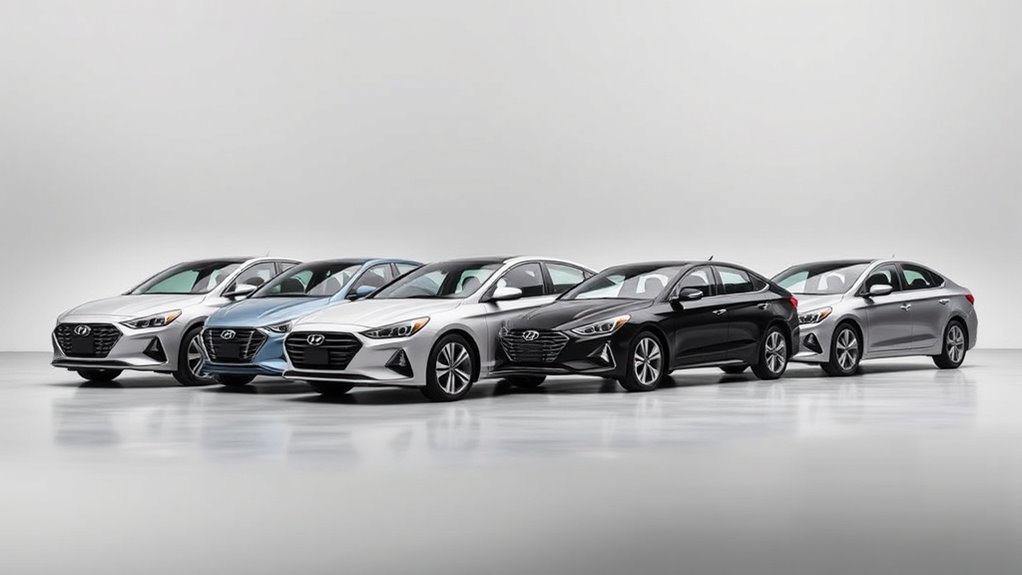
You’ll see the Sonata evolve from a rebadged, budget-friendly sedan in the 1980s to a refined, tech-packed contender by the 2010s and beyond. Early models used Mitsubishi four-cylinders and later added a V6; late‑90s to 2014 models gained European styling, better build quality, and long powertrain warranties. From 2015 onward Hyundai pushed sleek design, hybrids, and a 290‑hp N Line. Keep going and you’ll get decade-by-decade details and buying guidance.
Quick Timeline: Hyundai Sonata Generations at a Glance
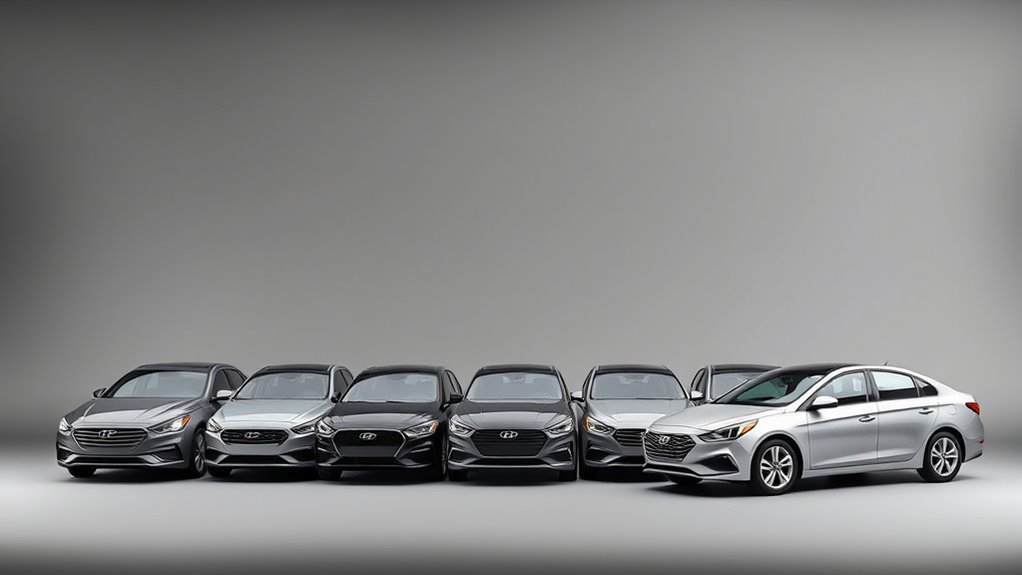
Across seven generations since its 1989 North American debut, the Hyundai Sonata evolved from a budget-friendly mid-size sedan into a tech-forward contender, with each iteration bringing notable design and performance upgrades. You’ll trace design evolution through milestones: the second generation’s U.S. entry with Mitsubishi engines that defined accessible value; the fourth generation’s bold warranty promise that boosted consumer trust and drove sales past 100,000 annually; the fifth generation’s sharper performance, including a 235-hp V‑6 and 0–60 mph in 7.0 seconds; and the eighth generation’s modern facelift, full-length LED strip, AWD availability, and advanced safety and infotainment. You’ll see how incremental innovation shaped market impact, freeing buyers from tradeoffs between price, capability, and cutting-edge features.
Hyundai Sonata 1985–1998: Origins, Engines, and Export Growth
When Hyundai launched the Sonata in 1985 as a rebadged Stellar, it aimed squarely at the executive-sedan market in South Korea, relying on Mitsubishi-sourced four-cylinder engines to deliver dependable, budget-minded performance; that foundation set the stage for the model’s export push and eventual U.S. debut with the second generation in 1989. You’ll see a clear progression: early engine specifications emphasized reliability and cost control, then the line added a 3.0-liter V6 in later iterations to improve competitiveness. Market strategies focused on affordable performance and expanding reach—U.S. entry in 1989, refined packaging and a longer wheelbase by 1995, and quicker 0–60 times as displacement rose. That pragmatic evolution freed buyers from premium-brand constraints.
Hyundai Sonata 1999–2014: European Styling, Quality, and Tech Gains
Though Hyundai still aimed for value, the 1999–2014 Sonatas shifted sharply toward European styling, build quality, and technology, adding a V6, a 10-year/100,000-mile powertrain warranty, and advanced options like direct injection to win buyer confidence. You’ll notice European Influence in cleaner proportions and sharper handling that moved the Sonata away from generic compact-sedan looks, helping sales surpass 100,000 in a year. You’ll also benefit from Tech Innovations such as refined V6 power that cut 0–60 mph to about 7.0 seconds, direct-injection choices, and continual fuel-efficiency gains. Safety and crash performance improved as well, so you can expect a more confident, liberated driving experience from a midsize sedan that matured into a credible option.
Hyundai Sonata 2015–2024+: Modern Design, Hybrid Tech, and N‑Line Performance
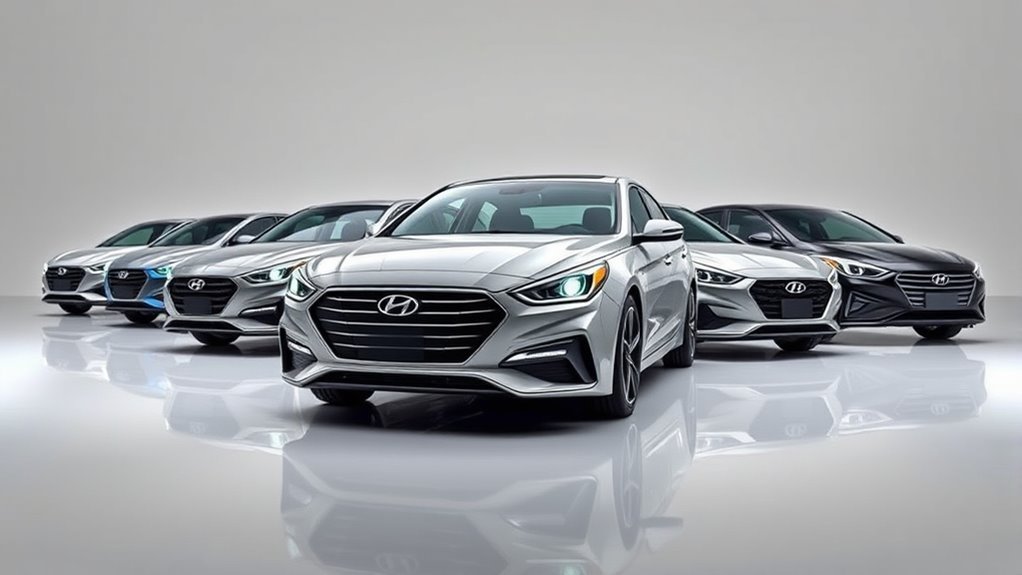
While keeping its midsize sensibility, the 2015–2024+ Sonata embraced a sleeker, lower profile and sharper lines that modernized its look, added hybrid efficiency, and introduced a high-performance N Line variant—so you get a car that balances everyday practicality with contemporary tech and sporty capability. You’ll notice the clear design evolution: precise creases, lowered stance, and the 2024 full‑length LED strip that sharpen presence. Tech advancements arrived in 2020 with dual 12.3‑inch displays, seamless Apple CarPlay/Android Auto, and a richer infotainment suite that frees you to stay connected. Hybrid efficiency appears with the 2020 2.0L hybrid (192 hp) for strong mileage without sacrifice. The N Line (2021) delivers 290 hp from a turbo 2.5L and an eight‑speed DCT for spirited driving.
Which Sonata Year Should You Buy? Reliability, Features, and Value
Looking for the right Sonata comes down to your priorities: buy an NF-era (2006–2010) if you value proven reliability and simple mechanics. If you want modern tech and top safety, the 2020–2023 DN8 delivers dual 12.3-inch displays and advanced driver aids. Choose the 2015–2019 model for fuel efficiency and a comfortable ride that suits long-distance freedom. For eco-minded drivers, the 2020 hybrid pairs a 2.0L engine with electric assist for impressive economy without sacrificing performance. Budget-conscious buyers should consider the 2025 SE entry-level trim for value—2.5L engine and available AWD. Use reliability ratings and feature comparisons to match your needs: prioritize longevity, tech, economy, or upfront value to liberate your daily drive.
Frequently Asked Questions
What Are the Different Generations of Hyundai Sonata?
You get seven Sonata generations: I–VIII (1985–present), each showing design evolution and performance upgrades—early budget models, U.S. expansion, V‑6 power, U.S. builds, refined dynamics, tech‑rich modernity with AWD and dual displays.
What Years Are the 7th Generation Sonata?
The 7th‑generation Sonata was produced from 2015 to 2019; you’ll note its design features evolved—facelifted in 2018—and engine specifications ranged from a 2.4L four‑cylinder to a 2.0L turbo and hybrid.
Conclusion
Across its lifespan, the Sonata evolved from a basic 1980s compact into a tech‑rich midsize with hybrids and an N‑Line. You’ll note that since 2015 Hyundai cut warranty claims by about 30% versus earlier decades, showing real reliability gains. Whether you prioritize value, advanced safety, or performance, pick a later‑model for features and peace of mind; choose an early‑2000s car only if budget and parts availability are your top concerns.