If your 2009 Hyundai Sonata smells like fuel, treat it as a safety issue first and a repair issue second. Start with the simple checks you can do safely: make sure the fuel cap is tight, look for wet spots under the rear of the car, and note when the odor appears. If you see liquid fuel, smell heavy fumes, or feel lightheaded, stop driving and call for help from a safe distance.
Quick Answer
A fuel smell in a 2009 Hyundai Sonata usually comes from a loose or faulty fuel cap, cracked filler or vent hoses, a leaking fuel line, a fuel pump seal, or a tank/EVAP leak. Do not drive if you see fuel wetness, puddles, or strong fumes. Tighten the cap, inspect safely, then have persistent odors diagnosed.
Key Takeaways
- A fuel odor is not normal. Even a small vapor leak can become a fire risk.
- Check the easiest item first: the fuel cap should tighten until it clicks and should seal correctly.
- Fuel smells after refueling often point to the cap, filler neck, vent hoses, charcoal canister, or EVAP system.
- Fuel wetness, puddles, dripping, heavy fumes, or dizziness means stop driving and tow the vehicle.
- Do not replace the fuel pump or tank until a shop confirms the leak point with inspection, pressure testing, or an EVAP smoke test.
At a Glance
| Time Required | 10–20 minutes for safe visual checks; longer for professional diagnosis. |
| Difficulty | Easy for cap and visual checks; advanced for tank, pump, fuel-pressure, and EVAP testing. |
| Tools Needed | Flashlight, gloves, clean cardboard, mirror, OBD-II scanner if available, and jack stands only if you must look underneath. |
| Cost | Visual checks may cost nothing. Diagnosis and repairs vary by location; major repairs such as fuel pump or tank replacement can run into the thousands, so get a written estimate first. |
Warning: Do not drive your Sonata if you see fuel dripping, fuel puddles, wet fuel lines, heavy fumes, or smell gasoline strongly inside the cabin. Turn the engine off, move people away from the car, avoid smoking or sparks, and call roadside assistance or a repair shop from a safe distance.
Why Your Sonata Smells Like Fuel
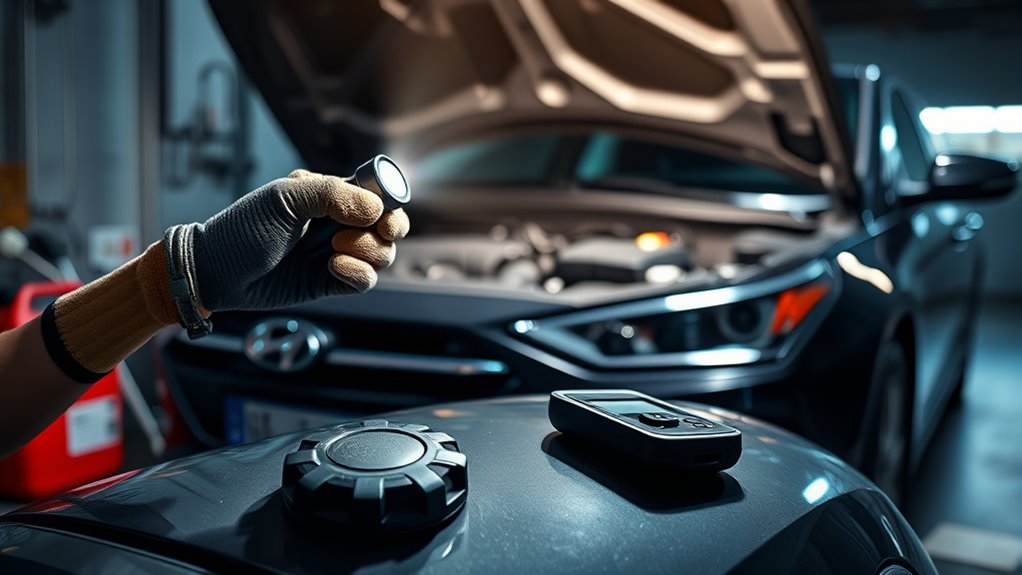
A fuel smell around a 2009 Hyundai Sonata usually means gasoline vapor or liquid fuel is escaping somewhere in the fuel or evaporative-emissions system. Common leak points include the fuel cap, filler neck, filler hose, vent hoses near the tank, fuel lines, fuel pump module seal, fuel tank, injector seals, or EVAP components.
The first clue is when and where the odor appears. A smell only after filling up often points to the cap, filler neck, vent hoses, or EVAP system. A strong odor near the rear of the car can point to the tank, pump seal, or rear fuel/vent lines. A smell under the hood may involve injector seals, fuel rail connections, or engine-bay fuel lines.
Hyundai’s fuel-system maintenance guidance says fuel lines, hoses, and connections should be checked for leakage and damage, and damaged or leaking parts should be replaced immediately by an authorized Hyundai dealer. You can do a careful visual check, but fuel-system repair should be handled by someone equipped to work safely around gasoline and vapor.
Is It Safe to Drive if Your Sonata Smells Like Gas?
Do not drive if the odor is strong, if the smell enters the cabin, if you see liquid fuel, or if the smell gets worse while driving. Gasoline is highly flammable, and vapors can ignite from sparks, static electricity, cigarettes, hot surfaces, or electrical faults.
You may be able to drive a short distance to a repair shop only if the smell is faint, there is no visible wetness or dripping, the odor does not get stronger, and the car runs normally. Even then, keep the windows open, avoid hard acceleration, and go directly to the shop. If you are unsure, tow it.
Note: A fuel smell with hard starting, rough idle, poor fuel economy, or a check-engine light should be diagnosed promptly. Those symptoms can overlap with EVAP leaks, fuel-pressure problems, injector leaks, and tank or pump issues.
Quick Checks: Gas Cap, Vent Lines, and Smell Source
Start with checks that do not require opening the fuel system. Work outside or in a well-ventilated area. Keep the engine off, avoid smoking, and do not use a flame to “look” for a leak.
[Products Worth Considering]

【FUEL CAP / GAS CAP TETHER COMPATIBLE WITH】31010-3L600U, 31010-3L600, Fuel Tank Filler Cap Is 100% Rigorously Tested Before Shipping. Check The Part Number To Confirm The Compatibility Before Purchase. GAS CAP For Kia & Hyundai Vehicles (Includ 2004 2005 2006 2007 2008 2009 2010 2011 2012 2013 2014 2015 2016 2017 2018 2019 2020 Years Series), Not All Of The Vehicles Are Listed, PLESE CHECK THE DROP DOWN BAR TO CHECK THE COMPATIBLE.

Premium Material: The Fuel Tank Filler Cap is crafted from premium plastic, offering excellent waterproof, rustproof, and corrosion-resistant properties for long-lasting durability. It is designed for easy installation: simply align the product with the fuel tank opening, rotate it clockwise, and listen for a click to confirm proper installation.

【Gas Cap Fuel Cap Replacement】31010-3L600U, 31010-3L600, Check The Part Number Before Your Order, It saves you the time of buying back and forth, and also helps you save money.
1. Check the Fuel Cap First
Open the fuel door and inspect the cap. Make sure the rubber seal is not cracked, flattened, swollen, missing, or covered in grit. Reinstall the cap and tighten it until it clicks. Hyundai owner guidance for fuel filler caps says the cap should be installed securely, and current Hyundai manuals also warn that automotive fuel is highly flammable and explosive.
If the cap is damaged or no longer clicks, replace it with the correct cap for the car. An incorrect cap can cause EVAP-system problems and may allow vapors to escape.
2. Notice When the Smell Happens
- Only after refueling: check the cap, filler neck, filler hose, vent hoses, and charcoal canister area.
- After topping off the tank: the EVAP charcoal canister may be contaminated by liquid fuel. Stop topping off after the pump clicks off.
- While parked overnight: place clean cardboard under the rear and engine area to help spot drips.
- While driving or stopping: pull over safely if the smell gets stronger.
- Under the hood: suspect injector seals, fuel rail connections, fuel hoses, or fuel-pressure components.
3. Inspect the Filler Neck and Rear Vent Hoses
Look around the fuel door, filler neck, and the area behind the left rear quarter panel if visible. Cracked filler hoses, loose clamps, disconnected vent hoses, or a rusty filler neck can let vapor escape. You may not see liquid fuel if the leak is vapor-only.
After refueling, look for wet streaks near the filler neck and under the rear of the car. If you see fuel stains or wetness, do not keep driving.
4. Look Under the Rear of the Car
From a safe distance, use a flashlight to inspect the ground beneath the fuel tank and fuel-line routing. Do not crawl under a car supported only by a jack. If you need a closer look underneath, use proper jack stands on a flat surface, or let a shop inspect it on a lift.
Check for dampness, fuel staining, cracked hoses, loose clamps, corrosion, or wet spots near the top edge of the tank. A leak on top of the tank can be hard to see without lowering the tank, so a clean underside does not always mean the vehicle is safe.
5. Check Under the Hood
If the smell is strongest near the engine, do not touch hot components. With the engine off and cool, look for wetness around fuel injector bases, the fuel rail, fuel hoses, and line connections. A fuel leak in the engine bay is especially serious because it is close to hot exhaust and electrical components.
Pro Tip: Write down when the smell appears, how full the tank is, where the odor is strongest, and whether the check-engine light is on. That information helps a mechanic narrow the diagnosis faster.
Smell Patterns and Likely Causes
| What You Notice | Likely Areas to Check | What to Do |
| Fuel smell right after filling up | Fuel cap, filler neck, filler hose, vent hose, EVAP canister | Tighten cap, stop topping off, inspect for wetness, schedule EVAP diagnosis if odor returns. |
| Strong smell near rear of car | Fuel tank, pump module seal, vent lines, top-of-tank fittings | Do not drive if strong or wet; have the tank area inspected on a lift. |
| Fuel smell under hood | Injectors, fuel rail, engine-bay fuel lines, connections | Stop driving if odor is strong; engine-bay leaks need urgent diagnosis. |
| Fuel smell plus check-engine light | EVAP system, cap, purge valve, vent valve, tank pressure sensor, leak points | Scan codes and ask for an EVAP smoke test if needed. |
| Visible puddle or dripping fuel | Fuel line, tank, pump seal, filler hose, engine-bay fuel leak | Do not start or drive the car. Move away and call for a tow. |
[Products Worth Considering]

High Quality: These fuel line clips for ford are made of premium plastic, with excellent craftsmanship, smooth, burr-free edges, stable structure, durability, corrosion resistance, and are not easily deformed or brittle, ensuring a long service life

[Vehicle Fitment -1 ] - EVAP Vapor Canister Purge Valve Solenoid compatible with 2010-2014 Hyundai Genesis Coupe L4 2.0L, 2010-2012 Hyundai Santa Fe L4 2.4L, 2013 Hyundai Santa Fe Sport L4 2.0L/2.4L, 2011-2014 Hyundai Sonata L4 2.0L, 2006-2014 Hyundai Sonata L4 2.4L, 2011-2013 Hyundai Tucson L4 2.0L, 2010-2015 Hyundai Tucson L4 2.4L

[Purge Valve Vehicle Fitment-1]:Compatible with Hyundai Sonata 2006-2014 L4 2.4L, Sonata 2011-2014 L4 2.0L, Tucson 2010-2015 L4 2.4L, Tucson 2011-2013 L4 2.0L, Santa Fe 2010-2012 L4 2.4L, Santa Fe Sport 2013 L4 2.4L 2.0L, Genesis Coupe 2010-2014 L4 2.0L
Safety First: How to Spot a Leak and When to Stop Driving
Smell Intensity Check
A faint smell that appears once after refueling may be from a loose cap or small EVAP leak, but it still needs attention if it returns. A strong, sharp gasoline odor is more serious, especially if it gets worse after driving, while idling, or when the tank is full.
If the odor makes you dizzy, gives you a headache, or seems to fill the cabin, stop the vehicle safely, shut it off, get passengers out, and move away from traffic and fumes.
Visible Fuel Puddles
A fuel puddle under the car is a stop-driving sign. Note the location from a safe distance, but do not crawl under the vehicle, touch the fuel, or try to patch the leak on the roadside. Fuel under the rear points toward the tank, pump seal, filler/vent hoses, or rear fuel lines. Fuel under the front points toward engine-bay lines, injector seals, or rail connections.
Immediate Evacuation Signs
Get everyone out of the car immediately if you smell heavy fuel fumes, see fuel dripping, hear hissing near the filler cap or tank, or notice fuel spraying or wetting hot engine parts. Move upwind if possible. Do not smoke, do not use a lighter, and do not restart the engine. Call emergency help or roadside assistance only after you are away from the vehicle.
Inspecting Under the Rear: Fuel Lines, Fittings, and Tank Top
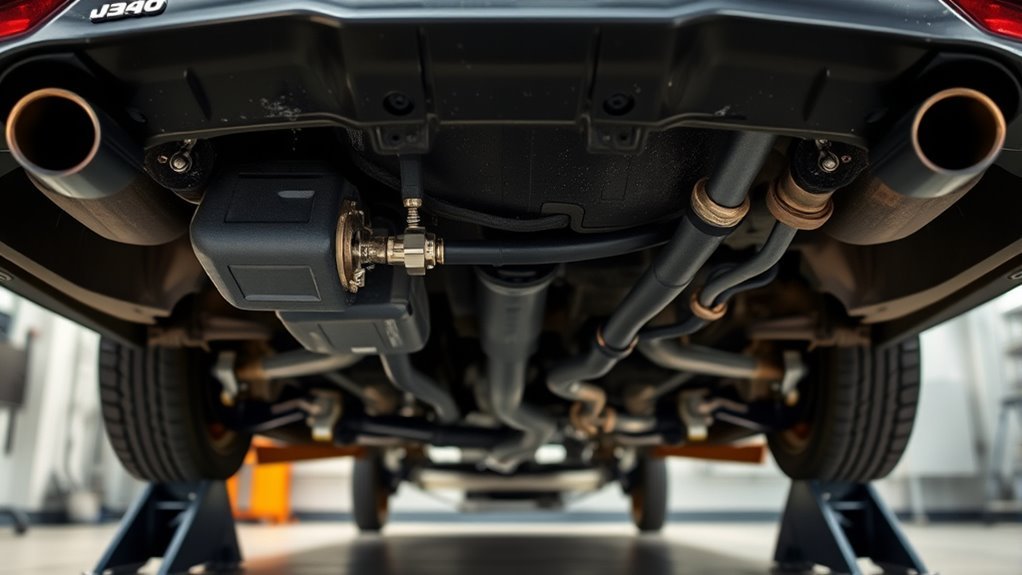
The rear underside is where many fuel odors are found because the tank, filler hose, vent hoses, pump module, and EVAP lines are located there. Look for cracked rubber, loose clamps, stained plastic lines, rust around metal lines or straps, and damp areas near the top of the tank.
A leak at the top of the tank or pump module seal may not drip onto the ground right away. It may only smell strong after a full tank, on hot days, or after the vehicle sits. If the odor is strongest near the rear wheel or under the back seat area, ask the shop to inspect the pump module seal, tank top, filler neck, and EVAP hoses.
Do not lower the tank yourself unless you have the correct tools, safe lifting equipment, fire precautions, and fuel-handling experience. Lowering a tank can expose fuel vapors, electrical connectors, pressurized lines, and fragile plastic fittings.
Check-Engine Light and EVAP Leaks
If the check-engine light is on with a fuel smell, the car may have an EVAP-system fault. The EVAP system is designed to contain fuel vapors and route them through the engine instead of letting them escape into the air. A loose cap, cracked hose, failed purge valve, failed vent valve, leaking tank seal, or tank-pressure problem can trigger a fault.
A shop may scan for codes, inspect the cap, and perform a smoke test. A smoke test introduces low-pressure smoke into the EVAP system so leaks can be found without guessing. This is often better than replacing parts one at a time.
Common EVAP-related codes may include small-leak or large-leak codes such as P0440, P0442, P0455, or P0456, but codes alone do not prove which part failed. Use them as clues, not as a parts-replacement list.
When to Replace the Fuel Pump or Tank
Do not replace the fuel pump or tank just because the car smells like gas. Replace major parts only when testing confirms the failure.
A fuel pump or pump module seal may need replacement if a shop confirms fuel leakage at the pump module, a damaged pump assembly, low fuel pressure with pump failure, or a failed seal at the tank opening. A fuel tank may need replacement if it is cracked, punctured, deformed, internally contaminated, or has integrated EVAP fittings that cannot be repaired separately.
RepairPal’s estimator lists a 2009 Hyundai Sonata fuel pump replacement in the $1,569–$3,493 range, depending on location, parts, taxes, fees, and related repairs. Its Hyundai Sonata fuel tank replacement page lists broad Sonata tank replacement estimates and also shows higher model-year-specific figures for some older years, so always get a local written estimate before approving a major repair.
Note: A repair estimate should identify the failed part, the test used to confirm it, parts pricing, labor, taxes, diagnostic charges, and whether new seals, straps, hoses, or clamps are included.
[Products Worth Considering]

[Vehicle Fitment]: Compatible with Hyundai Sonata 2006-2007 L4 2.4L, Sonata 2006-2010 V6 3.3L

【High Quality】A ABIGAIL fuel pump assembly improves the efficiency and stability of fuel delivery. Precisely built and tested to the same rigorous quality as OE fuel pumps.

[Vehicle Fitment]: Compatible with Hyundai Sonata 2008-2010 L4 2.4L---It only fits the model without California Emissions System
Cost and Who to Call: Dealer vs Local Mechanic
For a 2009 Sonata, the best shop depends on what you need: urgent leak repair, EVAP diagnosis, fuel-pump service, tank work, or recall/campaign verification.
When to Call a Local Mechanic
A trusted independent shop is often a good first call for visual inspection, EVAP smoke testing, fuel-line repair, filler-hose replacement, fuel cap replacement, injector-seal checks, and general diagnosis. Ask whether they are comfortable diagnosing fuel odors and whether they can inspect the vehicle on a lift.
When to Call a Hyundai Dealer
Call a Hyundai dealer if you suspect a VIN-specific recall or service campaign, need Hyundai-specific parts, or want dealer documentation. Hyundai’s recall/campaign tool lets owners look up safety recalls and service campaigns by VIN, and covered recall/campaign remedies are handled by Hyundai dealers.
Questions to Ask Before Approving Work
- Did you find liquid fuel, vapor leakage, or both?
- Was the leak found visually, with pressure testing, or with an EVAP smoke test?
- Is the failed part the cap, filler neck, vent hose, fuel line, pump seal, injector seal, tank, or EVAP component?
- Is the vehicle safe to drive, or should it be towed?
- Does the estimate include seals, clamps, hoses, taxes, and diagnostic fees?
- Did you check the VIN for open Hyundai recalls or service campaigns?
Frequently Asked Questions
Why does my car all of a sudden smell like gasoline?
A sudden gasoline smell usually means fuel vapor or liquid fuel is escaping. Common causes include a loose or damaged fuel cap, cracked filler or vent hose, leaking fuel line, injector leak, pump seal leak, tank leak, or EVAP-system failure. If the smell is strong or you see fuel wetness, stop driving.
Can a loose gas cap make a 2009 Hyundai Sonata smell like fuel?
Yes. A loose, missing, cracked, or incorrect fuel cap can let vapors escape and may trigger an EVAP-related check-engine light. Tighten the cap until it clicks. If the cap seal is damaged or the cap no longer clicks, replace it with the correct cap.
Can I drive my Sonata if the gas smell is faint?
Only use judgment if the smell is faint, there is no visible fuel, the cabin does not smell strongly, and the odor does not get worse. Go directly to a shop. If the smell is strong, persistent, or paired with fuel wetness, do not drive; tow the car.
Why does the fuel smell get worse after I fill the tank?
A smell after filling often points to the fuel cap, filler neck, filler hose, vent line, charcoal canister, or top-of-tank seal. It can also happen if you top off the tank after the pump shuts off. Stop topping off and have the EVAP and filler system inspected if the smell returns.
Should I replace the fuel pump or tank first?
No. Replace the fuel pump or tank only after a shop confirms the leak or failure. A fuel smell can come from smaller, cheaper parts such as a cap, hose, clamp, seal, or EVAP valve. Diagnosis is cheaper than replacing major parts by guesswork.
What should I tell the mechanic?
Tell the mechanic when the smell happens, where it is strongest, whether the tank was just filled, whether you topped off, whether the check-engine light is on, and whether you saw wet fuel. Ask for a visual inspection, code scan, and EVAP smoke test if no obvious leak is found.
Conclusion
If your 2009 Hyundai Sonata smells like fuel, start with the safest simple checks: tighten the fuel cap until it clicks, inspect for wet spots, and note when the odor appears. Do not keep driving with heavy fumes, visible fuel, or cabin odor. A fuel smell can come from a cheap cap or hose, but it can also come from a tank, pump seal, fuel line, injector, or EVAP leak. When the smell persists or any fuel is visible, have the car professionally diagnosed before replacing parts.
Sources
- Hyundai 2009 Sonata Owner’s Manual, fuel filler warning page — backs fuel cap, refueling, and gasoline vapor safety guidance.
- Hyundai Owner’s Manual: Fuel lines, fuel hoses and connections — backs inspection of fuel lines, hoses, and connections for leakage and damage.
- CDC/NIOSH Pocket Guide: Gasoline — backs gasoline flammability and exposure-risk guidance.
- RepairPal: 2009 Hyundai Sonata Fuel Pump Replacement Cost — backs current fuel pump replacement estimate range.
- RepairPal: Hyundai Sonata Fuel Tank Replacement Cost — backs fuel tank replacement cost context and EVAP/tank diagnosis notes.
- Hyundai Safety Recalls and Service Campaigns — backs VIN-specific recall and campaign lookup guidance.