Your Sonata’s engine air filter traps dust and debris to keep the air/fuel mix correct, protect intake parts, and maintain acceleration, fuel economy, and emissions; it’s in a rectangular airbox at the front or side of the engine bay and shows dark, compressed pleats when clogged. You can swap it yourself in under 30 minutes with basic tools, but replace every 10k–30k miles depending on conditions. Keep an eye on performance symptoms and continue below to get step‑by‑step guidance.
Who This Guide Is For
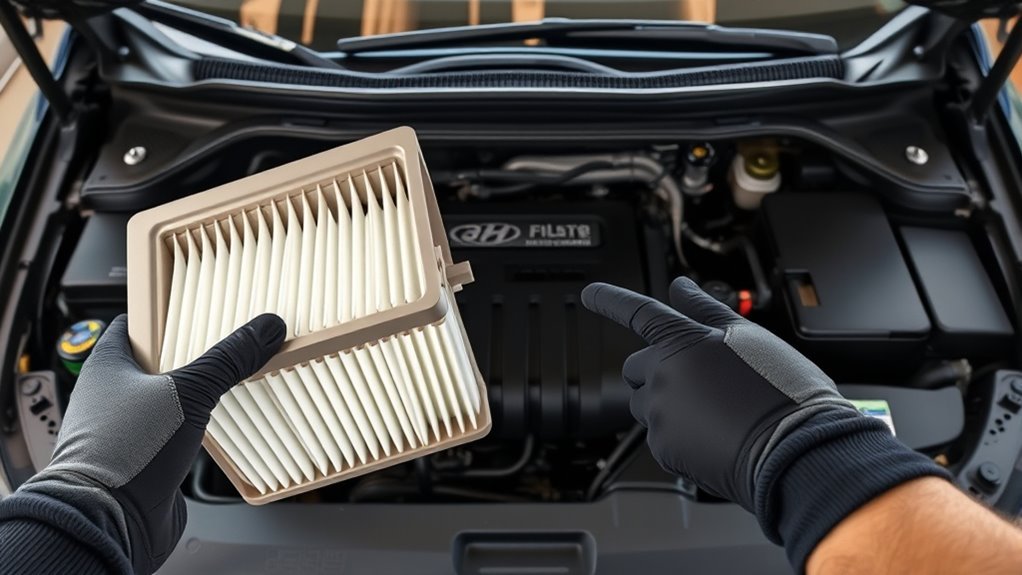
Anyone who owns a Hyundai Sonata and wants to keep its engine running efficiently will find this guide useful. You’re targeted if you prioritize engine maintenance and performance optimization, seeking practical steps to protect engine health and fuel economy. You’ll learn where the engine air filter sits in the engine bay and why it intercepts harmful particles before they reach combustion components. If you drive in dusty, urban, or extreme conditions, you’ll need guidance on the tighter replacement interval—about every 10,000 miles versus the typical 15,000–30,000 miles. You’ll also be encouraged to use certified OEM parts to preserve longevity and filtration effectiveness. This section serves liberated owners who want precise, actionable technical direction without unnecessary theory.
What the 2019 Sonata Engine Air Filter Does
The engine air filter in your 2019 Sonata cleans incoming air by trapping dirt, dust, and debris before it reaches the intake tract, ensuring the correct air/fuel mix for combustion. You rely on that barrier to protect intake components and combustion chambers from abrasive particles that reduce efficiency and cause wear. A clean filter sustains proper airflow, so you get steady acceleration, better fuel economy, and lower emissions — clear performance benefits. Inspect the filter at every oil change and replace it every 12,000–30,000 miles based on conditions; this is essential filter maintenance tips you can act on to retain power and freedom on the road. Don’t let a clogged filter choke your engine’s potential.
Where to Find the Engine Air Filter (And How It Looks)
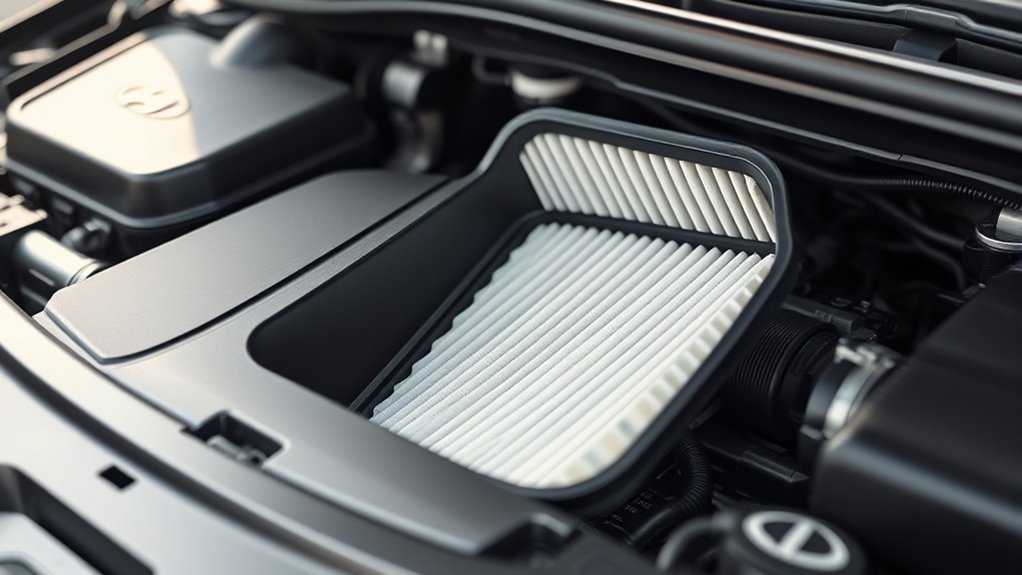
Now that you know why the filter matters, locate it in the engine bay: it’s mounted in a rectangular plastic airbox near the front of the engine, usually on the passenger or driver side depending on model year and trim. You’ll see a paper or panel-style element inside that box; it traps dirt, dust, and debris before the air intake. Inspect it visually—dark, compressed pleats indicate clogging and reduced air intake benefits.
- The airbox is secured with clips or screws accessible without disassembly of major components.
- The filter’s pleated paper is the common form factor across trims.
- Replace intervals range roughly 15,000–30,000 miles under normal use.
- Routine inspections during service embody practical filter maintenance tips for reliable performance.
Quick Answer: Can You Replace It Yourself?
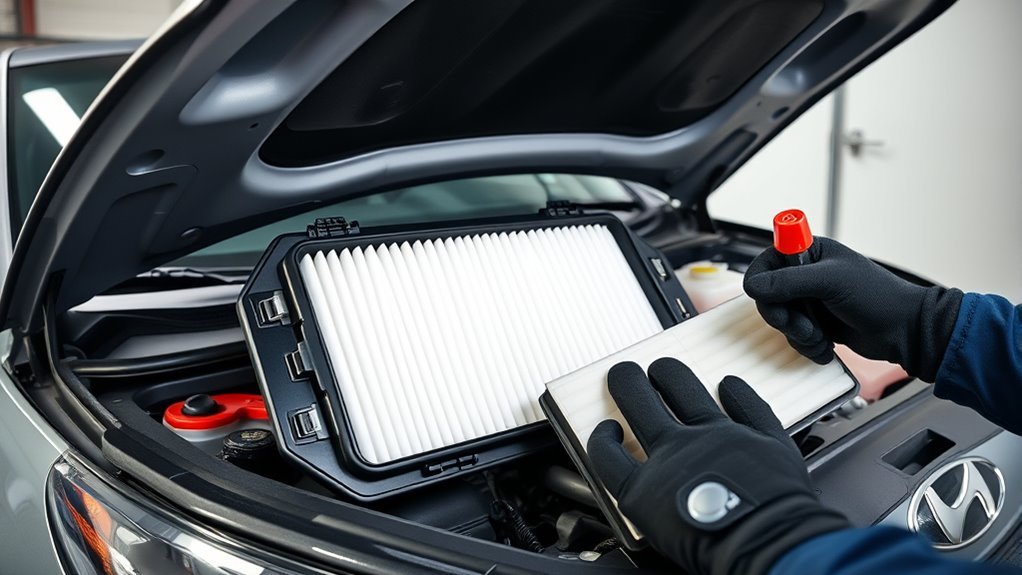
Yes — you can replace the Sonata’s engine air filter yourself in under 30 minutes using basic hand tools like a screwdriver or socket. I’ll walk you through a concise step-by-step process: locate and unclamp the housing, remove the old filter, seat the OEM replacement, and resecure the housing. Follow your owner’s manual for torque specs and recommended service intervals (15,000–30,000 miles).
Tools And Time
You can usually replace a Hyundai Sonata’s engine air filter yourself in under 30 minutes using basic hand tools like a Phillips screwdriver and a small ratchet set; the filter sits in an accessible housing near the front of the engine bay, so you won’t need lifts or specialty equipment. Prioritize filter maintenance and tool selection: choose OEM filters for fit and longevity, consult the owner’s manual for intervals, and plan a clean workspace. You’ll gain mechanical autonomy and save cost.
- Required basic tools: Phillips screwdriver, small ratchet set, and a clean rag.
- Recommended parts: certified OEM filter; keep an aftermarket spare if budget constrained.
- Time estimate: 10–30 minutes depending on experience.
- Safety: engine cool, keys removed, and clear workspace.
Step-By-Step Process
1. You can replace the Hyundai Sonata engine air filter yourself; follow this concise step-by-step process to reclaim control and improve performance. Open the hood, locate the accessible filter housing, and unclip the cover. Remove the old filter—replace every 15,000–30,000 miles under normal driving conditions. Use OEM parts ($20–$45) to preserve engine longevity and calibrations. Insert the new filter, orienting it correctly, then reseal the housing and secure the cover to prevent dirt ingress. Close the hood and verify seals visually. During oil changes, inspect the filter—many Hyundai service locations offer free checks. These filter maintenance tips reduce contamination risk and deliver tangible air quality benefits for combustion efficiency and cabin ventilation.
How Often to Check and Replace the Engine Air Filter
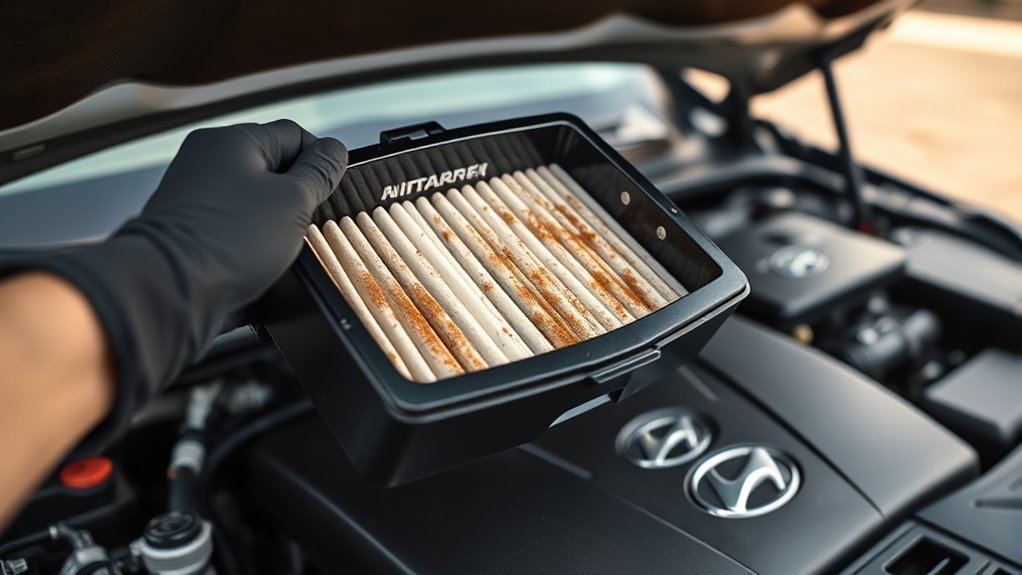
Although the engine air filter often goes unnoticed, check it at every service visit to keep your Sonata’s engine running efficiently and to prevent dirt-related damage; under normal driving replace it every 15,000–30,000 miles, but in dusty or off-road conditions swap it as often as every 10,000 miles. You’ll follow filter maintenance tips and monitor replacement frequency relative to your environment and driving style. Routine inspection prevents abrasive particles from entering the intake and avoids costly repairs. Consult the maintenance guide for tailored intervals.
- Inspect at each oil change and service visit for contamination and fitment.
- Document mileage and conditions to establish a personal replacement schedule.
- Replace sooner if you drive in heavy dust, construction zones, or off-road.
- Use OEM or equivalent filters to maintain airflow and filtration efficiency.
Signs Your Sonata Needs a New Engine Air Filter
If your Sonata feels sluggish or acceleration has dropped, the engine air filter may be restricting airflow. You’ll also notice higher fuel consumption when the air-fuel mix is off, and black exhaust smoke can accompany the issue. Inspect the filter visually—heavy discoloration or debris buildup is a clear signal it needs replacement.
Reduced Acceleration Performance
When your Sonata feels sluggish off the line and the throttle response lags, a clogged engine air filter is often the culprit because restricted airflow reduces combustion efficiency; you’ll notice slower acceleration and more effort required to reach speed. You’ll experience clear acceleration issues and a measurable performance decline as the engine gets less oxygen, so power delivery softens and rpm recovery slows. Inspect the filter during services and replace it every 15,000–30,000 miles, sooner in dusty conditions, to restore liberated driving responsiveness. Monitor pedal feel and acceleration curves; act before performance loss becomes driving frustration.
- Check throttle response: delayed build and softer surge
- Measure 0–60 or midrange pull for anomalies
- Inspect filter for dark, compacted debris
- Replace proactively in harsh environments
Increased Fuel Consumption
Because a clogged engine air filter restricts airflow, your Sonata will burn more fuel to maintain power, so you’ll often see a measurable drop in fuel economy. When airflow is limited, combustion efficiency falls and the engine compensates by injecting more fuel, lowering fuel efficiency and degrading engine performance. You may quantify this as several miles per gallon lost, accompanied by reduced acceleration and heavier throttle response. Inspect the air filter every 15,000–30,000 miles under normal conditions; replace sooner in dusty environments. Ignoring a blocked filter risks progressive engine wear, escalating repair costs and systemic inefficiency. Swap the filter as a low-cost, high-impact intervention to reclaim fuel efficiency, restore engine performance, and free yourself from preventable maintenance burdens.
Visible Dirty Filter
A quick visual check of your Sonata’s engine air filter will often reveal the need for replacement: look for heavy discoloration, embedded dust, or visible debris on the pleats, since those signs show the filter isn’t effectively cleaning incoming air. You should act when you see this—dirty filters reduce acceleration, lower fuel efficiency, and can produce black exhaust smoke from incomplete combustion. Regular inspection during service is a simple filter maintenance tip that protects performance and prevents costly engine damage. Replace a visibly dirty element promptly to restore airflow and fuel economy, and to defend your vehicle’s emissions profile and your personal freedom to drive without avoidable failures.
- Inspect pleats for compacted dust and dark streaks
- Note performance drop and black smoke signs
- Schedule replacement during routine service
- Consider air quality impact when driving in dusty areas
How to Inspect and Replace the Engine Air Filter Yourself
Start by popping the hood and locating the rectangular air filter housing in the engine bay—it’s usually secured with clips or screws—then visually inspect the filter for dirt, dust, or debris buildup. If it looks dark or clogged, plan a replacement. Unfasten clips or screws per your Sonata manual, remove the old element, and compare color: a clean filter is light. Install the new certified OEM filter for proper fit, then reseal the housing and verify no air leaks or loose connections. Replace every 15,000–30,000 miles under normal conditions. Maintain your liberty through simple filter maintenance to preserve engine performance and air quality.
| Step | Action | Check |
|---|---|---|
| 1 | Locate | Housing secure |
| 2 | Inspect | Color/debris |
| 3 | Remove | Follow manual |
| 4 | Install | OEM fit |
| 5 | Seal | No leaks |
Choosing Parts: OEM vs Aftermarket for Your Sonata
After replacing your Sonata’s air filter you’ll face a choice: stick with an OEM part or use an aftermarket alternative. You’ll want reliable filtration, precise fit, and long-term performance—OEM Benefits include engineered airflow compatibility, validated durability, and warranty protection that preserves your vehicle’s standards. Aftermarket Risks can include poor fit, reduced filtration efficiency, and potential warranty complications. Choose based on how much control and freedom you want over maintenance versus exposure to variable quality.
- OEM Benefits: exact fit, tested materials, consistent performance.
- Aftermarket Risks: inconsistent specs, shorter lifespan, potential warranty issues.
- Maintenance simplicity: OEM reduces diagnostic ambiguity.
- Performance priority: OEM supports designed fuel efficiency and engine protection.
Make a choice that empowers your independence and protects the Sonata.
Cost, Time, and When to See a Professional
When you factor in parts and basic labor, replacing your Sonata’s engine air filter usually costs $20–$45 and takes under 30 minutes, so it’s a quick, low-cost service you can often do yourself during routine maintenance. Use this cost analysis to plan: inspect the filter at every oil change and expect replacement every 15,000–30,000 miles in normal conditions. Apply maintenance tips if you drive in dust or off-road; then shorten intervals to ~10,000 miles. You’ll preserve performance and fuel economy. If you detect reduced acceleration, poor fuel consumption, or dark exhaust smoke, stop and consult a professional—those symptoms indicate restricted airflow or other issues beyond simple filter replacement. Know when to act; reclaim control of your vehicle’s efficiency.
Frequently Asked Questions
Does the Hyundai Sonata Have Two Air Filters?
Yes — you have two air filter types: an engine air filter and a cabin filter. You’ll maintain engine performance and interior air quality by replacing both regularly, empowering your driving freedom through proactive, technical care.
How Often Should I Change My Hyundai Engine Air Filter?
You should change your Hyundai engine air filter every 15,000–30,000 miles, or about every oil change; in extreme conditions swap around 10,000 miles. This maintenance tip preserves engine performance and empowers your vehicle freedom.
What Is the Most Common Problem With Hyundai Sonata?
The most common problem is reduced engine performance from a clogged air filter; you’ll notice poorer acceleration and fuel economy. Maintain air quality by inspecting and replacing filters regularly so you can drive freely and avoid costly damage.
Is It Better to Pull or Push Air Through Filter?
Think like Prometheus: you’ll want to pull air through the filter orientation that maximizes airflow efficiency. Pulling creates a vacuum, improves particle capture, boosts combustion cleanliness, and lets you reclaim performance and fuel economy.
Conclusion
You’ve seen where the 2019 Sonata’s engine air filter lives, how it works, and how to inspect or swap it—so why wait until performance drops? Regular checks and timely replacement keep airflow efficient, protect the engine, and sustain fuel efficiency. You can handle most swaps in minutes with basic tools, but choose OEM if you want guaranteed fit and filtration. If you spot heavy contamination, damage, or uncertain symptoms, get a pro to avoid costly engine issues.