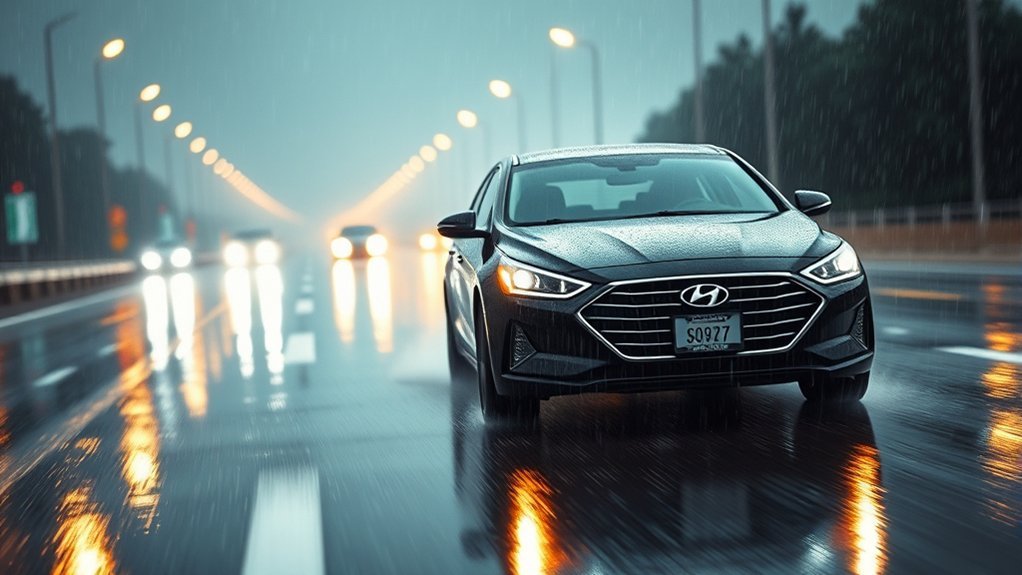
Driving your Hyundai Sonata safely in heavy rain requires preparation and awareness. Start by checking your wipers, tires, and fluid levels to guarantee maximum visibility and traction. Use your headlights to improve visibility for yourself and others. Adjust your speed according to conditions, and maintain a safe following distance to react in time. If you encounter hydroplaning, stay calm and ease off the accelerator. By following these tips, you’ll enhance your driving experience in wet conditions and discover more essential strategies.
Prepare Your Hyundai Sonata for Rainy Conditions
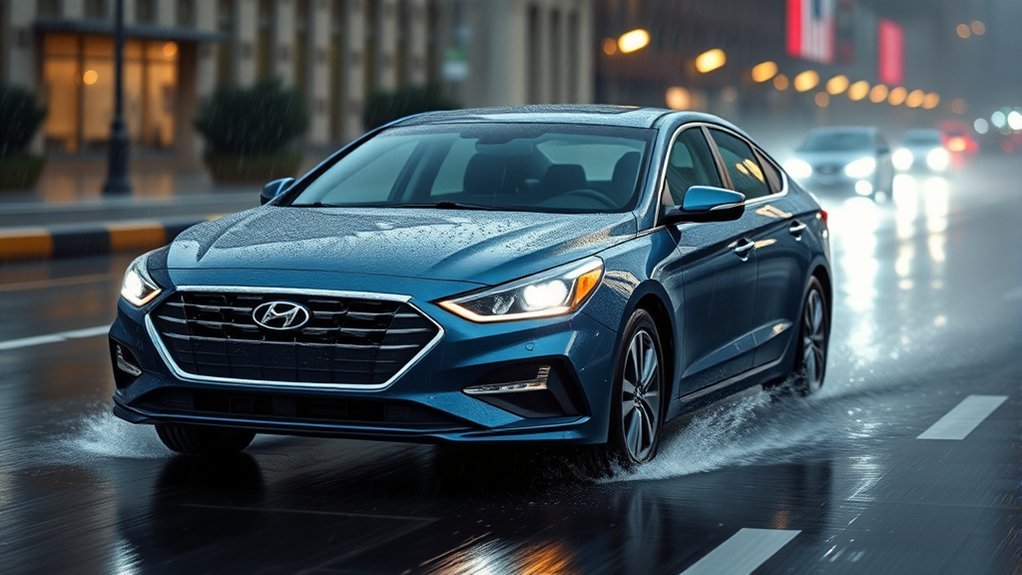
When driving your Hyundai Sonata in heavy rain, preparation is key to staying safe on the road. Start with wiper maintenance tips; regularly check and replace your windshield wipers to guarantee clear visibility. Worn blades can hinder your ability to see, especially in downpours. Next, don’t forget fluid checks—make sure your windshield washer fluid is topped off to keep your view unobstructed.
Additionally, inspect all vehicle lights, including headlights and taillights, to enhance visibility for you and other drivers. If you want to take it a step further, consider applying a water-repellent treatment like Rain-X to your windshield. This helps rain bead off the glass, improving your line of sight. By dedicating time to these preparations, you’ll drive with confidence, knowing you’re ready to face whatever the storm brings.
Ensure Your Tires Are Ready for Wet Weather
Driving in heavy rain can be challenging, and having the right tires is just as important as verifying your wipers and lights are in prime condition. Start with regular tire maintenance; check the tread depth, aiming for at least 4/32 of an inch to guarantee ideal grip on wet surfaces. Proper tire pressure is vital too; under-inflated tires can drastically reduce traction. If you often drive in heavy rain, consider upgrading to performance tires like the Yokohama Envigor, which enhance handling and boost your confidence on slick roads.
Don’t forget to inspect your tires for signs of wear or damage, such as cracks or bulges, as these can compromise safety. Finally, rotate your tires every 5,000 to 7,500 miles to promote even wear, assuring consistent traction when you need it most. Stay proactive about your tires, and you’ll navigate rainy conditions with ease.
Essential Driving Techniques for Heavy Rain
When driving your Hyundai Sonata in heavy rain, it’s essential to enhance your visibility and guarantee your speed effectively. Always turn on your headlights to help you see better and make sure other drivers can see you. Additionally, keeping your speed within limits allows for safer handling and reduces the risk of hydroplaning.
Visibility Enhancement Techniques
As heavy rain pours down, enhancing your visibility becomes essential for safe driving. Here are some effective techniques to guarantee you can see clearly and be seen by others:
- Activate your headlights to improve visibility for both you and other drivers, as it’s often legally required.
- Use front and rear defrosters to reduce humidity and prevent fog on your windows.
- Regularly check and maintain windshield wipers to make certain they effectively clear water.
- Consider applying windshield treatments like Rain-X to enhance water repellency, but watch out for glare at night.
Safe Speed Management Strategies
While traversing heavy rain, managing your speed becomes essential for maintaining control and ensuring safety. Adhere to posted speed limits, but don’t hesitate to make speed limit adjustments to suit wet conditions. Reducing your speed helps prevent hydroplaning, especially since it’s more likely at speeds above 35 mph. Allow extra travel time—speeding can lead to loss of control and longer stopping distances. Maintain a safe following distance of several car lengths to give yourself adequate time to react. Regularly check your tire tread depth, as insufficient tread can greatly reduce traction and increase skidding risks. Prioritizing these strategies enhances your driving comfort and keeps you and others safe on the road.
How Visibility Affects Safe Driving in Rain?
Good visibility is essential for safe driving in heavy rain, as it directly impacts your ability to navigate road conditions and respond to other vehicles. Visibility impairment can escalate the risk of accidents, so taking proactive measures is key. Here are four tips to enhance your visibility while rain driving:
Good visibility is crucial for safe driving in heavy rain, as it affects your navigation and response to road conditions.
- Activate headlights: This not only improves your sight but also makes your vehicle more noticeable to others, which is often required by law.
- Use windshield wipers: Guarantee they’re in good condition to clear water effectively and maintain clarity.
- Employ defoggers: This prevents fogging on your windows, enhancing your overall visibility.
- Reduce speed: Driving slower gives you more time to react to obstacles and decreases the chance of hydroplaning.
Use Headlights Wisely to Enhance Safety
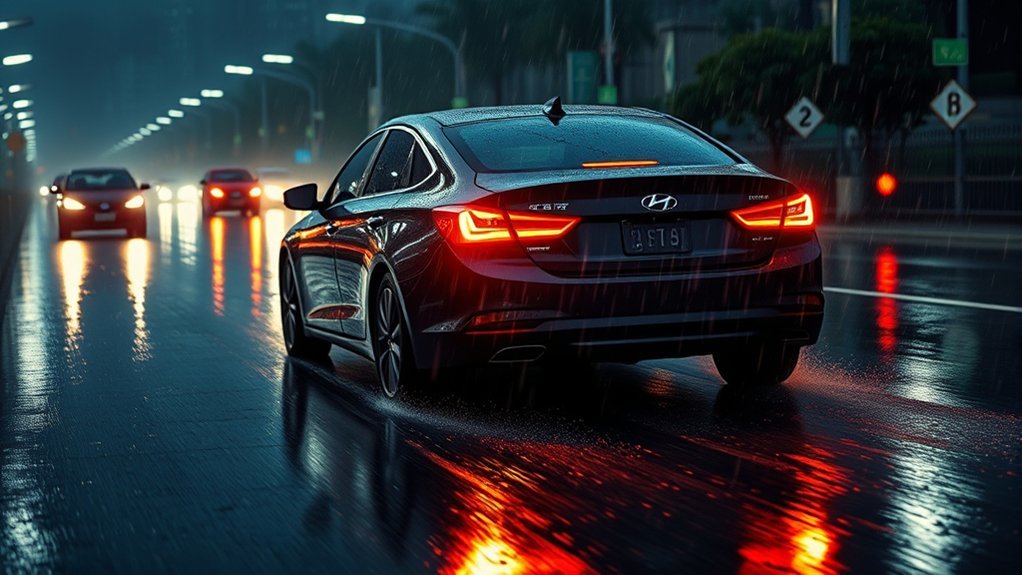
When driving your Hyundai Sonata in heavy rain, activating your headlights is essential for your safety and the safety of others. Not only does it comply with legal requirements in many states, but it also greatly improves visibility in low-light conditions. Remember, using your headlights wisely can help prevent accidents and guarantee you’re seen by other drivers.
Legal Headlight Requirements
Using your headlights during heavy rain isn’t just a safety measure; it’s often a legal requirement in many states. Familiarizing yourself with headlight regulations is essential for every driver. Here are some key points to keep in mind:
- Many states mandate headlight use during rain to enhance visibility.
- Low beam headlights are recommended, as high beams can cause glare.
- Failure to activate headlights in adverse conditions may lead to fines or penalties.
- Always check local regulations to guarantee compliance and promote safety.
As a responsible driver, you must recognize the importance of using headlights wisely. Not only does it protect you, but it also enhances the safety of everyone on the road.
Improved Visibility Benefits
Driving in heavy rain can be challenging, but activating your headlights can greatly enhance visibility for everyone on the road. Not only does this improve your sight, but it also makes your Hyundai Sonata more noticeable to other drivers, reducing the risk of accidents. In many states, using headlights in rainy conditions isn’t just good practice; it’s the law. While you might be tempted to use high beams, they can create glare and hinder visibility. Instead, focus on the appropriate headlight types, like low beams or fog lights, which work well with visibility technologies. Regularly checking your headlights guarantees they function properly, keeping you compliant and safe in poor weather. Drive smart and stay visible!
Managing Speed in Wet Conditions
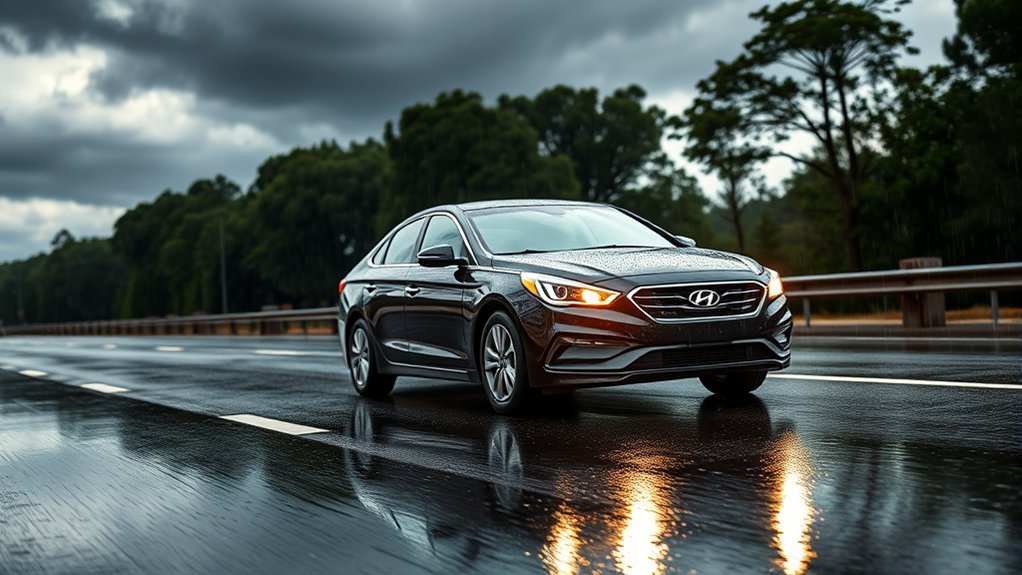
Heavy rain can create hazardous driving conditions, making it vital to manage your speed effectively. Here are key strategies for speed adjustment and traction management:
- Reduce Speed: Rain considerably decreases traction, so driving below the posted speed limit may be necessary for safety.
- Allow Extra Travel Time: Give yourself more time to reach your destination, as reduced visibility and longer stopping distances require a cautious approach.
- Maintain Safe Following Distance: Keep several car lengths between you and the vehicle ahead to guarantee adequate reaction time to sudden stops on slick roads.
- Adjust According to Conditions: If you notice pooling water, slow down even further to prevent loss of control.
Navigate Standing Water With Care
When facing standing water on the road, it’s essential to approach with caution to maintain control of your Hyundai Sonata. Always assess the depth before attempting to drive through; even a small amount can lead to significant standing water risks, causing your vehicle to lose traction and potentially float. Reduce your speed as you approach these areas to avoid sudden braking, which heightens traction challenges.
When maneuvering through water, stick to the center lane or established tire tracks for better grip and stability. If you must drive through, maintain a steady pace without abrupt maneuvers, allowing your tires to effectively grip the road. Always be vigilant for hidden hazards, like potholes or debris that may lurk beneath the water’s surface, posing serious risks to your vehicle. By taking these precautions, you can drive confidently and safely through challenging conditions.
Effective Hydroplaning Responses
When you notice your Hyundai Sonata starting to hydroplane, it’s essential to stay calm and focused. Recognizing the signs early can help you maintain control and respond effectively. Let’s explore the best practices for handling hydroplaning and ensuring a safe recovery.
Recognizing Hydroplaning Signs
As you navigate through wet conditions, recognizing the signs of hydroplaning is essential for maintaining control of your Hyundai Sonata. Being aware of these indicators can make all the difference:
- Sudden loss of steering control – You may feel like you’re losing grip.
- Floating sensation – Your car might seem to glide over the water.
- Increased road noise – The sound of tires on the pavement may change.
- Vibration – A noticeable difference in how your car feels on the road.
Maintaining Calm Control
Hydroplaning can be an alarming experience, but staying calm is key to regaining control of your Hyundai Sonata. Focus on calm breathing to keep your mind clear. Avoid abrupt steering or braking, as this can worsen the situation. Instead, gradually lift your foot off the accelerator to allow your vehicle to slow down naturally and regain traction. Maintain a firm grip on the steering wheel, steering gently in the direction you want to go. Don’t panic; overreacting can lead to further loss of control. Once you feel traction returning, resume acceleration slowly and cautiously, ensuring stability on those wet roads. Your calmness and grip strength are your best allies during these trying moments.
Safe Recovery Techniques
Experiencing hydroplaning can be unsettling, but knowing how to respond effectively can help you regain control of your Hyundai Sonata. Here are some safe recovery techniques to remember:
- Stay calm: Panicking can lead to abrupt movements, worsening the situation.
- Ease off the accelerator: Gradually reduce speed to allow your Sonata to regain traction without sudden braking.
- Grip the steering wheel: Maintain a firm hold to steer your vehicle while skimming over water.
- Steer gently: Direct your car where you want to go, avoiding sharp turns that could cause further loss of control.
Proper Braking Techniques for Rainy Conditions
Driving in heavy rain requires careful attention to your braking techniques to guarantee safety. Start by gradually reducing your speed; gently lifting off the accelerator helps maintain tire traction in wet conditions. Avoid hard braking, as sudden maneuvers can lead to skidding. Instead, apply the brakes smoothly and progressively to ensure stability.
It’s essential to check and maintain your brakes regularly for peak performance, especially in rainy weather. Keeping a safe distance behind the vehicle in front allows ample time for braking, reducing the risk of collisions. If you do feel a skid while braking, remain calm, ease off the brakes, and gently steer in the direction you want to go to regain control.
Maintain Safe Following Distances on Slick Roads
When it rains heavily, maintaining a safe following distance becomes essential for your safety and that of others on the road. Slick surfaces can lead to longer stopping distances, so here are some effective following distance strategies:
- Keep a distance of at least five to six seconds behind the vehicle in front of you to allow for adequate reaction time.
- Increase your following distance further when driving at slower speeds, as stopping takes longer.
- Monitor surrounding vehicles and adjust your distance if others are driving erratically or too closely.
- Stay aware of visibility conditions; rain can obscure your view, making it critical to maintain extra space.
Frequently Asked Questions
Can Heavy Rain Damage a Car Engine While Driving?
Yes, heavy rain can damage your car’s engine. Water intake through the air system can cause hydro-lock, leading to severe engine issues. Guarantee proper engine protection by avoiding flooded areas and regularly checking seals.
What Should a Driver Do When Driving in Heavy Rain?
When driving in heavy rain, adjust your braking techniques, maintain proper tire maintenance, and guarantee your headlights are on. Stay alert, avoid standing water, and keep a safe distance to enhance your control and safety.
How Many Inches of Rain Is Bad for Driving?
More than 2 inches of rain impacts visibility, increases hydroplaning risk, and jeopardizes driving safety. If you encounter heavy rainfall, it’s best to stay off the road and wait for conditions to improve.
What Drive Mode Is Best for Rain?
For driving in rain, use Eco or Normal mode. Make sure traction control’s engaged and maintain your tires. Proper tire maintenance enhances grip, keeping you safe and confident on slick roads while enjoying the drive.
Conclusion
So, as you glide through the downpour in your Hyundai Sonata, remember: you’re not auditioning for a wet t-shirt contest against Mother Nature. Keep those tires fresh, practice your hydroplaning dance moves, and don’t forget—your headlights aren’t just for show. With a little preparation and some common sense, you can navigate the rain like a pro, rather than a soggy sock in a puddle. Stay safe, and let the storm pass while you drive like the savvy road warrior you are!