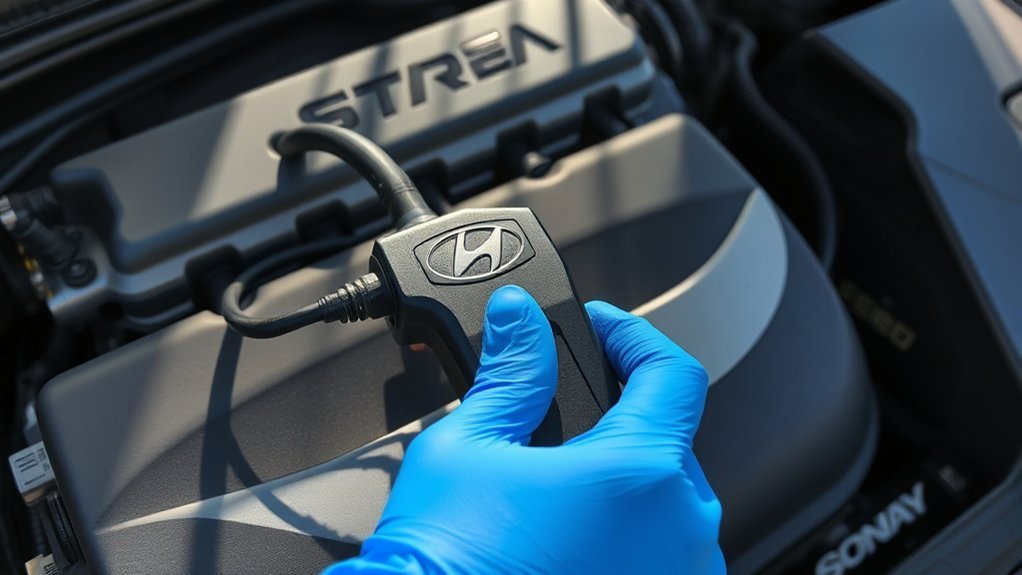
To diagnose an engine misfire in your Hyundai Sonata, start by checking for rough idling and loss of power. Retrieve OBD-II trouble codes to pinpoint misfiring cylinders. Inspect spark plugs and wires for damage, and test fuel injectors for clogs. Don’t overlook the oxygen sensors; faulty ones can disrupt air-fuel ratios, leading to misfires. Regular maintenance of these components is essential to overall engine performance. You’ll discover more detailed strategies to guarantee smooth engine operation.
Identifying Engine Misfire Symptoms in Your Hyundai Sonata

When your Hyundai Sonata starts showing signs of an engine misfire, it’s crucial to recognize the symptoms early to prevent further damage. You may notice rough idling, a loss of power, or hesitation during acceleration, especially under load. Pay attention to the check engine light; its activation often correlates with specific misfire codes for individual cylinders. Common misfire causes include faulty ignition components like worn spark plugs, damaged spark plug wires, or malfunctioning ignition coils. If you observe blackened spark plugs, that could indicate a rich fuel mixture, signaling potential issues with fuel injectors or oxygen sensors. Additionally, backfiring during acceleration can occur when excess fuel ignites in the exhaust system, further highlighting a misfire problem. Recognizing these symptoms can empower you to act promptly, ensuring your Sonata runs smoothly and efficiently.
Immediate Steps to Diagnose Engine Misfires
To effectively diagnose engine misfires in your Hyundai Sonata, start by retrieving the OBD-II trouble codes. This helps identify which cylinders are misfiring and reveals related issues with ignition or fuel systems. Next, inspect all spark plugs and wires for wear, damage, or carbon buildup, as these are common misfire causes. Don’t forget to visually check fuel injectors for clogs or malfunctions, since improper fuel delivery can trigger misfires under load.
Test ignition components, especially coils and wires, for arcing or failure, particularly in the misfiring cylinders. Finally, evaluate the oxygen sensors to guarantee proper function; a faulty sensor can lead to incorrect air-fuel mixtures, creating rich conditions that result in misfires. By following these troubleshooting tips, you’ll be well-equipped to tackle engine misfires effectively and restore your Sonata’s performance.
How Ignition Components Cause Engine Misfires
Ignition components play a critical role in engine performance, and issues with spark plugs or ignition coils can lead to significant misfires. If spark plugs fail to ignite the air-fuel mixture properly, or if ignition coils don’t deliver the necessary voltage, you’ll experience rough idling and decreased efficiency. Regular checks of these components are essential to guarantee your engine runs smoothly and efficiently.
Spark Plug Functionality
Spark plugs play a critical role in your engine’s performance by igniting the air-fuel mixture in the combustion chamber. When they’re fouled or damaged, incomplete combustion leads to engine misfires. Understanding spark plug functionality can help you maintain efficiency and avoid costly repairs. Here’s what to take into account:
- Condition: Worn or improperly gapped spark plugs produce weak sparks, especially under high engine load.
- Wiring: Damaged spark plug wires can cause arcing, reducing voltage and increasing misfire risks.
- Inspection: Regular spark plug maintenance is essential, particularly for high-mileage vehicles like your 1999 Hyundai Sonata.
- Technology: Investing in quality spark plug technology can enhance ignition reliability and reduce emissions, protecting your catalytic converter.
Ignition Coil Performance
Faulty ignition coils can severely impact engine performance, much like worn spark plugs. These components generate the high voltage necessary to ignite the air-fuel mixture, and if they’re weak, you’ll face misfires and rough idling. Each ignition coil type plays an essential role; a failing coil may deliver inconsistent sparks, leading to incomplete combustion and triggering multiple misfire codes. To diagnose issues, utilize coil testing techniques, such as measuring resistance, to pinpoint faulty coils. Regularly inspect both the ignition coils and associated wiring, as damaged coils can cause arcing and exacerbate ignition failure. Addressing these issues promptly will help restore your engine’s efficiency and performance.
Step-by-Step Guide to Diagnosing Fuel Injectors
When diagnosing fuel injectors, start with a thorough visual inspection of all six injectors, especially after removing the plenum for improved access. This vital step allows you to identify signs of wear, leaks, or clogs. Follow these steps for effective injector testing:
- Test Electrical Connections: Use a multimeter to confirm each injector receives proper voltage and signal from the ECU.
- Perform a Balance Test: Swap injectors between misfiring and non-misfiring cylinders to see if the misfire follows the injector.
- Check Fuel Delivery: Measure fuel pressure at the rail to verify it meets specifications for the 1999 Sonata.
- Clean or Replace: If issues persist, consider a fuel injector cleaning solution or ultrasonic cleaning service to tackle potential clogging without full replacement.
These steps will help guarantee ideal fuel delivery and pinpoint injector issues effectively.
Why Oxygen Sensors Matter for Diagnosing Misfires
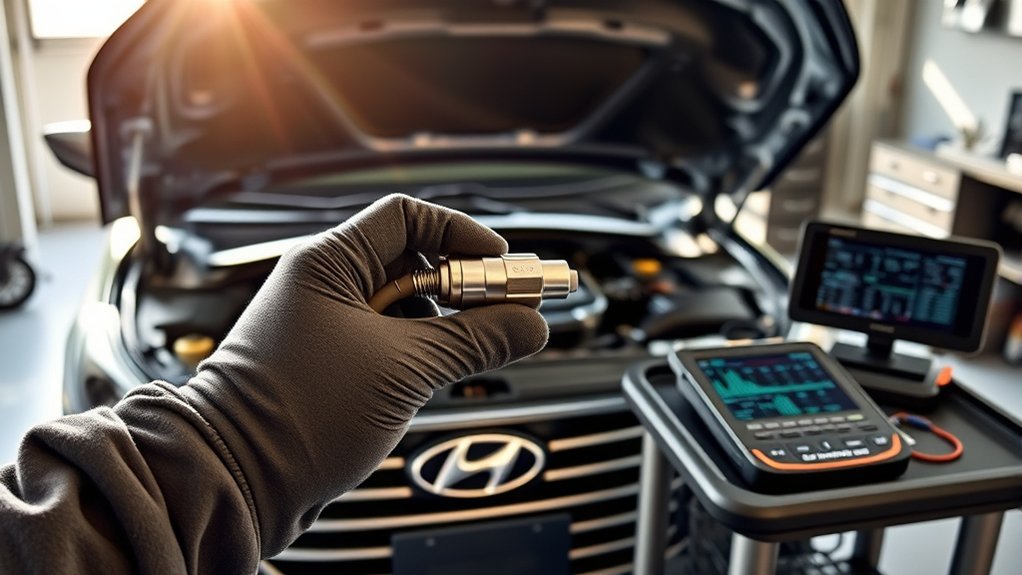
Oxygen sensors play a critical role in managing the air-fuel mixture, which directly affects engine performance and emissions control. If these sensors fail, you may experience misfires due to an improper air-fuel ratio, leading to increased fuel consumption and potential engine damage. Understanding how to diagnose and test these sensors is essential for accurately identifying misfire issues in your vehicle.
Role in Air-Fuel Mixture
Ensuring ideal combustion in your engine hinges on a well-balanced air-fuel mixture, which is where oxygen sensors play a pivotal role. These sensors measure oxygen levels in exhaust gases, providing essential data to the ECU for precise air fuel adjustment. Here’s why understanding oxygen sensor types is vital for diagnosing misfires:
- Data Accuracy: They make certain the ECU receives accurate readings for peak combustion.
- Misfire Detection: Faulty sensors can lead to rich or lean conditions, causing misfires.
- Performance Monitoring: They help identify whether issues stem from fuel delivery or ignition components.
- Fuel Efficiency: Proper functioning minimizes excessive fuel consumption and emissions.
Impact on Emissions Control
While diagnosing an engine misfire, understanding the impact of oxygen sensors on emissions control is essential. These sensors monitor the air-fuel mixture, and a faulty sensor can lead to an incorrect mixture, exacerbating misfires and increasing emissions. Misfires can cause unburned fuel to enter the exhaust system, risking damage to the catalytic converter, critical for meeting emissions regulations. The oxygen sensors’ readings help the engine control module adjust fuel delivery; inaccurate readings disrupt this balance, worsening both performance and emissions. With typically four oxygen sensors in modern vehicles like the Hyundai Sonata, evaluating their functionality is important. Misfires often result in rich fuel mixtures, greatly contributing to elevated emissions levels and adverse environmental impact.
Diagnostics for Misfire Issues
A thorough diagnostic process for engine misfires requires a close examination of the oxygen sensors. These sensors are essential in monitoring the air-fuel mixture, and any malfunction can lead to misfires and reduced performance. For effective misfire troubleshooting, consider these key points:
- Sensor Calibration: Verify the sensors are correctly calibrated to provide accurate data.
- Visual Inspection: Check for signs of contamination or damage on the sensors.
- Readings Analysis: Analyze oxygen sensor readings to identify discrepancies that may indicate issues.
- Cylinder Assessment: Examine misfiring cylinders, as they can skew sensor outputs and worsen the problem.
Understanding the relationship between oxygen sensor performance and engine operation helps you pinpoint misfire causes and streamline diagnostics.
Effective Testing Methods for Spark Plugs and Wires
To effectively diagnose engine misfires, you’ll need to employ precise testing methods for spark plugs and wires. Start by using a multimeter to measure the resistance of spark plug wires; if you see a reading higher than 12,000 ohms per foot, it’s likely time for replacement. Next, visually inspect the spark plugs for carbon buildup or wear; blackened plugs indicate a rich fuel mixture or misfiring issues. Conduct a spark test with an ignition tester to confirm that each spark plug fires properly under load—any weak or absent spark points to faulty ignition components. To isolate the problem, swap spark plugs and wires between misfiring and non-misfiring cylinders and observe any changes. Finally, check for arcing along the spark plug wires; visible carbon trails can signal insulation failure, contributing to your misfire woes. Regular spark plug maintenance is essential for peak engine performance.
Frequently Asked Questions
How to Diagnose What’s Causing a Misfire?
To diagnose a misfire, check the spark plugs for wear and the fuel injectors for clogs. Use an OBD-II scanner to identify trouble codes, guiding your troubleshooting process effectively and efficiently.
What Years Are Affected by the P1326 Hyundai Sonata Issue?
The P1326 issue affects Hyundai Sonata models from 2006 to 2010. If you’re experiencing symptoms like rough idling or reduced power, it’s essential to address this promptly to prevent further engine complications.
What Causes Hyundai to Misfire?
A Hyundai misfires mainly due to faulty spark plugs or clogged fuel injectors. These issues disrupt combustion, causing performance problems. Regular maintenance can prevent these failures and keep your engine running smoothly.
Conclusion
In diagnosing an engine misfire in your Hyundai Sonata, remember it’s much like solving a puzzle. Each component—ignition parts, fuel injectors, and sensors—plays an essential role in the bigger picture. By carefully examining these elements, you not only restore performance but also deepen your understanding of your vehicle. Just as a symphony needs each instrument to harmonize, your engine requires every part to function seamlessly. Stay proactive, and keep your Sonata singing smoothly down the road.