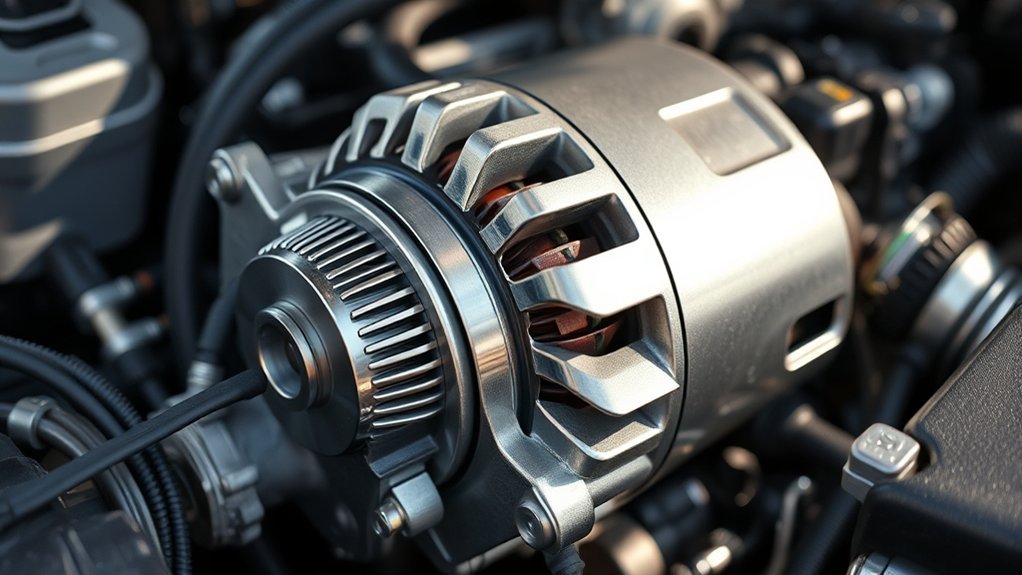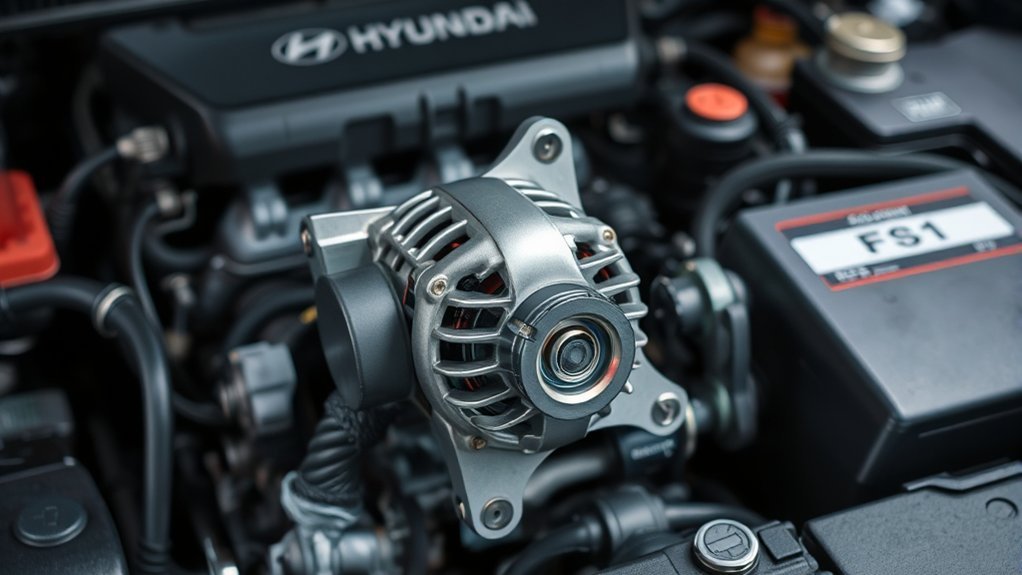
To diagnose alternator problems in your Hyundai Sonata, start by checking for common signs like an illuminated battery light, flickering headlights, or difficulty starting the engine. Use a multimeter to measure the alternator output; it should read between 13 to 14.5 volts. Inspect battery connections for corrosion and verify tightness. If you notice unusual smells or stalling issues, it’s best to address them promptly. Keep exploring to find additional tips on testing and maintenance.
Understanding Your Vehicle’s Electrical System
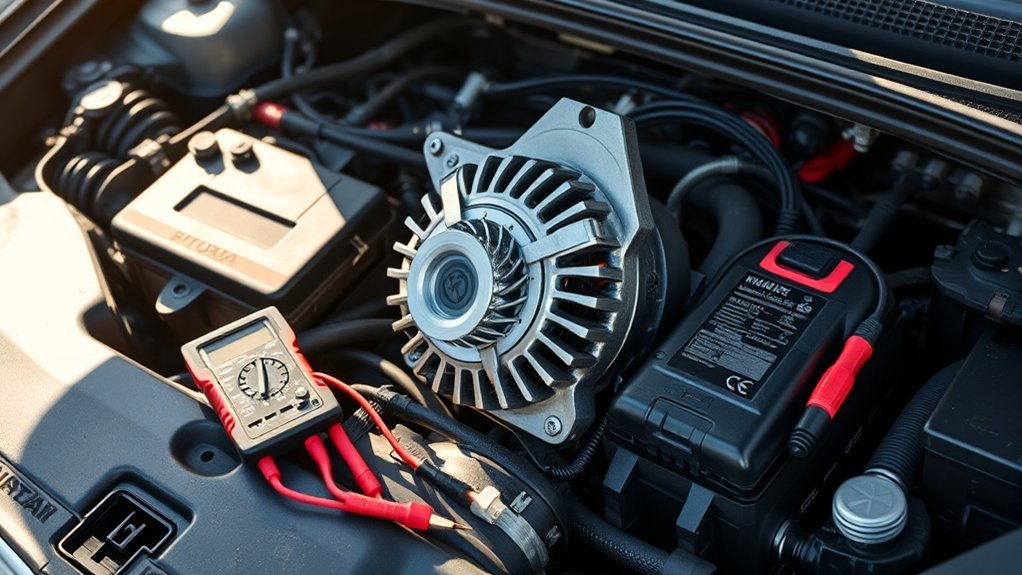
Your vehicle’s electrical system is a complex network that powers essential functions, relying heavily on the alternator. The alternator charges the battery and sustains electrical systems like headlights, the radio, and other accessories while your engine runs. Proper voltage regulation is critical; the alternator should produce between 13 to 14.5 volts. If you notice readings below 13.5 volts, it indicates potential failure that demands immediate attention.
To guarantee peak performance, battery maintenance is essential. Regular inspections of the alternator and battery connections can help prevent unexpected breakdowns and extend their lifespan. Pay attention to dashboard warning lights, such as the battery or alternator light, which signal underlying issues in your electrical system. By staying proactive, you can maintain your vehicle’s electrical integrity and enjoy a reliable driving experience, free from the frustrations of electrical failure.
What Are the Common Signs of Alternator Failure?
When your alternator starts to fail, you’ll notice specific symptoms that demand your attention. For instance, if the battery light on your dashboard illuminates or if you experience difficulty starting your car, it’s likely a sign of electrical issues. Additionally, watch for dim headlights and unusual smells, as these can indicate the alternator isn’t supplying sufficient power.
Symptoms of Alternator Failure
Recognizing the symptoms of alternator failure is essential for maintaining your vehicle’s performance and preventing potential breakdowns. One of the first signs you might notice is an illuminated battery light on your dashboard, indicating a charging system issue. Difficulty starting your vehicle, often accompanied by a clicking noise or prolonged engine cranking, suggests inadequate electrical supply from a failing alternator. You may also experience stalling or poor engine performance, like sluggish acceleration, due to inconsistent battery replenishment. Additionally, flickering or dimming headlights point to electrical instability, signaling that the alternator isn’t providing a steady current. Unusual smells, such as burning rubber or electrical odors, can indicate overheating parts, warranting immediate inspection for effective battery maintenance and electrical diagnostics.
Diagnosing Electrical Issues
Diagnosing electrical issues in your vehicle requires attention to specific symptoms that often indicate alternator failure. If the battery light stays illuminated after starting, it points to problems in the electrical charging system. You might also notice difficulty starting, characterized by clicking sounds or prolonged cranking, suggesting the alternator isn’t supplying sufficient power. Stalling or sluggish acceleration can signal inconsistent battery charging. Additionally, watch for dashboard warning lights flickering, which reflect electrical system fluctuations. Unusual smells, like burning rubber or electrical odors, may indicate overheating components, underscoring the need for immediate inspection. Regular battery maintenance and thorough electrical troubleshooting are essential to guarantee your Hyundai Sonata operates smoothly and safely.
How to Diagnose and Resolve Stalling Issues in Your Hyundai Sonata?
If your Hyundai Sonata is stalling, it’s essential to identify common causes, particularly related to the alternator. Start by testing the electrical system for voltage output; readings below 13.5 volts indicate a failing alternator that may not be providing adequate power to the spark plugs. Additionally, monitor for symptoms like dimming headlights, as these fluctuations can point to deeper issues affecting engine performance.
Common Stalling Causes
Stalling issues in your Hyundai Sonata can often stem from a failing alternator, which may not deliver enough power to the engine’s spark plugs, leading to abrupt shutdowns. To diagnose these stalling symptoms, start with electrical diagnostics; check the alternator’s voltage output. It should be between 13 to 14.5 volts—anything lower indicates potential malfunction. If the battery light stays on while driving, it signals a charging system issue that could result in significant power loss. Regular alternator and battery inspections are essential, as wear can diminish output and cause unexpected stalling, especially at higher speeds. Don’t ignore electrical fluctuations like dim headlights; addressing these promptly can prevent further complications related to a failing alternator.
Testing Electrical System
To effectively address stalling issues in your Hyundai Sonata, start by testing the electrical system, as a faulty alternator can considerably impact engine performance. Use a multimeter to check the alternator output; ideally, you should see voltage readings above 13.5 volts. If it’s lower, the alternator may be failing. Additionally, inspect the battery terminals for corrosion and verify they’re tight, as poor connections can lead to power loss. Regularly check the alternator belt for wear—slippage can impede charging. Keep an eye on dashboard warning lights, especially the battery light, which can signal electrical system issues. If stalling persists, the alternator’s insufficient power might prevent the spark plugs from firing correctly, warranting immediate inspection.
How to Test Your Alternator Output Effectively?
Testing your alternator output is essential for ensuring your vehicle’s electrical system functions correctly. Start by using a multimeter set to DC voltage. Connect the red lead to the positive terminal and the black lead to the negative terminal of the battery. A healthy alternator should show voltage readings between 13 to 14.5 volts while the engine runs. If it drops below 13.5 volts, your alternator might be failing.
To assess its performance under load, rev the engine to around 2,000 RPMs and monitor for significant drops in voltage. Additionally, inspect the alternator belt’s condition, as a loose or worn belt can hinder performance.
| Voltage Range | Condition | Action |
|---|---|---|
| 13 – 14.5 V | Healthy | No action needed |
| Below 13.5 V | Potential failure | Inspect further |
| Significant drop | Under load issues | Check belt and connections |
How to Inspect and Maintain Battery Connections?
While it may seem simple, regularly inspecting and maintaining battery connections is essential for guaranteeing your vehicle operates smoothly. Poor connection integrity can lead to significant electrical issues. Here’s how to keep your battery in top shape:
- Check for Corrosion: Inspect battery terminals for any corrosion. Use a mixture of baking soda and water to clean them and enhance conductivity.
- Tighten Connections: Confirm all battery connections are tight and secure. Loose connections can cause intermittent power supply and starting problems.
- Inspect Cables: Look for signs of wear on battery cables, such as fraying or cracking. Replace them if necessary to maintain reliable connection integrity.
Additionally, regularly test your battery voltage with a multimeter. A healthy battery should read between 12.4 and 12.7 volts when the engine is off. Consistent battery maintenance will help prevent unexpected issues down the road.
What Should You Do If You Think Your Alternator Is Failing?
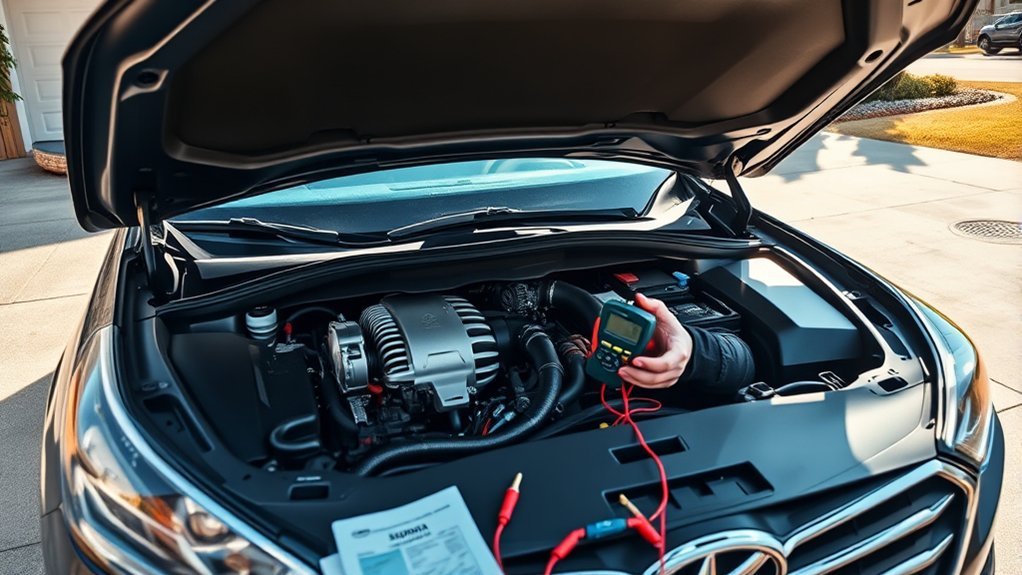
How can you tell if your alternator is on the brink of failure? Start by checking the battery light on your dashboard; if it stays illuminated after starting, that’s a clear sign of a charging system issue. Next, grab a multimeter to test the alternator’s output voltage. Readings below 13.5 volts usually indicate trouble. Don’t forget to inspect your battery terminals for corrosion; loose or corroded connections can mimic alternator problems. Also, be alert for unusual smells, like burning rubber or electrical odors, which could signal overheating components linked to the alternator. Regular alternator maintenance is essential for ensuring battery health, so don’t wait too long. If you notice these symptoms, schedule a diagnostic with a certified technician promptly to prevent further electrical issues that could lead to a complete vehicle shutdown or costly repairs.
When to Seek Professional Help for Electrical Issues?
When should you consider seeking professional help for electrical issues in your vehicle? It’s important to act swiftly when you notice specific warning signs.
- Battery Light: If the battery light stays on after starting, it’s an indicator of charging system problems, urging immediate attention.
- Multiple Warning Lights: Experiencing various dashboard alerts, like brake or steering warnings, suggests significant electrical faults requiring expert diagnostics.
- Unusual Smells: Detecting odors such as burning rubber or electrical scents points to overheating components, possibly a failing alternator.
If your vehicle stalls unexpectedly or struggles to start—even after confirming the battery’s functionality—contact a mechanic. Professionals use advanced diagnostic tools for precise electrical troubleshooting, ensuring your Sonata remains safe and reliable. Regular maintenance checks can prevent costly repairs and safeguard your driving experience.
Frequently Asked Questions
How Much Does It Cost to Fix an Alternator on a Hyundai Sonata?
Fixing an alternator on your Hyundai Sonata typically costs between $500 and $1,000, including parts and labor. Expect diagnostic fees of $50 to $150 as you address any alternator repair costs and related issues.
Can Autozone Diagnose an Alternator Problem?
Yes, AutoZone can diagnose an alternator problem through their specialized alternator testing services. They’ll check voltage output and inspect connections for issues, helping you understand the alternator’s condition and recommending next steps for repairs.
Conclusion
In conclusion, keeping your Hyundai Sonata’s alternator in check is essential for peak performance. Just like a knight checking his armor before a battle, you should routinely inspect electrical components and connections. If you notice any signs of failure, like dimming lights or unusual noises, don’t hesitate to act. Whether you’re testing the output or maintaining battery connections, staying proactive can save you from a roadside breakdown. If in doubt, seek professional help to guarantee your vehicle runs smoothly.