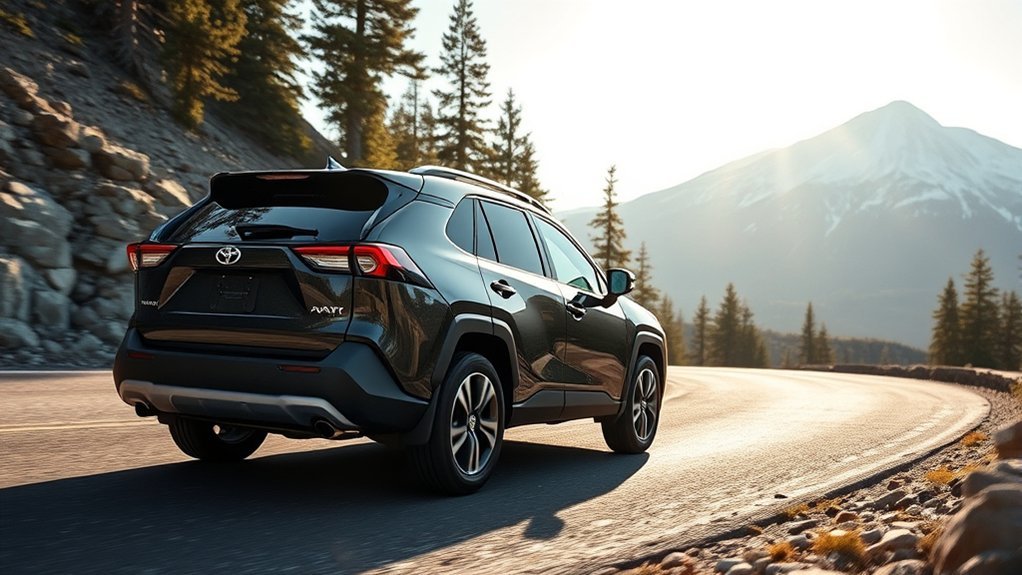
In your RAV4, traction control (TRC) and vehicle stability control (VSC) work together to enhance safety and handling. TRC monitors wheel speed to prevent slipping on slippery surfaces, while VSC detects loss of control and applies brakes to individual wheels. Both systems automatically reactivate for your safety, especially in adverse weather. If you’re off-roading, you might temporarily disable these systems for better traction. Want to understand warning lights and troubleshooting tips? Continue to explore more insights!
Understanding Traction Control and Vehicle Stability Control in the RAV4

When you’re behind the wheel of a RAV4, understanding how Traction Control (TRC) and Vehicle Stability Control (VSC) work can greatly enhance your driving experience. These systems are designed to keep you safe and confident on the road. TRC actively monitors wheel speed, reducing engine power or applying brakes to slipping wheels, ensuring you maintain traction on slippery surfaces. This means fewer skids and a more controlled drive, especially in adverse weather.
Meanwhile, VSC employs sensors to detect any loss of control, braking individual wheels as needed to steer you back on course. This considerably decreases the risk of rollover incidents by 35% in SUVs. Both traction control benefits and vehicle stability features are standard in all RAV4 trims, automatically reactivating for your safety. Disabling them is ill-advised, as it can raise accident rates by 20-25% in slippery conditions. Enjoy your drive—safely!
How to Use Traction Control for Safer Driving in Slippery Conditions
Utilizing Traction Control effectively can markedly enhance your safety in slippery conditions. Keep TRC activated during rain, snow, or icy roads. It minimizes wheel spin by applying brakes to slippery wheels, giving you better grip while accelerating. Pay attention to the TRC warning light; if it’s flashing during acceleration, your system’s working hard to maintain traction.
If you find yourself stuck in mud or snow, temporarily disable TRC to allow for necessary wheel spin to regain traction. Once you’re moving again, reactivate it. Familiarize yourself with the TRC button, usually marked with a car icon and skid marks, so you can access it quickly when needed.
Lastly, remember that driving techniques matter. Regularly check your tires and verify they’re properly inflated. Worn or poorly inflated tires can hinder TRC’s effectiveness on slippery surfaces, putting you at risk. Prioritize safety by using these strategies wisely.
What Do Those Warning Lights Mean for Your RAV4?
Ever wondered what those warning lights mean for your RAV4? Understanding warning light meanings is essential for maintaining your vehicle’s safety and performance. The Traction Control System (TCS) light should briefly illuminate at ignition; if it stays on, there’s a potential malfunction. A flashing TCS light during acceleration signals that the system’s working to prevent wheel spin, keeping you safe on slippery roads.
If you see the TC OFF or ESC OFF indicator, it means traction or stability control is manually disabled. When the TCS light remains lit after a restart, it’s time for a diagnostic evaluation. This could indicate issues like sensor misalignment or wheel speed sensor faults. Familiarizing yourself with your owner’s manual can empower you to troubleshoot effectively. By knowing these warning lights, you can take control of your driving experience and guarantee your RAV4 operates smoothly.
When to Disable Traction Control and Vehicle Stability Control for Off-Roading

If you’re planning to tackle off-road conditions, knowing when to disable Traction Control (TRC) and Vehicle Stability Control (VSC) can make a significant difference in your RAV4’s performance. Disabling these systems in deep snow, mud, or while rock crawling can offer off-road advantages by allowing necessary wheel spin for traction. However, keep in mind the safety considerations; disabling TRC can increase accident rates by 20-25% in slippery conditions.
Here’s a quick guide to help you:
| Action | Details |
|---|---|
| Disable VSC | Hold the traction control button for 3 seconds |
| Toggle TRC | Quick press of the button |
| Reactivation Speed | Both systems reactivate above 30 mph |
| Use Trail Mode | Optimizes torque; avoid regular driving |
Use manual overrides cautiously, prioritizing safety and only in challenging situations to enjoy your off-road adventures!
What to Do When Traction Control Fails
When your traction control system (TCS) fails, it’s essential to stay calm and take specific steps to guarantee your safety. Here are some TCS troubleshooting tips to help you navigate this situation:
- Restart your vehicle: Sometimes, a simple reset can clear minor issues.
- Avoid sudden movements: Steer clear of sharp turns or rapid acceleration, which can lead to loss of control.
- Check your manual: Familiarize yourself with common TCS issues and how to react if the system fails.
- Seek professional help: If the TCS warning light stays on, it may indicate sensor misalignment or other faults that need a mechanic’s attention.
Frequently Asked Questions
What Does the Traction Control Do on a rav4?
The traction control in your RAV4 helps maintain grip in slippery conditions by reducing engine power or applying brakes. This enhances traction benefits, keeping you safe and confident even when the road gets tricky.
Should You Drive With Traction Control on or Off?
Driving with traction control on boosts your safety by reducing accidents by 20-25% in slippery conditions. Embrace this feature for stability during normal driving conditions, and only consider turning it off in extreme scenarios.
When to Turn off Traction Control rav4?
You should turn off traction control in off-road conditions, slippery surfaces, and during performance or winter driving to allow tire spin. Just remember to reactivate it afterward for safety on regular roads.
How Does Toyota Vehicle Stability Control Work?
Toyota’s Vehicle Stability Control enhances your freedom by monitoring vehicle dynamics, ensuring safety. It detects traction loss and applies brakes selectively, helping you maintain control during sharp turns or sudden maneuvers without even thinking about it.
Conclusion
In the dance between traction and stability, your RAV4 becomes a graceful partner on slippery roads, yet a fierce adventurer off the beaten path. Embrace the control systems that enhance your safety, understanding their signals like a conductor reads music. But when the trail beckons, don’t hesitate to disable them and let your spirit roam free. Just remember, should traction falter, stay calm and regain your grip—your RAV4 is built to support you through every twist and turn.