Last updated: July 14, 2026
What’s in This Article
- Quick Check: Confirm the Passenger-Footwell Leak Source
- Before You Begin: Tools, Safety, and Time Needed
- Inspect the HVAC Drain Hose Safely
- Could Paraffin Wax From the Evaporator Be Causing Your Leak?
- When to Replace the AC Radiator/Evaporator Assembly
- When to Stop and Call a Technician
- Parts, Labor, and Cost: Dealer vs. DIY Estimates
- Document the Leak and Work With Your Dealer
- Short-Term Fixes, Odor Control, and Preventing Future Mold
- Frequently Asked Questions
A Toyota RAV4 passenger footwell water leak after AC use usually points to an HVAC condensate-drain problem. On affected 2020-2022 RAV4 vehicles with a start/stop switch, Toyota T-SB-0021-23 says the drain cooler hose may detach from the air conditioning radiator assembly. Toyota says the condition may be caused by paraffin wax leaking from the evaporator.
Dry the carpet and padding first, then note whether the water appears after AC use or rain. Inspect only the visible drain outlet without forcing tools into the HVAC case. If you smell grease or oil from the vents, see wax-like residue, or the leak returns, stop DIY work and ask a Toyota dealer to check T-SB-0021-23 eligibility and the specified assembly repair.
Quick Answer
Match the leak to its trigger before replacing parts. Water that appears after the AC has run points toward condensate that is not leaving through the HVAC drain. Water that appears after rain points more toward a windshield, door, cowl, roof-rail, or sunroof drain leak.
For an affected 2020-2022 RAV4 with a start/stop switch, a detached drain cooler hose and/or a grease or oil odor from the vents match Toyota T-SB-0021-23. The bulletin directs technicians to replace the air conditioning radiator assembly and drain cooler hose when its decision steps apply. It does not direct owners to improvise a clamp, reroute the hose, or clean wax from inside the HVAC case.
| When the Water Appears | Most Useful First Check | Next Step |
|---|---|---|
| After AC use | Visible HVAC drain outlet and condensate flow | Inspect safely; escalate if water stays inside |
| After rain or a car wash | Windshield, door, cowl, roof, and sunroof drainage | Water-test one area at a time |
| With grease or oil odor | T-SB-0021-23 eligibility | Dealer diagnosis |
| Near wiring or seat connectors | Electrical exposure | Stop and call a technician |
Key Takeaways
- Match the leak to AC use or rain before you decide which drain path to inspect.
- Look for wax-like residue or a grease or oil odor because those signs fit Toyota’s bulletin pattern.
- Confirm your RAV4 model year, start/stop switch, and VIN details before you rely on T-SB-0021-23.
- Dry wet carpet and padding within 24-48 hours when possible to reduce mold risk.
- Stop DIY work if the repair requires opening the AC refrigerant system or removing the AC radiator assembly.
Quick Check: Confirm the Passenger-Footwell Leak Source
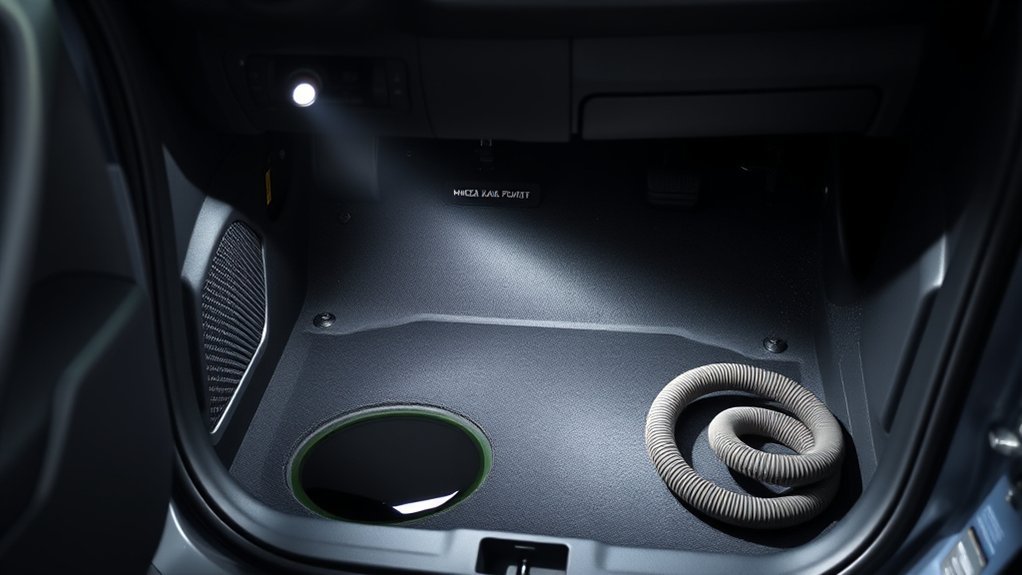
Start with a simple source check before you remove major trim. Water after air conditioning use points toward the HVAC drain. Water after rain may still involve the HVAC case, but you should also check door seals, windshield seals, cowl drains, and sunroof drains if your RAV4 has a sunroof.
Inspect the passenger footwell, lower kick panel area, and drain outlet under the vehicle. Look for standing water, damp padding, musty odor, grease or oil odor from the vents, and wax-like residue near the drain path. Follow Toyota T-SB-0021-23 only when your vehicle and symptoms match the bulletin.
Note: T-SB-0021-23 applies to certain 2020-2022 RAV4 vehicles with a start/stop switch, so verify your VIN and production details before you assume coverage.
Do not pour water into the HVAC case or push wire, compressed air, or a stiff line into the drain unless a model-specific Toyota repair procedure directs it. A safer owner check is to park on a level surface, run the AC, watch for condensate under the passenger side, and check whether the carpet becomes wetter.
Before You Begin: Tools, Safety, and Time Needed
A visual outlet check and cabin drying are limited owner tasks. The bulletin repair is a major HVAC service operation: Toyota assigns 5.4 warranty labor hours to RAV4 air conditioning radiator assembly and drain-hose replacement.
- Use a flashlight, gloves, towels, and a wet vacuum for inspection and cleanup.
- Remove only loose debris that is visible at the exterior outlet; do not force tools into the hose.
- Use photos, short videos, and written notes to track water entry and odor symptoms.
- Use a dealer or qualified AC shop when the repair requires trim removal, AC line removal, refrigerant recovery, or HVAC case work.
Warning: Do not open refrigerant lines or vent refrigerant. The EPA requires anyone who services a motor vehicle AC system for payment to hold Section 609 certification, and the job requires proper recovery and service equipment.
[Products Worth Considering]

This DIY toe alignment tool kit helps home mechanics quickly check and adjust front-end toe after suspension, steering, or tire service. Stainless steel toe plates and dual tape measures provide a simple, reliable reference for reducing uneven tire wear and improving straight-line tracking without needing a full alignment machine.

It is easy to use and saves you a lot of money from calling AC service or Plummer $150-200 per visit. When used every year it prevents the condensation overflow that will discolor your Sheetrock and avoid costly repair.

CHECK BEFORE YOU BUY: EZVAC's universal base is designed to fit multiple HVAC sizes. The custom black elbow ONLY fits a 1-inch opening and is ribbed for easy grip. Please make sure your drain line has a 1-inch opening before ordering
How to Inspect the HVAC Drain Hose Safely
Use these steps only for a visible exterior inspection. Toyota T-SB-0021-23 does not tell owners to reroute or clamp a detached drain cooler hose. When the bulletin applies, its repair procedure calls for a technician to replace the air conditioning radiator assembly and drain cooler hose.
- Confirm the pattern. Note whether the carpet gets wetter after AC use, rain, or both.
- Locate the exterior outlet. Find the drain outlet under the passenger side without lifting the vehicle unless you have safe, rated support equipment.
- Inspect what you can see. Look for a crushed outlet, loose external debris, dripping condensate, or water tracking back toward the body.
- Avoid invasive clearing. Do not push wire or a stiff line into the drain, and do not blow compressed air toward the HVAC case.
- Confirm drainage. Run the AC and check whether condensate drips under the vehicle while the passenger carpet stays dry.
- Escalate the repair. Stop if the outlet remains dry, water enters the cabin, the hose appears detached, or you detect wax-like residue or a grease or oil odor.
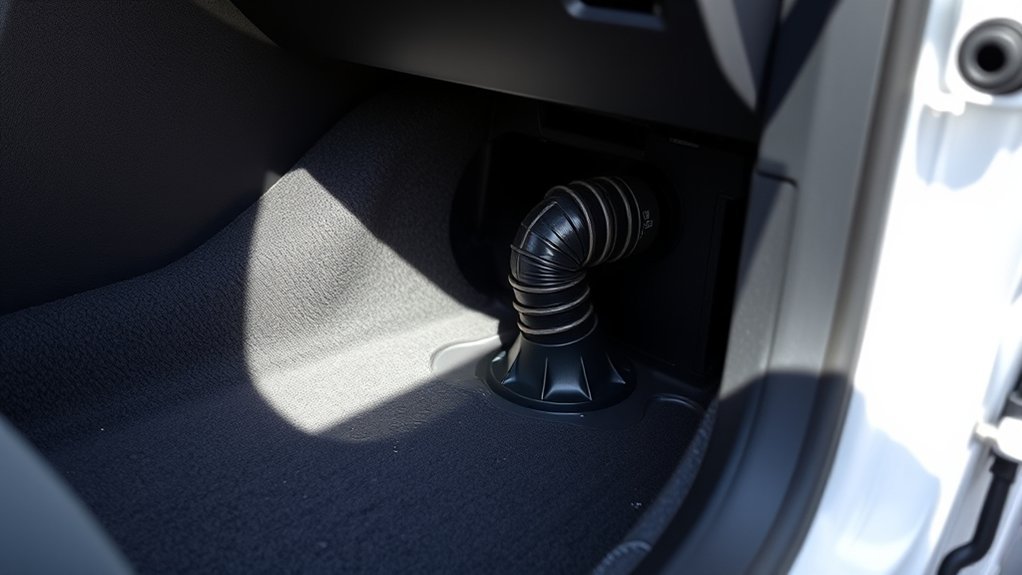
Locate the Visible Drain Outlet
Identify the outlet under the passenger side before removing trim or pulling on a hose. Access varies by model year and underbody coverage, so use the model-specific repair manual when the outlet is not plainly visible.
Check only the exposed section for damage, a crushed opening, or loose surface debris. If the connection at the air conditioning radiator assembly is detached, the repair has moved beyond a simple exterior drain check.
Should You Secure or Reroute the Hose?
Do not improvise a clamp, tie, or new hose route when the drain cooler hose is detached at the HVAC assembly. An improvised repair may hide the bulletin condition without correcting the paraffin-wax-related failure Toyota identified.
Ask a dealer to run the bulletin decision steps. When they apply, Toyota directs the technician to remove the air conditioning radiator assembly and drain cooler hose, install new parts, and confirm the condition is gone.
Pro tip: Photograph the footwell, mats, visible outlet, and any clips before moving them so the dealer can see the original leak pattern.
Could Paraffin Wax From the Evaporator Be Causing Your Leak?
Consider the bulletin pattern when water entry returns, the drain cooler hose is detached, or a grease or oil odor comes from the vents. Toyota says this condition may be caused by paraffin wax leaking from the evaporator in affected vehicles.
Do not treat visible wax-like residue as an ordinary debris clog. Photograph it and ask the dealer to inspect the air conditioning radiator assembly and drain cooler hose. The bulletin repair is replacement, not an owner-level wax-cleaning procedure.
What Does Toyota Say About Paraffin Wax?
Toyota states that paraffin wax leaking from the evaporator may cause the bulletin condition. The bulletin does not explain the wax’s path in enough detail to support an owner-level cleaning or melting diagnosis.
Document wax-like residue, vent odor, and water entry with photos and dates. When the vehicle meets the bulletin criteria, Toyota directs technicians toward replacement of the air conditioning radiator assembly and drain cooler hose.
Does the Bulletin Identify an Evaporator Seal Failure?
No. T-SB-0021-23 identifies paraffin wax leaking from the evaporator as a possible cause, but it does not diagnose a failed evaporator seal. Calling the problem a seal failure adds a cause that the bulletin does not confirm.
If moisture keeps returning after a safe exterior drain check, schedule a full HVAC diagnosis. Ask the technician to separate a detached drain-hose condition from other possible water-entry sources.
| Symptom | Action |
|---|---|
| Pooling water | Inspect drain hose |
| Wax deposits | Document residue and inspect evaporator area |
| Leak returns after outlet check | Schedule diagnosis; do not assume a seal failure |
| Musty smell or wet padding | Dry materials and ask about odor remediation |
| Recurrent leak | Ask about AC radiator assembly replacement |
Does Heat Cause the Paraffin-Wax Condition?
The bulletin does not explain whether cabin heat, evaporator temperature, or another process moves the paraffin wax. Avoid diagnosing a “heat-induced wax melt” from symptoms alone.
The useful decision points are the affected model and production details, the start/stop switch, a detached drain cooler hose, and a grease or oil odor from the vents. A trained technician can use those checks to decide whether the bulletin repair applies.
When to Replace the AC Radiator/Evaporator Assembly
A dealer should consider assembly replacement only after the bulletin decision steps match. The RAV4 must have a start/stop switch, and the technician must confirm a detached drain cooler hose and/or a grease or oil odor from the vents. If those checks do not match, Toyota says to continue diagnosis with the applicable repair manual.
When the bulletin applies, Toyota directs technicians to remove and replace the air conditioning radiator assembly and drain cooler hose. The bulletin lists 5.4 warranty labor hours for the RAV4 operation; that is a warranty time allowance, not a guaranteed customer-pay estimate.
The bulletin states that the Toyota Basic Warranty covers the specified repair for 36 months or 36,000 miles, whichever occurs first, from the vehicle’s in-service date. Coverage is limited to the condition described in the bulletin, so ask the dealer to verify current eligibility before authorizing paid work.
[Products Worth Considering]

Replace Part Number: 16571-0V020, 165710V020

COMPATIBILITY: Designed for 2004-2019 Volvo trucks and 2008-2019 Mack trucks, ensuring a precise fit and reliable performance

[Compatible]: This Upper Radiator Coolant Hose Connector Pipe Adapter is compatible with Toyota RAV4 models from 2009 to 2012.
When to Stop and Call a Technician
Stop DIY work if the carpet keeps getting wet after a safe exterior outlet inspection. Stop sooner if you smell grease or oil from the vents, see wax-like residue, or need to remove the air conditioning radiator assembly.
Call a dealer or qualified AC shop if water reaches wiring, control modules, or seat connectors. Water near electrical parts can create faults that cost more than the original leak. A technician can inspect the HVAC case, recover refrigerant correctly, and confirm the drain hose repair.
Parts, Labor, and Cost: Dealer vs. DIY Estimates
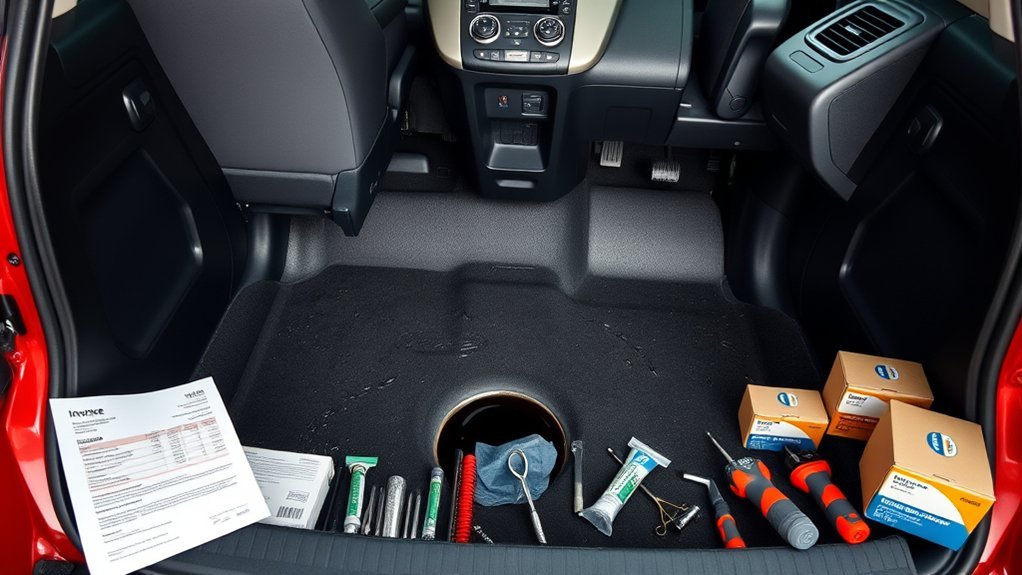
Cost depends on the exact cause. A loose hose or minor clog may cost far less than an evaporator-area repair. A full air conditioning radiator assembly job costs more because it involves labor, interior access, refrigerant handling, and final leak checks.
RepairPal’s estimate updated June 18, 2026 lists Toyota RAV4 AC evaporator replacement at $1,343-$1,903 on average. Its year-specific ranges are $1,717-$2,567 for a 2020 RAV4 and $1,925-$2,580 for a 2021 RAV4. These figures exclude taxes, fees, location differences, and related repairs, and they are not quotes for the exact T-SB-0021-23 repair.
DIY work can make sense for visual inspection and drying. Do not treat HVAC-case removal or refrigerant work as a basic DIY job. Request written estimates from more than one dealer or qualified AC shop, and ask each shop to separate parts, labor, diagnostic time, warranty coverage, and odor remediation.
[Products Worth Considering]

And Vehicle Specific

[Vehicle Fitment]: Compatible with Toyota Corolla iM 2017-2018 L4 1.8L, fit for RAV4 2006-2018, Corolla 2019 L4 1.8L, Corolla 2009-2018, Matrix 2009-2013, Mirai 2016-2020; Compatible with Lexus CT200h 2011-2017 L4 1.8L, HS250h 2010-2012 L4 2.4L; Compatible with Scion tC 2011-2016 L4 2.5L (Parallel Flow), xB 2008-2015 L4 2.4L, iM 2016 L4 1.8L (Parallel Flow); Compatible with Pontiac Vibe 2009-2010

STOP LEAKS PERMANENTLY - The Leak Saver can permanently seal small refrigerant leaks where the complete refrigerant charge is not lost within 7 days. When a leak occurs, the Leak Saver reacts with the air and moisture at the leak site to permanently seal the leak. When used for preventative maintenance, the active ingredient circulates safely in the system to seal future leaks
Document the Leak and Work With Your Dealer (T-SB-0021-23)
Photograph or record the water pooling and damp areas in the passenger footwell from more than one angle. Add the date, time, weather, AC use, and driving conditions to each note. This record gives the service advisor a clear pattern to review.
When you contact the dealer, state the symptoms and mention T-SB-0021-23. Ask the dealer to verify whether your RAV4 has a start/stop switch and falls within the affected production range. Also ask for warranty verification before you approve paid work.
Keep copies of work orders, estimates, photos, videos, and receipts. Clear records help you compare repair scope and support a warranty or goodwill request when the symptoms match the bulletin.
Short-Term Fixes, Odor Control, and Preventing Future Mold
Remove standing water right away with towels or a wet vacuum. Lift wet mats and check the carpet padding because padding can stay damp after the top carpet feels dry. The United States Environmental Protection Agency (EPA) advises drying water-damaged materials within 24-48 hours to help prevent mold growth.
Ventilate the cabin and use fans or a dehumidifier when you can do so safely. Replace soaked towels often, and do not cover damp carpet with floor mats. If padding stays wet or smells musty, ask a shop about carpet removal, padding replacement, and odor remediation.
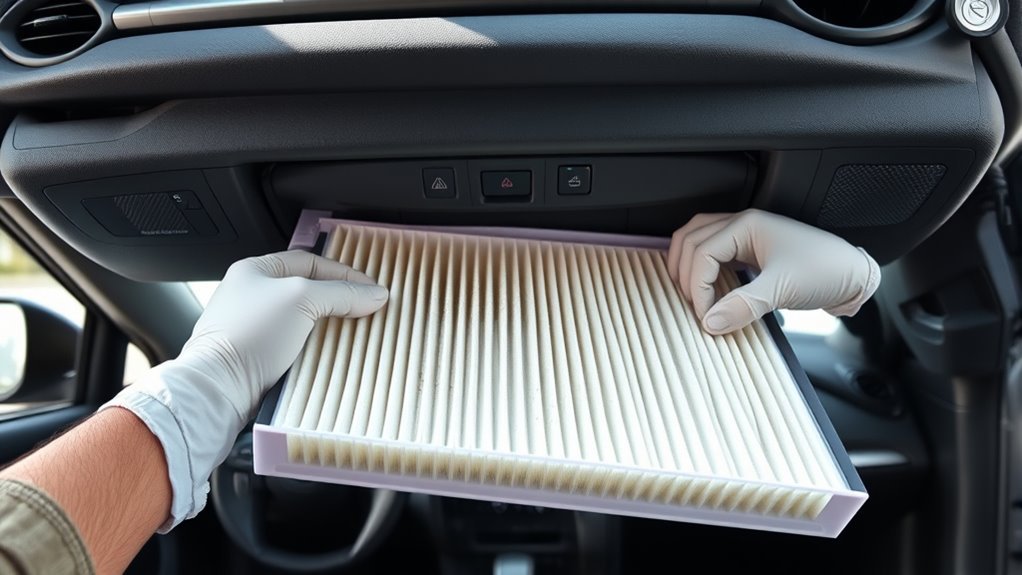
Replace the cabin air filter if it smells musty or has moisture damage. Use only cleaners that match the surface and product directions. Do not mix cleaning chemicals in the cabin.
Short-term drying helps protect the cabin, but it does not fix the leak. Keep the passenger footwell dry while you arrange the permanent repair.
Frequently Asked Questions
Why is my passenger footwell leaking water?
Your passenger footwell may leak because the HVAC drain hose has clogged, disconnected, or lost its proper route. On affected RAV4 vehicles, Toyota also links the condition to paraffin wax leaking from the evaporator.
Why is water leaking inside my car on the passenger side?
Passenger-side water often comes from AC condensate that cannot drain under the vehicle. Rainwater can also enter through seals, cowl drains, or sunroof drains, so match the leak timing to AC use or rain before you repair parts.
How do I tell AC condensate from rainwater?
Track when the carpet gets wetter. A leak that appears after the AC runs, even in dry weather, points toward the HVAC drain. A leak that appears after rain or a car wash points more toward exterior seals, cowl drainage, roof channels, or sunroof drains.
Does T-SB-0021-23 apply to every Toyota RAV4?
No. Toyota lists specific 2020-2022 RAV4 production groups, and the vehicle must have a start/stop switch. Your dealer should verify the model year, assembly plant, drivetrain, production VIN details, and symptoms before applying the bulletin.
Can I drive with water in the passenger footwell?
You can move the vehicle if it drives normally, but you should dry the area and schedule repair quickly. Do not ignore water near wiring, seat connectors, or control modules because moisture can create electrical issues.
How fast should I dry the carpet after a leak?
Start drying the carpet and padding right away. EPA mold guidance says wet materials dried within 24-48 hours often avoid mold growth, but soaked padding may still need removal or replacement.
Safety Disclaimer: This article gives general information about diagnosing a Toyota RAV4 passenger footwell water leak. Always use a qualified technician for AC refrigerant work, electrical concerns, and repairs that require HVAC case removal.
Conclusion
Start with the leak pattern: AC use suggests the HVAC drain, while rain suggests an exterior water path. Dry the carpet and padding immediately, inspect only the visible drain outlet, and avoid forcing tools into the HVAC case. If your 2020-2022 RAV4 has a start/stop switch and also has a detached drain hose, a grease or oil odor, or repeat water entry, take your records and T-SB-0021-23 to a Toyota dealer for an eligibility and repair check.
References
- Toyota T-SB-0021-23 Rev1: HVAC Drain Hose Disconnected From HVAC Case and/or Oil/Grease Odor From Vents – Toyota Motor Sales, USA / NHTSA, 2023
- Section 609 Technician Training and Certification Programs – U.S. Environmental Protection Agency, 2026
- A Brief Guide to Mold, Moisture and Your Home – U.S. Environmental Protection Agency, 2026
- Toyota RAV4 AC Evaporator Replacement Cost Estimate – RepairPal, 2026