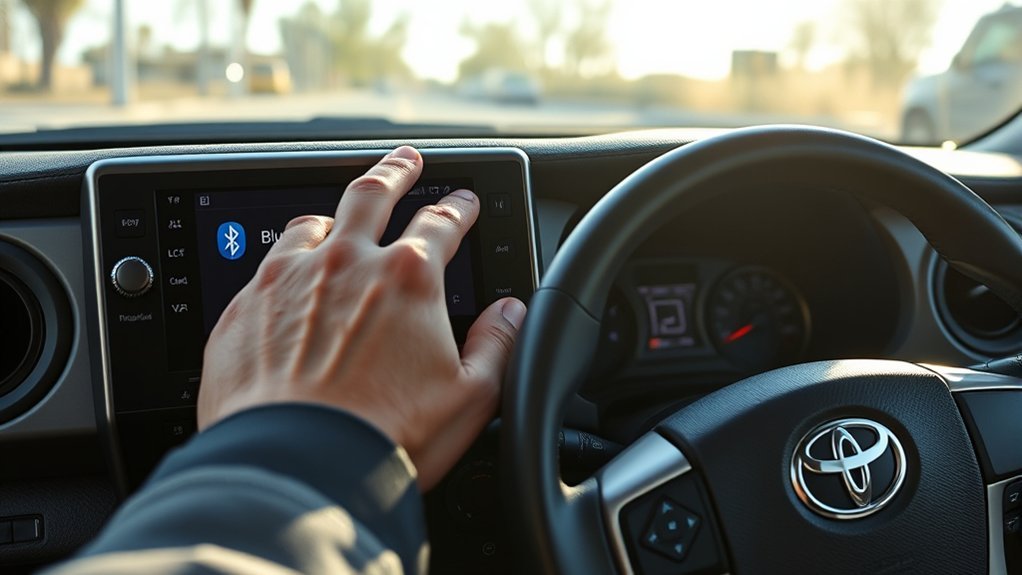
If your Tacoma shakes at highway speed, pulls to one side, or wears tires unevenly, the fix is usually either wheel balancing, wheel alignment, or both. These services solve different problems, so guessing can waste money and leave the same vibration or steering issue behind.
Quick Answer
Choose tire balancing if your Tacoma vibrates or shakes at a specific road speed, especially through the steering wheel, seat, or floor. Choose wheel alignment if it pulls, the steering wheel sits crooked, or the tires show uneven edge wear. Check tire pressure and tire damage first.
Key Takeaways
- Balancing fixes uneven weight in the tire-and-wheel assembly; it mainly solves speed-related vibration.
- Alignment adjusts wheel angles so the tires meet the road correctly; it mainly solves pulling, crooked steering, and uneven wear.
- Toyota’s 2025 Tacoma maintenance guide lists scheduled maintenance every 5,000 miles or six months and includes tire rotation at each 5,000-mile interval.
- Off-road driving, towing, potholes, curb strikes, lift kits, oversized tires, and mud packed inside wheels can make problems show up sooner.
- DIY inspection is useful, but accurate balancing and alignment require professional equipment.
At a Glance
| Time Required | 10–15 minutes for a basic home check; about 30–90 minutes at a shop for balancing or alignment |
| Difficulty | Easy to inspect; professional equipment needed to correct |
| Tools Needed | Tire pressure gauge, tread-depth gauge or penny, flashlight, and service records |
| Cost | Visual checks are free; balancing is usually priced per tire, while alignment is usually priced per vehicle |
Understanding Wheel Balancing vs. Alignment

Wheel balancing and wheel alignment both affect how your Tacoma feels on the road, but they do not correct the same fault. According to the National Highway Traffic Safety Administration tire safety guide, balancing uses weights to counter heavy spots in the wheel-and-tire assembly, while alignment adjusts wheel angles so the wheels are positioned correctly relative to the vehicle.
| Service | What It Corrects | Common Tacoma Symptom |
|---|---|---|
| Wheel balancing | Uneven weight distribution in the tire-and-wheel assembly | Vibration that gets worse at a certain speed |
| Wheel alignment | Incorrect camber, caster, toe, or thrust angle | Pulling, crooked steering wheel, or uneven tire wear |
| Both services | Ride quality, tire wear, steering feel, and stability | New tires, lift kit changes, rough-road use, or mixed symptoms |
Balancing is done with the wheel removed from the truck and mounted on a balancing machine. The machine detects where the assembly is heavy, and the technician adds or moves wheel weights to make it spin evenly.
Alignment is done on an alignment rack. Sensors measure the wheel angles, and the technician adjusts the suspension to match Toyota’s specifications as closely as the vehicle allows. On many Tacomas, the front alignment settings matter most, but a proper four-wheel alignment also checks rear tracking so the truck does not “dog track” or fight the steering wheel.
Note: A bad wheel balance does not usually cause a constant pull to one side. A pull is more often caused by alignment, uneven tire pressure, tire conicity, brake drag, worn suspension parts, or road crown.
How to Identify When Your Tacoma Needs Balancing or Alignment
Start with the symptom you can feel. A vibration, pull, crooked wheel, or unusual wear pattern points you toward the right first repair.
Symptoms of Imbalance
Your Tacoma may need tire balancing if you notice:
- Steering wheel shake that appears at highway speed, often around 45–70 mph
- Seat or floor vibration that changes with vehicle speed
- Vibration after a tire repair, tire rotation, new tire installation, or wheel impact
- Missing wheel weights on the rim
- Mud, snow, gravel, or debris packed inside the wheel after off-road driving
- A tire or wheel that required a large amount of weight during the last balance
Vibration location can help. A shake felt mostly in the steering wheel often points to the front tire-and-wheel assemblies. A vibration felt more in the seat or floor may come from the rear tires, although drivetrain or suspension issues can feel similar.
Signs of Misalignment
Your Tacoma may need an alignment check if you notice:
- The truck pulls or drifts on a straight, level road
- The steering wheel is off-center while driving straight
- Inside or outside tire edges wear faster than the center
- The tread feels feathered, sharp one way and smooth the other
- The truck feels nervous, loose, or slow to return to center
- Problems started after hitting a pothole, curb, rock, rut, or road debris
- Problems started after installing a lift, leveling kit, new control arms, or larger tires
Bridgestone explains that alignment concerns mainly involve camber, toe, and caster. Toe errors are especially hard on tires because they can scrub the tread as the truck rolls down the road.
Quick Diagnosis Table
| What You Notice | Most Likely First Check | Why |
|---|---|---|
| Vibration only at certain speeds | Balance | A rotating heavy spot often shows up at speed |
| Pulling left or right | Tire pressure, then alignment | Uneven pressure or alignment can steer the truck |
| Crooked steering wheel | Alignment | Toe or steering centering may be off |
| Inside or outside edge wear | Alignment and suspension inspection | Camber, toe, or worn parts can overload one edge |
| Cupped or scalloped tread | Balance, shocks, alignment, and tire condition | Several faults can create repeating dips in the tread |
| Vibration after off-road use | Clean wheels, inspect tires, then balance | Packed mud or wheel damage can throw balance off |
Pro Tip: Before paying for a balance or alignment, check all four tires when cold. NHTSA recommends checking tire pressure at least once a month, and a low tire can mimic a pull, rough ride, or uneven wear.
How Poor Balancing and Alignment Affect Your Tacoma’s Performance
Poor balancing and poor alignment both shorten tire life, but they do it in different ways.
An unbalanced tire bounces or wobbles slightly as it rotates. That can make the steering wheel shake, wear tread unevenly, and add stress to shocks, bearings, steering parts, and suspension bushings. Michelin notes that alignment and balancing affect tire performance, handling, and ride comfort.
A misaligned Tacoma can scrub tires across the pavement instead of rolling cleanly. That increases heat, creates uneven wear, and can make the truck feel unstable. If the alignment is badly off, you may also notice extra steering effort, poor return-to-center, or reduced fuel economy because the tires are fighting each other.
NHTSA tire safety guidance says tires are generally not safe when the tread is worn down to 1/16 inch, also known as 2/32 inch. If your Tacoma’s treadwear indicators are flush with the tread, replacement matters more than balancing or alignment.
For Tacoma owners, these problems can appear faster if the truck is used for trail driving, towing, hauling, or repeated rough-road impacts. Larger all-terrain or mud-terrain tires can also be harder to balance than standard highway tires, especially if they are heavy, aggressive, or slightly out of round.
Balancing vs. Alignment: Cost Comparison

Balancing is usually less expensive than alignment because it is performed on each removed wheel rather than on the full vehicle suspension. Alignment usually costs more because it requires an alignment rack, sensors, manufacturer specifications, and suspension adjustments.
| Service | How Shops Usually Price It | What Can Raise the Price |
|---|---|---|
| Standard tire balancing | Per tire or as part of tire installation | Large tires, old weights, corrosion, TPMS service, or specialty wheels |
| Road-force balancing | Per tire, usually higher than standard balancing | Hard-to-balance all-terrain tires, match mounting, or repeated troubleshooting |
| Wheel alignment | Per vehicle | Lift kits, seized adjusters, worn suspension parts, aftermarket control arms, or dealer-level calibration needs |
As a planning range, many U.S. shops price standard balancing per tire and four-wheel alignment per vehicle. The final quote can vary widely by region, tire size, shop type, and whether your Tacoma has aftermarket suspension parts. If a shop finds worn ball joints, tie rods, wheel bearings, or seized adjusters, those repairs should be handled before the final alignment is set.
Warning: Do not keep driving on a severe vibration, visible tire bulge, exposed cords, or rapidly wearing tire edge. Those are safety issues, not just comfort problems.
Recommended Frequency for Tire Balancing and Alignment
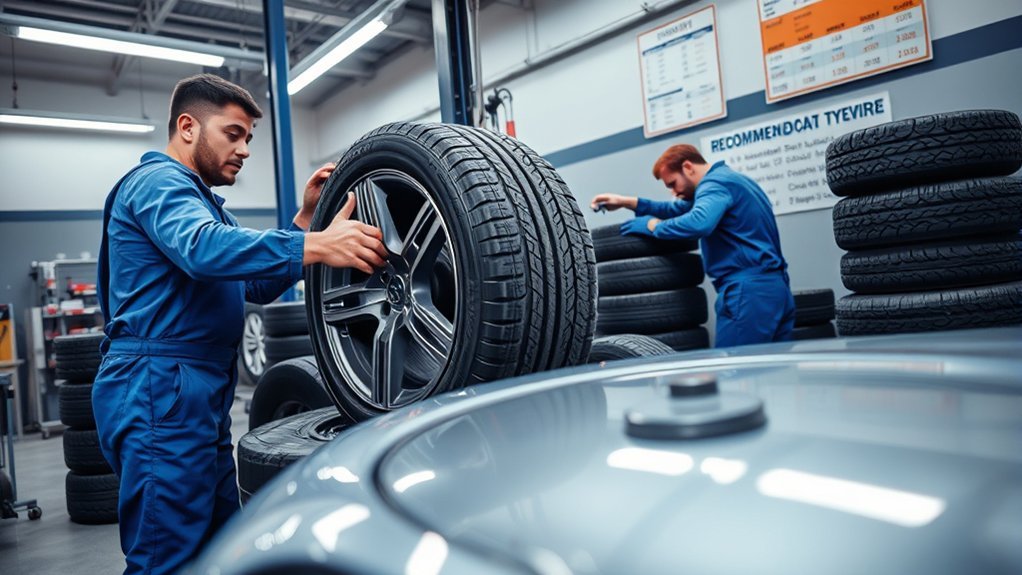
For a Tacoma, tire rotation is the easiest schedule anchor. The 2025 Toyota Tacoma Warranty & Maintenance Guide says Toyota recommends scheduled maintenance every 5,000 miles or six months, whichever comes first, and its maintenance chart lists tire rotation at each 5,000-mile interval.
Balancing and alignment are different because they are often symptom-based rather than required at every scheduled maintenance visit. Use this practical schedule:
- Rotate tires every 5,000 miles or six months if following the 2025 Tacoma schedule. Ask the shop to inspect tread wear during rotation.
- Balance tires when installing new tires, after a tire repair, after wheel damage, or when vibration appears.
- Ask for road-force balancing if a standard balance does not fix highway vibration or if you run heavy all-terrain or mud-terrain tires.
- Check alignment after hard impacts, curb strikes, potholes, off-road hits, suspension work, or lift/leveling kit installation.
- Check alignment when tire wear looks uneven, even if the truck still drives straight.
- Inspect tires monthly for pressure, cracks, objects, uneven wear, and tread depth.
The Toyota Tacoma tire inspection guidance also says to check for treadwear indicators and uneven wear, including excessive wear on one side of the tread.
Tacoma-Specific Causes That Trigger Balance or Alignment Problems
Tacomas are often used harder than basic commuter vehicles, so the cause matters as much as the symptom. Look for these common triggers:
- Off-road mud or packed snow: Material stuck inside the wheel can create instant imbalance.
- Rock or rut impacts: A hit can bend a wheel, damage a tire belt, or knock alignment out.
- Towing and heavy payloads: Extra load can reveal weak shocks, worn bushings, or marginal tire pressure.
- Lift and leveling kits: Suspension geometry changes may require alignment corrections and, in some cases, aftermarket parts.
- Oversized tires: Larger tires are heavier and can be more sensitive to road-force variation.
- Worn suspension components: A fresh alignment will not hold if tie rods, ball joints, bushings, or wheel bearings are loose.
- Brake or hub issues: A sticking caliper, warped rotor, or hub problem can feel like a wheel issue.
If your Tacoma developed vibration immediately after a trail run, clean the wheels before scheduling service. If it developed a pull after a hard hit, schedule an alignment and ask the technician to inspect for bent or loose parts before making adjustments.
Should You Try DIY Tire Balancing and Alignment?
DIY inspection is smart. DIY correction is usually not. You can check tire pressure, inspect tread wear, look for missing wheel weights, and spot obvious tire damage at home. But accurate balancing and alignment require specialized equipment.
| Task | DIY Friendly? | Best Approach |
|---|---|---|
| Check cold tire pressure | Yes | Use the driver-door placard, not the tire sidewall max pressure |
| Inspect tread depth and wear pattern | Yes | Use a tread-depth gauge or penny test |
| Remove mud from wheels | Yes | Clean the inner barrel before diagnosing vibration |
| Static bubble balance | Limited | Not ideal for modern highway-speed vibration diagnosis |
| Computerized wheel balance | No | Use a tire shop with a calibrated balancer |
| Wheel alignment | No | Use an alignment rack and ask for the printout |
A home string alignment may help a race team make rough toe checks, but it is not a substitute for a proper Tacoma alignment. It will not accurately confirm caster, camber, thrust angle, or whether the truck is within Toyota’s specifications.
[Products Worth Considering]

This CARORAV TPMS sensor set provides reliable tire pressure monitoring for a wide range of Toyota and Lexus vehicles with 315MHz compatibility. It is pre-programmed for easier setup, but still requires relearning or reset procedures after installation. Designed for accurate real-time pressure tracking, these sensors help support safer driving and long-lasting performance across many model years.

This DIY toe alignment tool kit helps home mechanics quickly check and adjust front-end toe after suspension, steering, or tire service. Stainless steel toe plates and dual tape measures provide a simple, reliable reference for reducing uneven tire wear and improving straight-line tracking without needing a full alignment machine.

This wheel alignment tool makes it easy to check and adjust toe-in and toe-out at home for better handling, stability, and more even tire wear. Designed for one-person use, it includes tape-measure slots for simple setup and accurate measurements without extra help. Its stainless steel construction and broad vehicle compatibility make it a practical addition to any DIY garage.
How to Select a Shop for Tire Balancing and Alignment
The right shop can save you from paying twice. Look for a tire or alignment shop that understands trucks, not just passenger cars.
- Ask whether they work on Tacomas, lifted trucks, and all-terrain tires. Experience matters when tire size and suspension geometry are not stock.
- Ask for a before-and-after alignment printout. The printout should show camber, caster, toe, and thrust angle where applicable.
- Ask whether they offer road-force balancing. This is helpful for stubborn highway vibration.
- Ask whether they inspect suspension before alignment. Worn parts can make the alignment impossible to hold.
- Ask how they handle old wheel weights. Old weights should be removed before a fresh balance.
- Ask about lug-nut torque and TPMS handling. Proper torque and sensor care matter on modern trucks.
- Read recent reviews for vibration and alignment complaints. A low price is not helpful if the truck still shakes.
Note: If your Tacoma has a lift kit and the shop says the alignment cannot be brought into spec, ask what adjustment is out of range. You may need cam bolts, upper control arms, worn-part replacement, or a truck-focused alignment shop.
[Products Worth Considering]

This universal wheel alignment tool helps you perform precise toe alignment at home with professional-grade accuracy and easy DIY operation. Its no-caliper-removal design simplifies setup, while the heavy-duty stainless steel construction and compact detachable form make it durable, stable, and easy to store. It is suitable for a wide range of vehicles, including cars, trucks, SUVs, ATVs, and UTVs.

These tricolor door sill protectors help guard your vehicle’s entry points from scratches, scuffs, and everyday wear while adding a bold color accent. Made from abrasion-resistant, waterproof PU leather, they are designed for easy peel-and-stick installation and a clean finish that helps protect the original paint.

This AstroAI digital tire pressure gauge delivers factory-calibrated readings with dependable ±1 PSI accuracy, helping you keep cars, trucks, motorcycles, and spare tires at the right pressure. Its bright backlit LCD and illuminated nozzle make nighttime checks easy, while the one-button unit switch and auto-off design add convenience and battery efficiency for routine maintenance.
What to Do If Your Tacoma Needs Balancing or Alignment?
Use this step-by-step order so you do not replace or adjust parts unnecessarily.
- Check cold tire pressure. Use the Tacoma’s door placard pressure and include the spare if it is part of your rotation plan.
- Inspect all tires. Look for bulges, cuts, punctures, exposed cords, separated tread, missing wheel weights, and uneven wear.
- Clean the wheels. Remove packed mud, rocks, snow, or road debris from the inner wheel barrels.
- Test drive carefully. Note the speed where the vibration begins, whether braking changes it, and whether the truck pulls on a level road.
- Rotate tires if wear is uneven. If the vibration moves from the steering wheel to the seat, the tire location may help identify the problem.
- Schedule balancing for speed-related vibration. Ask the shop to remove old weights and rebalance from scratch.
- Request road-force balancing if needed. The technician may match-mount the tire by rotating it on the rim to reduce tire-and-wheel variation.
- Schedule alignment for pulling, crooked steering, or edge wear. Ask for a suspension inspection and the before-and-after alignment report.
- Replace damaged or worn parts first. Do not align around loose tie rods, bad ball joints, worn bushings, or a bent wheel.
Here’s a quick reference:
| Action | Purpose | Notes |
|---|---|---|
| Check tire pressure | Eliminate a simple cause of pull or rough ride | Check when tires are cold |
| Inspect tread depth | Find wear patterns before they become unsafe | Replace tires at the wear bars or sooner if damaged |
| Remove old wheel weights | Improve balancing accuracy | Old stacked weights can hide the real imbalance |
| Road-force balance | Solve stubborn vibration | Useful for larger all-terrain tires |
| Alignment printout | Confirm the truck is within spec | Keep it with your service records |
| Suspension inspection | Find worn or bent parts | Required before a reliable alignment |
[Products Worth Considering]

This plug-and-play AC button switch is designed to replace a faulty factory air conditioner switch in compatible Toyota vehicles. It installs easily without tools and is made to match the original part for a seamless fit and reliable operation. Built from durable ABS plastic, it offers a dependable replacement backed by warranty support and fitment guidance.

These aluminum alloy tire valve stem caps provide durable, corrosion-resistant protection for your vehicle’s valve stems while helping maintain stable tire pressure. The rubber seal design helps block dust, moisture, and debris, reducing the risk of air leakage and valve damage. Easy to install and styled for a clean look, they fit a range of cars, SUVs, trucks, and motorcycles.
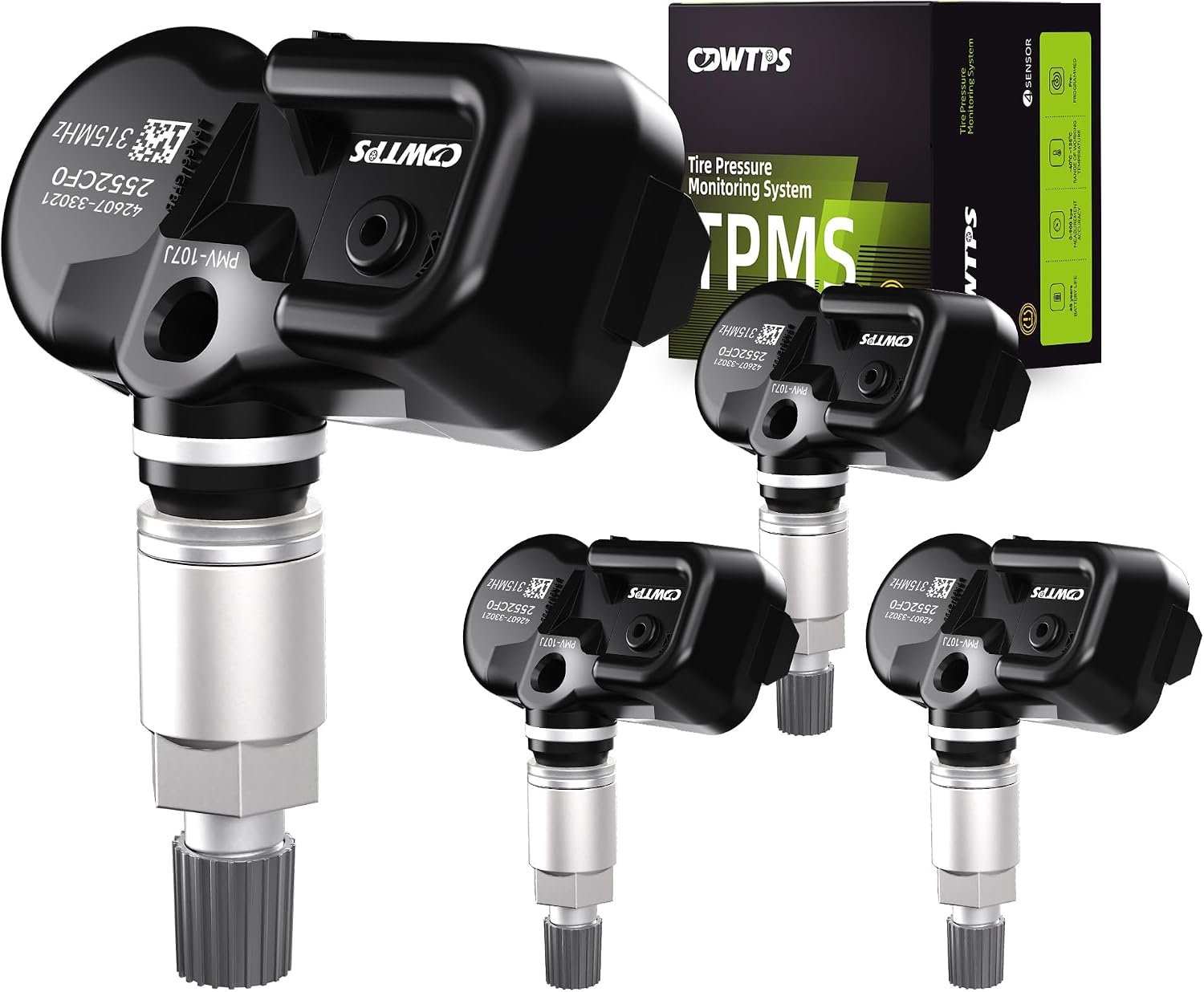
This set of four pre-programmed TPMS sensors is designed as a direct-fit replacement for compatible Toyota, Lexus, and Scion vehicles. It helps restore accurate tire pressure monitoring without sensor programming, and each unit is factory-tested for dependable performance. Built for long service life, these sensors offer a convenient solution for replacing worn or failed tire pressure monitors.
Frequently Asked Questions
How do I know if my Tacoma needs balancing or alignment?
Your Tacoma likely needs balancing if it vibrates at a specific speed. It likely needs alignment if it pulls, the steering wheel is off-center, or the tires show uneven edge wear. Check tire pressure and tire condition first because those can mimic both problems.
How often does a Toyota Tacoma need an alignment?
Toyota’s scheduled maintenance chart focuses on regular service and tire rotation, not a fixed alignment interval. Have alignment checked when you notice pulling, crooked steering, or uneven wear; after pothole, curb, or off-road impacts; after suspension work; and when installing new tires.
Is wheel alignment the same as wheel balancing?
No. Wheel balancing corrects uneven weight in the tire-and-wheel assembly to reduce vibration. Wheel alignment adjusts suspension angles so the tires contact the road correctly and the truck tracks straight.
Should I balance and align new Tacoma tires?
New tires should be balanced when installed. Alignment is also smart if the old tires wore unevenly, the truck pulls, the steering wheel is crooked, or the suspension was recently modified. A good alignment helps protect the new tires from early wear.
Can a bad alignment cause vibration?
Yes, but speed-related vibration is more often caused by tire balance, tire damage, wheel damage, or road-force variation. Alignment problems more commonly cause pulling, off-center steering, and uneven tread wear. Some trucks have both issues at the same time.
Why does my Tacoma still shake after balancing?
A Tacoma can still shake after balancing if a tire is out of round, a wheel is bent, mud remains inside a wheel, a tire has internal belt damage, road-force variation is high, or a suspension, hub, brake, or drivetrain part is worn. Ask for road-force balancing and a full inspection.
Conclusion
Balancing and alignment are both essential Tacoma tire services, but they fix different problems. If your truck shakes at speed, start with tire condition, pressure, wheel cleanliness, and balancing. If it pulls, wears tire edges, or drives with an off-center steering wheel, focus on alignment and suspension inspection. Keeping up with Toyota’s 5,000-mile tire rotation schedule, checking tire pressure monthly, and addressing symptoms early will help your Tacoma ride smoother, steer safer, and get more life from every set of tires.
Sources
- NHTSA Tire Safety Guide — definitions of tire balance and wheel alignment, tire pressure checks, treadwear indicators, and tire safety basics.
- 2025 Toyota Tacoma Warranty & Maintenance Guide — scheduled maintenance interval and tire rotation schedule.
- Toyota Tacoma Tire Inspection Guidance — treadwear indicators, uneven wear checks, and tire inspection guidance.
- Michelin Wheel Alignment & Balancing Guide — how balancing and alignment affect ride comfort, tire wear, and handling.
- Bridgestone Tire Alignment Guide — camber, toe, caster, and alignment symptom explanations.