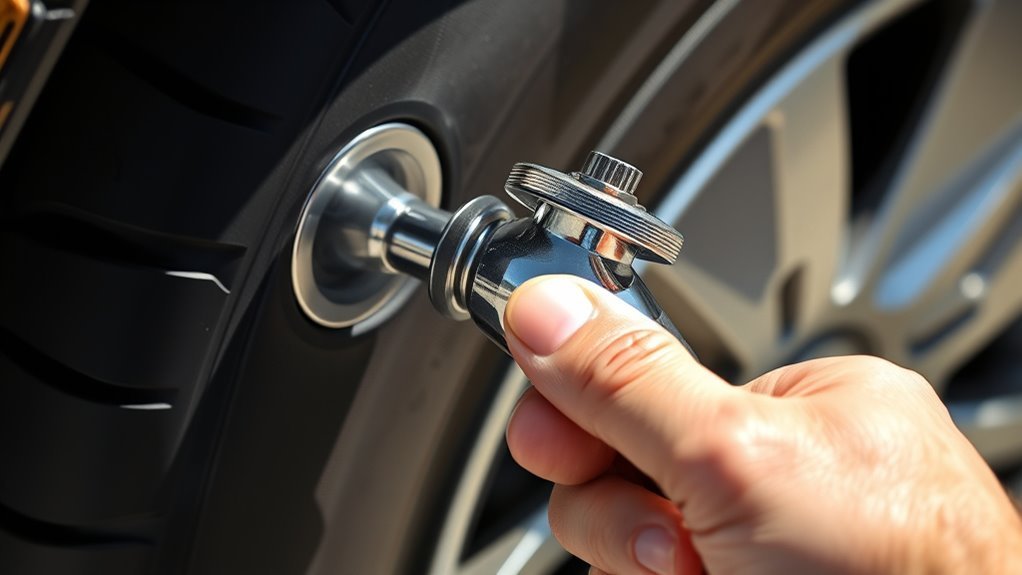
A tire air compressor generates and stores compressed air, allowing you to easily inflate tires and operate pneumatic tools. When your tire pressure is low or a warning light activates, you’ll want to use it. It delivers high airflow and pressure, making it ideal for regular tire maintenance or quickly fixing flat tires. With features like automatic shut-off and built-in gauges, it guarantees accurate inflation. Discover the key considerations for selecting the right compressor for your needs.
What Is a Tire Air Compressor?
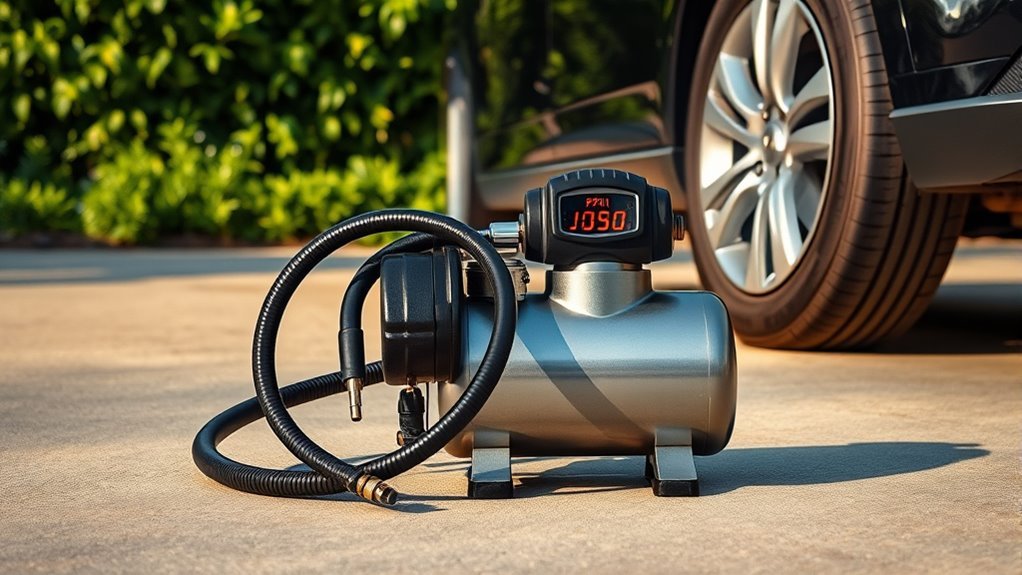
A tire air compressor is a powerful device designed to generate and store compressed air, making it essential for inflating tires and operating pneumatic tools. Unlike smaller tire inflators, this compressor typically features a larger tank capacity, allowing for continuous use without frequent recharges. It excels in delivering high airflow and pressure, measured in liters per minute and PSI, suitable for various applications beyond tire inflation. Most tire air compressors require a reliable power source, such as a wall outlet or vehicle battery, and are generally heavier, making them less portable. Commonly found in workshops and garages, they provide versatility for tasks like inflating sports equipment and air mattresses, as well as powering air tools effectively.
When Should You Use a Tire Air Compressor?
Whenever the tire pressure warning light activates, indicating a significant loss in PSI, you should use a tire air compressor immediately to guarantee safe driving conditions. Regular monthly tire checks using a pressure gauge can help prevent issues, as tires typically lose about 1 PSI each month. Additionally, during seasonal tire changes, a tire air compressor assures ideal tire inflation for summer or winter tires, enhancing vehicle performance. If you notice uneven tire wear or experience vibrations while driving, adjusting tire pressure with an inflator may resolve these problems and extend tire lifespan. In emergencies, a tire air compressor is essential for quickly inflating flat tires that hold air, allowing you to resume travel without waiting for roadside assistance, especially with an automatic shutoff feature.
Why You Should Regularly Check Tire Pressure With a Tire Air Compressor
Maintaining proper tire pressure is crucial for safe driving and peak vehicle performance, especially since tires can lose about 1 PSI each month. Regular checks with a tire air compressor guarantee your tires remain at ideal levels, typically 30-35 PSI. This practice not only enhances vehicle handling but also considerably boosts fuel efficiency, preventing costly decreases—up to 3% for every PSI lost. Quick inflation with a compressor takes just minutes, restoring proper pressure for safe driving conditions. Consistent monitoring prolongs tire lifespan, reducing heat buildup and uneven wear.
| Tire Condition | Benefits |
|---|---|
| Under-Inflated Tires | Decreased fuel efficiency |
| Proper Pressure | Improved handling and safety |
| Quick Inflation | Peace of mind while driving |
What Features Make a Tire Air Compressor Effective?
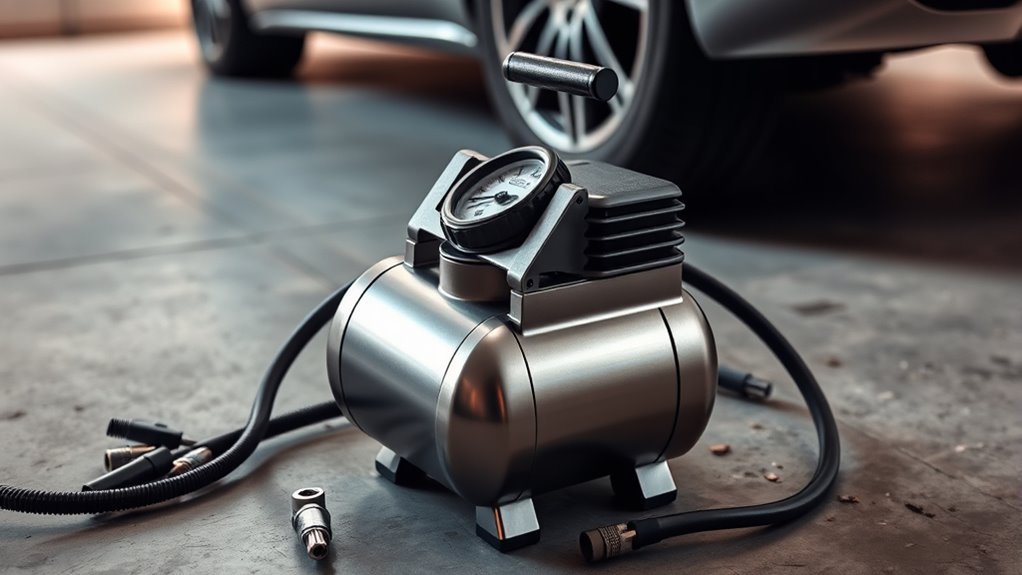
To guarantee you get the most from your tire air compressor, look for features that enhance both efficiency and usability. An effective compressor typically offers a high PSI output, often around 150 PSI, ensuring quick tire inflation. Pay attention to the CFM rating, as higher values indicate faster inflation. Built-in digital gauges help you monitor pressure accurately, preventing over-inflation. Opt for portable tire inflators with 12V DC power sources or cordless designs for convenience. Additional features like automatic shut-off protect against over-inflation, while LED lights improve visibility during nighttime use. These elements combine to create an easy-to-use device that simplifies tire maintenance, empowering you to stay safe on the road.
How to Pick the Perfect Tire Air Compressor for You
How can you guarantee you choose the perfect tire air compressor for your needs? Consider the following key factors:
- Capacity: Look for larger tire inflators with higher liters per minute for faster inflation.
- Power Source Options: Decide between 12V DC for vehicles, 110V AC for home use, or cordless battery-powered models.
- Features: Confirm it has a pressure gauge for accuracy, an automatic shut-off feature to prevent over-inflation, and a long power cord for convenience.
- Size and Weight: Opt for a portable car tire air pump that’s lightweight and compact, making it easy to store and access during emergencies.
These considerations will help you select a tire compressor that meets your specific needs effectively.
Frequently Asked Questions
How Does a Tire Air Compressor Work?
A tire air compressor generates airflow to inflate tires quickly, utilizing various power sources. Consider compressor types, inflation speed, noise levels, and maintenance tips while monitoring tire pressure with digital gauges for safe and portable use.
What Is the Difference Between an Air Compressor and a Tire Inflator?
An air compressor offers versatile power and higher output for tools, while a tire inflator’s portability and quick inflation shine in emergencies. Consider noise levels, maintenance tips, and accessories when choosing between them for your needs.
Are Tire Inflators Worth It?
Yes, tire inflators are worth it. They offer cost-effectiveness, portability, and user convenience, ensuring emergency preparedness. Regular maintenance tips enhance durability, while brand comparisons highlight inflation speed and power sources, making them essential for drivers.
Can I Run My Car While Using a Tire Inflator?
Yes, you can run your car while using a tire inflator. This enhances inflator power, maintains tire pressure monitoring, and safeguards your car battery, ensuring efficient compressor operation during seasonal tire checks or emergencies.
Conclusion
To summarize, understanding how a tire air compressor works and when to use it can save you from a flat tire and keep your vehicle running smoothly. Regularly checking your tire pressure guarantees your safety and enhances fuel efficiency. With the right features tailored to your needs, you’ll be equipped to tackle any tire-related challenge. Remember, it’s better to be safe than sorry—investing in a quality tire air compressor is a smart move for every driver.