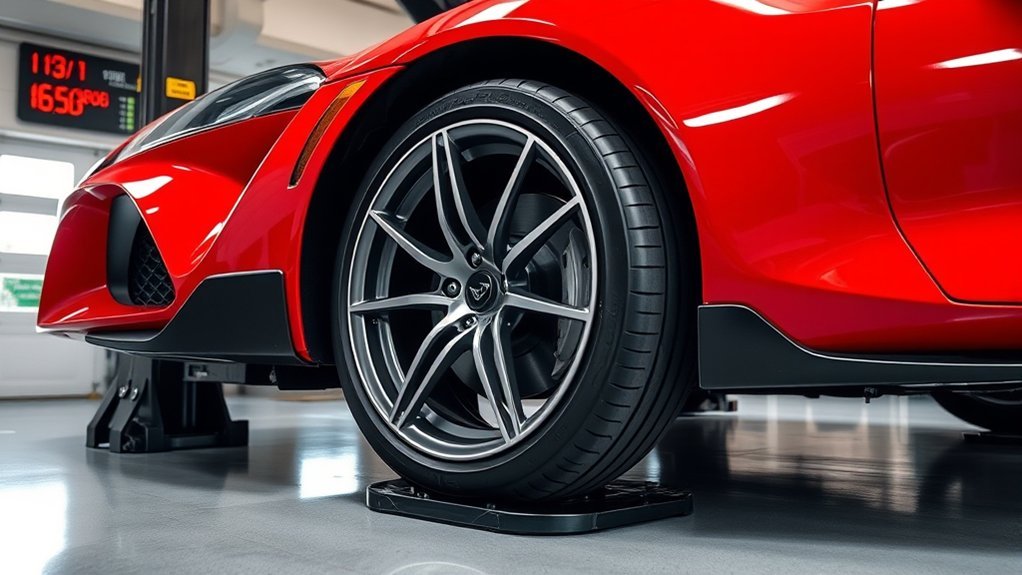
Proper wheel alignment for your Toyota Supra is essential for performance and safety. It affects handling, tire wear, and fuel efficiency. Set front toe to zero and rear toe-in to about 0.12° for stability. Adjust camber between -1° and -2.5° for peak grip. Watch for signs of misalignment like pulling to one side or uneven tire wear. Regular checks and adjustments based on your driving style can enhance your driving experience, and further insights await your exploration.
Why Wheel Alignment Matters for Your Supra

When you drive your Toyota Supra, proper wheel alignment is vital for maintaining peak performance and safety. Many alignment myths suggest it’s a minor issue, but misalignment can severely affect vehicle response and stability, especially at high speeds. You’ll notice uneven tire wear, particularly on the inner edges of your rear tires due to toe-in problems. Regular alignments extend tire life, promoting even wear patterns and saving you money on replacements. Additionally, a well-aligned Supra enhances fuel efficiency by reducing rolling resistance, allowing for smoother driving and lower consumption. Signs of misalignment, such as pulling to one side or an off-center steering wheel, compromise safety, making regular inspections essential for ideal performance.
Essential Alignment Settings for Optimal Performance
Achieving ideal performance in your Toyota Supra requires precise alignment settings tailored to its dynamic capabilities. For optimal stability, set your front toe to zero, while a slight rear toe-in of about 0.12° enhances high-speed stability and cornering grip. Camber adjustments should ideally range from -1° to -2.5° for both front and rear, promoting even tire wear and improved cornering. Avoid alignment myths: excessive toe settings lead to premature tire wear, so maintaining minimal toe-in or toe-out is essential. Maximize caster angle within specifications to improve steering response and maneuverability. Regular alignment checks, especially after modifications or spirited driving, are critical. Using the right adjustment tools guarantees your Supra maintains its handling prowess and performance.
Understanding Toe and Its Impact on Handling
Understanding how toe settings affect your Toyota Supra’s handling is essential for optimizing performance. Toe adjustments directly influence your car’s driving dynamics, impacting everything from steering response to tire wear. Here are key points to take into account:
- Front Toe Out: Enhances steering response for agile handling.
- Rear Toe In: Provides high-speed stability, significant in performance tuning.
- Positive Toe: Improves straight-line stability but may cause excessive inner tire wear if overdone.
- Neutral Toe: A balanced setting (0) is recommended for street driving, minimizing tire wear while maintaining alignment precision.
Camber’s Impact on Performance

While optimizing your Toyota Supra’s camber settings might seem minor, it plays an essential role in enhancing performance. A camber angle between -1° and -2° strikes an excellent balance between cornering grip and braking stability. Camber adjustment benefits include improved traction during high-speed cornering, especially with settings around -2° to -2.5°. However, excessive negative camber can lead to significant negative camber drawbacks, such as uneven tire wear on the inner edges, ultimately shortening tire lifespan. Lowering your car typically increases static negative camber, with values around -2.3° after a 1-inch drop, which can alter handling dynamics. Proper camber settings are imperative, as even slight adjustments can greatly influence your Supra’s overall response and cornering behavior.
Common Signs Your Supra Needs an Alignment
How can you tell if your Toyota Supra is in need of an alignment? Recognizing the signs early can save you from further suspension wear and guarantee peak performance. Here are some key indicators:
- Pulling to One Side: If your car drifts left or right while driving straight, misalignment is likely.
- Uneven Tire Wear: Look for wear patterns, especially on the inner or outer edges of your tires; this often signals alignment issues.
- Off-Center Steering Wheel: A steering wheel that isn’t centered while driving straight indicates misalignment.
- Unusual Vibrations: If you experience a rough ride or vibrations, it may be due to alignment problems affecting stability.
Regularly check your tire pressure and inspect your alignment, especially after modifications.
How to Troubleshoot Alignment Issues at Home
If you suspect misalignment in your Supra, start by checking for uneven tire wear, as patterns like inner edge wear can indicate specific issues. You can use simple DIY measurement techniques, such as the tape measure and string method, to verify toe settings accurately. Additionally, a camber gauge will help you assess camber accurately, ensuring your wheels are properly aligned for peak performance.
Signs of Misalignment
Misalignment can create significant handling issues, so recognizing the signs early is essential. Here are key indicators you should watch for:
- Pulling to One Side: If your vehicle drifts, it may need immediate alignment attention.
- Uneven Tire Wear: Look for excessive wear on one edge; this suggests alignment problems that need investigation.
- Off-Center Steering Wheel: An unaligned steering wheel while driving straight indicates misalignment.
- Unusual Vibrations: If you feel vibrations at higher speeds, it may signal instability due to misaligned wheels.
Regularly checking tire pressure and inspecting for suspension wear can help catch these issues early, preventing further tire damage and ensuring peak handling. Stay proactive to maintain your Toyota Supra’s performance.
DIY Measurement Techniques
Accurate wheel alignment is essential for optimizing your Toyota Supra’s handling and tire longevity. To troubleshoot alignment issues at home, start with a camber gauge to measure camber; verify it aligns vertically for measurement accuracy. For toe, stretch fishing line beneath the car, anchored between concrete blocks, and measure the distance from the string to each wheel’s front and rear to assess toe in/out. Establish a centerline using a plumb bob on suspension points; even a 1mm deviation can impact alignment. After adjustments, roll the car to correlate toe changes to tie rod turns. Document all measurements before and after to track alignment changes effectively. With these DIY tools, you can maintain your Supra’s performance.
What to Expect From a Professional Alignment?
When you take your Toyota Supra for a professional alignment, expect advanced equipment like laser systems to guarantee precise measurements. The alignment process involves detailed adjustments to camber, caster, and toe settings tailored to your driving style and modifications. Throughout this meticulous process, you’ll notice improvements in steering response and stability, making it well worth the wait.
Equipment Used During Alignment
A professional wheel alignment leverages advanced equipment to guarantee your Toyota Supra performs at its finest. When you visit an alignment shop, expect to see a range of specialized alignment tools, including:
- Laser alignment machines for precise caster and camber measurements.
- Camber gauges to assess wheel tilt, with prices reflecting accuracy from $80 to $221.
- Toe measurement techniques, often utilizing the string method for superior reliability over cheaper gauges.
- Water levels and plumb bobs to establish a centerline, securing accurate adjustments.
This equipment plays an essential role in achieving ideal vehicle handling and minimizing tire wear. By utilizing these tools, technicians meticulously verify your alignment is spot on, enhancing your driving experience.
Alignment Process Overview
Expect a thorough evaluation during your professional wheel alignment. The process starts with a detailed suspension inspection to identify any wear or damage that could impact alignment precision. Technicians use advanced alignment tools to measure critical angles like toe, camber, and caster, guaranteeing each wheel meets manufacturer specifications.
Here’s what happens during the alignment process:
| Step | Description | Outcome |
|---|---|---|
| Suspension Inspection | Check for wear and damage | Identify issues affecting alignment |
| Measurement | Measure toe, camber, caster | Establish baseline settings |
| Centerline Establishment | Prevent crabbing by aligning vehicle geometry | Guaranteed straight tracking |
| Adjustments | Fine-tune tie rods and cam bolts | Achieve desired settings |
| Test Drive | Evaluate handling characteristics | Confirm straight and true driving |
Once completed, a test drive verifies smooth handling.
Tuning Your Alignment for Different Driving Styles
Tuning your alignment to match your driving style can greatly enhance your Toyota Supra’s performance. Depending on your driving conditions, here are some alignment adjustments to take into account:
- Spirited Driving: Set front toe to zero for stability and rear toe-in (+0.12°) for high-speed handling.
- Cornering: Adjust camber to -2° to -2.5° for ideal grip, but avoid excessive negative camber to maintain braking stability.
- High-Powered Performance: Think about a slight toe-out in the front for quicker steering response, but be mindful of increased tire wear.
- Daily Driving: Balance aggressive settings for track use with neutral settings for everyday driving to promote tire longevity.
Regularly check and fine-tune these settings based on your driving feel to achieve the best performance.
Maintenance Tips for Extended Tire Life and Performance

Maintaining your Toyota Supra’s wheel alignment is essential for extending tire life and optimizing performance. Regular wheel alignment checks prevent premature tire wear, promoting even wear patterns. Verify your front toe setting is zero and the rear is slightly toed-in at around 0.12° to minimize tire scrubbing and enhance handling. Adjusting camber to -1 to -2 degrees can further improve cornering stability while reducing uneven wear. Always perform alignments at the vehicle’s ride height and under loading conditions for precise adjustments. Regularly monitor tire wear patterns to catch alignment issues early, which saves you from costly replacements. Don’t forget to maintain proper inflation pressure and perform tire rotation at recommended intervals to maximize your tires’ lifespan and performance.
Frequently Asked Questions
How Often Should I Check My Supra’s Wheel Alignment?
You should check your Supra’s wheel alignment every 6,000 miles or if you notice alignment signs like uneven tire wear. Your driving habits can impact this frequency, so stay attentive and proactive about maintenance.
Can Wheel Alignment Affect Fuel Efficiency in My Supra?
Improper wheel alignment can reduce fuel efficiency by up to 10%. When your Supra’s alignment’s off, it causes uneven tire wear and affects handling performance, making it essential to maintain precise alignment for ideal driving experience.
What Tools Do I Need for a DIY Alignment Check?
For a DIY alignment check, you’ll need alignment tools like a camber gauge, toe plates, and a level. Using these tools and proper DIY techniques, you can guarantee your vehicle’s alignment is spot on.
Is Wheel Alignment Necessary After Replacing Suspension Components?
Yes, wheel alignment’s necessary after replacing suspension components. Without proper suspension adjustments, you’ll notice alignment symptoms like uneven tire wear or steering issues, compromising your vehicle’s performance and safety. Don’t skip this essential step.
Can I Align My Supra After Installing Aftermarket Wheels?
Yes, you can align your Supra after installing aftermarket wheels. Confirm the alignment specifications match your new wheel setup. This guarantees ideal handling, tire wear, and performance, enhancing your driving experience and liberating your ride’s potential.
Conclusion
In summary, keeping your Toyota Supra’s wheel alignment in check is essential for maximizing performance and tire longevity. For instance, a driver who adjusts their alignment for track days experienced improved cornering stability and reduced tire wear, demonstrating the importance of tailored settings. Regularly checking your alignment can save you from costly repairs and enhance your driving experience, ensuring your Supra remains responsive and performs at its best, whether on the street or the track.