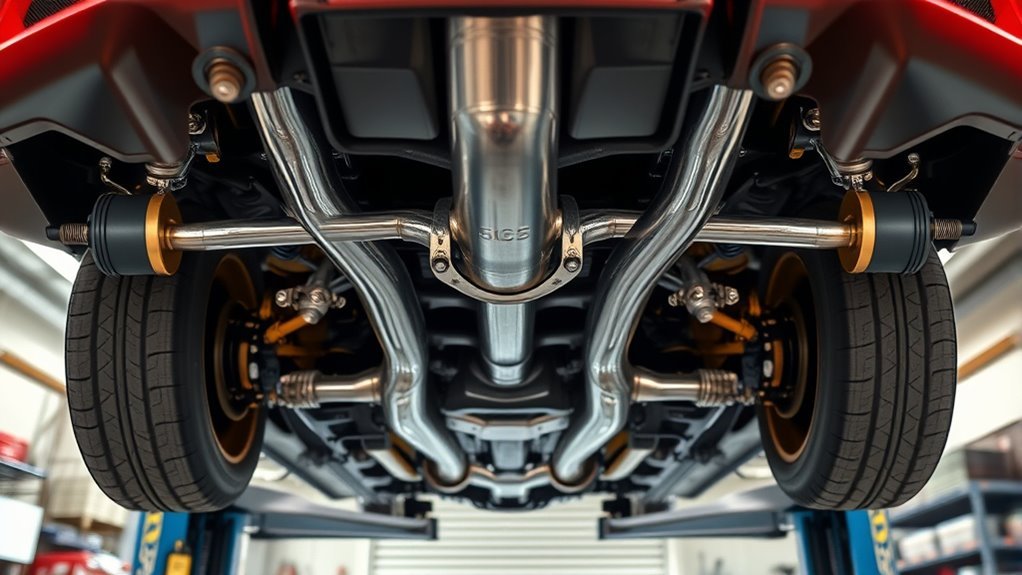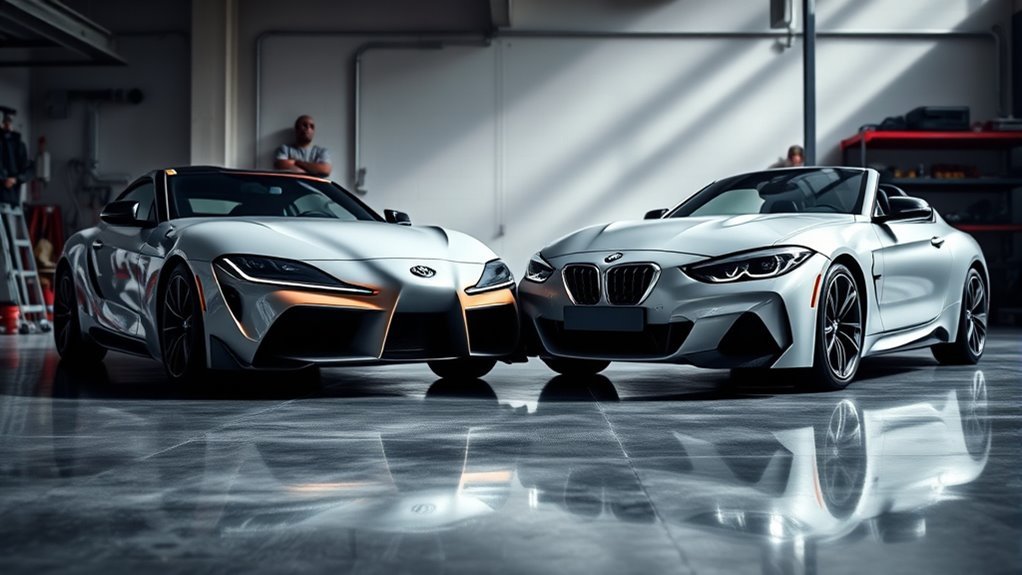
Toyota partnered with BMW to reduce development costs and utilize proven high-performance hardware while keeping the Supra’s unique character. This collaboration allowed both companies to share platforms, engines, and research for electric and hydrogen propulsion. Toyota integrated BMW’s 3.0-liter straight-six and eight-speed gearbox but applied custom mapping and chassis tuning to ensure the Supra handles like a true Toyota. Gazoo Racing validates these performance targets, creating a clear path for future electrification.
Quick Answer
The Toyota Supra uses a BMW-sourced engine and platform to cut costs and speed up development. While the powertrain and chassis components come from BMW, Toyota engineers tune the suspension, steering, and engine software to create a driving experience distinct from the BMW Z4.
Why Toyota and BMW Teamed Up
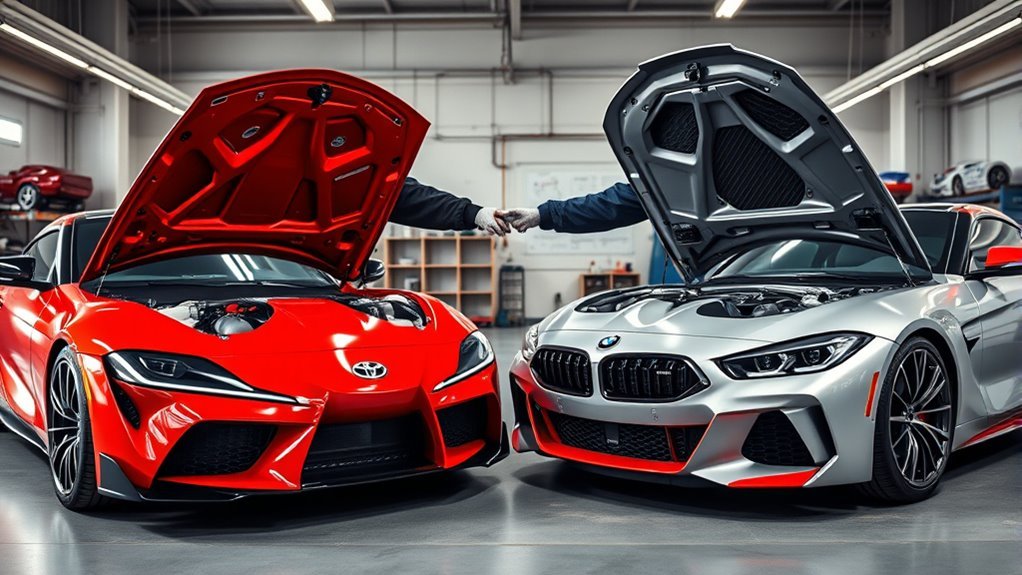
Rising development costs and changing performance standards led Toyota and BMW to sign a partnership in January 2013. They aimed to co-develop a midsize sports car platform that pooled their specific engineering strengths.
This collaboration offers several advantages:
- Reduced platform development costs through shared engineering.
- Faster testing and validation cycles.
- Efficient use of BMW’s proven straight-six engine.
- Shared knowledge in lightweight materials and powertrain design.
This technical alliance gives both brands the ability to maintain unique aesthetics and market positioning while sharing the heavy lifting of research and development.
Toyota-BMW Partnership: Origins, Goals, and Agreements
Building on their initial 2013 agreement, Toyota and BMW formalized plans to co-develop a midsize sports car platform while jointly exploring hydrogen fuel-cell and high-energy battery technologies. The partnership focuses on shared platform work to reduce costs and speed up the validation of new structures.
| Area | Objective | Impact |
|---|---|---|
| Platform | Shared midsize sports car | Cost, agility |
| Powertrain | H2 & dense Li-ion | Range, resilience |
| Identity | Brand separation | Market fit |
The Strategic Case: Why BMW Components Made Sense for Supra
Toyota chose BMW’s 3.0-liter straight-six and eight-speed transmission to provide a reliable, high-performance base. This choice saved significant time and money compared to designing a new engine from scratch. Toyota engineers focused their efforts on tuning the chassis and software to define the Supra’s personality.
[Products Worth Considering]

This LISEN MagSafe car mount charger combines wireless charging and a magnetic phone holder in one compact solution for everyday driving. With both dashboard and vent mounting options, a strong magnetic hold, and broad compatibility for popular iPhone and MagSafe-supported Android phones, it helps keep your device secure, accessible, and powered on the road.
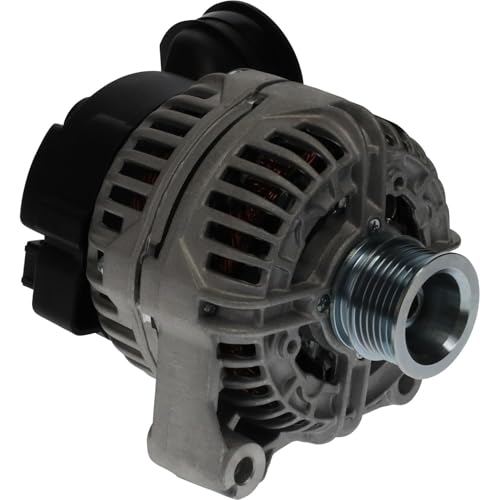
Replacement Part Numbers: 0 123 515 022, 0 124 515 050, 0 124 515 097, 0123515004, 0123515022, 0124515050, 0124515097, 12311432980, 12-31-1-432-980, 12311432986, 12-31-1-432-986, 12311740629, 12-31-1-740-629, 12311740631, 12-31-1-740-631, 12317501595, 12-31-7-501-595, 12317501597, 12-31-7-501-597, 12317501599, 12-31-7-501-599, 12317501690, 12-31-7-501-690, 12317501755, 12-31-7-501-755, 12317510593, 12-31-7-510-593, 12317510597, 12-31-7-510-597, 12317510599, 12-31-7-510-599, 12317515317
Engine Choice Rationale
Toyota selected BMW’s proven 3.0-liter inline-six to meet customer demand for a classic straight-six powerplant. Using this established engine freed up engineering resources to focus on the elements that define the driving feel, such as steering and suspension geometry.
The BMW unit provides a robust foundation for performance. By integrating this hardware and applying specific Toyota calibrations, the company delivers a unique driving experience while maintaining high reliability standards.
Cost And Resource Sharing
Tapping into existing BMW hardware resulted in several operational efficiencies for the Supra program. This strategic move allowed the company to allocate its budget toward high-impact areas like vehicle handling and aesthetics.
- Shared engine and transmission reduced non-recurring engineering costs.
- BMW chassis components shortened overall product validation cycles.
- Joint procurement increased leverage with suppliers, lowering per-unit expenses.
- Platform sharing minimized redundant R&D efforts.
Brand Identity Preservation
Toyota managed brand identity through deliberate calibration rather than just relying on shared hardware. Engineers tuned the engine mapping and shift points to match the performance profile expected of a Supra. Visual design and chassis tuning also diverge from the Z4, ensuring the car appeals to Toyota’s specific enthusiast base.
Why BMW Engines Power the New Supra
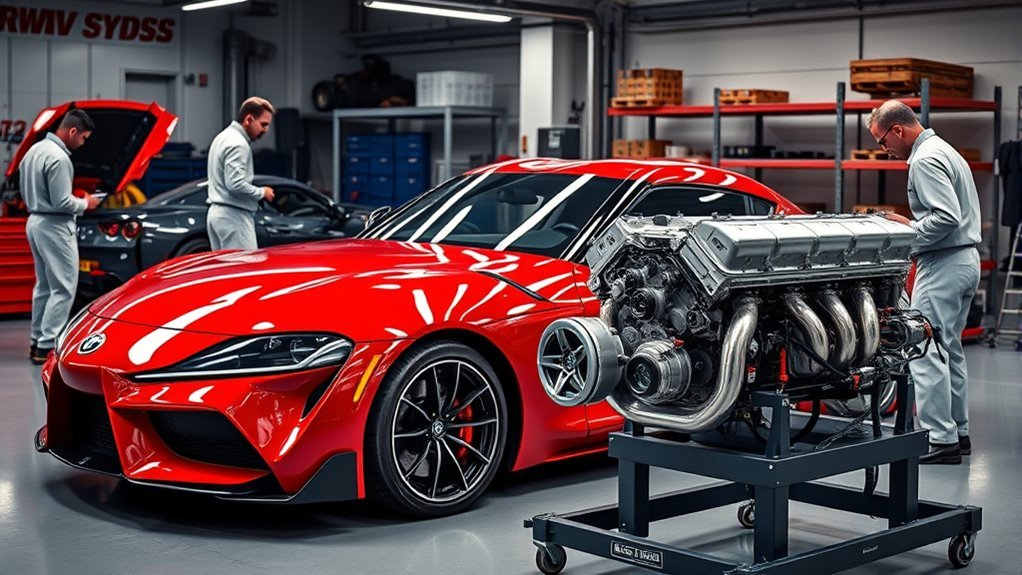
The fifth-generation Supra uses a BMW-sourced engine that Toyota recalibrates for its own specific power delivery goals. This partnership balances customer expectations for a straight-six with the practical need for modern engineering efficiency.
Practical benefits of this engine strategy include:
- Faster delivery of a refined, high-performance vehicle.
- Use of a compact, high-output engine architecture.
- Streamlined integration with the existing eight-speed automatic transmission.
- Ability to create a distinct driving signature through unique engine mapping.
[Products Worth Considering]

Officially Licensed Toyota Apparel for Women - Men; Toyota Motor T-Shirts; Toyota Trucks T-Shirts; Cars; Adventure; Racing; Off-Road; Gazoo Racing; Outdoor; Logo; Land Cruiser;

OPTIMAL PROTECTION – Advanced filter media captures up to 99% of dirt and airborne particles, helping protect critical engine components from premature wear.

RUGGED CONSTRUCTION: K&N Advantage air filters are built with durable, premium materials for up to 18,000 miles of use.
What Toyota Changed: Tuning, Chassis Tweaks, and Design Choices
Toyota engineers performed extensive work to differentiate the Supra from its platform-mate. While the core is shared, the driving experience remains unique to Toyota.
Key adjustments include:
- Recalibrated turbo response and engine mapping.
- Revised cooling systems to handle sustained high-performance driving.
- Stiffer bushings and retuned dampers for sharper handling.
- Bespoke suspension mounting points to improve turn-in and stability.
[Products Worth Considering]

Engine Schematics design. Officially Licensed Toyota Apparel for Women - Men - Boys - Girls - Toddler; Toyota Motor T-Shirts; Toyota Trucks T-Shirts; Car; Adventure; Racing;...
Supra vs Z4: How They Stay Visually and Mechanically Distinct
While the Supra and Z4 share a platform, their intended purposes lead to different mechanical outcomes. Toyota emphasizes a precise coupe feel, while BMW targets the open-top roadster market.
- Exterior: The Supra features a fixed-roof coupe design with unique aerodynamic bodywork.
- Platform sharing: Both brands apply different structural bracing and suspension geometry.
- Powertrain: Toyota uses its own custom mapping to alter the engine’s power delivery.
- Purpose: The vehicles cater to different driving philosophies regarding comfort and track-day capability.
Long-Term Roadmap: Hydrogen, Electrification Readiness, and Gazoo Racing
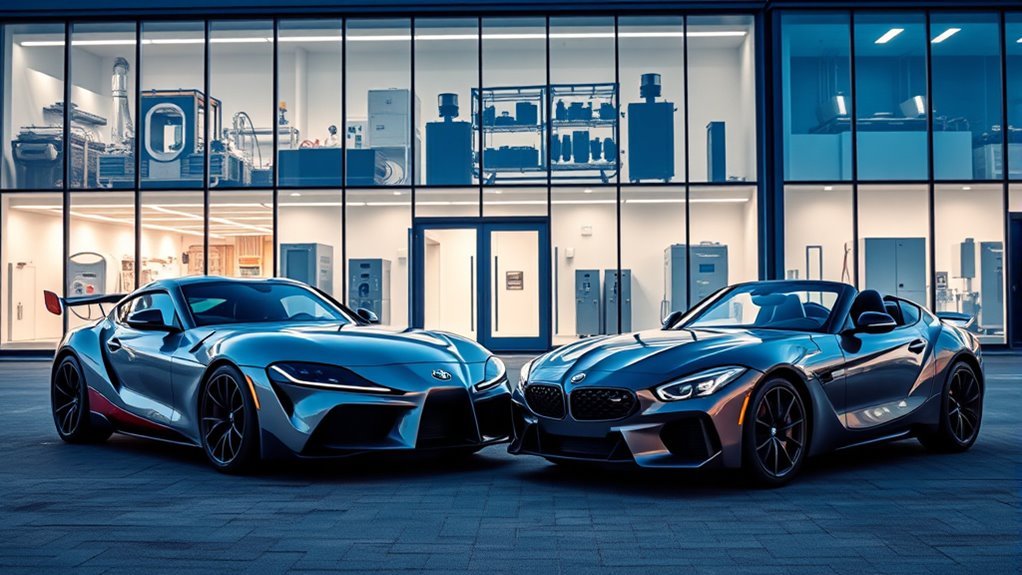
The partnership between Toyota and BMW now includes a focus on future propulsion technologies. Both companies are researching how to incorporate hydrogen and electrification into high-performance platforms.
Hydrogen Fuel Strategy
Toyota and BMW are exploring hydrogen fuel-cell systems as a way to maintain performance without relying solely on heavy battery packs. They prioritize lightweight structures to ensure that fuel-cell vehicles remain agile.
- Optimizing hydrogen storage and delivery systems.
- Developing chassis designs that support modular fuel-cell placement.
- Integrating small battery packs to handle peak power demand.
- Using Gazoo Racing to test and validate hydrogen tech in racing environments.
Always consult a qualified professional before making financial decisions based on the future availability or performance of new automotive technologies.
Electrification Integration Path
This roadmap details how the companies plan to transition to battery-electric and fuel-cell options. Future platforms will likely use modular designs that allow the brands to switch between drivetrains while maintaining similar chassis balance.
Gazoo Racing plays a role in this by developing control algorithms for electric motors, ensuring that future EVs handle with the same precision as their gasoline predecessors. The goal is to provide performance-focused options regardless of the power source.
Gazoo Racing Engines
Gazoo Racing focuses on building platforms that can support both high-power electric motors and hydrogen-capable engines. By designing from the ground up, the engineers avoid the weight penalties often associated with retrofitting electric components into older platforms.
What Each Side Gains: Benefits for Toyota and for BMW
The partnership provides tangible benefits to both manufacturers beyond simple cost savings. Toyota gains access to BMW’s advanced powertrain and electrification research, while BMW benefits from Toyota’s reputation for reliability and manufacturing efficiency.
This collaboration allows both companies to:
- Accelerate the development of new propulsion technologies.
- Optimize global component sourcing.
- Balance performance metrics with durability and reliability requirements.
Frequently Asked Questions
Is the Toyota Supra Basically a BMW?
No. While the Supra and Z4 share a chassis and engine, the suspension tuning, body design, and software calibrations are specific to Toyota. The resulting car offers a driving experience that matches the performance targets set by Toyota engineers.
Will the 2026 Supra Have a BMW Engine?
Yes. The current generation continues to use the BMW-sourced 3.0-liter inline-six. Toyota handles the calibration and tuning to ensure the engine meets the specific responsiveness and power delivery expectations of the brand.
Conclusion
The partnership between Toyota and BMW serves as a practical way to keep the sports car segment alive in a challenging market. By sharing development costs for the platform and engine, Toyota successfully revived the Supra while keeping it accessible. Although the car uses many BMW parts, the unique suspension settings and Gazoo Racing modifications ensure it remains a distinct product. This strategy sets a solid foundation for the future of hydrogen and electric performance vehicles.