You should run 75W-90 API GL-5 in your 4Runner rear differential for the best balance of cold-start flow, hypoid protection, and longevity; use 75W-85 only if you regularly face very cold climates and 80W-140 when towing or under heavy heat loads. Don’t mix viscosities or GL‑4 with GL‑5, and confirm limited‑slip needs. Change roughly every 30,000 miles, watch for noise or milky fluid, and check the breather—keep going for steps, torque specs, and product picks.
What Viscosity Does a 4Runner Rear Differential Need?
Wondering what gear oil your 4Runner’s rear differential needs? You should lean toward 75W-90 API GL-5 hypoid gear oil — it balances protection and performance across temperatures and loads. Viscosity impacts how quickly oil circulates at startup and how it cushions gears under stress, so using the recommended grade keeps contact patterns stable and wear minimal. In colder climates some drivers pick 75W-85 for easier cold starts, but swapping grades or mixing types risks compromising sealing, film strength, and torque transfer. For liberation from breakdowns, commit to scheduled differential maintenance: change the fluid roughly every 30,000 miles, inspect for leaks, and use the specified GL-5 formulation. That discipline preserves gear life and lets you drive confidently off-road or on pavement. Follow Toyota’s spec, avoid ad hoc substitutions, and you’ll free yourself from avoidable failures while keeping the rear differential performing reliably.
75W‑90 vs 75W‑85 vs 80W‑140 for 4Runner Diffs
When you compare W‑90, 75W‑85, and 80W‑140 for 4Runner diffs, start by looking at cold‑start viscosity: lower‑W grades like 75W‑85 flow easier at low temps for quicker lube film formation. Then consider load and temperature protection—80W‑140 gives superior film strength under towing or off‑road heat, while 75W‑90 balances protection for everyday driving. Don’t mix viscosities and always match the oil choice to your climate and duty cycle.
Cold-Start Viscosity Differences
Because cold-start viscosity directly affects how quickly lubricants reach critical gears, you’ll notice that choosing 75W-85 instead of 80W-140 gives your 4Runner’s diffs better flow and protection during low-temperature starts. You’ll feel the cold weather performance difference immediately: 75W-85’s lower pour point and winter rating reduce initial wear and help gears mesh smoothly. 80W-140 stays thicker at startup, increasing friction until it warms, so it’s less ideal if you want freedom from cold-induced wear. SAE 75W-90 strikes a practical middle ground, offering solid viscosity impact at cold temps while still protecting under normal driving heat. If you live where temperatures drop, pick 75W-85 to minimize startup wear and keep your drivetrain responsive and reliable.
Load And Temperature Protection
If you regularly tow, carry heavy loads, or tackle hot-condition off‑roading, choosing the right gear oil matters because it determines how well your 4Runner’s diffs resist heat and wear under strain. You’ll favor 80W‑140 when serious load management and temperature stability are priorities: its higher viscosity and heat-dissipation traits protect gears under sustained towing or aggressive off‑road work. Toyota’s guidance leans toward 75W‑85 (or 75W‑90) for everyday use, balancing protection with fuel efficiency and better cold-start flow. A GL‑5 75W‑90 offers extreme‑pressure additives that help hypoid gears without the drag of 140-grade fluids in moderate duty. Whatever you choose, change fluid around 30k miles and monitor for overheating—older heavy oils can raise friction and negate protection.
GL4 vs GL5 and Limited‑Slip Additives Explained
Although GL-4 and GL-5 look similar on the bottle, they serve different jobs and you need to pick the right one for your 4Runner’s differential. You’ll avoid differential chatter by choosing oil with the proper friction modifiers; LSDs need those additives to keep clutches from grabbing and to maintain smooth engagement. GL-4 works for older manuals and some gear sets, but it doesn’t offer the extreme-pressure protection modern hypoid differentials demand. GL-5 provides that extra EP protection and is the usual choice for a 4Runner, though its additive package can change friction characteristics.
Don’t mix GL-4 and GL-5—different additives can weaken protection and harm performance. If your 4Runner has a limited-slip unit, either pick a GL-5 formulated with friction modifiers or add an approved LSD additive. Check your owner’s manual to confirm the spec and additive needs so you can drive freely, confidently, and without unnecessary wear.
Toyota OEM Specs and Acceptable Synthetic Substitutes
You should stick with Toyota’s OEM spec of API GL‑5 gear oil in 75W‑90 or 75W‑85 (SAE 90 or SAE 110 where specified) for the differentials. Acceptable full synthetic substitutes include Mobil 1 75W‑90 and Redline 75W‑90, but don’t mix synthetic with conventional oil and use limited‑slip formulations or friction modifiers when required. Also note that transfer case fluid may call for a different viscosity or spec, so confirm the correct fluid before topping off.
Toyota OEM Specifications
When maintaining your 4Runner’s differentials, follow Toyota’s OEM recommendations: use API GL‑5 hypoid gear oil—75W‑90 for the rear and 75W‑85 for the front (75W‑90 is an acceptable substitute in many cases). For straightforward differential maintenance, stick to those viscosities to guarantee oil compatibility with gears and limited-slip components. Toyota’s specs reflect modern needs: SAE 110 can replace SAE 90 where heavier film strength is beneficial. You’re free to choose quality oils that meet GL‑5; full synthetics like Redline 75W‑90 and Mobil 1 75W‑90 are frequently cited by users for superior protection and longer drains. Follow Toyota’s fill volumes and intervals, verify seals and magnets, and you’ll preserve drivetrain freedom and reliability.
Approved Synthetic Alternatives
Following Toyota’s OEM viscosity guidelines, you can choose from several synthetic 75W‑90 GL‑5 options that offer better wear protection and longer drain intervals than conventional gear oils. You’ll favor brands like Redline 75W‑90 and Royal Purple Max Gear 75W‑90 for proven synthetic benefits and clear oil compatibility with Toyota differentials. Verify API GL‑5 to protect hypoid gears under high pressure. Some users report 75W‑85 synthetics work in specific climates, but stick to OEM recommendations for general use. Choose fluids that handle low temps and high loads for off‑road freedom and reliability.
| Brand | Viscosity | Notes |
|---|---|---|
| Redline | 75W‑90 | Strong wear protection |
| Royal Purple | 75W‑90 | Extended drains |
| Redline | 75W‑85 | Climate-specific option |
| OEM spec | 75W‑90 GL‑5 | Required baseline |
Transfer Case Fluid Notes
Although Toyota calls for Genuine Transfer Gear Oil SAE 75W (or an equivalent) in its transfer cases, you can use several high-quality synthetics—like Redline 75W‑85 or Royal Purple Synchromax—provided they meet the OEM viscosity and performance expectations. You should perform transfer case maintenance about every 30,000 miles: drain, inspect, and refill to preserve gear life and shifting quality. Check fluid levels frequently to avoid overheating and the damage that follows low or degraded oil. When you drain the case, look for metal particles, water, or sludge—signs of fluid contamination that demand immediate attention and likely further service. Choose a synthetic that matches SAE 75W viscosity and OEM specs, and you’ll free yourself from premature wear while keeping the system reliable.
How to Check and Change Your 4Runner Differential Oil
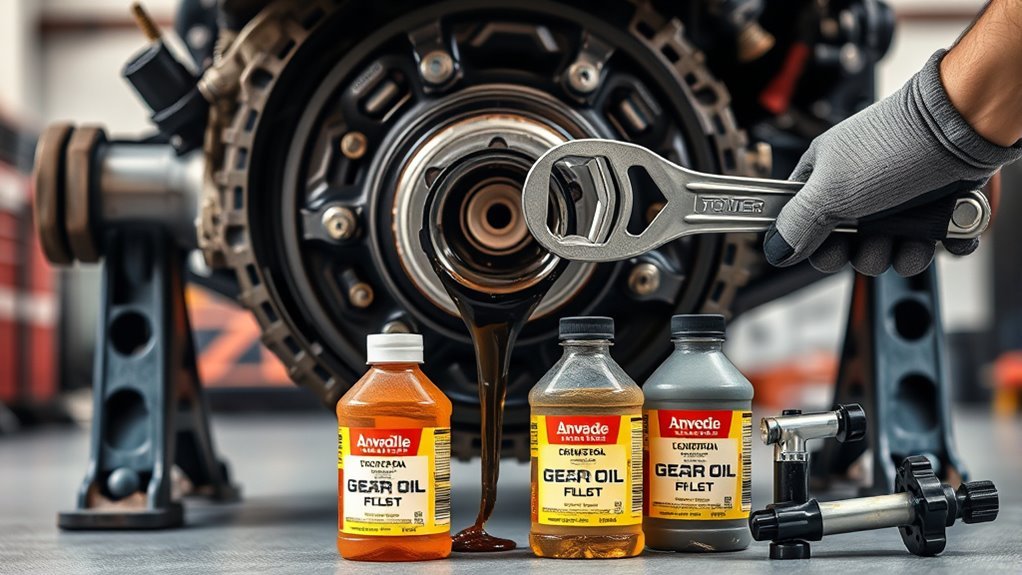
Start by checking the differential oil level: remove the fill plug and confirm the oil reaches the bottom of the hole—if it doesn’t, add more until it does. For disciplined differential maintenance, inspect the oil color and smell while you’re there; dark, gritty fluid indicates oil contamination and means you should change it. To change the oil, place a drain pan under the drain plug, remove it, and let the old oil drain completely so contaminants leave with it. Clean the drain and fill plug threads and replace crush washers if fitted. Refill with 75W-90 synthetic gear oil to the fill-hole level, then torque plugs to spec. Start the vehicle, take a short drive, and recheck for leaks at both plugs and confirm level again. This routine keeps your 4Runner free and reliable, prevents gear wear, and restores control—so you can move without being held back by neglected differentials.
Service Intervals, Symptoms of Old Oil, and Breather Checks
When you want your 4Runner’s differentials to last, change the gear oil about every 30,000 miles (and check your owner’s manual for model-specific intervals), because old oil raises friction, heats faster, and accelerates wear; watch for unusual noises, excess heat, or degraded performance as clear signs it’s time to act. Stick to those intervals for reliable differential maintenance and to keep your vehicle free from avoidable failures. Inspect fluid color and consistency—dark, gritty, or milky oil signals oil contamination and needs immediate replacement. Also check and clean the differential breather regularly; a clogged breather traps pressure, draws contaminants in, and causes leaks or seal failure. When you perform service, look for milky residues around seals or magnetic drain plugs for metal grit. If you notice elevated running temperature, whining, or rough engagement, don’t delay: drain, flush, and refill per spec, and restore breather function. Staying proactive preserves freedom on and off road.
Recommended Products: Budget vs Performance Picks
1 choice you’ll make when servicing your 4Runner’s differential is whether to prioritize cost or performance, and both paths have dependable options: For budget options, Valvoline 75W-90 delivers reliable protection at a low price, letting you maintain drivetrain health without overspending. You’ll still get quality coverage across normal driving and light off-road use. If you lean toward performance upgrades, Mobil 1 75W-90 offers a synthetic formulation for longer service intervals and stronger wear resistance. For extreme conditions and track-minded builds, Redline 75W-90 reduces friction and handles heat exceptionally well. When towing or serious off-roading is routine, consider Royal Purple Max Gear 75W-140 for thicker protection under heavy loads. Pick from well-reviewed brands rather than the cheapest alternatives; that choice frees you from frequent changes and unexpected failures. Match viscosity to load and climate, then choose the product that aligns with how far you push your 4Runner.
Frequently Asked Questions
What Kind of Gear Oil Does a 2002 Toyota 4runner Take?
You should use API GL-5 hypoid gear oil: rear typically SAE 75W-90, front Toyota recommends 75W-85 (75W-90 common). You’ll note gear oil types and viscosity ratings matter; don’t mix synthetic and conventional.
Conclusion
Keep the right diff oil and your 4Runner will run quieter, shift cleaner, and avoid expensive gear wear. For example, a 2012 owner switched from 80W‑90 to Toyota‑spec 75W‑90 GL5 synthetic after noisy clunks and saw smoother operation and no leaks for 30k miles. Follow Toyota specs, use GL5 with LSD additive if needed, check breathers, and replace at recommended intervals to keep driveline longevity and confident, trouble‑free ownership.