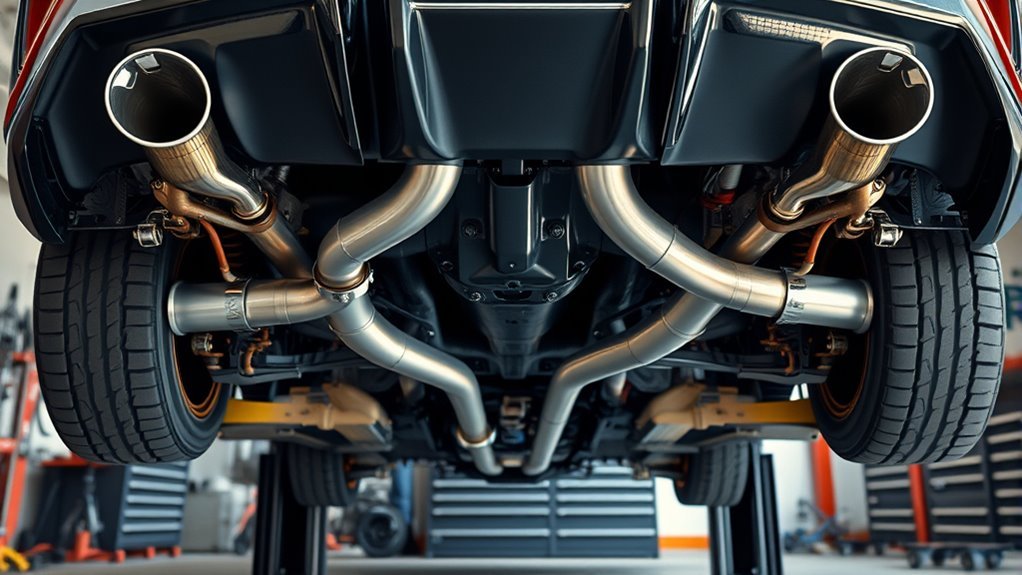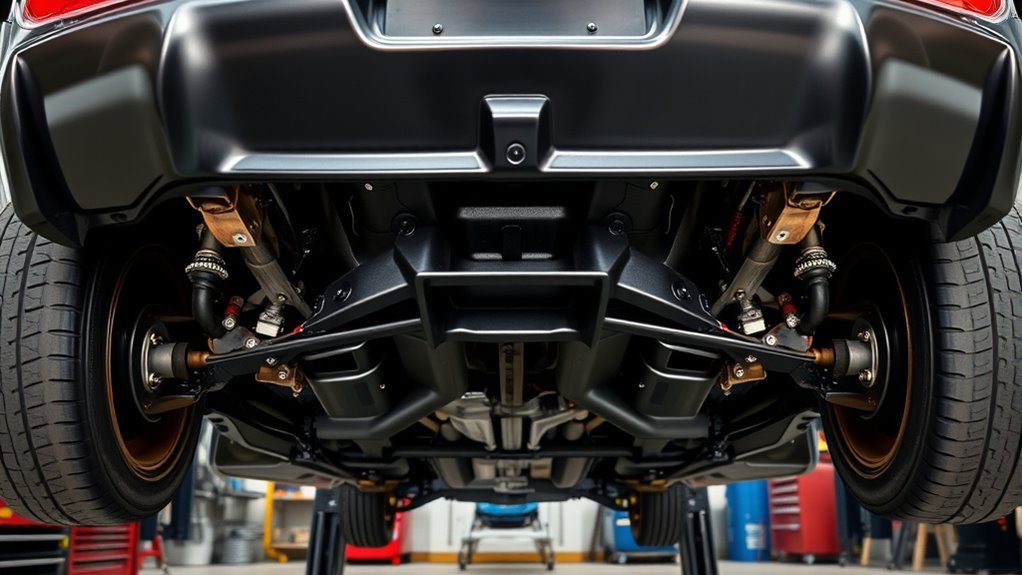
You get a rear‑biased, compact transaxle layout and mixed‑material subframes that net near 50:50 mass distribution and low polar inertia for crisp rotation. A short 97.2‑inch wheelbase, wide track and very high torsional rigidity sharpen turn‑in and feedback. Dual‑pivot MacPherson up front, aluminum subframe and adaptive CVSAe dampers refine self‑centering and response, while a five‑link rear controls toe and grip. Keep going and you’ll uncover the tuning limits and practical upgrade paths.
How Toyota Supra Chassis Delivers 50:50 Balance and Driving Goals
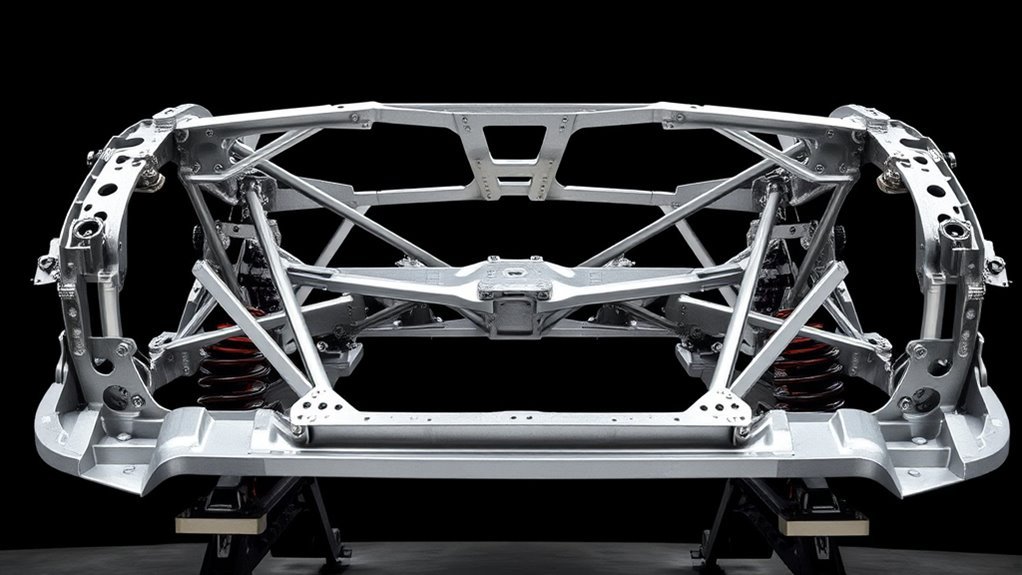
Because Toyota positioned the engine rearward in the bay and matched that with a compact transaxle layout, the Supra achieves a true 50:50 front-to-rear weight balance that gives you predictable lateral response and neutral turn-in. You’ll feel chassis dynamics engineered for decisive control: double-joint spring MacPherson front struts and a multi-link rear suspension translate balanced weight distribution into precise load transfer and consistent tire contact. High structural rigidity, exceeding even the Lexus LFA, reduces unwanted compliance so inputs produce immediate, proportional outcomes. An active differential varies lock from 0 to 100% to optimize traction during both acceleration and deceleration, expanding the envelope you can exploit. Nürburgring-proven calibration guarantees the car rewards intent, freeing you to push limits with confidence.
Chassis Architecture: Short Wheelbase, Wide Track and “Condensed Extreme
The Supra’s “Condensed Extreme” architecture packs sports-car intent into a compact, focused package: a short 97.2-inch wheelbase and a deliberately wide track produce rapid directional changes and high lateral stability, yielding what Toyota calls a golden ratio of 1.55 for ideal handling balance. You feel immediate responsiveness from the wheelbase benefits: quicker turn-in, reduced yaw inertia and tighter mid-corner corrections. The long bonnet and compact cabin concentrate mass, while a rearward engine position secures a 50:50 weight distribution and amplifies grip.
- Short wheelbase improves agility and steering precision.
- Wide track increases lateral stability and roll resistance.
- High structural rigidity supports sharper inputs.
- Mass concentration enhances rotational control.
This architecture frees you to exploit dynamic potential with confidence.
Subframes: Aluminium Front vs Steel Rear – Structural Trade‑Offs
Balance is at the heart of the Supra’s subframe strategy: an aluminum front subframe trims mass and unsprung weight to sharpen steering response, while a steel rear subframe supplies the strength and fatigue resistance needed to anchor heavy rear suspension and drivetrain loads. You’ll appreciate how subframe materials are deployed to free performance: aluminum up front reduces overall mass and helps hit a 50:50 balance, steel aft gives durability under high loads, and together they manage performance trade offs between agility and structural integrity. The choice isn’t ideological—it’s tactical, letting you push handling without sacrificing longevity. Below is a compact comparison to clarify structural roles and expected outcomes.
| Component | Purpose |
|---|---|
| Front (Aluminum) | Reduce unsprung weight |
| Rear (Steel) | Provide rigidity and fatigue resistance |
| Vehicle Balance | Support 50:50 distribution |
| Handling Outcome | Sharper response vs robust dynamics |
Front Suspension: Dual‑Pivot Strut, Subframe Role and Steering Feel
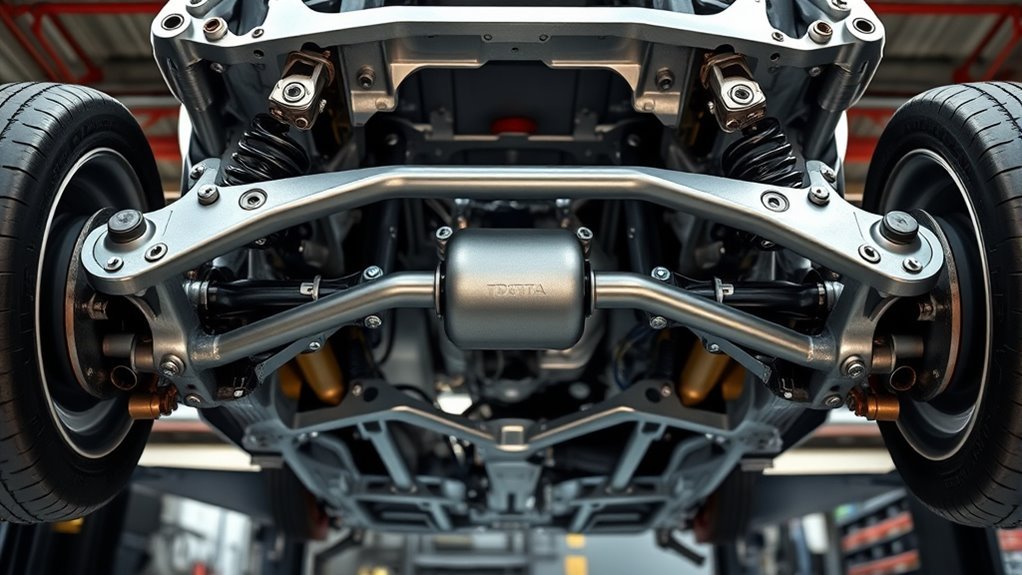
Precision steering in the Supra starts with a dual‑pivot strut that lowers scrub radius and sharpens self‑centering, letting you place the wheel confidently through quick direction changes. You feel direct feedback because the strut design separates steering and lateral load paths, improving tire contact consistency under load. An aluminum subframe anchors the steering rack and stabilizer pivot, cutting unsprung mass while keeping rigidity for precise inputs.
- Dual‑pivot strut improves tracking and reduces steering effort
- Aluminum subframe reduces mass and preserves structural accuracy
- CVSAe dampers adapt in real time for consistent control
- Height sensors enable suspension tuning for ride versus response
Four‑piston front calipers add braking precision, reinforcing the chassis’ communicative feel.
Rear Suspension: Five‑Link Geometry, Motion Ratios and Dynamic Toe
Moving rear grip work hand-in-glove with the front’s direct steering, as the Supra’s five-link rear layout controls wheel motion independently through five discrete links that separate lateral and longitudinal loads. You’ll find the eccentric inner end on the lower control arm gives purposeful camber adjustment so you can dial cornering performance without changing mounting points. The spring’s 0.55:1 motion ratio delivers efficient force transfer and predictable responsiveness across travel, so suspension tuning yields consistent roll behavior. A slim toe link preserves static wheel alignment while inducing progressive dynamic toe-in under lateral load, sharpening rear-end grip as you commit. The rear stabilizer bar tied to the aluminum hub carrier raises local stiffness, letting you exploit alignment and damping choices for liberated, precise handling.
How Chassis Geometry (Roll Centers, Golden Ratio) Shapes Handling
Because roll-center placement and the Supra’s 1.55 “golden ratio” work together, you get a chassis that trades off agility and stability in a predictable, tunable way. You’ll feel precise directional changes because roll center dynamics control load transfer rates, while the golden ratio biases front/rear response for neutral behavior. The 50:50 weight split and dual‑pivot front geometry reduce scrub radius, sharpening steering and aiding self‑centering. The rear five‑link locates the wheel for consistent toe and lateral control. Electronically‑controlled damping then refines behavior in real time, enabling suspension optimization across conditions.
- predictable load transfer management
- tunable under/oversteer balance
- enhanced steering feedback
- adaptive ride and control
Stiffness vs Safety: Torsional Rigidity, LFA Comparison and Track Benefits
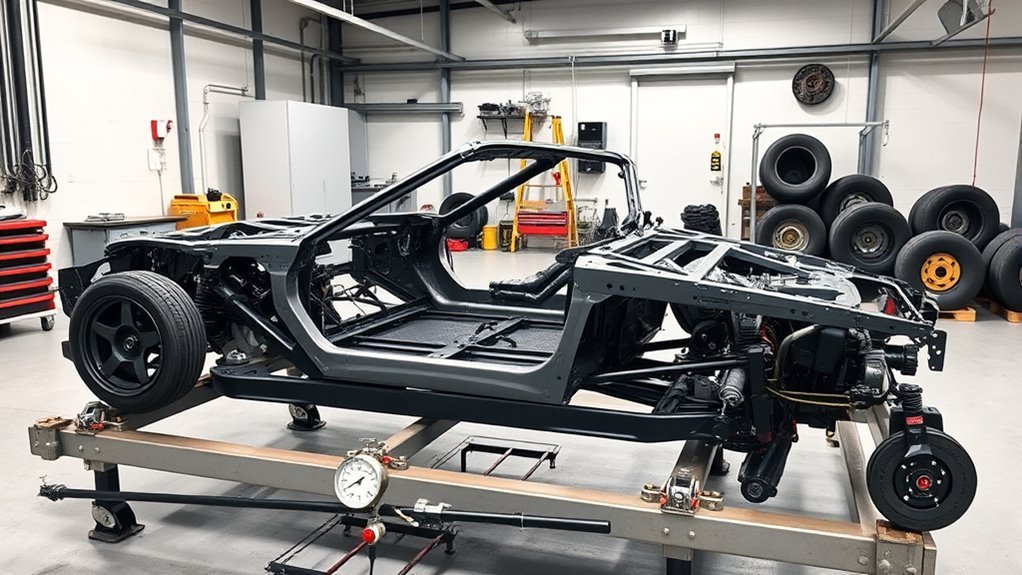
While many sports cars trade crash safety or comfort for a rock‑hard shell, the Supra achieves exceptional torsional rigidity without compromising occupant protection, and you’ll notice the benefits immediately on track. You feel sharper steering inputs and more predictable weight transfer because Supra’s stiffness benefits extend beyond headline numbers: superior torsional rigidity, rearward engine placement delivering 50:50 balance, and aluminum subframe components cut mass while preserving strength. Compared to the Lexus LFA, Supra’s structure surpasses its torsional resistance, translating to steadier behavior under high lateral loads. Engineers proved this through Nürburgring validation, confirming no undue safety trade offs despite a firmer personality. For a liberated driver, that means you can push harder, brake later, and trust the chassis to respond precisely.
Practical Tuning and Ownership: Setup Limits, Common Upgrades, Maintenance
Having a stiff, predictable chassis gives you a solid baseline for tuning and ownership decisions, but real-world setups require balancing that rigidity with component limits and maintenance practices. You’ll exploit the 50:50 weight distribution through precise tuning strategies, but remember component limits: bushings, mounts, and wheel bearings wear faster under aggressive setups. Prioritize suspension upgrades that let you adjust ride height, damping, and rear toe to match driving goals.
A stiff, predictable chassis is your tuning baseline—balance rigidity with component limits, adjustable suspension, and diligent maintenance.
- Install adjustable coilovers for controlled damping and height.
- Fit adjustable toe links to use the multi-link rear’s dynamic toe.
- Choose lightweight forged wheels and high-grip tires to reduce unsprung mass.
- Inspect bushings and alignment regularly to protect geometry.
Be methodical: tune incrementally, record changes, and maintain parts to stay liberated on track and road.
Frequently Asked Questions
What Chassis Is the Supra Built On?
You’re built on a shared BMW-derived platform that uses mixed chassis materials and aluminum subframes; you’ll leverage this for performance tuning, freeing your driving potential through structural rigidity, balanced weight distribution, and precise multi-link rear dynamics.
What Are Common Supra Problems?
40% of owners report turbo lag issues; you’ll face engine issues, suspension wear, transmission failures and electrical faults, so you’ll analyze cooling, electronics compatibility, rear diff tuning and reinforce components to reclaim driving freedom.
Do the Z4 and Supra Share the Same Chassis?
Yes — they share the same underlying platform, but you’ll note chassis differences and performance comparisons matter: Toyota redirects tuning, suspension geometry, and weight distribution to liberate driver engagement, yielding a distinctly sportier Supra.
Conclusion
You’ll recognize the Supra’s chassis like a well‑tuned clock: short wheelbase and wide track give you 50:50 balance, subframes trade weight and stiffness like chess moves, and five‑link rear geometry tweaks motion ratios and toe for grip. Knowing roll centers and golden‑ratio cues sharpens your setup choices; torsional rigidity versus crash safety frames your limits. Use this knowledge to tune, maintain, and upgrade with the precision of a race engineer.