
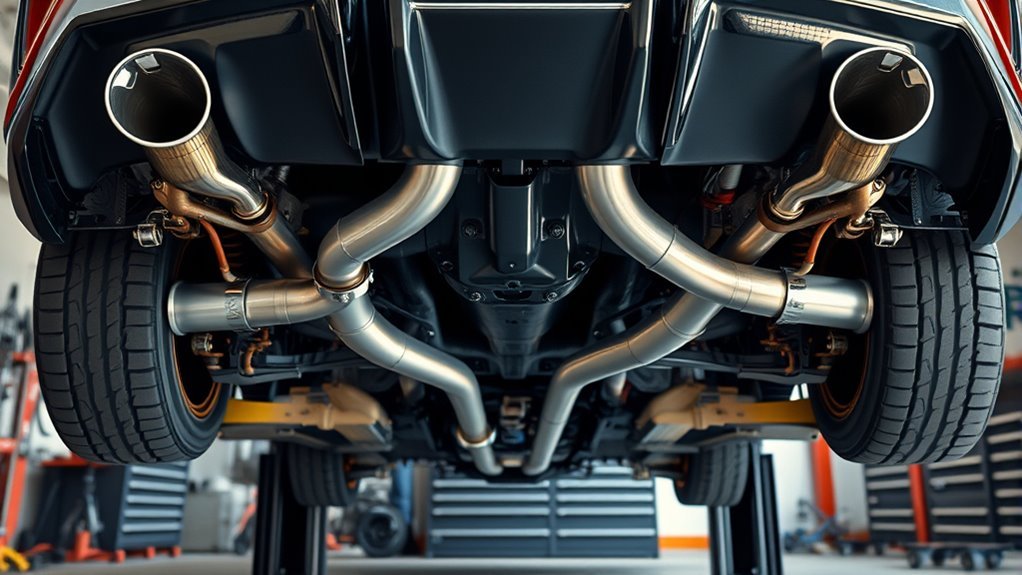
The Toyota Supra exhaust system on the U.S.-market MkV GR Supra 3.0 routes exhaust from the turbocharger into the downpipe and close-coupled catalyst area, through the center pipe or midpipe, and into the rear muffler, active-valve hardware, and tips. For most street cars, a resonated or valved cat-back is the lowest-risk sound upgrade because it leaves the primary catalyst in place. A downpipe changes the hotter, emissions-monitored front section, so it demands tighter fitment, catalyst, sensor, tuning, and legal checks.
Last updated: August 31, 2026. This revision corrects U.S. GR Supra 2.0 model-year scope, separates 2026 MkV Final Edition fitment, adds current manufacturer fitment examples, and rechecks EPA/CARB guidance.
Affiliate disclosure: This page may contain affiliate product links. If you buy through them, we may earn a commission at no extra cost to you.
Quick Answer
On a fifth-generation GR Supra 3.0, exhaust flows from the turbo outlet into the downpipe and close-coupled catalyst area, through the center pipe, then into the rear muffler, active-valve, and tip assembly. The downpipe has the strongest link to post-turbine restriction, catalyst monitoring, heat, and tuning risk. The center section mainly affects connection, clearance, and resonance. The cat-back mainly changes tone, volume, weight, valve behavior, and rear-section flow.
Key Takeaways
- This guide focuses on U.S.-market 2020–2026 GR Supra 3.0 models. The U.S. GR Supra 2.0 was offered for model years 2021–2024 and uses different exhaust hardware; older A70/A80 generations are also different.
- A cat-back is usually the best first upgrade when the goal is sound, appearance, or modest weight reduction without replacing the primary catalyst.
- A high-flow catted downpipe is not automatically street legal. Verify the exact vehicle application, emissions documentation, CARB Executive Order status where required, and local inspection rules.
- Do not buy by pipe diameter alone. Confirm model year, engine, transmission, flange or clamp type, active-valve compatibility, hanger locations, and ground clearance.
- For 2026, verify the exact trim. Toyota lists 3.0, 3.0 Premium, and MkV Final Edition models, and some aftermarket systems explicitly exclude the Final Edition.
Evidence note: This is a layout, fitment, and compliance guide based on Toyota documentation, EPA/CARB guidance, and current manufacturer application data. It does not claim first-hand dyno or sound testing; product-specific measurements are identified as manufacturer data.
At a Glance
| Part | Main Job | Main Buying Risk |
| Downpipe/catalyst section | Moves hot gas away from the turbo and treats emissions | Emissions legality, sensor faults, heat, tune compatibility |
| Center pipe/midpipe | Connects front and rear sections; manages resonance and clearance | Drone, mismatched connections, chassis contact |
| Cat-back | Tunes sound, retains or replaces valve hardware, changes rear flow and weight | Drone, valve faults, bumper contact, excessive noise |
| Best first upgrade | Resonated or valved cat-back for most street cars | Buying a system recorded with a different downpipe than yours |
Which Toyota Supra Exhaust System Does This Guide Cover?
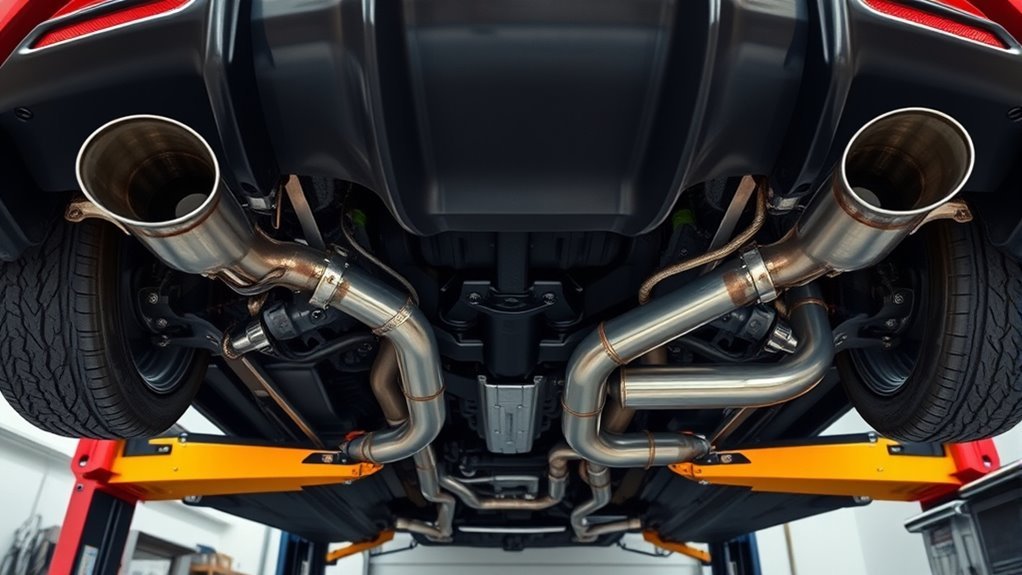
This guide covers the modern, fifth-generation GR Supra 3.0 sold in the United States from model years 2020 through 2026. Toyota’s 2026 U.S. lineup includes the GR Supra 3.0, 3.0 Premium, and MkV Final Edition; Toyota rates all three at 382 horsepower and 368 lb-ft of torque. See Toyota’s official GR Supra page and the 2026 GR Supra MkV Final Edition announcement for current factory information.
The layout concept is similar across MkV 3.0 cars, but exhaust part numbers are not automatically interchangeable. The 2020 3.0 was rated at 335 horsepower, Toyota raised the U.S. 3.0 rating to 382 horsepower for 2021, and the six-speed manual arrived for model year 2023. For 2026, trim matters too. A listing that says only “A90/A91” or “2020–2026” is not enough by itself; check the manufacturer’s exact year, engine, transmission, and trim application before ordering.
| Vehicle | How This Guide Applies | Fitment Check |
|---|---|---|
| 2020 GR Supra 3.0 | Same turbo-to-tailpipe concept; early 335-hp calibration and model-year-specific hardware | Confirm 2020-specific downpipe and cat-back listings |
| 2021–2022 GR Supra 3.0 | Updated 382-hp 3.0-liter configuration; automatic transmission | Check year range, catalyst connection, valve support, and braces |
| 2023–2025 GR Supra 3.0 | 382-hp 3.0-liter configuration with manual or automatic availability | Verify transmission-specific clearance and included adapters |
| 2026 GR Supra 3.0 / 3.0 Premium / MkV Final Edition | 382-hp 3.0-liter configuration; manual or automatic available | Verify trim-specific fitment; do not assume Final Edition compatibility |
| 2021–2024 GR Supra 2.0 | Different four-cylinder engine and exhaust hardware | Do not assume 3.0 exhaust parts fit |
| A70/A80 Supra | Different generations, engines, chassis, and exhaust architecture | Use a generation-specific guide and parts catalog |
For a deeper model-year explanation, see the site’s A90 vs. A91 guide. For catalyst-specific symptoms and diagnostics, use the Supra catalytic converter guide.
Current fitment example: Borla’s 2020–2026 GR Supra catalog lists its 3.0-liter valved cat-back family across the broad year range but explicitly says “EXCEPT Final Edition Models.” HKS likewise separates B58 Supra exhaust applications by model code and, on some products, transmission. These current catalogs show why a broad “MkV” year range is not proof of compatibility. Check Borla’s GR Supra application page and HKS’s GR Supra application chart.
Fitment note: “A90” and “A91” are used inconsistently in enthusiast listings. Treat those labels—and broad year ranges—as search terms, not proof of compatibility. The part manufacturer’s current application chart and installation instructions should control the purchase.
How Does GR Supra Exhaust Flow From the Turbo to the Tailpipes?
Exhaust energy spins the turbocharger turbine, then the gas exits into the downpipe and close-coupled catalyst area. From there it travels through the center exhaust section and into the rear muffler and tailpipe assembly. The front section sees the most heat and has the closest relationship to catalyst monitoring. The rear section has the largest effect on sound and active-valve behavior.
What Happens at the Turbo-to-Downpipe Transition?
This joint handles very hot, high-velocity exhaust. Flange flatness, V-band alignment where used, weld quality, catalyst construction, heat shielding, and oxygen-sensor placement all matter. A leak here can create ticking, odor, soot, heat damage, or abnormal sensor readings. It can also make the car sound louder without producing a useful performance gain.
A larger or smoother aftermarket downpipe can reduce restriction after the turbine, but the result depends on the catalyst, turbo, tune, fuel, and test method. Do not accept a fixed horsepower promise unless the seller provides same-car, same-fuel, same-dyno before-and-after data.
What Does the Center Pipe or Midpipe Do?
The center section connects the downpipe area to the rear exhaust. It must clear braces, heat shields, the driveshaft tunnel, and underbody panels without preloading the hangers. Depending on the brand, this section may be called a midpipe, front pipe, center pipe, or part of the cat-back. Compare diagrams rather than relying on the product name alone.
Resonators in this section target harsh frequencies and highway drone. Flex joints can reduce stress from engine and drivetrain movement. Oxygen-sensor compatibility is usually a downpipe or catalyst concern on stock-style MkV 3.0 layouts, so do not assume a center pipe needs sensor bungs unless the manufacturer’s instructions show them.
What Does the Cat-Back Change?
The cat-back changes the rear piping, muffler, valve arrangement, and tips after the catalyst section. It is normally the lowest-risk exhaust area to modify for sound because it does not replace the primary catalytic converter. On the GR Supra, check whether the system retains the factory active-exhaust actuator, uses a supplied valve, disables the valve mechanically, or removes valve control entirely.
Tip size changes appearance and can slightly alter the sound at the outlet, but it does not correct a restriction farther upstream. Muffler and resonator design matter more. A valved or well-resonated system usually suits a daily driver better than the loudest available straight-through rear section.
Pro Tip: Judge sound clips only when the test car uses the same downpipe, center section, transmission, and valve mode as your car. A cat-back that sounds controlled with the stock catalyst can become much louder after a downpipe change.
Where Does the Supra Exhaust Sit Under the Chassis?
The downpipe sits near the turbo and front of the transmission tunnel. The center section follows the tunnel, while the rear exhaust routes around the rear suspension and bumper area. Heat shields, braces, underbody panels, wiring, sensor leads, and suspension movement all compete for space.
Heat management is most important around the turbo, downpipe, and catalyst. Toyota’s owner materials warn that the exhaust system can reach high temperatures and cause burns. Keep oxygen-sensor wiring, plastic undertrays, brake-related components, and body insulation away from hot tubing. After an install, inspect the system with the suspension loaded if possible; clearance on a lift can look different when the car is on the ground.
Check the lowest points before driving over speed bumps or track curbing. V-band clamps, slip-joint clamps, resonators, and muffler cases can hang below the surrounding chassis. Lowered cars need extra margin. The site’s Supra underbody-panel guide can help identify nearby covers and inspection points.
What Is the Difference Between Stock, High-Flow, and EWG Downpipes?
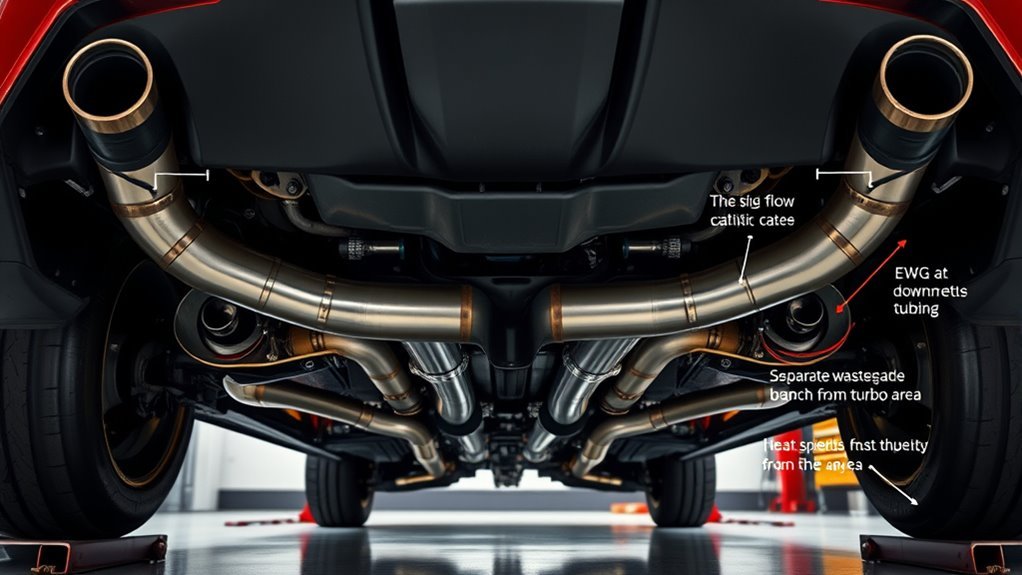
The downpipe is the exhaust part with the greatest effect on heat, catalyst function, oxygen-sensor feedback, emissions readiness, and potential tuning needs. It is also the part most likely to create a check-engine light or legal problem when the catalyst is changed or removed.
[Products Worth Considering]

FOXWELL NT201 is an easy-to-use OBD2 scanner designed to help drivers quickly read and clear check engine codes, view live engine data, and check emissions readiness. Its color screen, one-key I/M readiness test, and broad compatibility with most gasoline vehicles since 1996 make it a practical tool for everyday diagnostics and maintenance. With plug-and-play operation and lifetime free updates, it offers a simple way to understand vehicle issues without expensive shop visits.

Walker exhaust pipe flange gasket is designed to help complete exhaust repairs with a reliable seal for compatible vehicles. Built to work with OE exhaust components and Walker replacement parts, it features heat-deflecting construction, durable materials, and slotted bolt holes where applicable for easier installation. Engineered and tested for real-world performance, it supports long-lasting exhaust system service.

The BLCKTEC 440 Bluetooth OBD2 scanner helps drivers and DIY mechanics quickly read and clear trouble codes, monitor live data, and check emissions readiness with confidence. Its color display, graphing capabilities, and battery and charging system testing make it a versatile diagnostic tool for OBD-compliant vehicles. Designed for plug-and-play convenience, it runs directly from your vehicle and includes support for report sharing and ongoing updates.
Why Keep the Stock Downpipe?
The stock downpipe is engineered as part of the vehicle’s certified emissions configuration. It supports cold-start catalyst light-off, heat shielding, noise control, sensor feedback, and the factory calibration. It is not designed only for maximum flow, but it avoids many of the inspection, odor, and fault-code risks that come with an aftermarket front section.
Do not use the 2020 car’s 335-hp rating as a universal “stock downpipe limit.” Toyota raised the U.S. 3.0 rating to 382 horsepower for 2021, and the 2026 model remains rated at 382 horsepower. Power capacity depends on the complete engine, turbo, fuel, calibration, temperature, and exhaust setup—not one factory rating.
When Does a High-Flow Catted Downpipe Make Sense?
A high-flow catted downpipe can reduce post-turbine restriction while retaining a catalyst. It may support quicker response and more power headroom when the part, calibration, fuel, and supporting hardware are matched. The catalyst’s quality, placement, thermal durability, and emissions documentation matter more than the words “high flow.”
- Choose a catted design when you want less odor and a more street-manageable sound than a catalyst-delete pipe, while recognizing that it still may not match the stock catalyst for emissions performance.
- Confirm the exact model year, engine, transmission, and turbo connection.
- Ask for written emissions documentation for the specific vehicle application.
- For California, verify the exact Executive Order and application in CARB’s database.
- Follow the part maker’s calibration guidance, but never use software to hide a required emissions fault.
- Use fresh sealing hardware where specified and follow the manufacturer’s torque sequence.
Warning: A catalytic converter in the pipe does not automatically make the part legal. EPA policy addresses tampering and aftermarket defeat devices, and the agency does not issue a blanket “EPA-approved” label for ordinary performance parts. Review the EPA tampering policy. California buyers should also check CARB’s application-specific records before installation.
When Is an External Wastegate Layout Relevant?
EWG means external wastegate. It is an advanced turbo-system change, not a normal exhaust upgrade for a stock-turbo street car. An EWG uses a separate wastegate valve and discharge tube to control turbine bypass flow. The discharge can be recirculated into the exhaust or routed through an open dump.
An external wastegate may help boost control on a turbo setup that exceeds the capacity of the original wastegate arrangement. It also adds fabrication, heat, noise, and packaging demands. The valve size, spring and control strategy, dump-tube direction, brake and wiring clearance, and recirculation point must be engineered as a system. For engine- and turbo-side differences that can change downpipe compatibility, see the site’s B58 engine-design guide. Do not assume an “off-road” label or occasional track use makes an open dump lawful.
How Should You Choose a Supra Midpipe or Center Section?
Choose the center section by connection type, clearance, resonator design, material, and compatibility with the front and rear exhaust—not by diameter alone. Brand terminology varies: one company’s “cat-back” may include the center pipe, while another company sells the center pipe separately.
- Compare installation diagrams and included adapters before ordering.
- Measure or verify flange, V-band, slip-joint, and clamp sizes.
- Confirm hanger positions and clearance around braces and underbody panels.
- Choose a resonated version when highway drone is a concern.
- Verify whether the system retains the factory active-exhaust valve and actuator.
- Use corrosion-resistant material suited to the climate and expected track heat.
A larger pipe can help a high-output turbo build, but it can also increase volume, rasp, and fitment difficulty without adding meaningful power to a lightly modified car. The goal is low restriction with adequate noise control, safe temperature management, and clean transitions. SAE research on exhaust backpressure specifically describes the tradeoff between reducing restriction and maintaining noise attenuation. See SAE Technical Paper 2023-01-0946.
Manufacturer-data example: HKS publishes a DB42 Supra comparison in which the factory system is listed at 80 mm → dual 70 mm, 58 dB(A) idle, 85 dB(A) proximity noise, and 26.7 kg, while its Super Turbo Muffler is listed at 85 mm → dual 70 mm, 61 dB(A) idle, 87 dB(A) proximity noise, and 24.7 kg. Those are HKS test/application figures—not universal U.S. fitment, legal limits, or predicted results for another exhaust—but they show why diameter, noise, and weight should be compared together. See HKS’s published Supra exhaust comparison.
[Products Worth Considering]

Walker 36454 is a spring bolt kit designed to help secure exhaust components and maintain a tight, leak-resistant connection. It is made for ball and socket joint applications and uses durable materials for long-lasting performance. This hardware is a practical choice for exhaust repairs and compatible replacement needs on select vehicles.

The FOXWELL NT301 is a plug-and-play OBD2 code reader designed to help drivers and home mechanics diagnose check engine light issues with ease. It reads fault codes, clears emissions-related warnings, displays live sensor data in graph form, and shows I/M readiness so you can quickly check vehicle status before an emissions test. With broad compatibility across many OBD2 vehicles and a clear color screen, it offers a practical, user-friendly way to monitor and troubleshoot engine performance.

This 2-piece oil control variable valve timing solenoid set is designed to help restore proper VVT operation and engine performance across a wide range of Toyota, Lexus, Scion, and Pontiac applications. Built to meet or exceed OE performance, it uses quality seals for reliable oil control and helps reduce issues caused by improper oil flow. It is a practical replacement choice for maintaining smooth engine timing and dependable drivability.
How Do Mufflers, Valves, and Tips Change Supra Sound?
The rear exhaust controls most of the sound character a driver hears after the stock catalyst remains in place. Muffler volume, resonator placement, valve strategy, tubing material, and tip position shape cold-start volume, acceleration tone, rasp, and steady-speed drone.
| Component | What It Changes | What to Check |
|---|---|---|
| Muffler/resonator | Volume, tone, rasp, drone | Packing quality, chamber design, resonator location |
| Active valve | Quiet/loud mode behavior | Factory actuator reuse, wiring, default position, fault risk |
| Tubing | Flow, weight, clearance, tone | Diameter, bend quality, wall thickness, hanger alignment |
| Tip | Appearance and outlet character | Length, bumper gap, heat staining, centering |
Stainless steel is the practical all-around material for corrosion resistance and durability. Titanium can reduce weight, but the final tone depends on wall thickness, muffler and resonator design, tubing layout, and the rest of the exhaust—not material alone. Inconel handles extreme heat well but is rarely necessary for a normal street cat-back.
After installation, perform a full heat cycle and recheck the system when cool. Look for shifted clamps, loaded hangers, loose valve hardware, bumper contact, and heat-shield buzz. A tip that is only slightly misaligned when cold can move closer to the bumper as the system expands.
How Do You Check Emissions Legality and Fitment?
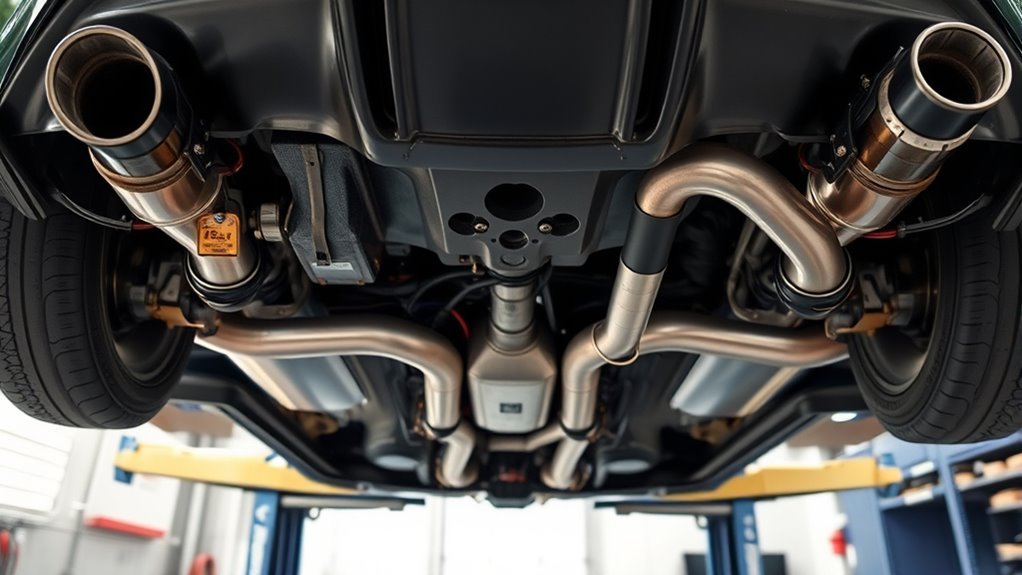
Start with the certified configuration of the exact vehicle. EPA policy states that federal anti-tampering and defeat-device prohibitions apply to emissions controls, catalysts, and onboard diagnostic systems. State laws and inspection programs can add stricter requirements. A seller’s “race use,” “49-state,” or “no CEL” wording is not a substitute for application-specific documentation.
California buyers should use CARB’s Aftermarket, Performance, and Add-On Parts program and aftermarket parts database. Match the Executive Order, part number, vehicle year, engine, and any listed conditions. Do not rely on an EO number that covers a different vehicle family.
- Check the application: Match model year, engine, transmission, emissions market, and turbo configuration.
- Check the documentation: Read the exact EO or emissions statement, not only the product-page headline.
- Mock-fit first: Leave connections loose until the complete system is centered and clear.
- Protect sensors: Do not twist oxygen-sensor wiring or let it touch hot tubing.
- Check readiness: Diagnose a catalyst or sensor code; do not clear it repeatedly or suppress the monitor.
- Reinspect after heat cycling: Check clamps, hangers, shields, valve hardware, and tip position.
Which Exhaust Layout Fits Street, Track, or Drag Use?
The right layout depends on noise tolerance, inspection rules, turbo output, heat load, and how the car is driven. A daily driver benefits from a resonated or valved rear system and the least invasive emissions changes. A track car needs durable hangers, thermal control, and compliance with venue sound limits. A dedicated competition build may prioritize flow, but legal status depends on the vehicle and applicable law—not only where it is driven.
| Use Case | Recommended Direction | Avoid |
|---|---|---|
| Daily Street | Stock downpipe or documented compliant replacement; resonated or valved cat-back | Catalyst deletes, open dumps, disabled monitors, severe drone |
| Weekend/HPDE | Heat-resistant stainless system, controlled sound, secure hangers, venue-compliant volume | Thin unsupported tubing, poor shielding, systems near the sound-limit threshold |
| Dedicated Competition | Turbo-matched diameter, engineered wastegate routing, documented vehicle/legal status | Assuming “track use” alone legalizes emissions tampering or unsafe dump routing |
The best Supra exhaust is not the loudest or largest one. It is the system that fits the exact car, supports the turbo and calibration, controls heat and drone, and meets the rules that apply to the vehicle.
[Products Worth Considering]

The ANCEL AD410 PRO combines engine diagnostics and 12V battery testing in one easy-to-use tool, helping you read and clear check engine codes while checking battery health, cranking, and charging performance. It also provides live data, freeze frame details, and I/M readiness checks to help you diagnose issues faster and prepare for emissions testing. With plug-and-play operation, a clear screen, and broad vehicle compatibility, it is a practical solution for home mechanics and everyday drivers.

This center console armrest cover is designed to fit the 2026 Toyota RAV4 for added comfort and a cleaner interior look. Made with breathable vegan leather and a thick cushioned feel, it helps reduce arm fatigue on long drives while protecting the console from pet paws, dirt, and sticky fingerprints. The band-secured design installs easily with no tools required and blends with the OEM-style interior.

The ANCEL AD410 helps drivers quickly read and clear engine-related fault codes, view live data, and understand why the check engine light is on before heading to a repair shop. With built-in code definitions, readiness checks, and support for common OBD2 functions, it makes basic diagnostics straightforward for beginners and DIY users. Powered directly from the vehicle and easy to use with no app required, it offers practical value for everyday vehicle troubleshooting.
What Should You Verify Before Ordering?
Use this checklist before paying for a downpipe, center section, or cat-back. A single mismatched connection can create leaks, rattles, or an unusable combination.
- Model year, 2.0 or 3.0 engine, U.S. or other market, and 2026 Final Edition status where applicable
- Manual or automatic transmission fitment
- Stock turbo, upgraded turbo, or external-wastegate configuration
- Downpipe outlet and cat-back inlet connection type and size
- Factory active-exhaust valve and actuator compatibility
- Included adapters, gaskets, clamps, V-bands, extensions, and hardware
- Written emissions documentation for the exact application
- Ground clearance with the car’s ride height and underbody bracing
- Sound clips recorded with the same downpipe and center-pipe setup
- Return policy before the part is installed or heat-cycled
How Do You Install and Troubleshoot a Supra Exhaust Safely?
Let the exhaust cool completely and support the car on a rated lift or jack stands. Apply penetrating oil to heat-cycled fasteners, disconnect and route sensor wiring according to the part maker’s instructions, and replace damaged sealing hardware. Loosely assemble the full system before final tightening so the hangers and tips can settle without preload.
After the first heat cycle, let the car cool and inspect every connection. A metallic rattle often comes from a heat shield, brace, clamp, valve mechanism, or undertray contact point. A ticking sound or soot mark can indicate a leak. Exhaust odor in the cabin requires immediate inspection; stop driving until the leak source and cabin-entry path are found.
If a check-engine light appears after a front-section change, read and record the diagnostic code before clearing anything. Catalyst-efficiency, oxygen-sensor, heater-circuit, or wiring codes require different tests. Repeatedly clearing the light can erase useful diagnostic data and does not correct the underlying issue.
Warning: Never work under a car supported only by a jack. Use rated stands or a lift, chock the wheels, wear eye protection, and keep skin and wiring away from hot exhaust parts.
Frequently Asked Questions
What are the main parts of a Toyota Supra exhaust system?
On a MkV GR Supra 3.0, the main exhaust sections are the turbo outlet, downpipe and catalyst area, center pipe or midpipe, rear piping, muffler, active valve hardware, and exhaust tips. Product names vary by manufacturer, so compare diagrams and connection points.
Does this exhaust layout apply to the GR Supra 2.0 or older Supras?
The front-to-rear concept is similar, but the parts are not interchangeable. In the U.S., the GR Supra 2.0 was offered for model years 2021–2024 and uses a different four-cylinder engine and exhaust hardware. A70 and A80 Supras use entirely different generations of engines, chassis, and exhaust layouts.
What does a downpipe do on a Supra?
The downpipe carries exhaust away from the turbocharger and connects the turbo outlet to the rest of the exhaust. Its catalyst design, diameter, bends, heat shielding, and oxygen-sensor provisions affect restriction, temperature, sound, emissions monitoring, and fitment.
Will a Supra cat-back exhaust add horsepower?
A cat-back may reduce some rear-section restriction, but on a mostly stock turbo Supra it usually changes sound, valve behavior, appearance, and weight more than peak horsepower. Treat any power claim as product-specific and look for controlled before-and-after testing.
Is a catless downpipe legal on a street Supra?
Removing or defeating required emissions equipment on a street vehicle can violate federal and state law. A “race use” label does not by itself make a catalyst-delete pipe legal. Verify the exact vehicle, part, emissions documentation, and local rules before installation.
Why does my Supra exhaust drone after an upgrade?
Drone is a low-frequency resonance that appears at a steady engine speed or load. A resonated center pipe, different muffler design, or properly controlled valve can reduce it. Downpipe changes can also make an existing cat-back louder and expose frequencies that were previously muted.
Do I need a tune after installing a Supra exhaust?
A cat-back normally does not require ECU calibration. A downpipe may have product-specific calibration requirements and can trigger catalyst or oxygen-sensor faults. Follow the part maker and qualified tuner’s guidance, but do not alter the tune to conceal or disable required emissions monitoring.
Does a 2026 GR Supra MkV Final Edition use the same aftermarket exhaust fitment?
Do not assume it does. Toyota’s 2026 lineup includes the MkV Final Edition alongside the 3.0 and 3.0 Premium, and current aftermarket catalogs can treat the Final Edition separately. For example, Borla’s current 2020–2026 GR Supra 3.0 cat-back listings explicitly exclude Final Edition models. Verify the exact part number and trim application before ordering.
Conclusion
For a 2020–2026 GR Supra 3.0, the exhaust path is easy to trace: turbo, downpipe and catalyst area, center section, then rear muffler, valve, and tips. The downpipe has the greatest effect on heat, restriction, catalyst monitoring, and legal risk. The center section controls connection and resonance. The cat-back delivers the largest sound change with the least intrusion into the emissions system.
Start with exact fitment and use case. A street car usually benefits most from a resonated or valved cat-back while retaining the stock downpipe. On a 2026 car, verify Final Edition status before ordering because broad MkV year ranges can hide trim exclusions. A higher-output build needs a system-level plan covering turbo size, calibration, catalyst documentation, heat, noise, and inspection rules. Recheck every clamp and clearance point after the first heat cycle.
Sources
- Toyota — 2026 GR Supra official model page — current U.S. engine and model information.
- Toyota USA Newsroom — 2026 GR Supra MkV Final Edition — 2026 lineup, 382-hp output, trim, and transmission context.
- Toyota USA Newsroom — 2020 GR Supra — original 335-hp 3.0-liter specification and active-exhaust context.
- Toyota USA Newsroom — 2021 GR Supra update — 382-hp 3.0-liter update and 2.0-liter introduction.
- Toyota USA Newsroom — 2025 GR Supra — confirms the U.S. 2025 lineup is 3.0 and 3.0 Premium, with no 2.0 grade.
- Toyota Owners — 2026 Supra digital manual — owner safety and exhaust-system warnings.
- U.S. EPA — Vehicle and Engine Tampering Policy — federal emissions-control and OBD enforcement guidance.
- California Air Resources Board — Aftermarket Parts Program — California compliance resources.
- California Air Resources Board — Aftermarket Parts Database — application-specific Executive Order lookup.
- SAE Mobilus — Study to Improve Engine Efficiency by Reducing Backpressure — technical background on the flow/noise tradeoff.
- Borla — 2020–2026 Toyota GR Supra Exhaust Systems — current valved cat-back specifications and Final Edition exclusion.
- HKS — GR Supra application chart — model-code, engine, and transmission-specific exhaust/catalyst fitment examples.
- HKS — GR Supra exhaust comparison — published pipe diameter, sound, weight, and factory-valve data for a DB42 application.


[…] manifold and turbo assembly still varies by engine designation. On an A90/A91 Supra, review the Supra exhaust system layout before ordering a turbo, downpipe, or catalyst-related […]
[…] guide on how to check Toyota Supra coolant levels for charge-cooler maintenance, and explore the Supra exhaust system layout guide to understand how downpipe modifications complement intake […]