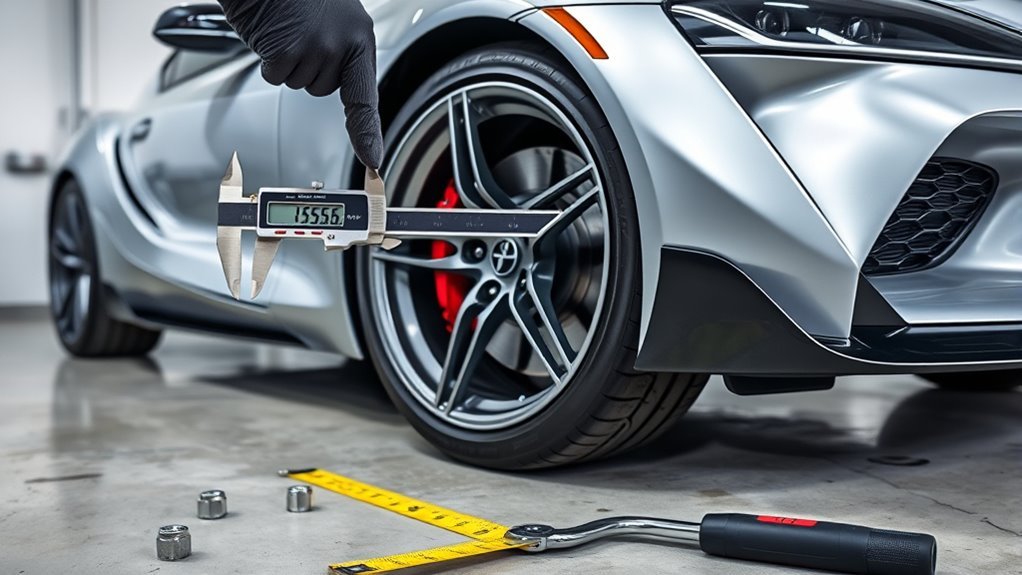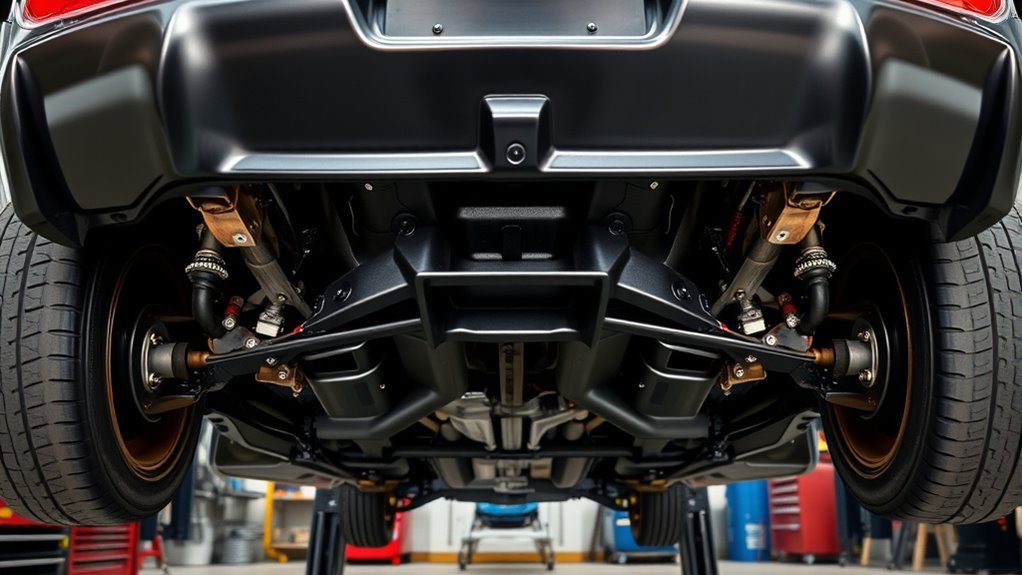
The Toyota Supra chassis feels sharp because Toyota built the car around balance, stiffness, and quick response. You get a rear-biased engine position, a compact sports-car layout, mixed-material subframes, and a near 50:50 mass distribution that helps the car rotate cleanly. A short 97.2-inch wheelbase, wide track, high torsional rigidity, dual-pivot front struts, adaptive dampers, and a five-link rear suspension all work together to shape steering feel, grip, and tuning potential.
Quick Answer
The Toyota Supra chassis uses a short wheelbase, wide track, stiff body structure, and near 50:50 weight balance to deliver quick turn-in and stable grip. Its dual-pivot front struts, five-link rear suspension, adaptive dampers, and active differential help the car feel precise on road and track.
Key Takeaways
- The Supra chassis centers on near 50:50 weight balance and low polar inertia.
- The short wheelbase and wide track help the car change direction quickly.
- The aluminum front subframe saves weight, while the steel rear subframe handles high drivetrain loads.
- The five-link rear suspension helps control toe, camber, and tire contact under load.
- Smart tuning starts with alignment, tires, dampers, and routine suspension checks.
How Toyota Supra Chassis Delivers 50:50 Balance and Driving Goals
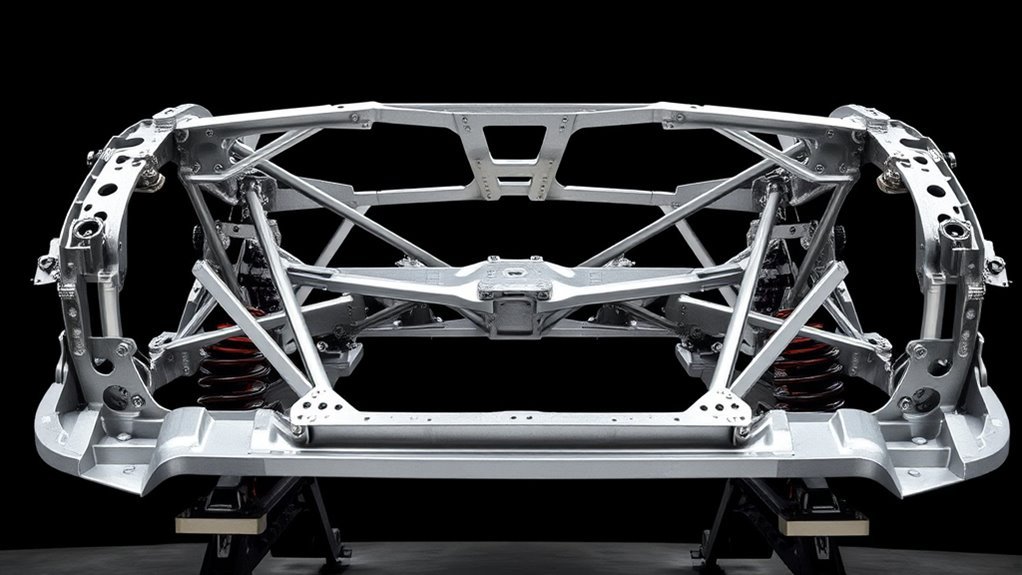
Toyota placed the engine far back in the bay to help the Supra reach a near 50:50 front-to-rear weight balance. That balance gives you predictable lateral response, neutral turn-in, and cleaner load transfer during hard cornering.
The double-joint spring MacPherson front struts and multi-link rear suspension help keep the tires planted as the car loads up. High structural rigidity reduces unwanted flex, so steering and throttle inputs feel direct.
An active differential can vary lock to improve traction during acceleration and deceleration. Toyota also tuned the chassis through track testing, which helps the car reward smooth and confident inputs.
Chassis Architecture: Short Wheelbase, Wide Track and Condensed Extreme
The Supra’s Condensed Extreme architecture puts sports-car intent into a compact package. Its 97.2-inch wheelbase and wide track help produce quick steering response and strong lateral stability.
You feel the short wheelbase when the car turns in fast and needs small mid-corner corrections. The long hood, compact cabin, and rearward engine position also help concentrate mass near the center of the car.
- Short wheelbase improves agility and steering precision.
- Wide track increases lateral stability and roll resistance.
- High structural rigidity supports sharper inputs.
- Mass concentration improves rotational control.
Together, these traits help you use the car’s grip without feeling like the chassis lags behind your inputs.
Subframes: Aluminium Front vs Steel Rear – Structural Trade-Offs
Balance shapes the Supra’s subframe strategy. The aluminum front subframe trims mass near the nose, while the steel rear subframe supplies strength for the rear suspension and drivetrain loads.
This material split helps the car combine steering response with durability. Aluminum helps reduce weight up front, while steel adds fatigue resistance where the chassis sees high rear loads.
| Component | Purpose |
|---|---|
| Front (Aluminum) | Reduces front-end mass |
| Rear (Steel) | Adds strength and fatigue resistance |
| Vehicle Balance | Supports near 50:50 distribution |
| Handling Outcome | Improves response while preserving durability |
Note: Aluminum does not always mean better, because the best material depends on load, cost, fatigue life, and location.
[Products Worth Considering]
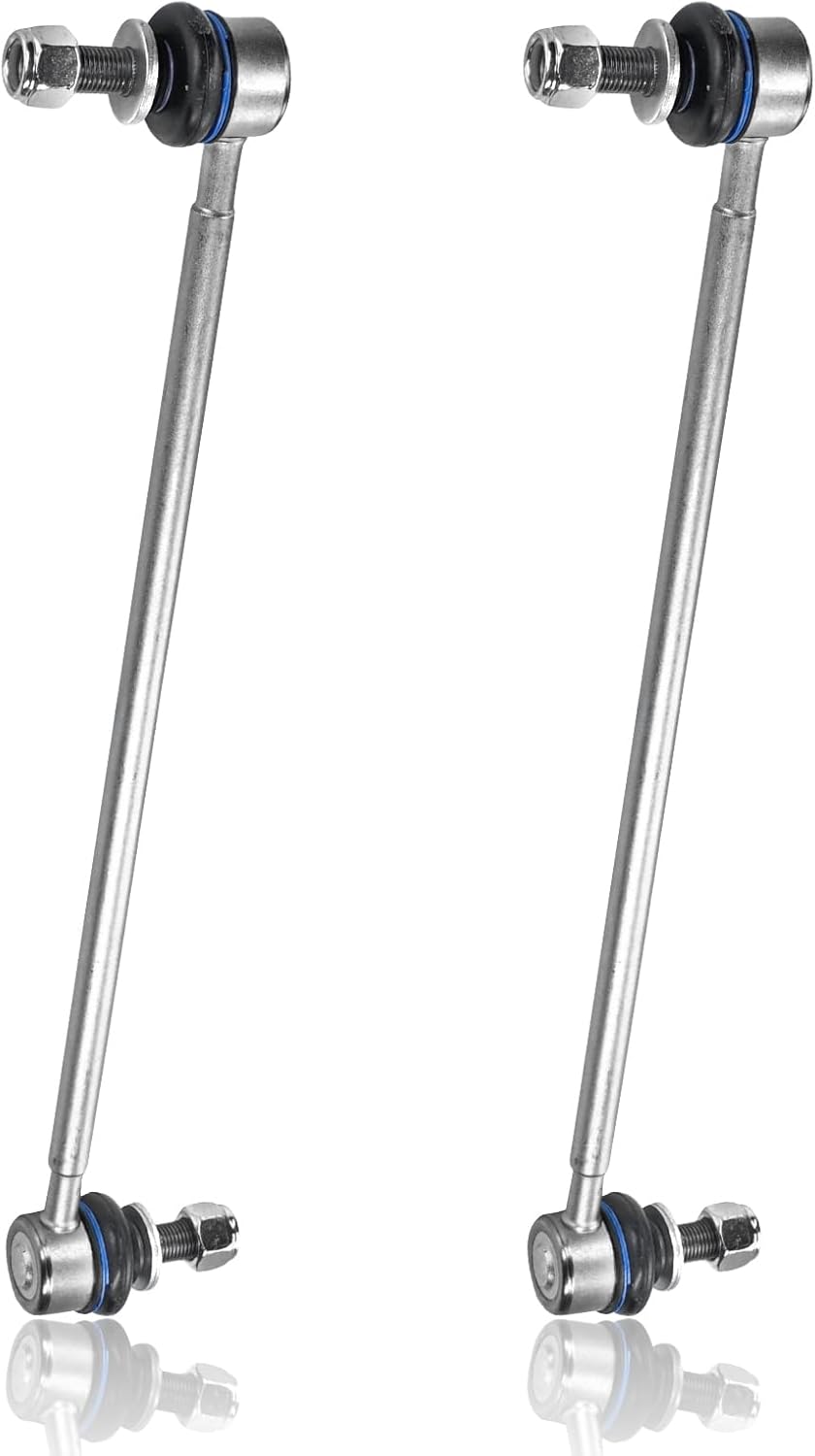
These front stabilizer sway bar end links are designed to restore smooth, stable handling and reduce noise and vibration during turns and over bumps. Compatible with select Toyota, Prius, and Scion models, they offer a reliable replacement built to meet manufacturing standards with corrosion-resistant coating and a strong, durable body.

This 2-piece suspension tool set combines a compact strut spreader with a high-leverage lower control arm prying tool to help speed up safe suspension service. Designed for many FWD, import, and domestic vehicles, it supports strut, hub, ball joint, and control arm work while helping reduce the risk of damage to surrounding components. Heavy-duty steel construction makes it a dependable choice for mechanics and serious DIY suspension repair.

This DIY toe alignment tool kit helps home mechanics quickly check and adjust front-end toe after suspension, steering, or tire service. Stainless steel toe plates and dual tape measures provide a simple, reliable reference for reducing uneven tire wear and improving straight-line tracking without needing a full alignment machine.
Front Suspension: Dual-Pivot Strut, Subframe Role and Steering Feel
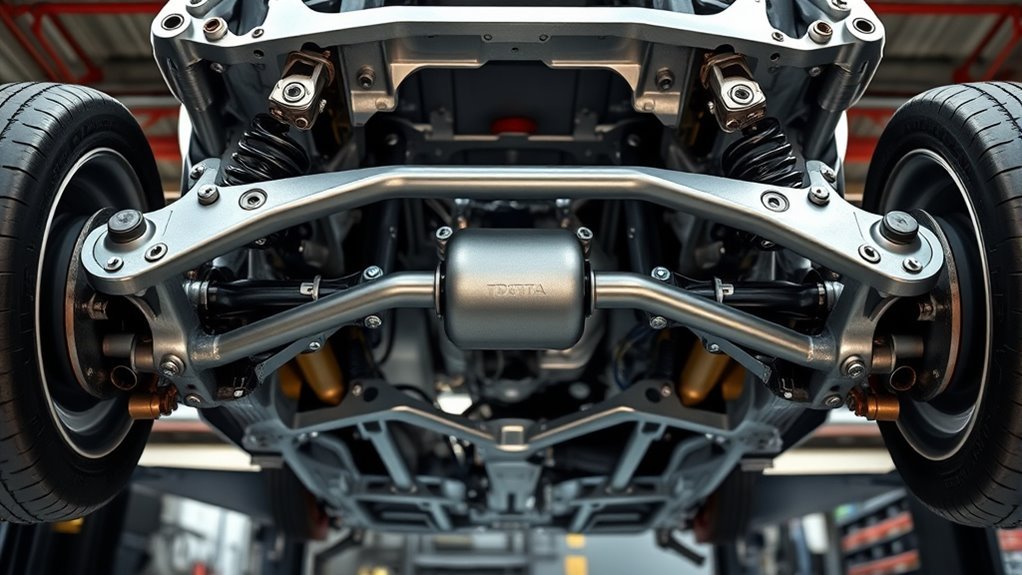
The Supra’s dual-pivot strut front suspension helps reduce scrub radius and sharpen self-centering. That design lets you place the front tires with more confidence during quick direction changes.
The strut layout helps separate steering and lateral load paths, which improves tire contact under load. An aluminum subframe anchors the steering rack and stabilizer pivot, which supports precise inputs.
- Dual-pivot struts improve tracking and reduce steering effort.
- The aluminum subframe reduces front-end mass and supports steering accuracy.
- Continuously Variable Semi-Active Electronic (CVSAe) dampers adapt for ride and control.
- Height sensors help the system tune body movement in real time.
Four-piston front calipers add braking control, which supports the chassis’ direct and communicative feel.
Rear Suspension: Five-Link Geometry, Motion Ratios and Dynamic Toe
The Supra’s five-link rear suspension controls wheel motion through separate links that manage lateral and longitudinal forces. This layout helps the rear tires keep steady contact as the car accelerates, brakes, and corners.
An eccentric inner end on the lower control arm allows camber adjustment, which helps you tune cornering grip. The spring’s 0.55:1 motion ratio gives predictable force transfer across suspension travel.
A slim toe link helps preserve static wheel alignment while allowing useful dynamic toe behavior under lateral load. That rear geometry gives you more grip and confidence when you commit to a corner.
How Chassis Geometry, Roll Centers and Track Ratio Shape Handling
Roll-center placement and the Supra’s wheelbase-to-track ratio work together to balance agility and stability. You feel this when the car changes direction quickly without feeling nervous at speed.
Roll-center behavior affects how fast load moves across the tires. The near 50:50 weight split and dual-pivot front geometry help sharpen steering and reduce unwanted scrub.
The five-link rear suspension keeps the rear wheels controlled through toe and camber changes. Adaptive damping then refines body motion across rough roads, fast sweepers, and track use.
- Predictable load transfer helps the car feel stable.
- Tunable alignment supports understeer and oversteer balance.
- Direct steering geometry improves feedback.
- Adaptive damping supports both ride comfort and control.
Stiffness vs Safety: Torsional Rigidity, LFA Comparison and Track Benefits
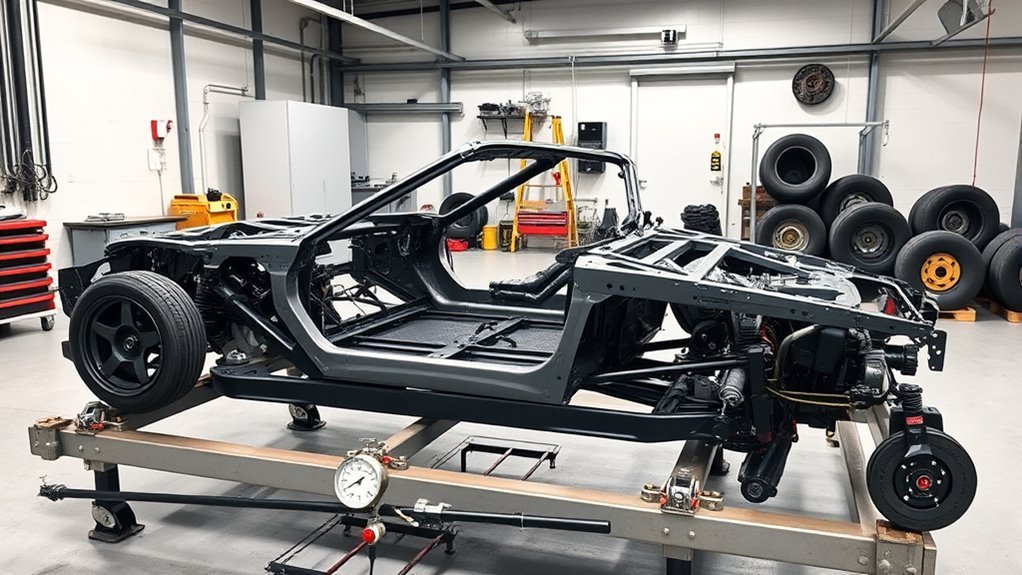
A stiff body structure helps the Supra translate driver inputs into clean chassis response. You feel that stiffness through sharper steering, steadier braking, and more predictable weight transfer.
Toyota has stated that the GR Supra body structure exceeds the Lexus LFA in torsional rigidity. That strength helps the suspension do its job because the mounting points move less under load.
Track testing also helped Toyota tune steering, damping, stability control, and differential behavior. For you, that means the car feels more stable when you brake late, turn in hard, or add throttle at corner exit.
Practical Tuning and Ownership: Setup Limits, Common Upgrades, Maintenance
A stiff, predictable chassis gives you a strong tuning baseline. Still, real-world setups work best when you balance grip, alignment, damping, tire choice, and maintenance.
You can use the Supra’s near 50:50 weight distribution through careful tuning. But aggressive alignment, high-grip tires, and track use can wear bushings, mounts, and wheel bearings faster.
A stiff, predictable chassis gives you the baseline, but careful alignment and regular checks keep it working well.
- Install adjustable coilovers when you need more control over height and damping.
- Fit adjustable toe links if your setup needs more rear alignment range.
- Choose lightweight forged wheels and quality tires to reduce unsprung mass.
- Inspect bushings, bearings, and alignment often after track use.
Pro tip: Change one setup variable at a time, then record tire pressures, alignment, ride height, and driver notes.
Start with tires and alignment before you replace major suspension parts. Those changes often reveal what the chassis needs next.
[Products Worth Considering]

This wheel alignment tool makes it easy to check and adjust toe-in and toe-out at home for better handling, stability, and more even tire wear. Designed for one-person use, it includes tape-measure slots for simple setup and accurate measurements without extra help. Its stainless steel construction and broad vehicle compatibility make it a practical addition to any DIY garage.

Bendix Premium Ceramic Front Brake Pads are engineered to match original equipment fit, form, and function for a straightforward replacement. Built with durable materials to help resist wear and corrosion, they support consistent braking performance and reduced brake fade for everyday driving. These pads are a dependable choice for compatible Pontiac, Scion, Toyota, and related vehicles.

This universal wheel alignment tool helps you perform precise toe alignment at home with professional-grade accuracy and easy DIY operation. Its no-caliper-removal design simplifies setup, while the heavy-duty stainless steel construction and compact detachable form make it durable, stable, and easy to store. It is suitable for a wide range of vehicles, including cars, trucks, SUVs, ATVs, and UTVs.
What Setup Changes Matter Most for Street and Track Driving?
For street driving, tire quality, correct tire pressure, and a clean alignment matter most. These changes keep the car sharp without making it harsh or noisy.
For track use, focus on brake pads, brake fluid, camber, tires, and heat management before chasing big power. A balanced setup helps the Supra stay consistent over a full session.
Warning: Aggressive track alignment can reduce tire life and make the car less stable on rough public roads.
[Products Worth Considering]
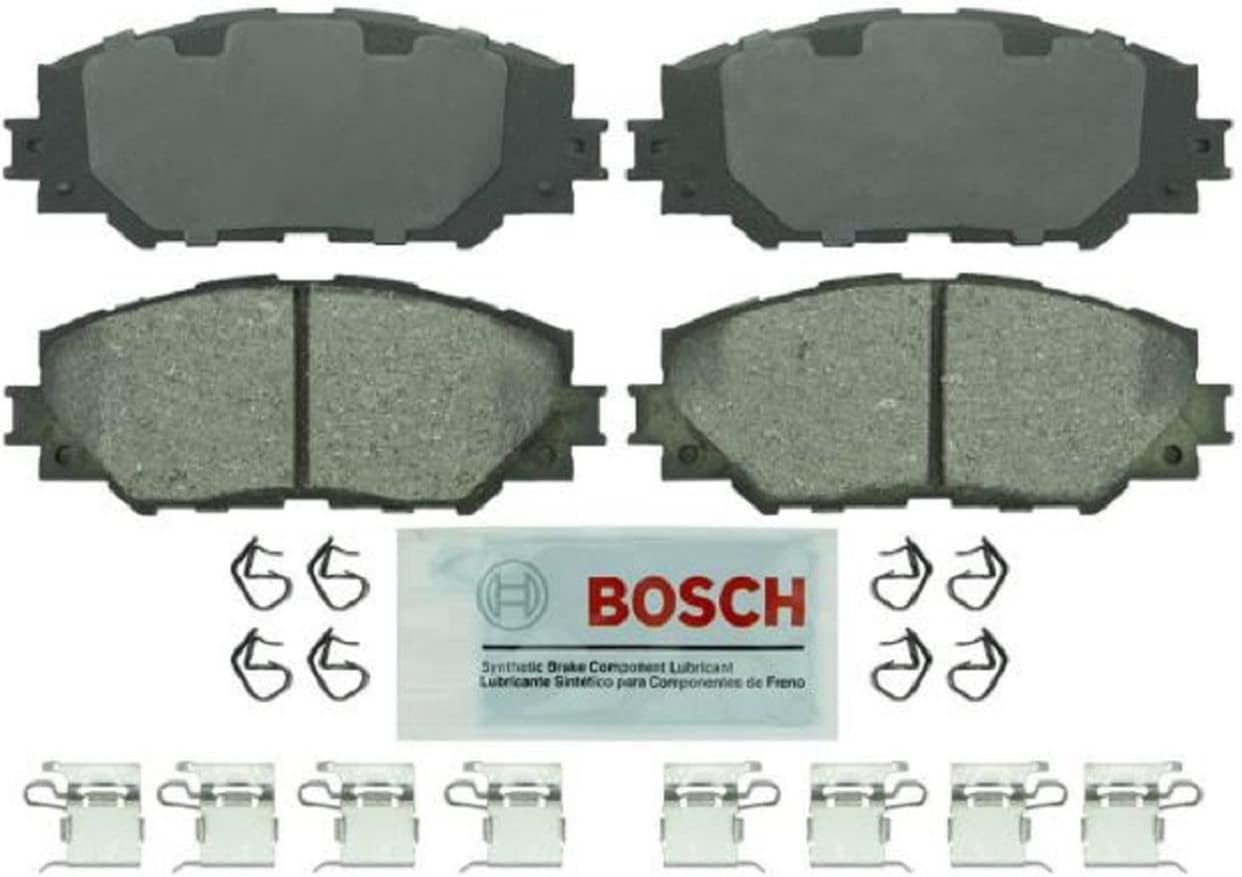
Bosch Blue ceramic front brake pads deliver dependable stopping power with platform-specific friction material designed for select Lexus, Pontiac, Scion, and Toyota vehicles. OE-style shims, slots, and chamfers help promote quiet braking, while the rust-inhibitive coating supports long-lasting performance and cleaner operation. The set includes hardware and synthetic lubricant for easier installation on one axle.

This all-in-one front end service kit is designed to help remove stubborn ball joints, tie rod ends, and pitman arms on a wide range of vehicles. Built from hardened alloy and organized in a portable ABS case, it offers reliable performance for both professional mechanics and DIY repairs.

This custom-fit steering wheel cover is designed for select Toyota models and sized for standard steering wheels to help improve grip and comfort while driving. Made with soft microfiber leather and a non-slip rubber inner ring, it adds control, protects your wheel, and brings a stylish diamond-quilted look to your car interior. Installation is simple and tool-free, making it an easy upgrade for everyday driving.
Frequently Asked Questions
What Chassis Is the Supra Built On?
The Toyota GR Supra uses a BMW-derived sports-car platform shared with the BMW Z4. Toyota gave the Supra its own body structure tuning, suspension calibration, steering feel, and stability-control setup.
What Are Common Supra Problems?
Common issues can include suspension wear, alignment sensitivity, tire wear, electronic faults, and drivetrain stress on modified cars. Track use can also speed up wear on brake fluid, pads, bushings, and wheel bearings.
Do the Z4 and Supra Share the Same Chassis?
Yes, the Z4 and Supra share the same underlying platform. The two cars feel different because Toyota and BMW use different tuning goals for steering, suspension, body control, and driver feedback.
Does the Supra Have a Perfect 50:50 Weight Distribution?
The Supra targets a near 50:50 weight balance, which supports neutral handling. Exact figures can vary by model year, trim, options, fuel load, and measured curb weight.
Is the Supra Chassis Good for Track Use?
Yes, the Supra chassis gives you a strong base for track use because it combines stiffness, balance, and compact dimensions. For repeated hard laps, focus on brake fluid, pads, tires, alignment, and cooling before adding major power.
Conclusion
The Supra’s chassis works because Toyota links balance, stiffness, compact size, and smart suspension geometry into one clear driving goal. Start your setup with tires, alignment, brakes, and inspection before you add more aggressive parts.
When you tune the car in small steps, you protect its best traits instead of hiding them. That approach helps the Supra stay sharp, stable, and rewarding on both road and track.
References
- Toyota GR Supra — Toyota
- Toyota Pressroom — Toyota
- BMW Group PressClub — BMW Group