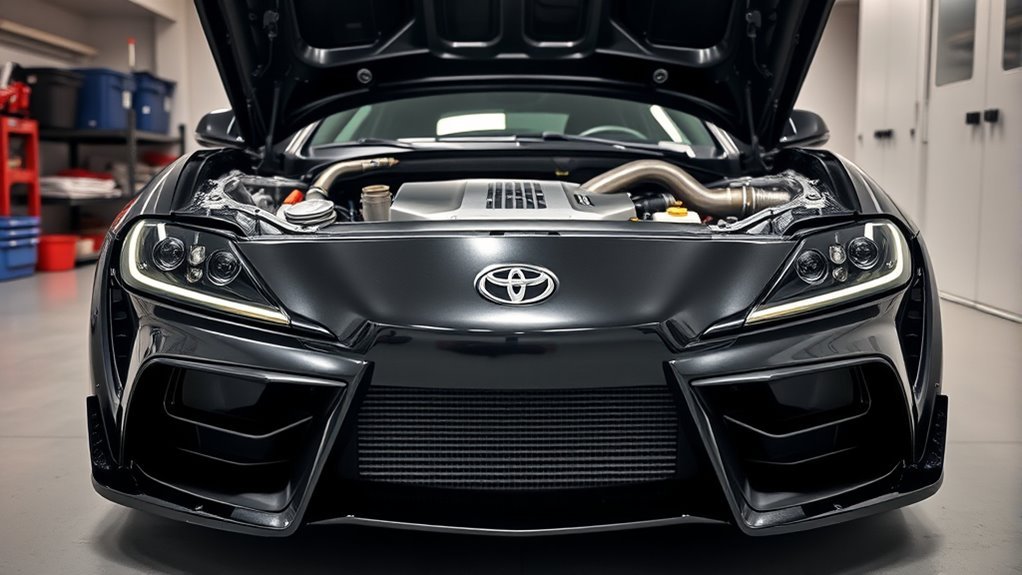
You rely on a Supra’s intercooler, also called a charge-air cooler, to remove heat from turbocharged intake air before that air enters the engine. That cooling makes the air denser, helps the ECU control knock, and keeps power more consistent when boost and engine load rise. The exact hardware depends on the Supra generation: many air-to-air setups use a front-mounted heat exchanger, while the B58-powered GR Supra uses an indirect coolant-based charge-air cooler integrated into the intake system.
Quick Answer
A Supra intercooler cools the hot air compressed by the turbocharger. Cooler charge air is denser, so the engine can use more oxygen for combustion, reduce knock risk, and maintain stronger, more repeatable power under boost.
Key Takeaways
- Turbochargers heat air as they compress it; the intercooler removes much of that heat before the air reaches the cylinders.
- Cooler charge air improves air density, supports cleaner combustion, and gives the ECU more knock margin.
- A larger intercooler is not always better; fitment, pressure drop, coolant capacity, core design, and tuning all matter.
- The current B58-powered GR Supra uses a coolant-based charge-air cooler, so upgrades often focus on the charge-air cooler manifold, heat exchanger, coolant circuit, and supporting calibration.
What a Supra Intercooler Does
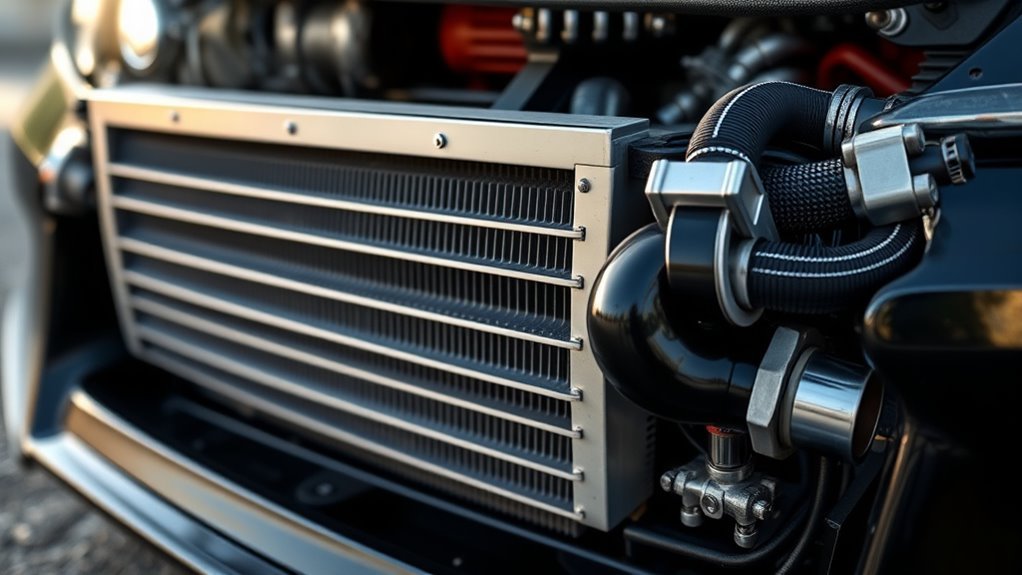
Think of the intercooler as the turbo system’s heat exchanger. A turbocharger compresses intake air so the engine can burn more oxygen and fuel, but compression also raises air temperature. Hotter air is less dense, which means less oxygen enters the cylinders for the same volume of air.
The intercooler removes heat from that compressed air. As the charge air cools, density rises, oxygen content per volume improves, and the engine can make more stable power. This is why charge-air cooling is important on turbocharged Supras, especially during repeated pulls, track sessions, hot weather, or higher-than-stock boost.
On the current Toyota GR Supra, Toyota lists a 3.0-liter turbocharged inline-six as the main performance engine. That engine family uses an indirect charge-air cooling layout, where coolant removes heat from the compressed air instead of using a simple front air-to-air core alone.
[Products Worth Considering]

Made from pure silicone (Material imported from Korea) & high quality heat-resistant embedded fiber for enhanced durability and longer lifespan

Compatibility - Compatible with 1990 1991 1992 1993 1994 1995 Toyota Pickup 3.0L V6

Compatibility - Silicone Radiator Hose Compatible with 1997-2002 TOYOTA SUPRA JZA80 2JZ-GTE TURBO VVTI
Why Turbo Supras Need an Intercooler
A turbo Supra needs charge-air cooling because power, reliability, and tuning safety all depend on intake air temperature. Without cooling, the turbo can send hotter, less dense air into the engine, making the car more prone to power loss and knock.
Preventing Engine Knock
Engine knock happens when the air-fuel mixture auto-ignites in an uncontrolled way instead of burning smoothly after the spark event. High intake air temperature makes knock more likely because the end-gas in the combustion chamber is already closer to its auto-ignition point.
By lowering charge-air temperature, the intercooler helps the ECU preserve safer ignition timing and boost control. That does not mean an intercooler makes any tune safe, but it gives the engine more thermal margin.
- Lowers charge-air temperature before combustion
- Helps reduce knock tendency under boost
- Supports more consistent ignition timing
- Reduces heat stress on pistons, rings, valves, and spark plugs
- Helps maintain repeatable power during back-to-back acceleration
Warning: Do not use an intercooler upgrade as a substitute for proper tuning, correct fuel octane, and healthy engine hardware. Higher boost without a safe calibration can still damage a Supra engine.
Boosting Air Density
Cooling charge air increases density. Denser air carries more oxygen in the same intake volume, so the engine can produce more torque when the ECU supplies the correct fuel and timing. This is the main reason intercoolers are associated with horsepower gains.
The key detail is that the intercooler itself does not create power by magic. It removes a restriction caused by heat. You see the biggest gains when the original cooling system is heat-soaked, undersized for the boost level, or limiting timing and boost through high intake air temperatures.
How a Supra Turbo Makes Hot Intake Air
A turbocharger uses exhaust energy to spin a turbine, which drives a compressor wheel on the intake side. The compressor packs more air into the intake tract, raising pressure. As pressure rises, temperature rises too.
The exact outlet temperature depends on boost pressure, compressor efficiency, ambient temperature, turbo size, and engine load. A hard-working turbo on a hot day can create very hot charge air, which is why the intercooler must keep removing heat if you want consistent performance.
Turbocharger Compression Heating
Compression heating is the main reason the intercooler exists. When the compressor wheel increases pressure, it also adds heat to the air. If that hot air goes straight into the combustion chamber, the engine gets less oxygen per volume and becomes more knock-prone.
- Boost pressure increases air mass but also raises temperature.
- Hotter air is less dense than cooler air at the same pressure.
- Lower density reduces the oxygen available for combustion.
- High intake temperature can cause the ECU to reduce timing or boost.
- Charge-air cooling restores density and improves combustion conditions.
Exhaust-Driven Turbine Heat
The intake air is mainly heated by compression, but the turbocharger also lives in an extremely hot environment. The turbine housing is driven by exhaust gas, so heat soak from the turbo assembly, engine bay, charge pipes, and repeated boost events can all raise intake temperature.
| Turbo System Factor | Effect on Charge Air | Why It Matters |
|---|---|---|
| Higher boost | More compression heat | Greater need for cooling capacity |
| Hot ambient weather | Less temperature difference for heat exchange | More heat soak risk |
| Repeated pulls or track use | Heat builds faster than it can leave | Power becomes less consistent |
| Restrictive core or piping | Pressure drop increases | Turbo works harder to hit target boost |
How the Intercooler Cools Charge Air
An intercooler transfers heat out of the compressed air before that air reaches the throttle body and intake ports. Air-to-air systems move heat directly from charge air to outside airflow. Air-to-water, or more accurately air-to-coolant, systems move heat from charge air into coolant, then reject that heat through a front heat exchanger.
Both systems have the same goal: lower intake air temperature while keeping pressure loss under control. A good intercooler must balance thermal efficiency, flow, pressure drop, packaging, and response.
The best intercooler is not simply the biggest one. It is the one that cools the charge air enough for your power goal without adding unnecessary pressure drop, lag, heat soak, or fitment problems.
Air-to-Air vs. Air-to-Water for the Supra
Supra intercooler layout depends on the generation and build. Many older turbo and aftermarket setups use air-to-air intercoolers, often mounted in the front bumper area. The B58-powered GR Supra uses an indirect coolant-based charge-air cooler integrated into the intake plenum, a design described in BMW B58 technical training material as an integrated, indirect charge-air cooler.
| Intercooler Type | Best For | Strengths | Trade-Offs |
|---|---|---|---|
| Air-to-air | Simple turbo setups, many front-mount upgrades | Simple, no pump or coolant circuit, good airflow at speed | Needs good front airflow, can require long piping, may add pressure drop if oversized |
| Air-to-water / air-to-coolant | Compact engine bays, integrated manifolds, drag or street builds needing short charge paths | Shorter charge path, strong transient cooling, easier packaging near the engine | More parts, pump and coolant management, heat exchanger capacity matters |
Note: On a B58 GR Supra, the visible front heat exchanger is not the same as a traditional front-mount air-to-air intercooler. The charge air is cooled in the intake-side charge-air cooler, while coolant carries that heat forward to be rejected.
[Products Worth Considering]
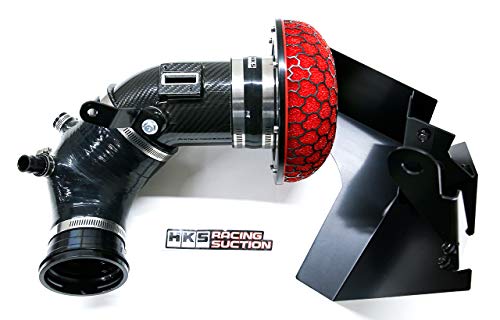
HKS Dry Carbon Racing Suction Kit with Pipe Compatible with 2020 Toyota Gr Supra 70028-AT001

Direct fit for the 2020+ Toyota GR Supra 3.0T
Intercooler Benefits: Power, Efficiency, Knock Prevention
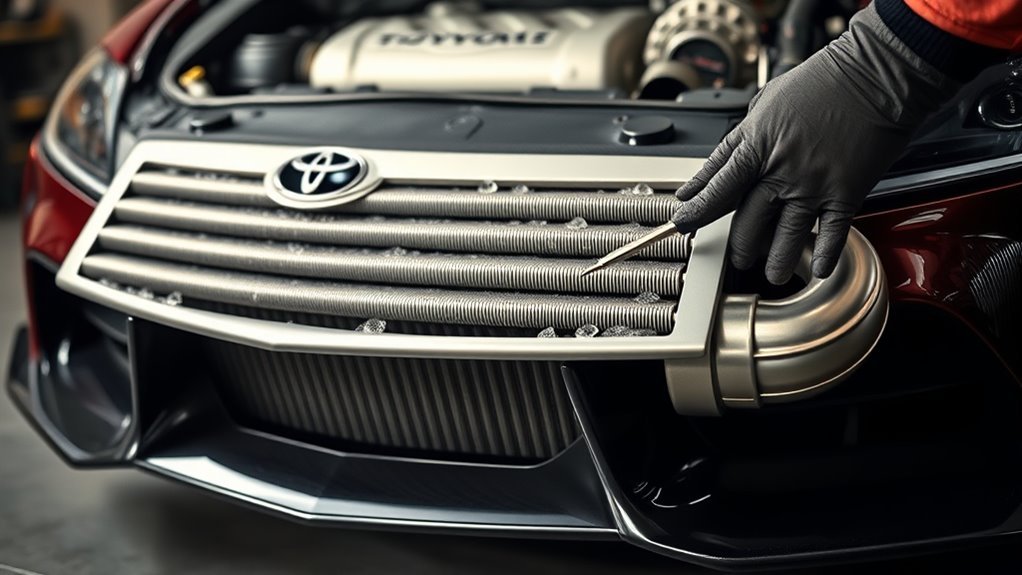
The main benefits of a Supra intercooler are better power consistency, lower knock risk, and improved thermal control. A stronger intercooler can help a tuned car hold timing and boost longer, especially when the stock system becomes heat-soaked.
- More consistent horsepower: Cooler intake temperatures help the ECU avoid pulling power when heat builds.
- Better torque under boost: Denser air supports stronger combustion when the fuel and tune match the airflow.
- Lower knock tendency: Cooler charge air gives the engine more safety margin.
- Improved repeatability: A good system performs better during back-to-back pulls, not just one dyno run.
- Longer component life: Lower heat stress helps protect engine and turbo system parts.
Fuel economy gains are not guaranteed. In normal driving, an intercooler upgrade may have little effect on mpg. The real advantage is maintaining safe, stable power when the turbo system is working hard.
Supra Intercooler Locations and How Placement Changes Results
Intercooler placement changes cooling performance, response, and serviceability. A front-mounted air-to-air intercooler gets strong airflow at speed, but it can require longer piping. A compact air-to-coolant charge-air cooler can keep the charge path short, but it depends on coolant flow, pump performance, and heat exchanger capacity.
For the GR Supra, placement decisions often involve the charge-air cooler manifold, front heat exchanger, auxiliary cooling parts, and coolant circuit. For older or custom turbo Supras, the decision usually involves front-mount core size, bumper airflow, end tank design, piping route, and pressure drop.
Why Bigger Is Not Always Better
A larger core can absorb and reject more heat, but only if the turbo can move air through it efficiently and the vehicle can supply enough cooling airflow. An oversized or poorly designed intercooler can add volume, increase pressure drop, slow response, and make the turbo work harder.
Choose the smallest, most efficient system that supports your power goal and driving style. A street car, drag car, road-course car, and dyno-focused build do not all need the same intercooler setup.
Signs of a Failing Intercooler and Quick Checks
A failing intercooler or charge-air cooling system usually shows up as heat, boost loss, inconsistent power, or leaks. On an air-to-water system, coolant problems can also cause charge-air temperature to climb.
- Power drops after one or two pulls: This can point to heat soak or poor coolant circulation.
- Boost is lower than expected: Check for cracked end tanks, loose clamps, torn couplers, or leaking charge pipes.
- Intake air temperature rises quickly: Log intake air temperature during a pull and compare it with ambient temperature and past baselines.
- Coolant level drops: On coolant-based systems, inspect the low-temperature circuit, heat exchanger, pump, hoses, and charge-air cooler.
- Oil residue or wet connections: A light oil film can be normal in turbo plumbing, but pooling oil or wet leak points deserve inspection.
- Check-engine light or limp mode: Scan for boost, pressure, temperature, or mixture-related codes before replacing parts.
Pro Tip: Before buying an upgraded intercooler, log intake air temperature, boost target, boost actual, ignition timing, and ambient temperature. Data will show whether the cooler is actually the limiting factor.
Choosing an Upgrade: Fitment, Core Size, and Trade-Offs
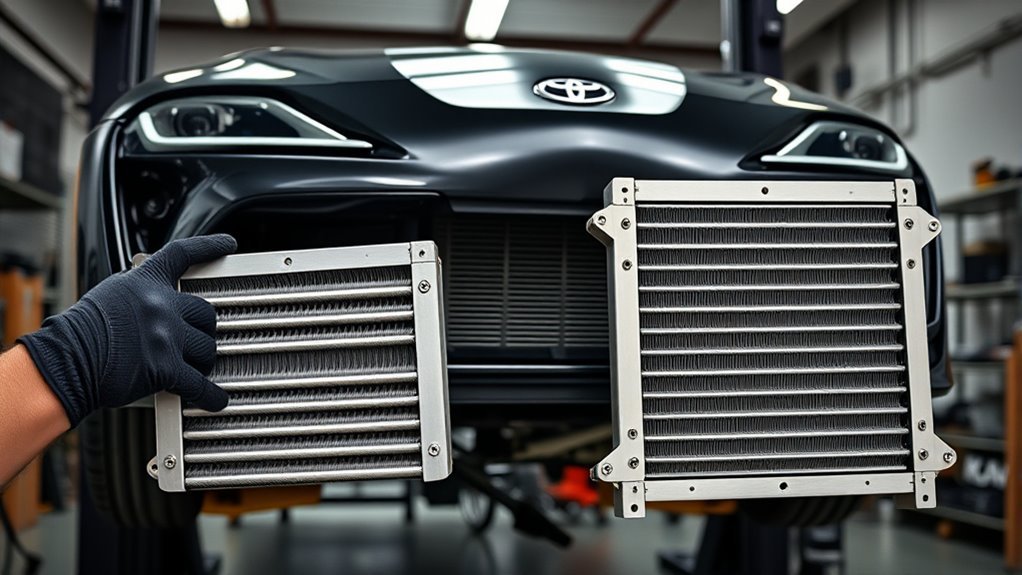
When choosing a Supra intercooler upgrade, start with your power goal and use case. A stock daily driver does not need the same setup as a big-turbo car, a road-course build, or a drag-focused Supra running repeated high-boost launches.
Check fitment first. A part that forces poor piping angles, blocks radiator airflow, or creates service problems can make the car worse even if the core looks impressive. You should also compare pressure-drop data, heat exchanger size, coolant flow, end tank design, and whether the part needs tuning support.
What to Check Before Buying
- Generation and engine: Confirm whether your Supra uses a traditional air-to-air layout or a B58-style integrated charge-air cooler.
- Power target: Match the cooler to realistic horsepower and boost goals.
- Pressure drop: Lower charge temperature is good, but not if the turbo must work much harder to overcome restriction.
- Heat soak recovery: Track and street performance depends on how quickly the system sheds heat after a pull.
- Coolant circuit capacity: For air-to-water systems, the pump, reservoir, heat exchanger, and bleeding procedure all matter.
- Installation quality: Poor clamps, bad welds, pinched hoses, and leaking couplers can erase the benefit of expensive parts.
- Tuning needs: Higher airflow and lower intake temperature may require ECU calibration to get the full benefit safely.
Upgrade Priorities by Use Case
| Use Case | Priority | Best Upgrade Focus |
|---|---|---|
| Stock daily driver | Reliability and leak-free operation | Inspection, cleaning, coolant health, and data logging |
| Tuned street car | Lower intake temps during repeated pulls | Higher-capacity charge-air cooler or heat exchanger with proper tune |
| Road-course car | Heat soak recovery and consistent lap-to-lap power | Cooling package, airflow management, coolant capacity, and ducting |
| Big-turbo build | Flow capacity and low pressure drop | Core/manifold sized for turbo flow, charge piping, fueling, and calibration |
Frequently Asked Questions
What is the main function of a Supra intercooler?
The main function is to cool compressed turbo air before it enters the engine. Cooler charge air is denser, supports better combustion, reduces knock tendency, and helps the Supra maintain consistent power under boost.
Does the Toyota Supra have an intercooler?
Yes. Turbocharged Supras use charge-air cooling. The B58-powered GR Supra uses an indirect coolant-based charge-air cooler integrated into the intake system, while many older or aftermarket turbo setups use air-to-air intercoolers.
Do you gain horsepower from an intercooler upgrade?
You can gain horsepower if the original intercooler is limiting the setup and the ECU or tune can take advantage of lower intake temperatures. On a mostly stock car, the bigger benefit may be more consistent power rather than a large peak horsepower increase.
Is an air-to-air or air-to-water intercooler better for a Supra?
Neither is automatically better. Air-to-air systems are simple and effective with good front airflow. Air-to-water systems can use shorter charge paths and strong transient cooling, but they add pumps, coolant, and heat exchanger complexity. The best choice depends on the Supra generation, power goal, and use case.
Can a bad intercooler damage a Supra engine?
A leaking, heat-soaked, or poorly functioning intercooler can contribute to knock, power loss, rich or lean corrections, and excessive turbo workload. The intercooler is only one part of the system, so scan for codes, pressure-test the intake tract, and verify coolant circulation before driving hard.
Conclusion
A Supra intercooler cools turbocharged intake air so the engine receives a denser, more knock-resistant charge. That helps protect the engine and keeps power more consistent when boost, heat, and driving load increase.
For the best results, match the intercooler system to the car instead of choosing the largest part available. Consider the Supra generation, turbo size, tune, core design, pressure drop, coolant circuit, airflow, and how the car is actually driven. A well-matched intercooler upgrade can make a tuned Supra stronger and safer; a poorly matched one can add lag, leaks, and unnecessary complexity.
Sources
- Toyota GR Supra official model page – verifies current GR Supra turbocharged engine context.
- Toyota GR Supra official specifications – supports factory specification references for the current U.S. GR Supra.
- BMW Group B58 Engine Technical Training – explains B58 integrated indirect charge-air cooling and coolant-based charge-air cooler design.
- Garrett Motion Turbo System Optimization – supports turbo system setup factors, charge tubing, intercoolers, and monitoring.
- Garrett Motion Performance Intercoolers – supports intercooler core sizing, thermal stability, and performance cooling concepts.
- MIT OpenCourseWare Internal Combustion Engines, Turbocharging Lecture – supports the relationship between intercooling, charge density, output power, and knock suppression.