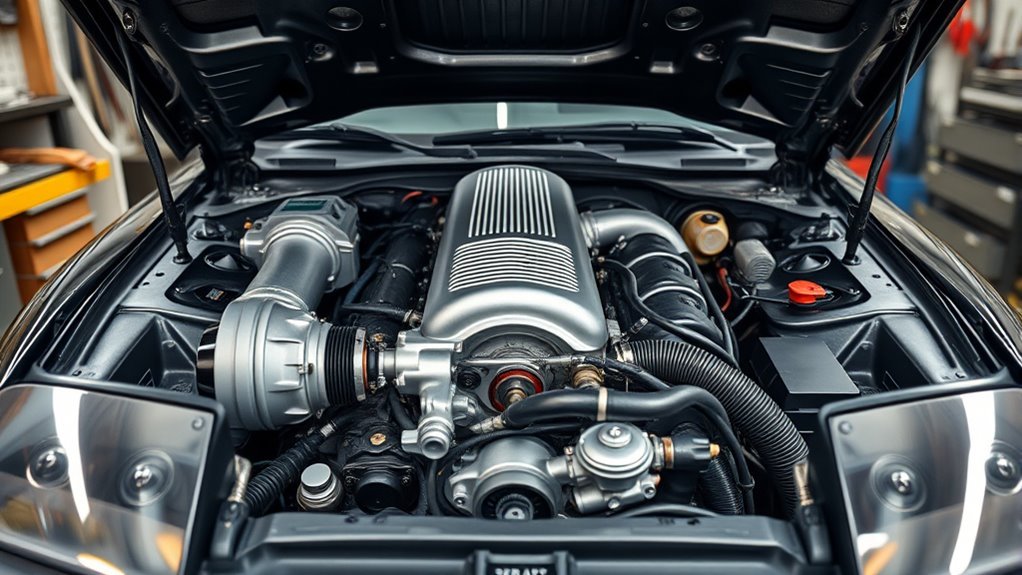
You’re looking at Toyota’s 3.0-liter 7M-GTE: a turbocharged, DOHC 24-valve inline-six best known from the A70/MK3 Supra Turbo and related Toyota models. In stock form, U.S.-market Supra Turbo output was quoted by Toyota at about 230 hp and 246 lb-ft, while other market and standards-based references vary slightly. The engine is rewarding to build, but its head gasket sealing, cooling system, turbo oiling, and tune quality decide whether it becomes a reliable classic or an expensive lesson.
Quick Answer
The 7M-GTE is worth keeping if you want period-correct Toyota turbo character and a realistic 280–350 hp street build. For reliable higher power, budget for head studs, a quality gasket, cooling refresh, fuel upgrades, engine management, and careful tuning before chasing boost.
Key Takeaways
- The 7M-GTE is a 2,954 cc turbo inline-six with a cast-iron block, aluminum head, DOHC valvetrain, and 24 valves.
- Factory power varies by market and rating standard, but U.S. Supra Turbo output was about 230 hp and 246 lb-ft.
- The biggest reliability concern is not the block; it is head sealing, cooling health, detonation control, and old maintenance history.
- A healthy stock-bottom-end street build should prioritize compression, leakdown, fuel delivery, intercooling, exhaust flow, and conservative tuning.
- Swap decisions depend on budget: a 1JZ or 2JZ offers stronger aftermarket support, but keeping the 7M-GTE usually costs less if the engine is already healthy.
7M-GTE Engine at a Glance: Key Specs and Factory Performance
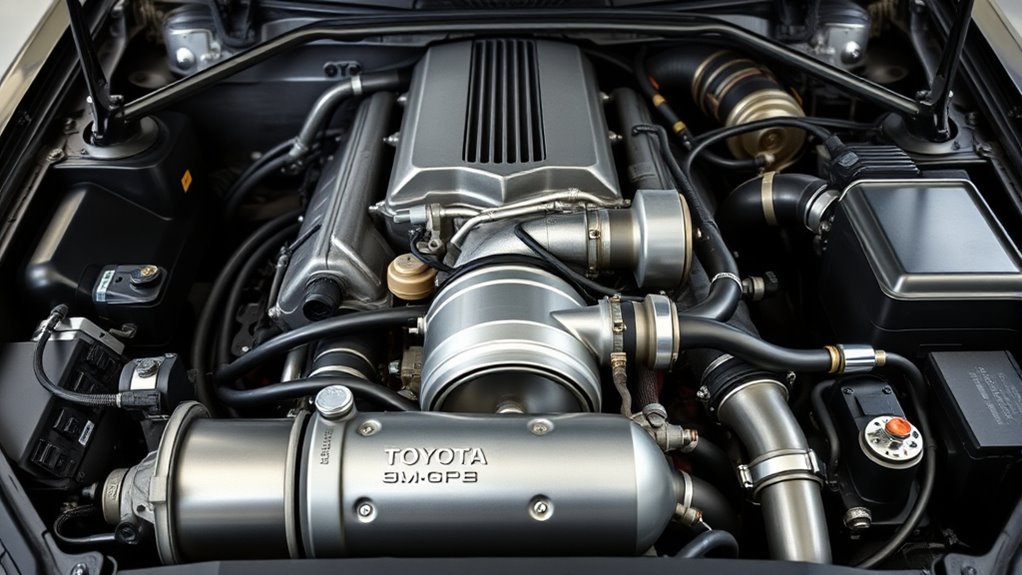
The 7M-GTE was Toyota’s turbocharged version of the 7M family: a 3.0-liter, straight-six engine with electronic fuel injection, an intercooled CT26 turbocharger, and a timing-belt-driven DOHC cylinder head. Toyota’s own Supra history notes that the third-generation Supra Turbo arrived for 1987 with the 7M-GTE, making it the first U.S. Toyota model available with both turbocharging and anti-lock brakes.
| Spec | 7M-GTE Detail |
|---|---|
| Configuration | Turbocharged inline-six, DOHC, 24 valves |
| Displacement | 2,954 cc / 3.0 liters |
| Bore x stroke | 83.0 mm x 91.0 mm |
| Compression ratio | 8.4:1 |
| Block / head | Cast-iron block / aluminum cylinder head |
| Factory turbo | Toyota CT26, intercooled |
| Factory output | About 230 hp and 246 lb-ft in U.S. Supra Turbo references; other market figures vary slightly |
| Best known applications | A70/MK3 Supra Turbo and related Toyota/Soarer platforms depending on market |
You’ll appreciate the 7M-GTE most when you treat it as an old turbo performance engine, not a modern sealed-for-life motor. The cast-iron block is strong, the long-stroke inline-six makes smooth torque, and the factory turbo setup responds well to basic breathing upgrades. But because many surviving engines are now decades old, maintenance quality matters more than the brochure numbers.
Note: You’ll see different factory output figures online because horsepower and torque were quoted by different markets, model years, and rating standards. Use Toyota’s U.S. Supra history as the best reference for U.S.-market Supra Turbo figures.
7M-GTE vs 7M-GE, 1JZ and 2JZ: Keep, Tune, or Swap?
The right choice depends on your goal. If you want a period-correct MK3 Supra that still feels like a classic Toyota turbo car, keeping the 7M-GTE makes sense. If you want easier access to modern aftermarket support, newer engine management options, and higher power with less custom problem-solving, a 1JZ-GTE or 2JZ-GTE swap may be more attractive.
| Option | Best For | Trade-Off |
|---|---|---|
| 7M-GE | Naturally aspirated reliability and simple ownership | Less power potential without major work |
| 7M-GTE | Original turbo character, lower-cost builds when the engine is healthy | Head sealing, age, and tuning discipline matter a lot |
| 1JZ-GTE | Rev-happy Toyota turbo six with strong swap support | Swap costs, wiring, mounts, transmission fitment, and parts sourcing |
| 2JZ-GTE | Large aftermarket, proven high-power builds, stronger reputation | Highest buy-in cost and often overkill for a modest street MK3 |
Keep the 7M-GTE if the engine has good compression, clean oil and coolant, no overheating history, and your target is a responsive street car. Consider a JZ swap if your 7M-GTE already needs a full rebuild and you want a future-proof path to serious power.
How to Spot a Tired 7M-GTE: Common Failure Signs and Quick Checks
You’ll spot a tired 7M-GTE by checking for oil consumption, coolant contamination, overheating, uneven compression, turbo smoke, and unusual engine noises. A clean-looking engine bay is not enough. You want test results, maintenance history, and a cold-start inspection.
Excessive Oil Consumption
Excessive oil consumption usually points to worn piston rings, tired valve stem seals, turbo seal issues, crankcase ventilation problems, or external leaks. Check oil level before and after a long test drive, then watch the exhaust:
- Blue smoke on startup often points toward valve stem seals.
- Blue smoke under boost may point toward turbo oil seal problems or crankcase pressure.
- Blue smoke on deceleration can suggest valve guide or seal wear.
- Oil around the turbo feed, drain, valve covers, or front seals suggests external leakage that still needs fixing.
A compression test and leakdown test will tell you whether the oil use is likely coming from the rings, valves, or head gasket area.
Coolant Contamination Signs
Coolant contamination is one of the most important 7M-GTE red flags. Inspect the dipstick and oil cap for milky residue, check the coolant reservoir for oily film, and look for unexplained coolant loss. White exhaust smoke after warm-up, bubbling in the coolant, repeated overheating, or hard upper radiator hoses shortly after startup can also point to combustion pressure entering the cooling system.
Warning: Do not keep driving a 7M-GTE that is overheating or mixing oil and coolant. Coolant-contaminated oil can damage bearings quickly, and repeated heat cycles can warp the aluminum cylinder head.
Unusual Engine Noises
Unfamiliar sounds can save you money if you listen early. A deep knock from the bottom end may indicate bearing wear. A sharp ticking could be valvetrain, exhaust leak, injector noise, or low oil pressure. A high-pitched whine from the turbo area can indicate turbo bearing wear, boost leaks, or intake plumbing problems. Grinding or rattling near the front of the engine deserves immediate timing belt and accessory inspection.
Do not diagnose only by sound. Confirm with oil pressure, compression, leakdown, timing inspection, and a turbo shaft-play check.
7M-GTE Internals & Realistic Power Limits Without a Rebuild
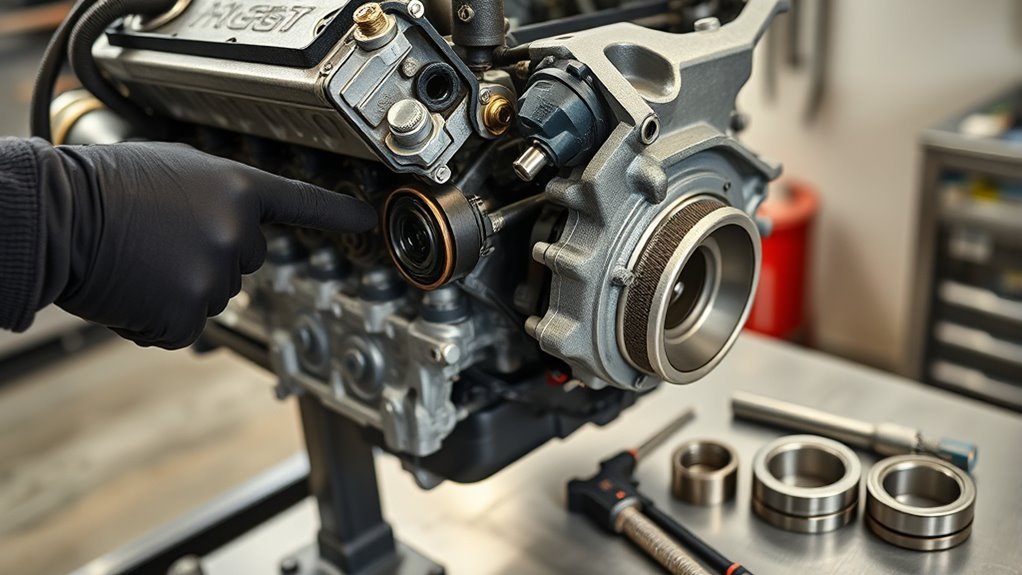
The 7M-GTE’s cast-iron block gives it a solid foundation, but “stock internals” does not mean “unknown condition.” A 30-plus-year-old engine with tired bearings, clogged cooling passages, old hoses, weak fuel delivery, or a questionable head gasket should not be pushed just because other builds have made big power.
For a healthy, unopened engine, a sensible street target is usually in the 280–350 hp range with supporting upgrades and a conservative tune. Higher numbers are possible, but reliability becomes more dependent on head sealing, turbo sizing, fuel system capacity, ignition control, intercooling, oil control, and the actual condition of the rods, pistons, rings, and bearings.
The factory-style compression check standard is 156 psi or more, with 128 psi as the minimum and no more than 14 psi difference between cylinders.
Compression numbers should be judged as a set. Six cylinders at 150–160 psi are more encouraging than one cylinder at 170 psi and another at 125 psi. Pair the compression test with a leakdown test so you know whether losses are coming through the rings, intake valves, exhaust valves, or head gasket.
Bolt-Ons That Give the Biggest Power Gains Per Dollar
The best 7M-GTE bolt-ons are the ones that reduce heat, improve airflow, and keep the tune safe. Avoid chasing boost before the fuel, cooling, and head sealing are ready.
- Cooling system refresh: radiator, thermostat, hoses, fan clutch or fan setup, coolant cap, and proper bleeding. This is reliability work before it is performance work.
- Exhaust upgrade: a freer-flowing downpipe and exhaust reduce backpressure and help the turbo work more efficiently.
- Intercooler and piping: better charge-air cooling reduces knock risk and improves consistency, especially in warm weather.
- Intake and boost-leak fixes: replace cracked couplers and old vacuum lines before blaming the turbo.
- Fuel system support: verify pump health, injector condition, fuel pressure, and wiring before raising boost.
- Boost control and monitoring: use a quality boost gauge, wideband oxygen sensor, and knock-aware tuning strategy.
- Head sealing hardware: if the head comes off, use the right gasket for your surface finish and follow the fastener manufacturer’s torque procedure.
Pro Tip: A wideband oxygen sensor and real boost gauge are not optional on a modified 7M-GTE. They help you catch lean conditions, boost creep, and tune problems before they become broken pistons or bearings.
When to Rebuild Your 7M-GTE: Triggers, Internals, and Gasket Choices
Plan a rebuild when the engine shows oil-and-coolant mixing, repeated overheating, low or uneven compression, heavy blow-by, bearing noise, metal in the oil, or recurring head gasket failure. A proper rebuild is not just a gasket swap. The machine work and measurement matter.
During teardown, inspect the head and block for flatness, cracks, corrosion around coolant passages, cylinder bore wear, crankshaft condition, rod bearing wear, piston ring lands, and oil pump health. If you plan to run more boost, decide the power goal before ordering pistons, rods, injectors, turbo, clutch, and engine management.
For gasket choice, match the gasket to the surface finish and the build goal. A multi-layer steel gasket can work well, but only when the head and block surfaces are prepared correctly. A composite-style gasket may be more forgiving on a mild restoration. ARP-style studs or quality head bolts should be installed and torqued according to the fastener maker’s instructions, not guessed from forum memory.
Build Paths: Reliable Daily Driver vs. High-Power Track Engine
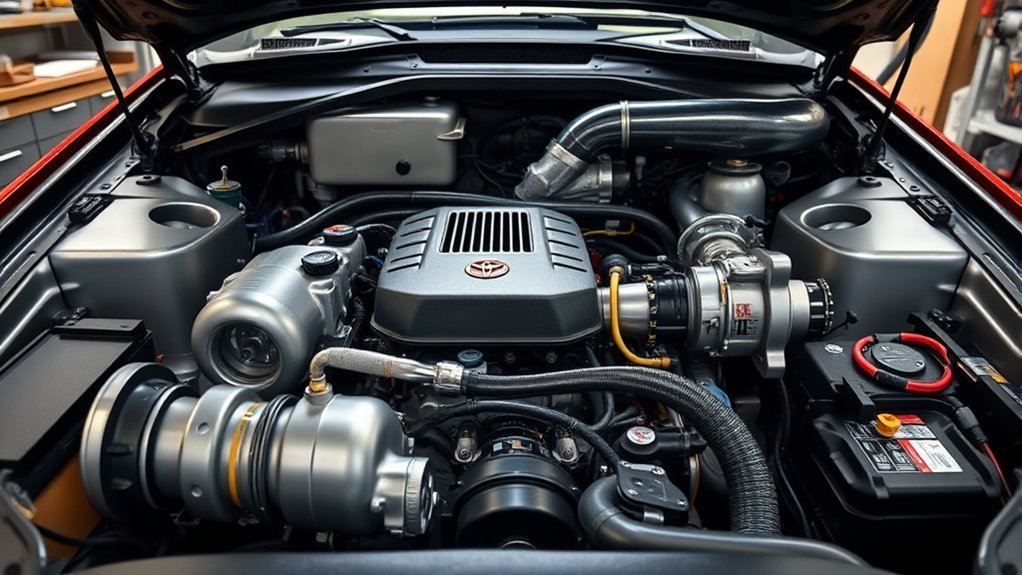
A reliable 7M-GTE build and a high-power 7M-GTE build are not the same recipe. The daily-driver path focuses on heat control, drivability, and easy service. The track path focuses on airflow, fuel, oil control, engine management, and parts that survive repeated abuse.
| Build Path | Recommended Focus | Avoid |
|---|---|---|
| Reliable daily | Cooling refresh, healthy CT26 or mild turbo, exhaust, intercooler, wideband, conservative boost, strong head sealing | Turning up boost on old hoses, old fuel pump, unknown head gasket, or stock gauges only |
| Fast street car | Upgraded turbo, injectors, pump, standalone or well-supported tuning, clutch, cooling, head studs, better intercooler | Relying on rising-rate fuel shortcuts or untuned airflow changes |
| Track/high-power | Built bottom end, oiling upgrades, baffling, fuel system, standalone ECU, data logging, upgraded cooling, proper machine work | Expecting stock-age internals and factory cooling to survive repeated high-boost sessions |
If you want the engine to last, build the support systems before the dyno number. The 7M-GTE can be fun at moderate power when the tune is clean, the cooling system is healthy, and the head gasket is sealed correctly.
Buying Checklist: What to Inspect on Supra and Soarer 7M-GTEs
At a Glance
| Time Required | 1–3 hours for a serious pre-purchase inspection |
| Difficulty | Moderate; use a specialist if you are not comfortable testing compression, leakdown, and turbo play |
| Tools Needed | Compression tester, leakdown tester, flashlight, cooling-system pressure tester, boost gauge, scan/diagnostic basics, clean rags |
| Cost | Usually low for DIY checks; a professional inspection is cheap compared with a failed head gasket or rebuild |
Start by asking for receipts. A seller who can show cooling system work, head gasket work, timing belt service, oil changes, turbo replacement, and tuning records is giving you more than a clean car; they are giving you risk reduction.
Compression and Leakdown
Compression and leakdown tests are the best first filter for a 7M-GTE purchase. A healthy engine should be consistent across all six cylinders. Factory repair manual values list compression pressure at 156 psi or more, a minimum of 128 psi, and no more than 14 psi difference between cylinders.
Use leakdown to locate the problem. Air heard through the oil filler suggests ring or bore leakage. Air through the intake suggests intake valve leakage. Air through the exhaust suggests exhaust valve leakage. Bubbles in the radiator suggest a head gasket or casting issue.
Turbo and Oil Lines
The CT26 turbo and its oil plumbing deserve close attention. Inspect the compressor wheel for contact marks, check shaft play, look for oil in the intake tract, and inspect feed and drain lines for leakage, cracking, poor routing, or heat damage.
- Check feed and drain fittings for seepage or stripped threads.
- Confirm the drain has a clear downhill path back to the sump.
- Inspect intercooler piping for oil pooling, cracked couplers, and loose clamps.
- Watch for smoke after boost, long idle, and throttle lift.
Head Gasket Condition
Because head gasket trouble is the 7M-GTE’s best-known weakness, inspect it from every angle. Look for coolant loss, oily coolant, milky oil, bubbling in the radiator, overheating history, external seepage at the head-to-block joint, and mismatched compression numbers.
If a seller says “the head gasket was done,” ask what was actually done. You want to know whether the head was checked for flatness, whether the block deck was inspected, which gasket was used, which fasteners were installed, and whether torque procedures were documented.
Electrical, Fuel, and Tuning Checks
Old wiring can create problems that look like mechanical failure. Inspect grounds, injector clips, coil wiring, sensors, fuel pump wiring, and any piggyback or standalone ECU installation. Poor wiring, a weak pump, or a bad tune can destroy an otherwise healthy 7M-GTE.
On a modified car, ask who tuned it, what fuel it was tuned for, what boost level it runs, and whether there is wideband data. A car with “unknown tune, unknown injectors, and a manual boost controller” should be priced like a project.
Best Maintenance Practices for Long 7M-GTE Life
A 7M-GTE rewards boring maintenance. Keep oil fresh, coolant clean, belts healthy, and the tune conservative. Replace old rubber before it strands you. Bleed the cooling system correctly. Watch oil pressure and coolant temperature. Fix small leaks before they become low-fluid events.
- Use quality oil and change it regularly, especially if the car sees boost often.
- Refresh the cooling system if service history is unknown.
- Replace vacuum lines and couplers to prevent boost leaks and false diagnosis.
- Inspect timing belt components and replace them on schedule or when age is unknown.
- Monitor air-fuel ratio on modified cars with a wideband gauge.
- Do not raise boost until compression, fuel pressure, cooling, and head sealing are verified.
Frequently Asked Questions
How long does a 7M-GTE engine last?
A well-maintained 7M-GTE can last a long time, but age and service history matter more than mileage alone. Engines with clean oil, stable coolant temperatures, good compression, and proper head gasket work are far safer bets than low-mile examples with unknown maintenance.
What is the Supra MKV?
The Supra MKV is the modern fifth-generation Toyota GR Supra, launched for the 2020 model year. It is not powered by the 7M-GTE. The MKV uses BMW-sourced turbocharged engines, while the 7M-GTE belongs to the older A70/MK3 Supra Turbo era.
Is the 7M-GTE better than a 1JZ or 2JZ?
Not universally. The 7M-GTE is usually better if originality, cost control, and classic MK3 character matter. A 1JZ or 2JZ is usually better if you want broader aftermarket support, easier high-power planning, and a more common modern swap path.
How much power can a stock 7M-GTE handle?
There is no safe single number because condition and tuning vary. A healthy stock-bottom-end 7M-GTE is commonly kept in the moderate 280–350 hp street range with supporting upgrades. Higher-power builds should address head sealing, fuel, engine management, turbo sizing, cooling, and internal condition.
Why do 7M-GTE head gaskets fail?
The common causes are weak clamping, old gasket materials, imperfect head or block surfaces, overheating, detonation, poor torque procedure, and age. A lasting repair usually means checking surface flatness, using the right gasket, using quality fasteners, and keeping the cooling system healthy.
Conclusion
The 7M-GTE is not just “the engine before the JZ.” It is a smooth, strong, old-school Toyota turbo six with real character and useful tuning potential. Keep expectations honest: verify compression, protect the head gasket, refresh the cooling system, support the fuel system, and tune conservatively. Do that, and the 7M-GTE can still be a satisfying engine for a classic Supra or Soarer build.
Sources
- Toyota USA Newsroom: Toyota Supra — An Icon A Half-Century in the Making — backs A70 Supra Turbo history and Toyota’s U.S. factory output reference.
- Toyota Support: History of the Supra — backs third-generation Supra Turbo background and U.S. model history.
- Toyota Owners: 1987 Supra Manuals and Warranties — official Toyota owner literature portal for the 1987 Supra.
- Toyota 7M-GTE Repair Manual, Compression Check — backs compression test procedure and pressure values.
- Engine-Specs: Toyota 7M-GTE Technical Data — backs displacement, bore, stroke, compression ratio, and general engine architecture.