Choosing spark plugs for a Toyota Supra is not just about grabbing a popular NGK part number. The right plug and gap depend on the engine, ignition health, boost pressure, fuel tune, and how the car is driven. Use the factory specification as your baseline, then tighten the gap only when cylinder pressure or high-rpm misfire shows that the ignition system needs help.
Quick Answer
Stock Supra spark plug gaps are usually 1.1 mm (0.043 in) for 7M-GE and U.S.-spec 2JZ engines, while the stock 7M-GTE turbo spec is 0.8 mm (0.031 in). Tuned or higher-boost cars often need tighter gaps, commonly around 0.028–0.032 in, to prevent spark blowout.
Key Takeaways
- Start with the Toyota service specification for your exact engine, year, and market before using tuner advice.
- A larger gap needs more voltage; higher boost or high compression usually needs a smaller gap for reliable ignition.
- Do not force a large gap change on fine-wire iridium or platinum plugs; choose a plug that is close to the needed gap.
- A smaller gap can reduce spark blowout, but it will not fix weak coils, bad wires, poor grounds, boost leaks, or a rich tune.
At a Glance
| Time Required | 30–60 minutes for a basic plug inspection or replacement |
| Difficulty | Beginner to intermediate, depending on engine bay access and coil condition |
| Tools Needed | Spark plug socket, extension, torque wrench, wire-style gap gauge, dielectric grease for boots if needed |
| Typical Cost | About $20–$120 for a set of plugs, depending on copper, platinum, or iridium construction |
Recommended Supra Spark Plug Gaps by Setup
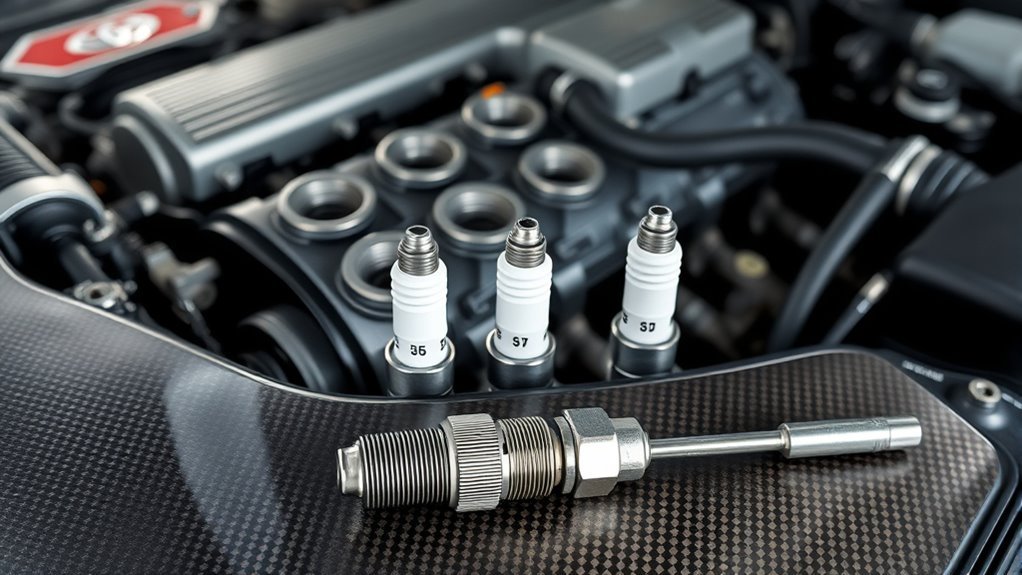
The safest spark plug gap is the one your engine and ignition system can fire cleanly under load. For stock cars, use the Toyota specification. For modified cars, use the factory spec as a starting point, then reduce the gap only as needed to stop verified spark blowout.
| Engine / Setup | Common OEM-Style Plug | Recommended Gap | Best Use |
|---|---|---|---|
| 7M-GE naturally aspirated | NGK BCPR5EP-11 or Denso/Nippondenso PQ16R | 1.1 mm / 0.043 in | Stock daily driving and mild naturally aspirated use |
| 7M-GTE stock turbo | NGK BCPR6EP-N8 or Denso/Nippondenso PQ20R-P8 | 0.8 mm / 0.031 in | Factory turbo boost and stock ignition |
| 2JZ-GE and U.S.-spec 2JZ-GTE | 2JZ-GE: NGK BKR5EP11 / Denso PK16R11; 2JZ-GTE: NGK BKR6EP11 / Denso PK20R11 | 1.1 mm / 0.043 in | Factory-spec Mk4 Supra maintenance |
| Mild boost increase or occasional high-rpm misfire | Correct heat range NGK or Denso plug for the build | 0.8–0.9 mm / 0.031–0.035 in | Lightly modified turbo cars after ignition health is confirmed |
| Higher-boost tuned build | Often one colder heat range; copper or fine-wire plugs depending on tune | 0.7–0.8 mm / 0.028–0.031 in | Boosted cars that show spark blowout under load |
| Extreme boost / race-only tuning | Build-specific heat range and ignition setup | 0.6–0.7 mm / 0.024–0.028 in | Dyno-verified race setups only |
Note: Toyota’s published 1997 Supra specifications list a 1.1 mm (0.043 in) spark plug gap for both 2JZ-GE and 2JZ-GTE engines. Many tuned 2JZ cars run tighter gaps, but that is a modification choice, not the stock service specification.
Stock Plug Types and Gaps for Supra Engines
The 7M and 2JZ engines use different plug specs, and some online recommendations mix stock service data with tuner habits. That is where mistakes happen. If the car is stock, match the service manual. If the car is tuned, match the plug to the tune, boost pressure, and ignition system.
7M-GE Naturally Aspirated
For the 7M-GE, the commonly listed factory-style spark plugs are Denso/Nippondenso PQ16R or NGK BCPR5EP-11. The stock service gap is 1.1 mm, which equals about 0.043 in. This wider gap works well on a naturally aspirated engine with a healthy ignition system because cylinder pressure is lower than on a turbo setup.
7M-GTE Turbo
For the 7M-GTE, the common factory-style plugs are Denso/Nippondenso PQ20R-P8 or NGK BCPR6EP-N8. The stock service gap is 0.8 mm, or about 0.031 in. Toyota used a tighter gap on the turbo engine because boost raises cylinder pressure, and higher pressure makes it harder for the spark to jump the electrodes.
2JZ-GE and 2JZ-GTE
For the U.S.-spec Mk4 Supra, Toyota’s 1997 specifications list Denso PK16R11 or NGK BKR5EP11 for the 2JZ-GE, and Denso PK20R11 or NGK BKR6EP11 for the 2JZ-GTE. The listed plug gap is 1.1 mm, or 0.043 in. Tuned 2JZ-GTE builds often run tighter gaps, but that should be treated as a tuning adjustment rather than a replacement for the factory spec.
Plug Types Explained: Copper, Platinum, Iridium, and Fine-Wire
Spark plug material affects service life, voltage demand, and how carefully you can adjust the gap. The best choice depends on whether you want long service life, low cost, or maximum control for a modified engine.
- Copper / nickel plugs: Often favored on modified turbo cars because they are inexpensive, easy to read, and commonly available in colder heat ranges. They wear faster and need more frequent inspection.
- Platinum plugs: Common in many factory-style applications because they last longer than basic copper plugs. They are a good match for stock ignition systems and normal service intervals.
- Iridium plugs: Use a fine center electrode that can fire with less voltage than a large conventional electrode. They are durable, but the fine tip is delicate and should not be bent roughly.
- Fine-wire plugs: Fine-wire platinum or iridium designs can help marginal ignition systems because the smaller center electrode lowers the voltage needed to start the spark.
Pro Tip: Pick a plug that is already close to your target gap. NGK and Denso both caution against large gap changes because moving the ground strap too far can hurt electrode alignment and plug life, especially on fine-wire plugs.
How Ignition Systems Affect Spark Plug Gap Choices

A spark plug gap is really a voltage demand. The wider the gap, the more voltage the ignition system must produce. Under boost, the air-fuel mixture is packed more densely into the cylinder, so the spark needs even more voltage to jump the same gap. If the coil, wires, igniter, grounds, or plug boots cannot keep up, the result is misfire or spark blowout.
Coil Charge Time
As rpm rises, the coil has less time to charge between firing events. A gap that works at idle may fail at high rpm because the coil cannot build enough energy fast enough. This is why a boosted Supra may idle cleanly but break up under full throttle near the top of a gear.
Spark Energy Needs
A larger gap can expose more spark to the air-fuel mixture, but only if the ignition system can fire it reliably. If the gap is too wide for the available voltage, the spark may not jump the electrodes at all. If the gap is too tight, the spark may fire easily, but the flame kernel can be smaller than ideal. The goal is the widest reliable gap for your setup.
Multiple-Spark and High-Output Systems
Aftermarket ignition systems, fresh coils, strong grounds, and good plug wires can sometimes support a wider gap than a tired stock ignition system. However, stronger ignition does not mean the gap should be opened blindly. Make one change at a time and test under the same boost, fuel, and rpm conditions.
The best spark plug gap is not always the widest one. It is the widest gap your ignition system can fire cleanly at peak boost, peak cylinder pressure, and peak rpm.
Choosing the Right Gap: Stock, Mild Mods, High RPM, and High Boost
Use this process instead of guessing:
- Start with the factory specification. Use 1.1 mm / 0.043 in for 7M-GE and stock U.S.-spec 2JZ applications, and 0.8 mm / 0.031 in for the stock 7M-GTE.
- Confirm ignition health first. Check plug age, wires, coils, igniter, grounds, boots, and oil contamination in the plug wells.
- Reduce the gap only when needed. If the engine breaks up under boost but is otherwise healthy, step down gradually.
- Match heat range to the tune. Higher boost and more timing heat may require a colder plug, but too cold a plug can foul during street driving.
- Log and inspect. Record the plug part number, heat range, gap, boost level, fuel, timing, and plug color after testing.
Warning: Do not use a tighter plug gap to hide detonation, lean fueling, weak coils, or poor tuning. If a Supra misfires under boost, diagnose the ignition and tune before assuming the gap is the only problem.
Step-by-Step Gapping, Torque, and Installation for Supras
Work on a cool engine, keep dirt out of the plug wells, and install the plugs by hand before using a wrench. Aluminum cylinder head threads are easy to damage if a plug is cross-threaded or over-tightened.
Tools Needed
- Correct replacement spark plugs for your engine and tune
- Wire-style spark plug gap gauge
- 5/8 in spark plug socket with rubber insert or magnet
- Ratchet and extensions
- Torque wrench that reads low torque accurately
- Compressed air or a vacuum for cleaning plug wells
- Dielectric grease for plug boots, if needed
Installation Steps
- Let the engine cool. Removing plugs from a hot aluminum head can damage threads.
- Remove covers and coils or wires. Label anything that could be mixed up during reassembly.
- Clean the plug wells. Blow out or vacuum dirt before removing the old plugs.
- Remove the old plugs. Inspect each plug and keep them in cylinder order so you can spot cylinder-specific problems.
- Check the new plug gap. Use a wire gauge. Adjust only gently, and avoid large changes on fine-wire plugs.
- Thread each plug by hand. If it does not spin in smoothly, stop and restart. Never force it.
- Torque the plug. A common Toyota 2JZ spark plug torque value is 18 Nm / 13 ft-lb. If your engine manual gives a different value, follow the manual for your engine.
- Reinstall coils, wires, and covers. Make sure boots seat fully and connectors click into place.
- Start and test. Listen for misfire at idle, then test under light load before making full-boost pulls.
Note: Many modern spark plugs have plated threads and do not need anti-seize. Denso specifically warns that thread lubricant can lead to over-tightening. If a manual or plug maker calls for anti-seize, use it sparingly and adjust torque as directed.
Troubleshooting: Misfires, Fouling, and Idle Problems
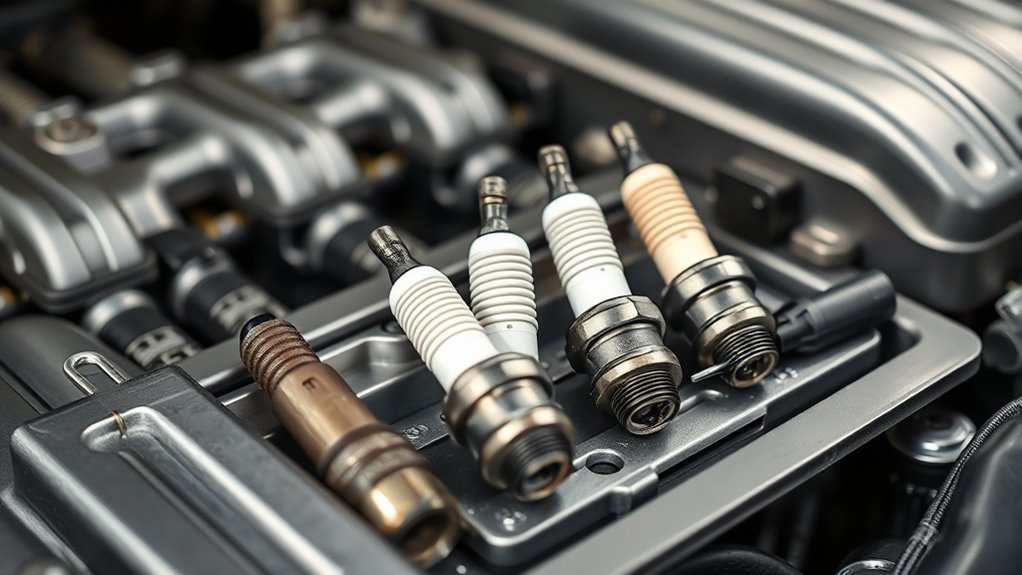
Misfire diagnosis should be methodical. Spark plugs are easy to blame, but a misfire can come from ignition, fuel, compression, wiring, vacuum leaks, oil in the plug wells, or the tune itself.
Misfire Diagnosis Steps
- Read trouble codes first. Codes can point to ignition, airflow, cam/crank signal, oxygen sensor, or fuel control issues.
- Check when the misfire happens. Idle-only, cruise-only, and boost-only misfires usually have different causes.
- Inspect the plugs by cylinder. One wet or black plug points to a local issue; all black plugs often point to rich fueling or weak ignition.
- Check plug gap and wear. Worn plugs with enlarged gaps can misfire even if the original gap was correct.
- Test coils, wires, and boots. Cracks, carbon tracking, oil-soaked boots, and loose terminals can mimic a bad plug.
- Pressure-test for leaks. Boost and vacuum leaks can create lean or rich conditions that make plug readings misleading.
Plug Fouling Causes
Carbon fouling usually points to a rich mixture, weak spark, too cold a heat range, excessive idling, or short-trip driving. Oil fouling points toward valve stem seals, piston rings, turbo oil seal issues, or oil pooling in the plug valley. Fuel-wet plugs can also come from injector leakage, failed starts, or poor cold-start tuning.
Idle Stability Fixes
A healthy 2JZ-GTE service idle is listed at 650 ± 50 rpm in Toyota workshop material. If idle is rough, do not tighten the plug gap first. Check vacuum leaks, idle air control, throttle body cleanliness, ignition timing, coil connectors, grounds, fuel trims, and plug condition. A very tight plug gap may make boost misfire better while making idle quality worse.
Maintenance Intervals, Inspection Tips, and Common Mistakes
Inspection intervals depend on plug material and engine tune. A stock street car with platinum or iridium plugs can usually go much longer than a high-boost car running copper plugs. Modified engines should be checked more often because plug color, porcelain marks, and electrode wear can reveal tuning problems early.
- Stock street car: Inspect during routine service and follow the service interval for the plug type installed.
- Modified turbo car: Inspect after tuning changes, boost increases, fuel changes, or any misfire event.
- Race or high-boost car: Read plugs frequently and replace copper plugs as cheap insurance.
Common mistakes include using the wrong heat range, trusting a plug because it was “pre-gapped,” opening iridium plugs too far, using a coin-style gauge on fine-wire plugs, overusing anti-seize, and torquing plugs without cleaning the plug wells first.
Quick Reference: Part Numbers, Recommended Gaps, and Upgrade Pairings
Use this quick reference as a starting point, then confirm fitment with your vehicle year, market, and engine code.
- 7M-GE stock street: NGK BCPR5EP-11 or Denso/Nippondenso PQ16R, gapped to 1.1 mm / 0.043 in.
- 7M-GTE stock turbo: NGK BCPR6EP-N8 or Denso/Nippondenso PQ20R-P8, gapped to 0.8 mm / 0.031 in.
- 2JZ-GE stock: NGK BKR5EP11 or Denso PK16R11, gapped to 1.1 mm / 0.043 in for the 1997 U.S.-spec reference.
- 2JZ-GTE stock: NGK BKR6EP11 or Denso PK20R11, gapped to 1.1 mm / 0.043 in for the 1997 U.S.-spec reference.
- Mildly boosted tuned setup: Use the correct heat range for the tune and test around 0.031–0.035 in.
- High-boost setup: Work with the tuner; many builds start around 0.028–0.031 in and move smaller only if needed.
Frequently Asked Questions
How do I know what spark plug gap I need?
Start with the factory service specification for your engine. If the car is modified, reduce the gap only when testing shows spark blowout or misfire under load. The correct gap is the widest gap that fires reliably at your real boost and rpm level.
What is the stock spark plug gap for a Toyota Supra?
The 7M-GE stock gap is 1.1 mm / 0.043 in, and the 7M-GTE stock turbo gap is 0.8 mm / 0.031 in. Toyota’s 1997 Supra specifications list 1.1 mm / 0.043 in for both 2JZ-GE and 2JZ-GTE engines.
Why do boosted Supras often run a tighter spark plug gap?
Boost increases cylinder pressure, and higher pressure makes it harder for the spark to jump the plug gap. Tightening the gap lowers the voltage needed to fire the plug and can prevent spark blowout under load.
Should I gap iridium or platinum spark plugs?
You should verify the gap, but avoid large adjustments. Fine-wire iridium and platinum electrodes are delicate, so it is better to buy a plug that is already close to the needed gap than to bend it heavily.
Can a smaller spark plug gap fix a misfire?
It can fix spark blowout caused by excessive gap under boost, but it will not fix every misfire. Check coils, wires, plug boots, grounds, fuel trims, vacuum leaks, boost leaks, compression, and tune quality before relying on gap changes.
What torque should I use for Supra spark plugs?
A commonly published Toyota 2JZ spark plug torque is 18 Nm / 13 ft-lb. Always follow the service manual for your exact engine and plug type, and install plugs into a cool, clean cylinder head.
Conclusion
The right Supra spark plug gap depends on the engine first and the modifications second. Keep a stock 7M-GE or U.S.-spec 2JZ close to the 1.1 mm / 0.043 in factory baseline, keep a stock 7M-GTE near 0.8 mm / 0.031 in, and tighten the gap only when boost, rpm, and testing prove it is needed. Match the plug heat range to the tune, torque the plugs correctly, inspect them often, and your Supra’s ignition system will stay crisp, stable, and easier to diagnose.
Sources
- NGK Spark Plugs — Gapping and Indexing — explains how gap size affects voltage demand and why forced induction may require a smaller gap.
- NGK Spark Plugs — Do I Need to Set the Gap? — supports verifying plug gap instead of assuming the factory preset is correct for every engine.
- NGK Spark Plugs — Spark Plug Installation — supports cool-engine installation, clean plug holes, and correct installation technique.
- DENSO Spark Plug Installation — supports following the vehicle repair manual and avoiding thread lubricant unless specified.
- MkIII Supra Handbook Service Specifications — supports 7M-GE and 7M-GTE plug types and stock gap specifications.
- 1997 Toyota Supra Specifications — supports 2JZ-GE and 2JZ-GTE plug types and the 1.1 mm / 0.043 in factory gap.