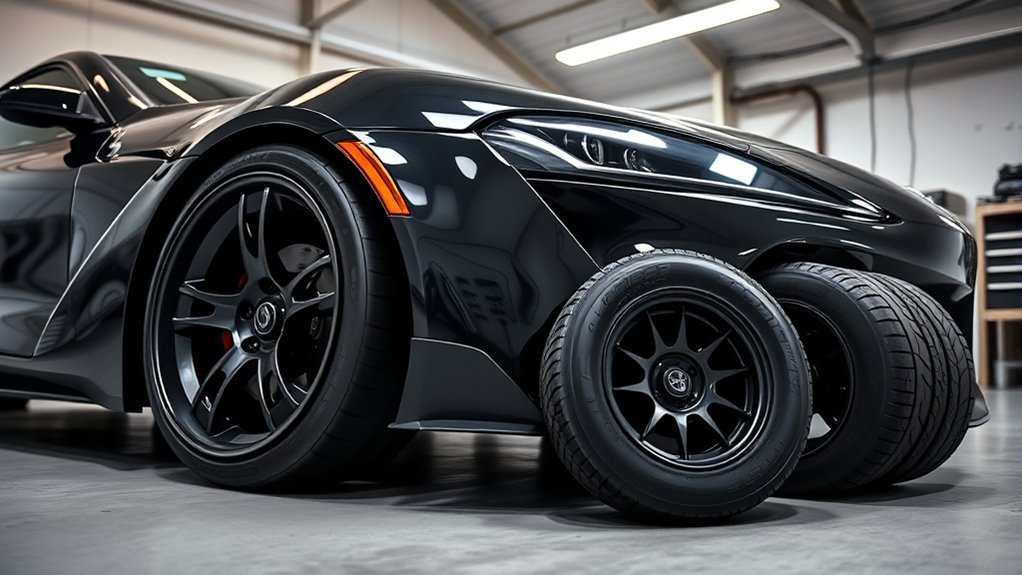
You’ll pick staggered for rear-biased traction and an aggressive stance—better straight-line grip and drift-friendly oversteer but more uneven wear and limited rotation. Go square if you want sharper turn-in, balanced handling, and easier tire rotation for autocross or daily use; it demands front grip tuning and alignment but saves money long-term. Fitment, spacers, camber, and swaybar tweaks matter either way, and the next section breaks down the specific adjustments and costs.
Quick Decision Guide: Staggered vs Square for Your Supra
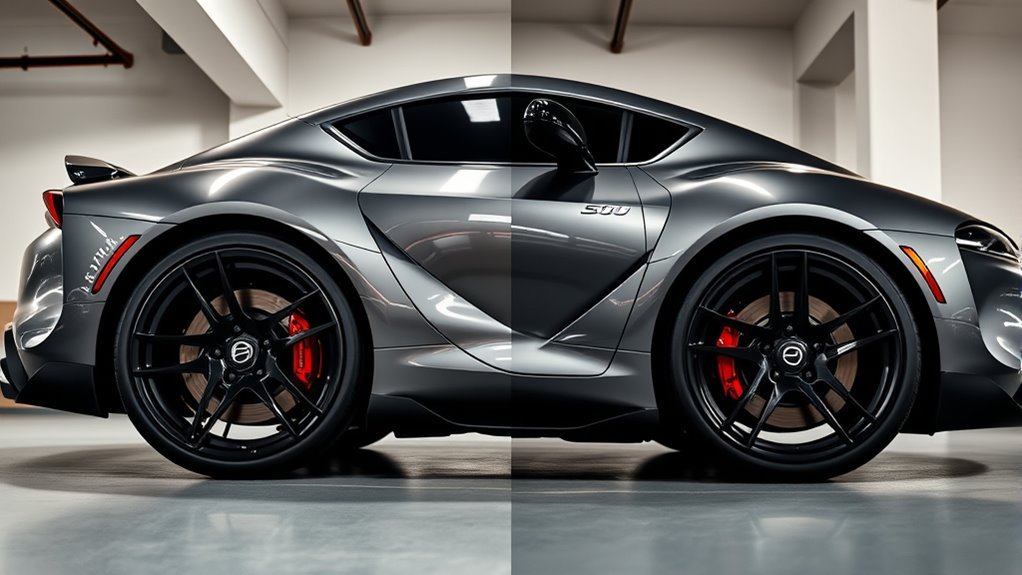
Pick the wheel layout that matches how you drive: a square setup (same tire size all around) gives balanced handling, predictable turn-in, and easier tire rotation—ideal for autocross and spirited road use—while a staggered setup (wider rears) boosts straight-line traction and an aggressive stance but can induce understeer and limits rotation options. You’ll favor square if you want nimble control, consistent grip up front, and easier maintenance; a 16×9 with 245/50/16 tires can sharpen response when suspension is tuned. Monitor tire pressure closely to preserve contact patches, and adjust ride height to manage weight distribution. Choose liberation through measurable upgrades: practical square setups free you from compromises that staggered aesthetics demand.
How Staggered Setups Change Supra Handling and Wear
You’ve seen the trade-offs in the quick guide; now let’s look at how a staggered wheel setup actually alters Supra behavior and tire life. You’ll notice wider rear tires boost traction and straight-line speed, but they shift balance rearward, increasing understeer in slow corners while still allowing sudden oversteer in high-speed shifts. Smaller fronts reduce contact patch and degrade steering feedback and response, so you’ll need to tune tire pressure and suspension to reclaim predictability. Expect uneven wear: rears wear differently than fronts, forcing more frequent rotations or replacements. If you crave liberation from cautious driving, accept the maintenance and setup demands; with careful tuning you can exploit rear grip while managing compromised agility and longevity.
How Square Setups Improve Front Grip, Rotation, and Track Times
When you switch the Supra to a square wheel setup, the uniform tire sizes immediately boost front grip and sharpen steering response, letting you carry more speed into and through corners with greater confidence. You gain improved handling dynamics as wider front tires increase traction, reducing understeer and creating a neutral balance that frees you to explore limits without fighting the wheel. The square layout also lets you rotate tires regularly, producing even wear patterns that extend tire life and cut maintenance costs. On track, predictable tire performance translates to cleaner inputs, earlier throttle application, and faster lap times. If you want liberation from inconsistent grip and frequent tire swaps, a square setup delivers measurable gains in control, economy, and pace.
Practical Fitment Checklist: Wheels, Tires, Spacers, and Lug Bolts
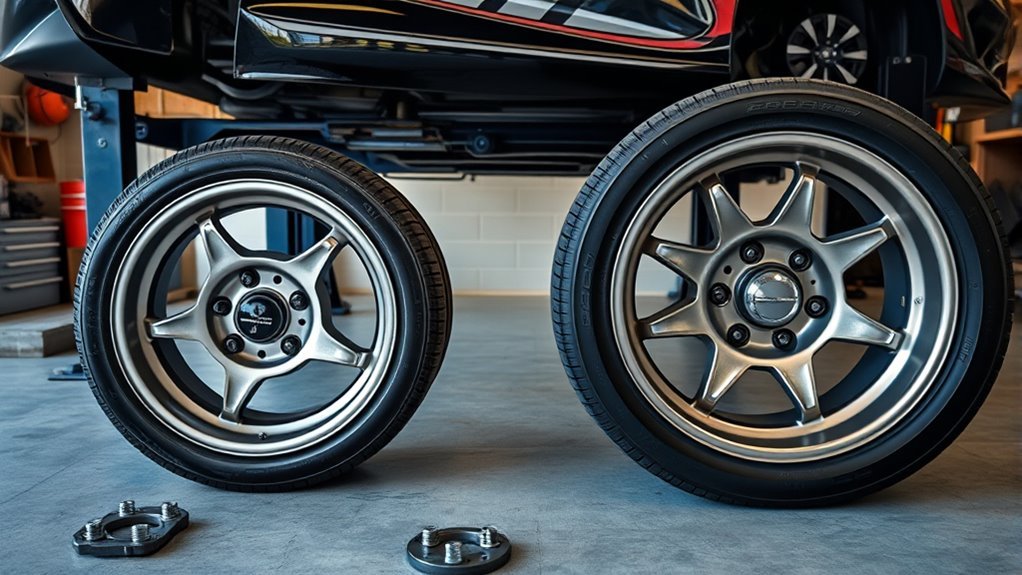
Check that your 16×9 wheels clear the Supra’s arches and comfortably accept 245/50/16 tires to preserve balanced grip and predictable handling. If you swap rears to the front, plan on 10–13 mm spacers and longer lug bolts, and verify how spacer thickness changes wheel protrusion and alignment. Keep OEM springs in place for correct ride height, and remember a square setup lets you rotate tires regularly to maximize the life of 245/50/16 rubber.
Wheel And Tire Sizes
Although a square wheel setup demands tight tolerances, you can reliably run 16×9 wheels with 245/50/16 tires (and 16×8 with up to 235s) on a Supra if you verify clearance, offset, and suspension geometry first. You’ll check wheel offset against inner fender and control-arm clearance to prevent rubbing under compression; incorrect wheel offset ruins predictable steering and wears edges prematurely. Match tire pressure to intended load and dynamic use—track vs street—and remember pressure affects effective tire width and contact patch. Confirm overall diameter to maintain speedometer and gearing. Measure for camber and toe tolerance so the chosen sizes don’t amplify negative camber wear. Be decisive: correct fitment liberates handling potential, mismatches compromise safety and performance.
Spacers And Lug Bolts
One clear step you’ll need for converting a Supra from staggered to a square setup is choosing and fitting the correct spacers and matching lug bolts so the wheels sit true and safe. You’ll pick spacer materials that resist corrosion and maintain rigidity; aluminum or steel options change mass and load paths. Verify whether 10 mm or 13 mm spacers avoid wheel protrusion and clear suspension or fenders. Use longer lug bolt types rated for the added thickness, and torque to spec.
- Measure fitment: test 10 mm then 13 mm, check tire clearance (245/50/16) and hub contact.
- Select hardware: corrosion-resistant spacer materials and proper lug bolt types.
- Align and torque: confirm alignment to restore handling and liberate confident driving.
Suspension & Swaybar Tweaks and Alignment Specs for Each Setup
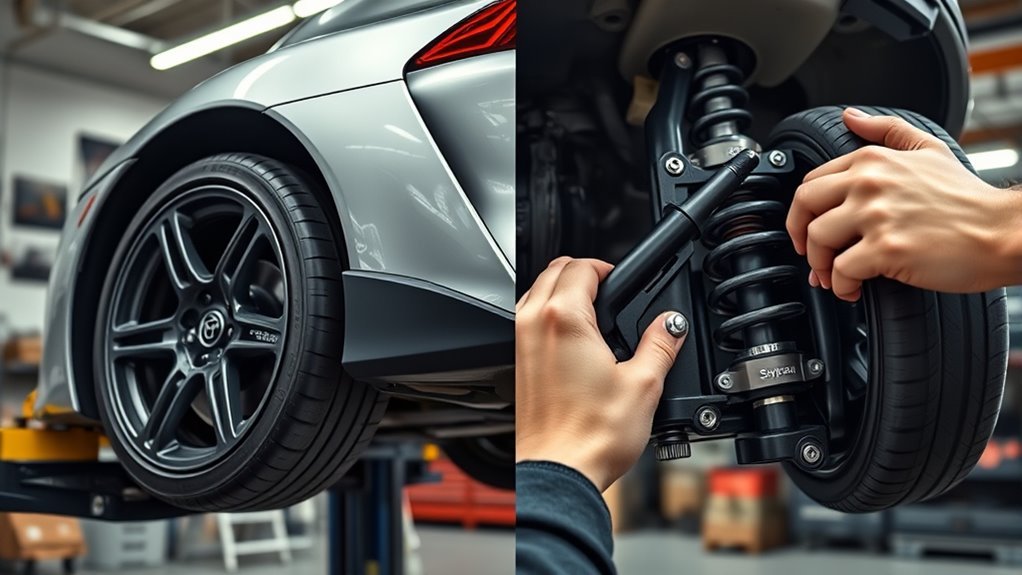
You’ll want to match spring rates and camber to the wheel setup: for a square Supra, JDM Bilstein with Eibach Pro springs and about 3° negative camber tightens turn-in and tire contact. Set the front swaybar to its stiffest position and the rear to full soft as a baseline, then tweak to balance oversteer and understeer for your driving style. After any swaybar or spring change, get a proper alignment to prevent uneven wear and maintain predictable handling.
Spring Rate & Camber
Because a square-wheel Supra changes load patterns at each corner, you’ll want stiffer springs up front and careful camber biasing to keep the contact patch flat through turn-in and mid-corner. You’ll favor JDM Bilstein dampers with Eibach Pro springs for predictable spring characteristics and a firmer front rate to resist squat. Camber adjustments around -3° frontward improve grip with square tires, freeing you to push harder without sacrificing stability.
- Set front spring rates higher to control dive and keep tire contact; watch ride height and spacer effects.
- Bias camber to the front (~-3°) for even wear and consistent cornering loads.
- Verify suspension geometry after spacer or lug-bolt changes to retain intended behavior.
Swaybar Settings & Alignment
When dialing in swaybar settings and alignment, start with a clear goal for balance—square setups typically run the front bar on the firmest setting and the rear as soft as possible to promote neutral, predictable turn-in, while staggered setups benefit from stiffening the rear bar to reduce understeer. You’ll make swaybar adjustments deliberately: firm front/soft rear for square, stiffer rear for staggered, then test. Use JDM Bilstein shocks with Eibach Pro springs as a baseline; they respond predictably but demand fine alignment tweaks. Prioritize alignment importance—equal camber on all four for square setups, and tweak toe/camber for staggered geometry. Monitor handling after each change, liberate your driving by trusting data and deliberate, minimal adjustments that sharpen balance without sacrificing grip.
Cost, Tire Lifecycle, and Maintenance: What to Budget For
A few clear budget items separate staggered and square wheel setups, and knowing them up front saves you money and downtime: staggered arrangements typically raise tire costs and limit rotation options because front and rear sizes differ, while square setups let you rotate all four tires for more even wear and replace them together to lower per-vehicle expense—though you must also account for spacers and longer lug bolts if you’re fitting rear wheels up front. You’ll want to plan for tire costs, maintenance frequency, alignment expenses, and tire longevity when choosing.
- Tires: square reduces per-vehicle spend and boosts tire longevity via full rotations.
- Hardware: spacers and bolts are one-time but necessary buys.
- Service: regular alignments still protect handling and limit unexpected wear.
Real-World Use Cases: Daily Driving, Autocross, and Drifting
If you split your driving between daily commuting, autocross, and the occasional drift session, your wheel choice will directly shape grip, tire wear, and setup flexibility. For daily driving you’ll appreciate a square setup: it delivers daily comfort, uniform tire wear, and simple rotations, so you spend less time and money on maintenance while preserving predictable handling dynamics. In autocross a square layout sharpens front grip and neutral balance, letting you carry speed through corners and shave lap time. For drifting you’ll lean toward staggered wheels; the wider rear induces oversteer and easier initiations, though it sacrifices rotation options and long-term tire parity. Choose based on priorities: liberation through balanced, repeatable control or aggressive, drift-oriented rear bias.
Frequently Asked Questions
Is a Square Setup Better Than Staggered?
Yes — you’ll prefer square setups for freer handling dynamics and reduced tire wear; they give balanced grip, easier rotation, predictable responses, and practical performance, so you’ll feel liberated from uneven wear and twitchy handling.
What’s the Point of a Staggered Wheel Setup?
Like a sprinter switching spikes, you get staggered wheels for extra rear traction; you’ll gain improved tire performance and altered handling characteristics, boosting straight-line grip and a bold look while accepting rotation limits and wear trade-offs.
What Is the Best Wheel Spec for a Supra?
You’ll want 16×9 wheels with a modest wheel offset (ET around +20 to +35) and 245 tire width; this gives balanced grip, easier rotation, improved handling, and frees you to drive confidently and uncompromised.
Conclusion
You want grip or you want drama—pick one and pretend you’re surprised. Staggered gives the Supra a planted, rear-biased stance and predictable oversteer, great for straight-line style and tire conservation; square buys you balanced rotation, better front bite, and faster lap times at the expense of more frequent tire swaps. Follow the fitment, alignment, and hardware rules, tweak bars and dampers, and you’ll get the result you paid for—no miracles, just engineering.