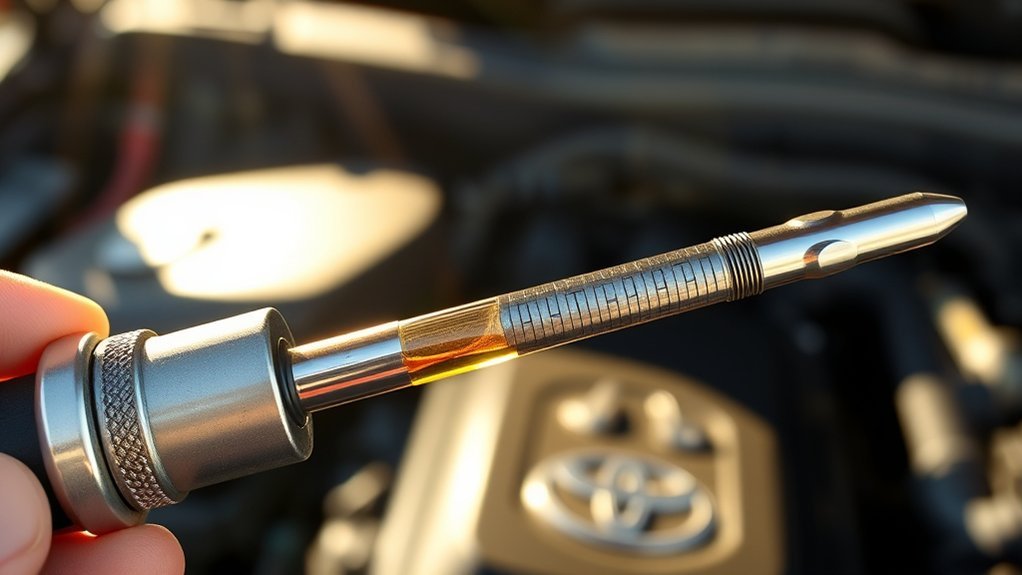
To read your Toyota Tacoma dipstick correctly, first verify your vehicle is on a level surface. Pull out the dipstick, wipe it clean, then fully reinsert it and remove it again. Check the oil level against the marks; if one side shows higher, trust the lower reading. Perform checks after the engine is off for accurate results. Regular monitoring helps prevent overfilling issues. Stick around to discover tips for troubleshooting common dipstick problems.
Common Challenges With Toyota Tacoma Dipsticks
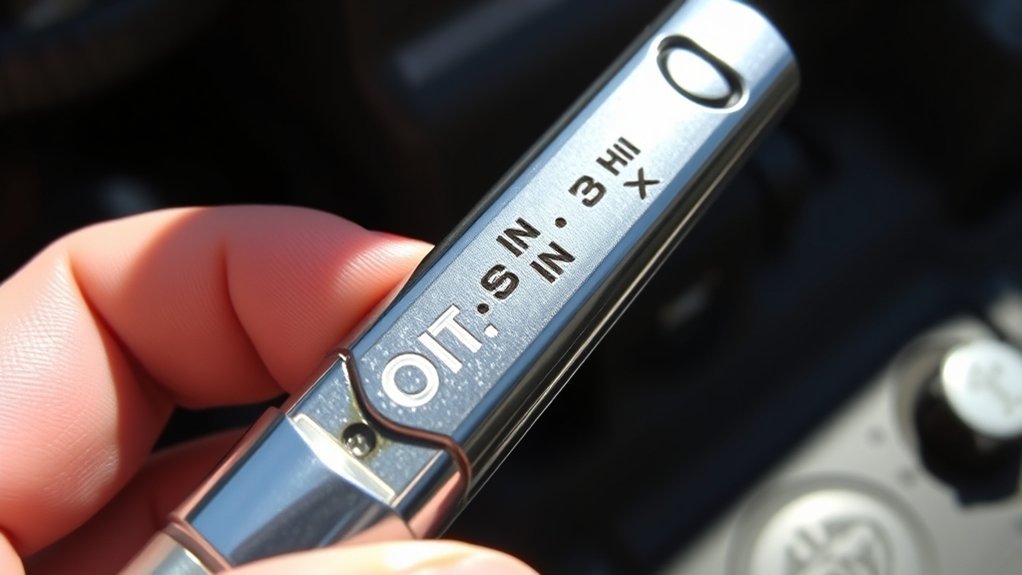
When checking the oil level in your Toyota Tacoma, you might face several challenges. The dipstick design often leads to inconsistent readings; one side may show a higher oil level than the other. This discrepancy complicates your ability to gauge the actual oil level accurately. Additionally, the shiny surface of the dipstick can cause clear oils to smear, obscuring visibility and leading to frustration.
Oil wicking up the dipstick tube is another common issue, misleading your measurements and necessitating multiple checks for accuracy. To improve clarity, consider roughening the dipstick’s surface with fine grit sandpaper to enhance oil adhesion. Users also find it beneficial to wipe the dipstick clean, wait a few minutes for oil to settle, and then recheck. This approach can provide a more reliable reading, especially when considering variations in oil viscosity.
How to Accurately Check Your Tacoma’s Oil Level
To accurately check your Tacoma’s oil level, start by ensuring the vehicle is on a level surface to prevent skewed readings. It’s best to perform this check in the morning or after the engine has been off for a while, allowing the oil viscosity to stabilize. Begin by wiping the dipstick clean, then fully reinsert it and wait a few moments for the oil to settle back into the pan. When you pull it out, examine both sides of the dipstick. If one side shows a higher level, trust the lower reading for accuracy. If you notice inconsistent readings, lightly roughen the dipstick design with fine grit sandpaper to enhance oil adherence, ensuring clearer indications. Regular checks help maintain your Tacoma’s performance and longevity, so don’t overlook this essential task.
Best Techniques for Reading Your Tacoma’s Dipstick
After checking your Tacoma’s oil level, understanding how to read the dipstick marks is essential for monitoring your engine’s health. Start by wiping the dipstick clean and reinserting it fully. Wait a few moments before pulling it out again to minimize oil smearing. For consistent readings, check the dipstick in the morning when the oil has settled. Use a clean paper towel to enhance visibility, especially with clear oils. Make sure your vehicle is on level ground, allowing the oil to drain back into the pan for accurate oil measurement techniques. If you encounter inconsistent readings, consider using fine grit sandpaper to roughen the dipstick surface, helping oil adhere better. Following these dipstick maintenance tips will guarantee you get the most accurate readings, allowing you to maintain your Tacoma’s engine health effectively.
Fix Inconsistent Dipstick Readings
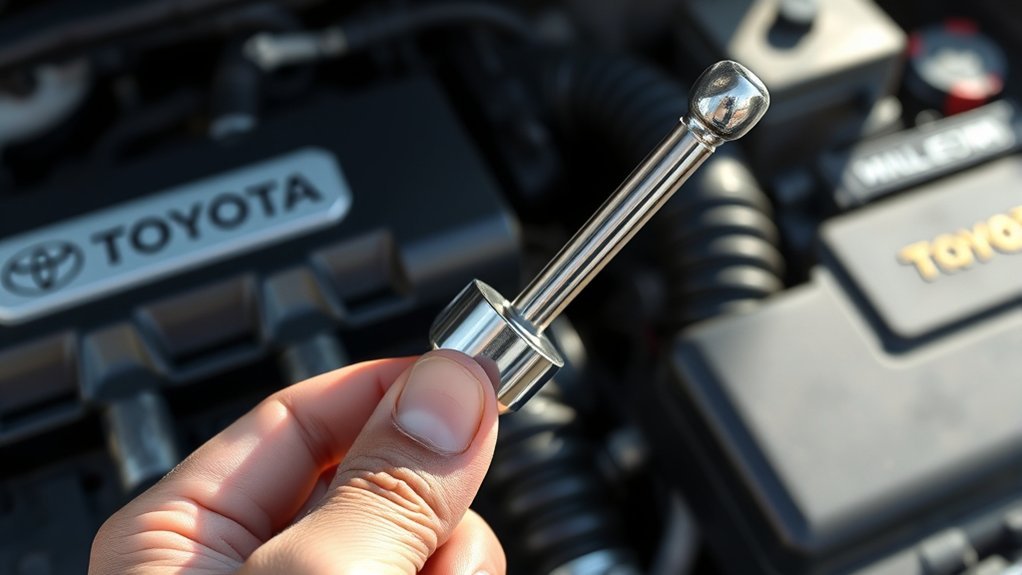
While checking your Tacoma’s oil level, you might notice inconsistent dipstick readings. To fix this, start by wiping the dipstick clean with a paper towel and wait a few minutes after removal for oil to drain back. This aids in dipstick calibration, providing a more accurate reading. You might also consider roughening the dipstick’s surface with fine grit sandpaper; this helps oil adhere better, improving visibility of the oil level. It’s best to check the oil level in the morning when the engine is cold, as this often yields more consistent readings. Finally, experiment with different angles while reinserting the dipstick to reduce smearing, which can obscure your readings, especially with clear oils. Remember, the viscosity of your oil can also affect how it clings to the dipstick, so keep that in mind during your checks.
Keep Your Engine Happy With Proper Oil Levels
To keep your engine happy, consistently check your oil levels using precise techniques. Start by cleaning the dipstick and ensuring it’s fully inserted before checking for accurate readings. Maintaining oil levels between the minimum and maximum marks is essential for engine performance and longevity.
Consistent Dipstick Checking Techniques
Maintaining accurate oil levels in your Toyota Tacoma is essential for engine health. Start by following these dipstick maintenance tips: always wipe the dipstick clean and reinsert it fully. Wait a few moments before pulling it out again to get a precise reading. It’s best to check the dipstick in the morning or after the engine has been off, minimizing oil adherence to the tube. If readings are consistently high on one side, try turning the dipstick around or checking from different angles. Consider roughening the dipstick surface with fine grit sandpaper for better oil visibility. Regularly monitor oil levels and change the oil filter with each oil change to mitigate oil viscosity effects and guarantee peak performance.
Importance Of Accurate Readings
Accurate dipstick readings are crucial for keeping your Toyota Tacoma’s engine running smoothly. Maintaining proper oil levels directly impacts engine performance and longevity. Regularly checking oil levels helps you identify leaks or consumption issues, ensuring efficient operation. Aim for the halfway mark on the dipstick; this indicates sufficient lubrication without risking overfilling. Inconsistent readings can lead to excess oil, causing pressure issues and potential engine damage. Always let the oil settle before checking, as this can improve accuracy. Techniques like wiping the dipstick and allowing oil to drain back also enhance reading precision. Remember, understanding oil viscosity and your dipstick design plays an important role in safeguarding your engine’s health for the long haul.
Community Tips for Troubleshooting Dipstick Issues
When troubleshooting dipstick issues, it’s crucial to understand common problems and effective checking techniques. Many Tacoma owners have shared insights that can help you achieve accurate readings and maintain proper oil levels. Let’s explore these community-tested methods for a smoother oil-checking experience.
Common Dipstick Problems
Although many Toyota Tacoma owners encounter dipstick-related challenges, understanding these common issues can help you maintain ideal oil levels. One frequent problem is inconsistent readings; often, one side of the dipstick shows a higher oil level than the other. This discrepancy can stem from the dipstick design or oil viscosity. To achieve accurate results, wipe the dipstick clean and wait a few minutes for the oil to settle before rechecking. Overfilling is another concern; if your dipstick consistently indicates high levels, siphoning off excess oil can prevent engine complications. Community feedback suggests checking oil levels in the morning, when the engine’s cold, to guarantee more reliable readings and avoid confusion.
Effective Checking Techniques
Inconsistent readings can lead to confusion and potential engine issues, making effective checking techniques essential. Start by wiping the dipstick clean before reinserting it, allowing the oil to settle for a few minutes for accurate results. Check the dipstick in the morning when the engine is cold, as warm oil can cling to the tube, skewing your readings. Pull the dipstick straight out without bending it to avoid oil smearing. For improved visibility, consider roughening the dipstick surface with fine grit sandpaper; this helps oil adhere better and reduces inaccuracies. Finally, mark your dipstick at the appropriate oil levels after a change to enhance reliability during future checks, ensuring proper dipstick maintenance and understanding of oil viscosity.
Community Sharing Insights
Many Tacoma owners have shared valuable insights that can help you troubleshoot dipstick issues effectively. First, pull the dipstick straight out to minimize oil smearing, ensuring clearer readings. Wipe it clean and wait a few minutes after removal for more accurate measurements, allowing oil viscosity to stabilize. Some users recommend dipstick modifications, like using sandpaper to roughen its surface, which helps oil adhere better. Marking hash points between minimum and maximum levels on the dipstick also aids in quick visual references. Additionally, turning the dipstick around after wiping it can reveal different oil levels, enhancing accuracy. Implementing these community tips can empower you to maintain your Tacoma with confidence.
How to Handle Overfilled Oil Situations
When you notice the dipstick indicates oil levels above the maximum mark, it’s important to address the issue promptly to prevent engine damage. Overfilling can lead to increased oil pressure, triggering oil pressure relief valves and potentially causing operational issues. To remedy this, consider using oil siphoning techniques with a siphon pump to carefully remove the excess oil. This process helps maintain ideal engine pressure and guarantees proper lubrication.
If you consistently see high readings, check for oil wicking up the dipstick tube, which can distort measurements. Always remember to change the oil filter with each oil change to ensure accurate readings and proper oil flow throughout the system. When in doubt, trust the manufacturer’s recommended oil capacity rather than solely relying on the dipstick. Taking these steps not only protects your engine but also empowers you to maintain your vehicle effectively.
When to Get Help With Dipstick Problems?
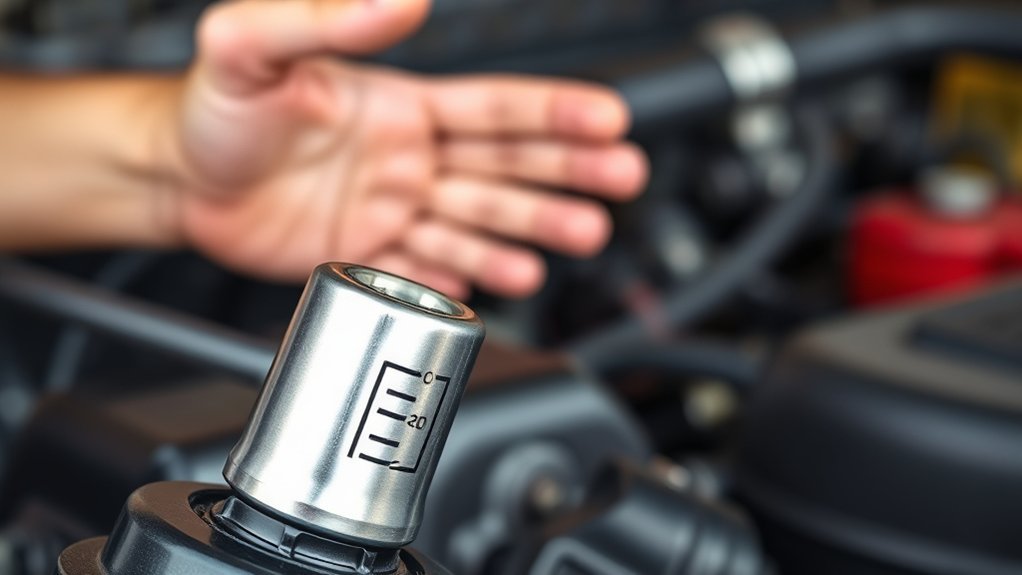
If you notice unusual readings on your dipstick, it’s vital to seek expert help. Consistently differing oil levels can indicate a problem with the dipstick or tube, suggesting it’s time for professional evaluation. If you see oil smearing along the dipstick or struggle to get a clear reading, consult a mechanic to protect your engine’s health.
Should the dipstick show readings considerably above the maximum mark, addressing potential overfilling issues is essential, as this can lead to severe engine damage. Additionally, persistent low oil pressure gauge readings between 1.8-3.2 can signal underlying problems, warranting immediate consultation.
If you find yourself relying more on oil capacity than dipstick readings, it’s time to get expert insight into your vehicle’s oil system. Prioritizing proper dipstick maintenance can prevent costly repairs down the line and guarantee your Tacoma runs smoothly.
Regular Maintenance for Your Tacoma’s Oil System
Regular maintenance of your Tacoma’s oil system is essential for peak engine performance and longevity. To keep your engine healthy, stick to an oil change frequency of every 5,000 to 7,000 miles. Always replace the oil filter during each oil change; this guarantees optimal filtration and prevents contaminants from circulating within your engine.
When checking oil levels, allow the engine oil to drain back into the pan for a few minutes for a more accurate reading. Wipe the dipstick clean, reinsert it, and wait a moment before pulling it out to avoid smearing. This practice provides clarity in your readings. Regularly monitor the dipstick, especially after an oil change, to prevent overfilling, which can cause potential engine damage. By following these steps, you’ll maintain your Tacoma’s oil system effectively, enhancing both performance and durability.
Frequently Asked Questions
How to Read a Toyota Oil Dipstick?
To read your Toyota oil dipstick, pull it out, wipe it clean, and reinsert it. Check both sides for oil level; prefer the higher reading. Regular dipstick maintenance guarantees accurate monitoring of your engine’s oil.
How to Read Dipstick Markings?
To read dipstick markings accurately, maintain it by wiping clean first. Wait for oil to settle, then check both sides for consistent oil level. Regular checks guarantee ideal performance and prevent engine issues.
What Year Was the Worst Year for Toyota Tacoma?
The worst year for Toyota Tacoma is 2005, plagued by severe frame rust problems. Model comparisons show significant reliability issues during this year, impacting owners’ experiences and diminishing the Tacoma’s overall reputation in the market.
How to Get the Most Accurate Dipstick Reading?
“Measure twice, cut once.” For accurate dipstick readings, guarantee dipstick maintenance by cleaning it first, waiting for excess oil to drain, and regularly changing oil. This helps you achieve consistent and reliable oil level assessments.
Conclusion
In the intricate dance of your Toyota Tacoma’s engine, the dipstick plays an essential role, guiding you to the right oil level. By mastering its readings, you guarantee your engine runs smoothly, like a well-tuned instrument. Keep an eye on those marks, and address any inconsistencies swiftly to avoid costly repairs. With regular checks, your Tacoma will hum along the road, ready for every adventure. Remember, a vigilant owner is the key to a thriving engine.