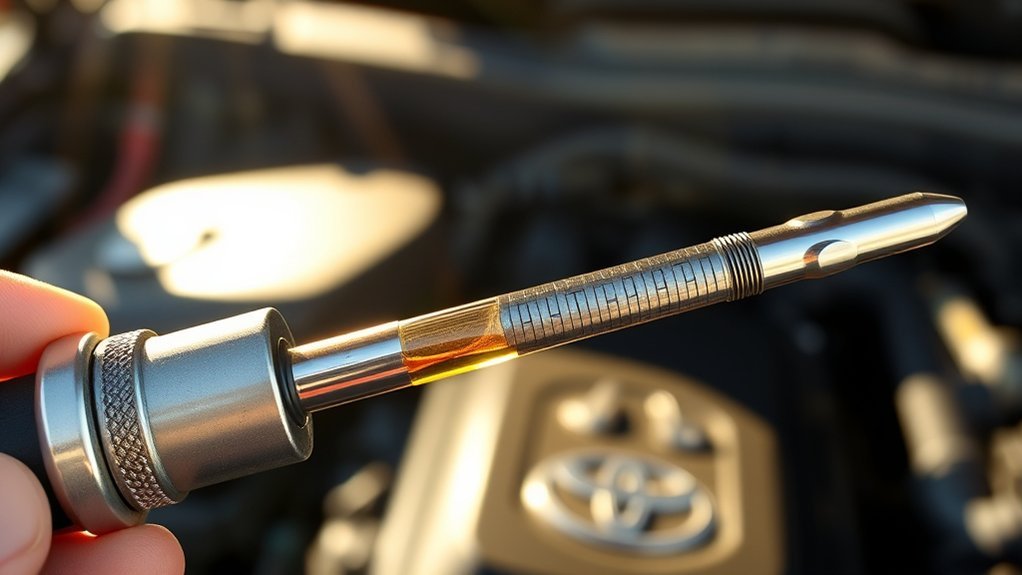
Reading a Toyota Tacoma dipstick should be simple, but the Tacoma’s long dipstick tube, clean modern oil, and two-sided dipstick marks can make the level look different from one pull to the next. The safest fix is to use the same repeatable method every time: park level, let the oil drain back, wipe the dipstick, reinsert it fully, and read the clean wet edge between the low and upper marks.
Quick Answer
To read a Toyota Tacoma dipstick correctly, park on level ground, shut the engine off, wait several minutes, wipe the dipstick clean, reinsert it fully, then pull it out and read the lowest clean oil line between the low and upper marks. Add oil slowly only if the level is below the safe range.
Key Takeaways
- Always check the oil on level ground after the engine has been shut off long enough for oil to drain back into the pan.
- Wipe the dipstick, fully reinsert it, and pull it straight out before reading it.
- If one side is smeared or higher, trust the lower clean wet edge, then repeat the check to confirm.
- Do not overfill. Keep the oil between the low level mark and the refill upper limit mark on your actual dipstick.
- If readings stay confusing, the oil looks milky or foamy, or a warning light appears, stop guessing and have the truck inspected.
At a Glance
| Time Required | 3 to 10 minutes |
| Difficulty | Easy |
| Tools Needed | Clean lint-free rag or paper towel, gloves, funnel, correct engine oil if topping off |
| Cost | Free to check; cost only applies if oil is needed |
Common Challenges With Toyota Tacoma Dipsticks
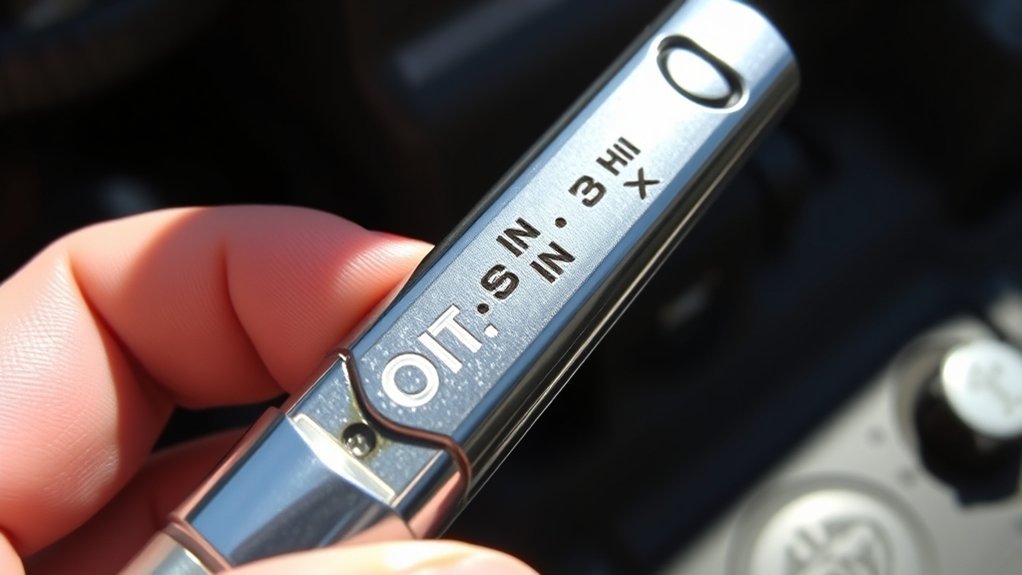
Tacoma owners often run into three dipstick problems: one side reads higher than the other, the oil is so clear that the wet line is hard to see, or oil smears up the stick as it passes through the tube. These issues do not always mean the engine has a problem. They usually mean the dipstick picked up oil from the tube wall or the truck was checked before the oil fully settled.
The official Toyota method is the best starting point, but your exact model year and engine matter. The Toyota Tacoma owner’s manual and the Toyota Tacoma Hybrid owner’s manual are the right references for official oil-checking instructions. In general, expect Toyota’s process to use level ground, a warm engine, a short drain-back wait, a clean dipstick, full reinsertion, and a final reading between the low mark and the refill upper limit mark.
Note: The dipstick shape, oil marks, oil grade, and wait time can vary by Tacoma model year and engine. Use the markings on your actual dipstick and the oil-checking instructions in your owner’s manual.
[Products Worth Considering]

ECOGARD X5608 is a premium cartridge oil filter designed for a wide range of Toyota, Lexus, and Scion vehicles. It helps protect your engine by screening out harmful contaminants and is built for use with both synthetic and conventional oils. Included O-rings support a proper housing seal for dependable maintenance between oil changes.

FOCUSFILTER 04152-YZZA1 OEM grade oil filter is designed to help protect your engine with reliable filtration and 10K mile protection. It cross references multiple OE part numbers and fits a wide range of Toyota and Lexus applications, making it a practical replacement for routine maintenance. Built for compatible vehicles including Camry, Avalon, Highlander, Tacoma, RAV4, Sienna, ES 350, and RX 350.

This 12-pack oil filter and drain plug washer set is designed for a wide range of Toyota and Scion vehicles, helping support clean oil flow and dependable engine performance. It replaces several common OE part numbers and offers an easy-fit solution for routine maintenance. Built with corrosion-resistant materials and efficient filtration, it helps keep engine contaminants out and supports longer service life.
How to Accurately Check Your Tacoma’s Oil Level
Use this repeatable method whenever you check your Tacoma’s oil:
- Park on a level surface. A sloped driveway can make the oil pool to one side of the pan and skew the reading.
- Let the oil drain back. After shutting the engine off, wait several minutes unless your specific manual says otherwise.
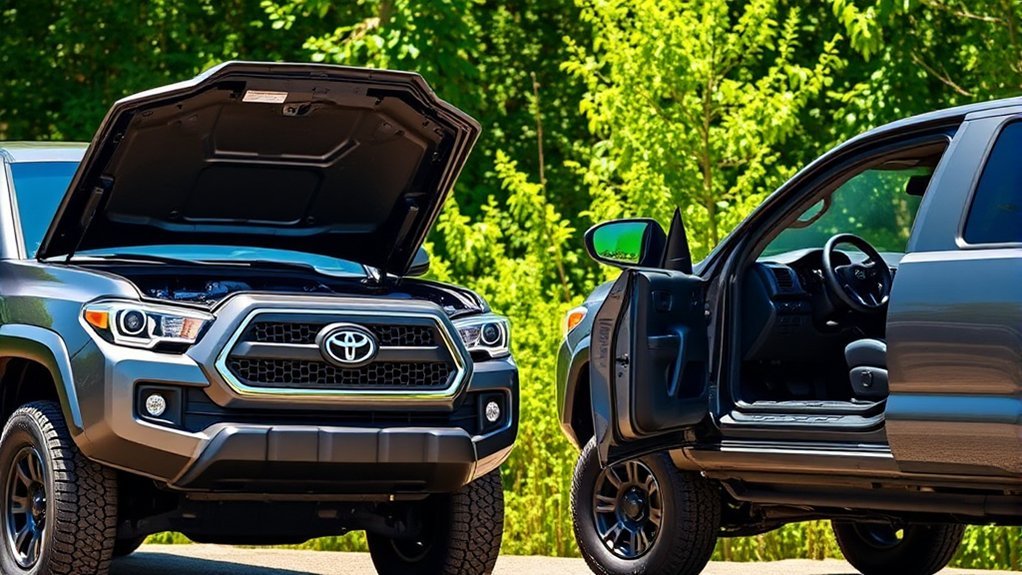
- Open the hood safely. Make sure the truck is in Park, the parking brake is set, and hot engine parts are avoided.
- Pull the dipstick and wipe it clean. Use a clean lint-free rag or paper towel so the first smeared reading does not mislead you.
- Reinsert the dipstick fully. Push it all the way down into the tube until it seats.
- Pull it straight out. Avoid bending or dragging it against the tube more than necessary.
- Read the clean oil line. The oil should be between the low level mark and the refill upper limit mark.
- Repeat once if needed. If the reading is smeared, wipe it and check again using the same method.
How to Read Low, Normal, and Overfilled Oil Levels
The low mark and upper mark show the safe operating range for the oil level. Your goal is not to hit the very top mark every time. Your goal is to keep the clean oil line within the safe range on a confirmed reading.
- Below the low mark: Add the correct oil slowly, wait briefly, then recheck the dipstick.
- Between the marks: The level is in the safe range. Do not add oil just to reach the top mark.
- Slightly above the upper mark: Wipe and recheck first because a smear can look like overfill.
- Clearly above the upper mark: Treat it as overfilled and remove excess oil or have a shop correct it.
Warning: Do not rely on engine oil capacity alone when topping off. Oil capacity is a reference amount for oil changes, not a target for pouring in extra oil. Add small amounts, wait briefly, and recheck the dipstick so the level does not exceed the upper mark.
Best Techniques for Reading Your Tacoma’s Dipstick
After you pull the dipstick, hold it horizontally under good light and look for the clean wet edge. Fresh synthetic oil can be nearly transparent, so tilting the dipstick slightly or touching the edge to a clean paper towel can make the oil line easier to see.
If one side of the dipstick shows a high smear and the other side shows a lower, sharper line, use the lower clean line as the safer reading and check again. A high streak often comes from oil dragged up the dipstick tube, while the lower edge is more likely to show the actual oil level in the pan.
Pro Tip: Take the second reading more seriously than the first. The first pull often has oil smeared on it from driving, while the wipe-and-reinsert reading is usually clearer.
Fix Inconsistent Dipstick Readings
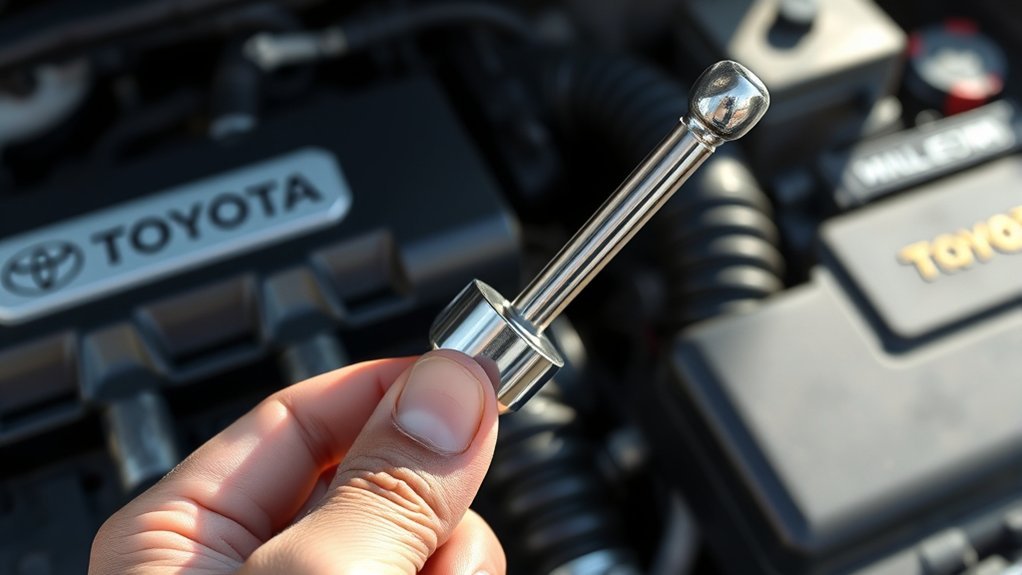
If your Tacoma dipstick gives inconsistent readings, do not add oil immediately. First, confirm the checking method:
- Make sure the truck is level.
- Wait long enough after shutting the engine off.
- Wipe the dipstick completely clean before each check.
- Push the dipstick fully into the tube before pulling it back out.
- Pull it out smoothly and read it right away.
- Compare both sides and trust the lower clean wet edge if one side is smeared.
Some owners try roughening the dipstick with fine sandpaper to make oil cling better, but that is not an official Toyota procedure and can leave abrasive residue if done carelessly. A safer first step is to use better lighting, blot the edge on a clean towel, and repeat the check. If you modify or clean the dipstick aggressively, make sure no grit, fibers, or metal particles can enter the engine.
[Products Worth Considering]

This upgraded aluminum oil filter housing cap is designed as a direct replacement for compatible Toyota and Lexus models, helping restore a secure, reliable seal for the oil filter housing. Built from durable aluminum, it offers improved strength and heat resistance over factory plastic covers, while the included gasket and plug support straightforward installation and dependable leak-free performance.

This oil filter housing cap assembly is designed as a direct replacement for a wide range of Toyota and Lexus vehicles, helping restore a secure seal for proper oil filtration. It is made for easy installation and tested for compatibility with multiple part numbers and model years. The package includes the cap, plug, and gasket for a complete replacement solution.

Direct replacement - this engine oil dipstick tube is designed to match the fit and function of the original tube on specified vehicles
Quick Dipstick Troubleshooting Table
| What You See | Likely Cause | What to Do |
| One side reads high | Oil smear from the dipstick tube | Use the lower clean wet edge and repeat the check. |
| Oil line is hard to see | Fresh oil is clear | Use bright light or blot the edge on a clean white towel. |
| Level changes every pull | Truck is not level or oil has not settled | Move to level ground, wait longer, wipe, and recheck. |
| Level stays far above the upper mark | Possible overfill or fluid contamination | Avoid guessing. Have the level corrected and the oil checked. |
Keep Your Engine Happy With Proper Oil Levels
Proper oil level protects the Tacoma’s bearings, timing components, turbocharger on applicable engines, and other lubricated parts. Too little oil can reduce lubrication and cooling. Too much oil can cause foaming, crankcase pressure problems, leaks, smoke, or drivability issues.
For best results, keep the oil level within the marked safe range rather than trying to hit the very top mark every time. If the level is near the low mark, add the correct Toyota-specified oil in small amounts through the oil filler opening, wait a minute, then recheck. A funnel helps prevent spills.
Consistent Dipstick Checking Techniques
Consistency matters more than checking at random times. Pick one method and repeat it. For most owners, the easiest routine is to check the oil on level ground a few minutes after shutting the engine off, such as after a fuel stop or once the truck has been parked briefly at home.
Checking cold in the morning can also be useful for comparison because the oil has fully drained back, but it may not match the exact warm-check procedure in every Toyota manual. If your reading seems unusual, follow your owner’s manual method and compare again.
Importance of Accurate Readings
An accurate dipstick reading helps you catch oil leaks, oil consumption, and overfilling before they become expensive problems. Check more often if you tow, drive off-road, idle heavily, make short trips, operate in dusty areas, or notice oil spots where you park.
A clean, repeatable dipstick check is better than chasing every streak on the stick. Confirm the reading twice before adding or removing oil.
Community Tips for Troubleshooting Dipstick Issues
Tacoma owners often share practical tricks for getting a clearer oil reading. These are not a replacement for the owner’s manual, but they can help when the dipstick is hard to read.
Common Dipstick Problems
The most common problem is a dipstick that shows oil higher on one side than the other. That usually happens because the dipstick contacts oil inside the tube. Another common problem is clear oil that blends into the metal, especially soon after an oil change.
If the dipstick repeatedly reads far above the upper mark after a correct check, the engine may be overfilled. If it repeatedly reads low even after topping off correctly, there may be a leak, oil consumption issue, or incorrect oil-change fill amount.
Effective Checking Techniques
Try these simple techniques before assuming the dipstick is wrong:
- Use a white paper towel behind the dipstick to see the wet line more clearly.
- Read both sides and compare the lowest clean edge.
- Insert the dipstick with the same orientation each time if your handle allows it.
- Wait a little longer if the oil still appears streaky.
- Check again after the next drive cycle to confirm the pattern.
Community Sharing Insights
Many owners find that the dipstick is easiest to read when the truck is parked in the same level spot each time. Others mark their maintenance log after an oil change and compare future readings against that known-good fill. This is useful, but do not add permanent marks to the dipstick unless you are certain the oil capacity, filter, drain time, and level-checking method were correct.
How to Handle Overfilled Oil Situations
If the oil is slightly above the upper mark, wipe the dipstick and recheck using the correct method before taking action. A smear can look like overfill. If the clean oil line is truly above the refill upper limit mark, remove the excess oil or have a shop do it.
Excess oil can be removed with a proper fluid extractor through the dipstick tube or by carefully draining a small amount from the drain plug. If you are not comfortable doing this, a mechanic can correct the level quickly.
Warning: If the oil looks foamy, the oil pressure warning light comes on, the engine runs poorly, or the level is far above the upper mark, avoid driving and have the Tacoma inspected.
[Products Worth Considering]
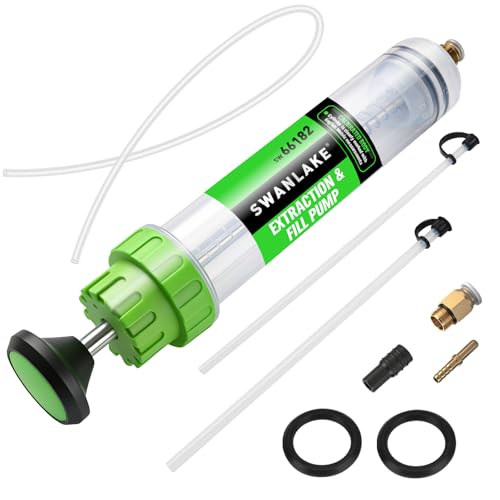
POWERFUL EXTRACTION - Delivers strong suction with its double-seal rubber rings, efficiently removing engine oil, transmission fluid, and coolant without leaks - perfect for car maintenance and lawn mower service with mess-free operation

Package Contents: The DURATECH fluid extractor includes 1 x 500cc fluid pump, 2 x 12" extension tubes with end caps, 1 x 27.6" silicone hose, 2 x spare rubber sealing rings, 1 x metal connector, 1 x anti-drip rubber connector, and 1 x alternate copper adapter

REACH HARD-TO-ACCESS SERVICE POINTS: Some maintenance jobs are difficult because fill ports are hidden or located in tight spaces. FOUR UNCLES Fluid Transfer Syringe with flexible hose helps you reach challenging areas while making fluid extraction and refilling easier and cleaner.
When to Get Help With Dipstick Problems
Get professional help if the dipstick remains unreadable after repeated checks, the reading changes dramatically without adding or draining oil, or the oil level keeps dropping between services. You should also have the truck inspected if you notice leaks, burning-oil smell, blue exhaust smoke, engine ticking, low oil pressure warnings, or oil that looks milky, gritty, or foamy.
If you are shopping for a used Tacoma, check open recalls and service campaigns by VIN through Toyota’s recall lookup and the National Highway Traffic Safety Administration recall lookup. NHTSA notes that some recently announced recalls may not show every VIN right away, and manufacturer service campaigns may not appear in the same way as safety recalls. Service records and a physical inspection still matter.
For older used models, frame corrosion history deserves extra attention. Toyota issued Warranty Enhancement Program ZH6 for frame corrosion on certain 2005 to 2010 Tacoma vehicles, so underbody condition, repair records, and VIN-specific history are important before purchase.
Regular Maintenance for Your Tacoma’s Oil System
Check the engine oil regularly and follow the maintenance schedule for your Tacoma’s model year, engine, and driving conditions. Many maintenance intervals depend on normal versus severe service, so towing, dusty roads, repeated short trips, off-road driving, and heavy idling can change what your truck needs.
Replace the oil filter whenever the oil is changed, use the oil grade specified for your exact Tacoma, and reset the maintenance reminder only after the service is completed. After every oil change, run the engine briefly, shut it off, wait the manual-specified time, and recheck the dipstick to confirm the level is within the safe range.
Frequently Asked Questions
How do you read a Toyota Tacoma oil dipstick?
Park on level ground, turn the engine off, wait several minutes for the oil to drain back, wipe the dipstick clean, reinsert it fully, then pull it out and read the clean wet edge. The level should be between the low mark and the refill upper limit mark.
Should I check Tacoma oil hot or cold?
Toyota commonly uses a warm-engine check after the engine has been shut off for a short drain-back period. A cold check can help you compare readings in the same parking spot, but the owner’s manual method for your exact model year is the best reference.
Why does one side of my Tacoma dipstick read higher than the other?
One side may drag against oil inside the dipstick tube, creating a high smear. Wipe the dipstick, reinsert it fully, pull it straight out, and use the lower clean wet edge if the other side is smeared.
How much oil should I add if the dipstick is low?
Add oil slowly in small amounts, then wait and recheck. Do not pour in the full oil capacity unless you are performing a complete oil and filter change. The goal is to bring the dipstick level into the safe range without passing the upper mark.
What if my Tacoma dipstick is hard to read after an oil change?
Fresh oil can be very clear. Use bright light, hold the dipstick level, compare both sides, and blot the edge on a clean white paper towel. If the level still looks unclear, repeat the check after one short drive cycle and a proper drain-back period.
What year was the worst year for Toyota Tacoma?
There is no official single “worst year” for every Tacoma. However, certain 2005 to 2010 Tacoma vehicles were covered by Toyota frame corrosion programs, so those model years deserve extra frame inspection when buying used. Always check the VIN, service history, recalls, and underbody condition.
Can I drive with too much oil in my Tacoma?
If the level is only slightly above the mark, recheck first to rule out a smear. If the clean reading is clearly overfilled, remove the excess oil before driving much. Do not drive if the oil looks foamy, warning lights appear, or the level is far above the upper mark.
Conclusion
Your Tacoma’s dipstick is only useful when you read it the same way every time. Park level, let the oil settle, wipe the dipstick, reinsert it fully, and trust the lower clean wet edge when one side is smeared. Keep the level between the marks, add oil slowly, and get help if the reading stays confusing or the oil condition looks abnormal. A two-minute check can prevent costly engine trouble and keep your Tacoma ready for the next drive.
Sources
- Toyota 2025 Tacoma Owner’s Manual: Engine compartment — official oil dipstick checking procedure and refill upper limit guidance.
- Toyota 2025 Tacoma Hybrid Owner’s Manual: Maintenance data — hybrid oil-level checking timing and oil capacity reference guidance.
- Toyota Safety Recalls & Service Campaigns Lookup — VIN-based Toyota recall and service campaign checks.
- National Highway Traffic Safety Administration Recall Lookup — federal recall, investigation, complaint, and manufacturer communication search tool.
- Toyota Warranty Enhancement Program ZH6 Dealer Letter — official frame corrosion program information for certain 2005 to 2010 Tacoma vehicles.