Yes, tire inflator hose length matters considerably. A longer hose lets you reach all tires without moving the compressor, which enhances convenience. However, keep in mind that extended hoses can cause pressure drops, especially in smaller diameters like 1/4″, resulting in inefficient inflation. Using a larger 3/8″ hose minimizes this effect, allowing for better airflow. Choosing the right length and diameter guarantees effective tire inflation. You’ll find more useful tips to optimize your inflator performance ahead.
Why Hose Length Matters for Tire Inflation
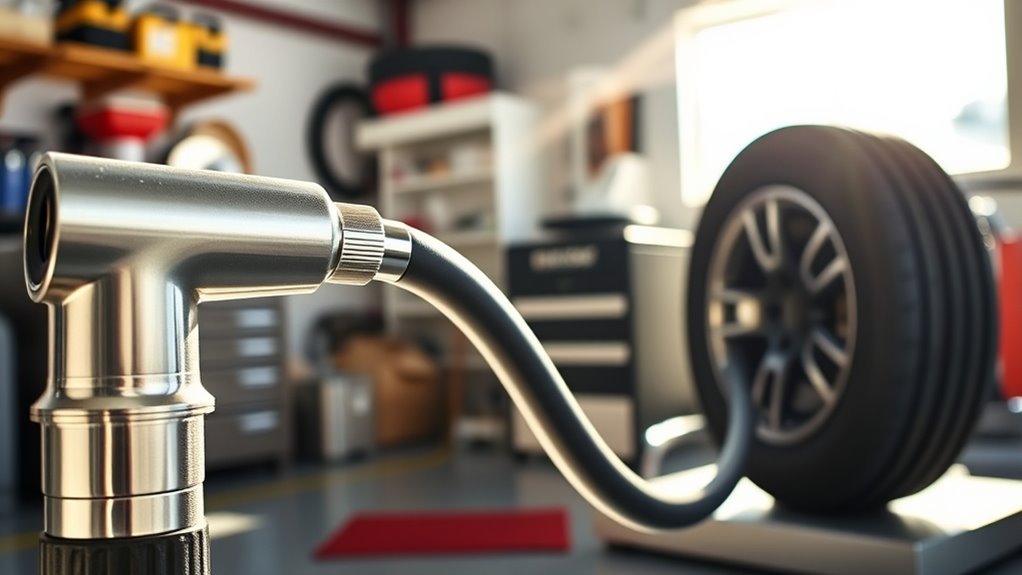
When it comes to tire inflation, hose length is vital for efficiency and convenience. A longer hose lets you reach all your tires without needing to reposition the compressor, guaranteeing you can easily access vehicles in various positions. However, keep in mind that increased hose length can lead to significant pressure drop. For instance, a 1/4″ hose may lose up to 25 PSI over 50 feet at 80 PSI, reducing your inflation effectiveness. The inside diameter also plays a significant role; using a larger diameter hose minimizes pressure drop and maintains adequate airflow. To optimize tire inflation, aim for hoses with a minimum inside diameter of 3/8″ to guarantee consistent pressure and accurate tire readings, keeping your vehicle safe and efficient.
How Pressure Drops Can Affect Airflow?
As you inflate your tires, understanding how pressure drops can affect airflow is crucial for achieving ideal performance. Pressure drops can greatly hinder your inflation process, especially with longer hoses. Here are a few key points to take into account:
Understanding pressure drops is essential for efficient tire inflation, especially with longer hoses.
- A 1/4″ hose can lose 25 PSI over 50 feet, severely impacting tool efficiency.
- Larger hose diameters, like 3/8″, minimize pressure loss—only 6 PSI over the same distance.
- Friction increases with smaller diameters, slowing airflow and raising pressure loss.
Measuring pressure at the tool rather than the compressor gives you a clearer picture of available pressure and airflow. By being mindful of hose length and diameter, you can maintain ideal airflow and guarantee your tire inflation is as efficient as possible.
Why Hose Diameter Matters for Optimal Performance
Understanding how pressure drops impact airflow sets the stage for recognizing the importance of hose diameter in achieving peak performance. A larger hose diameter greatly enhances airflow, allowing for higher CFM at the same pressure, which boosts your tool’s efficiency. For instance, a 3/8 inch ID hose minimizes pressure drop compared to a 1/4 inch ID hose, especially over longer distances. This is vital when using high-demand tools like a 1/2 inch impact wrench, which requires at least a 10 mm hose for ideal operation. Choosing the right hose diameter not only combats friction but also guarantees consistent pressure, preventing operational issues and liberating you from unnecessary delays.
How to Determine the Right Hose Length for Your Vehicle?

How can you guarantee that your tire inflator hose is the right length for your vehicle? Start by considering a few key factors:
- Measure the distance from the inflator to the furthest tire, adding a bit of extra length for flexibility.
- Aim for a hose length around 30 meters for ideal airflow and minimal pressure drop during inflation.
- Remember that longer hoses can lead to friction issues, affecting inflator performance.
Best Practices for Ensuring Your Tire Inflator Operates Effectively
To guarantee your tire inflator operates effectively, it’s essential to focus on both the hose length and maintenance practices. Aim for a hose length between 10 to 25 feet to reach all tires without excessive slack. A shorter hose minimizes friction loss and helps maintain consistent air pressure, leading to quicker inflation. Consider using a larger diameter hose, like 3/8 inch, to enhance airflow, especially for larger tires or high-demand inflators. Regularly inspect your hose for signs of wear or damage. Ensuring a secure and leak-free connection is imperative for effective tire inflation. By following these best practices, you’ll maximize your tire inflator’s performance and enjoy hassle-free maintenance.
Frequently Asked Questions
Does the Length of an Air Hose Affect Pressure?
Yes, the length of an air hose affects pressure. Longer hoses increase pressure loss due to friction, while larger hose diameters improve airflow efficiency, ensuring you maintain ideal pressure at your tool for better performance.
Do I Need a 50 Ft or 100 Ft Hose?
You’ll likely find a 50 ft hose more practical for inflation efficiency and easier storage. A 100 ft hose offers reach but may complicate storage and airflow, potentially limiting your liberation in using it. Choose wisely!
Does a Longer Vacuum Hose Reduce Suction?
Yes, a longer vacuum hose can reduce suction power due to increased friction. Opt for a hose with a larger diameter to maintain vacuum efficiency, ensuring you keep your cleaning performance high while reaching all areas.
Is It Better to Have a 5’8″ or 3/4″ Hose?
You’ll find a 5/8″ hose offers better inflation speed and user convenience due to its lighter weight, while a 3/4″ hose provides greater durability and airflow for longer distances. Choose based on your specific needs.
Conclusion
In the world of tire inflators, hose length is like a lifeline—too short, and you’re left stretching to reach; too long, and you risk losing pressure. Not only does the right hose length guarantee ideal airflow, but it also enhances convenience during inflation. By understanding your vehicle’s needs and choosing wisely, you’ll keep your tires pumped and ready for the road. So, take a moment to evaluate your inflator’s hose length; it’s a small detail that makes a big difference!