If you own a Toyota Tacoma, understanding OBD2 codes is essential for effective diagnostics and maintaining performance. Each code starts with a letter and four digits, with “P” codes indicating powertrain issues. You’ll need an OBD2 reader, usually found under the dashboard, to access these codes. Familiarize yourself with common codes like P0420 and P0171 to troubleshoot efficiently. Explore the nuances of each code and how to fix the underlying issues as you enhance your vehicle expertise.
Understanding OBD2 Codes: What They Are and Why They Matter
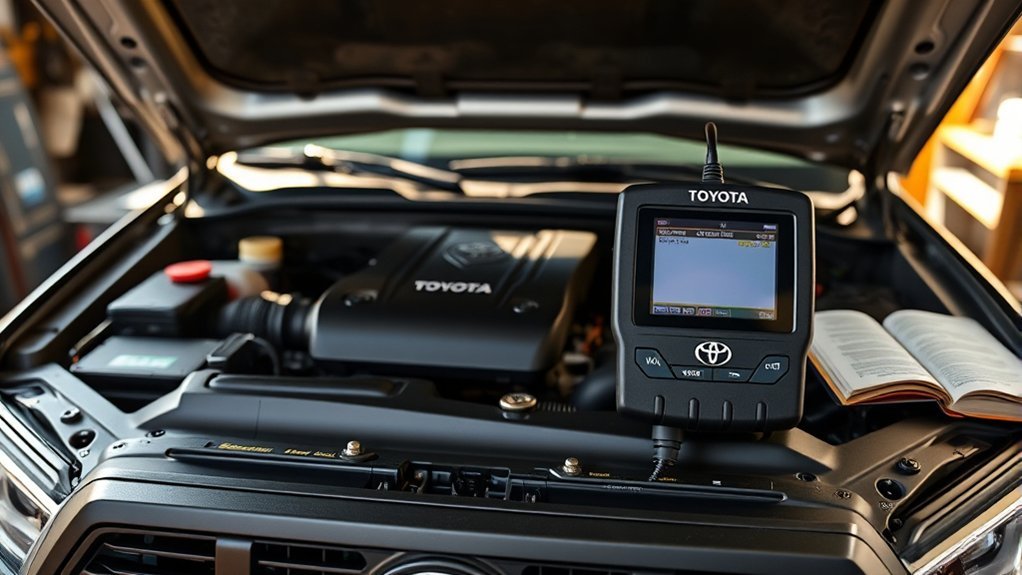
OBD2 codes are vital tools in modern automotive diagnostics, helping you pinpoint issues with your vehicle’s performance and emissions systems. Understanding OBD2 basics is important for any vehicle owner. Each code starts with a letter followed by four digits, indicating the specific system affected. For instance, “P” codes refer to powertrain issues, while “B” codes pertain to body systems.
The diagnostic significance of OBD2 codes can’t be overstated. These codes provide real-time information about malfunctions, stored in your vehicle’s computer. When a fault occurs, it often triggers the check engine light, signaling that immediate attention is needed. By familiarizing yourself with these codes, you empower yourself to maintain your vehicle better, prevent costly repairs, and guarantee compliance with emissions regulations. This knowledge not only enhances your driving experience but also liberates you from unnecessary stress and expenses related to automotive issues.
How to Read Toyota Fault Codes Like a Pro
To read Toyota fault codes effectively, you’ll need an OBD2 reader that connects to the vehicle’s data port. Start by powering the reader with the ignition on, then scan for diagnostic trouble codes. Understanding the codes and their meanings is essential for accurate diagnostics and resolution.
Tools Needed For Reading
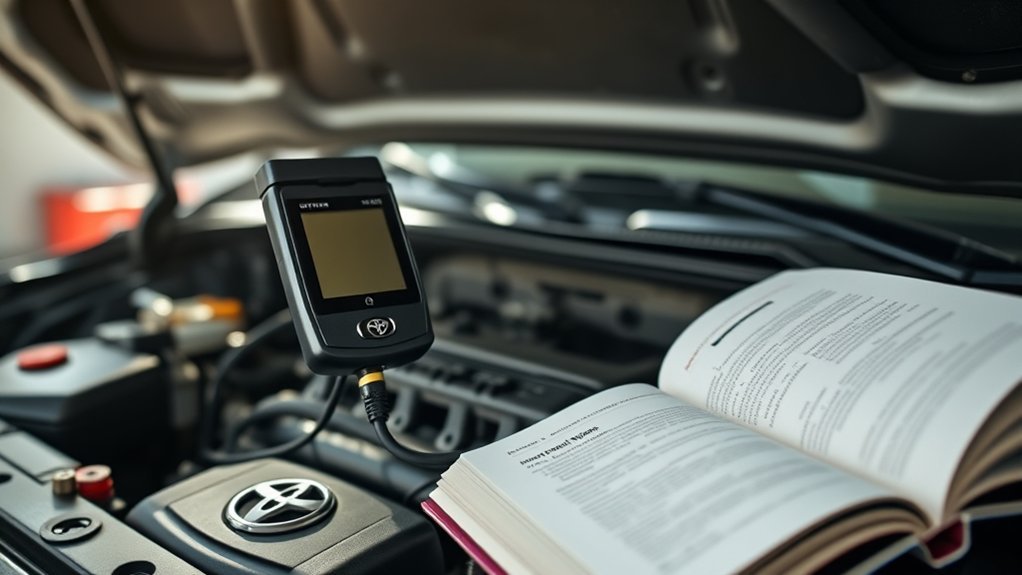
When diagnosing issues with your Toyota Tacoma, having the right tools at your disposal is essential. You’ll need an OBD2 reader, which comes in various types, including standard and manufacturer-specific options. Standard readers provide generic codes, while Toyota-specific readers offer detailed diagnostics. The OBD2 port is typically found under the dashboard in the driver’s footwell, often requiring minor panel removal for access.
| Tool Type | Features | Recommended Use |
|---|---|---|
| Standard OBD2 Reader | Basic fault codes | General diagnostics |
| Manufacturer-Specific Reader | Detailed Toyota diagnostics | In-depth vehicle analysis |
| Diagnostic Software | Enhanced data interpretation | Advanced troubleshooting |
| Mobile Apps | User-friendly interface | On-the-go monitoring |
| Bluetooth Adapters | Wireless connectivity | Remote diagnostics |
With these tools, you can efficiently interpret fault codes and identify issues affecting your vehicle’s performance.
Step-By-Step Reading Process
Reading Toyota fault codes effectively involves a straightforward process that can save you time and hassle. Follow these steps to master it:
- Locate the OBD2 port under the dashboard in the driver’s footwell. Make sure the vehicle’s in the “ON” position, but don’t start the engine.
- Connect your OBD2 reader; it should power up automatically. This diagnostic tool is essential for accessing OBD2 protocols.
- Navigate the reader’s interface to scan for fault codes specific to your Tacoma. Record the diagnostic trouble codes (DTCs) that appear for further analysis.
Once you have the codes, interpret them using a reference guide to pinpoint any issues affecting your vehicle’s performance.
Decoding Common Toyota Fault Codes You Might Encounter
Understanding common Toyota fault codes is essential for diagnosing issues in your Tacoma efficiently. Fault codes, or Diagnostic Trouble Codes (DTC), pinpoint specific problems. For instance, P0420 indicates catalytic converter efficiency issues, while P0171 signals a lean air-fuel mixture. You’ll often see symptoms like a check engine light or poor engine performance alongside these codes, highlighting the need for immediate attention.
To decode these fault code specifics, connect an OBD2 reader to the port under your dashboard. This tool helps you retrieve the codes and provides a foundation for your troubleshooting strategies. Specialized Toyota OBD2 readers offer deeper insights, making it easier to address unique issues, such as P2004, which denotes an IMRC stuck open. By understanding these common codes, you empower yourself to tackle problems head-on, enhancing your Tacoma’s performance and longevity.
P0420 and P0430: Understanding Catalyst System Issues
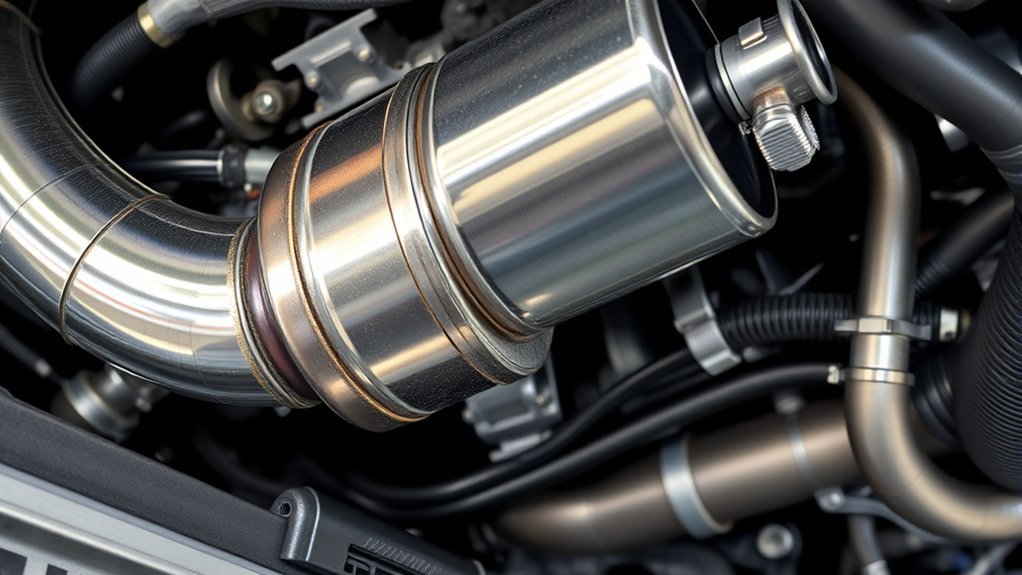
Catalytic converter efficiency issues, signaled by the P0420 and P0430 codes, can greatly impact your Tacoma’s performance and emissions. When your O2 sensors detect discrepancies between readings before and after the catalytic converter, these codes trigger, indicating potential problems. To address these issues effectively, consider the following steps:
- Inspect the Exhaust System: Look for any leaks or damage that may affect performance.
- Conduct Oxygen Sensor Testing: Verify your O2 sensors are functioning correctly, as faulty sensors can trigger these codes.
- Perform Catalytic Converter Maintenance: Regular checks can prevent costly replacements and maintain peak performance.
Ignoring these codes can lead to poor fuel economy and further engine issues. By diagnosing the underlying problems promptly, you can keep your Tacoma running smoothly and efficiently, guaranteeing it meets emissions standards while delivering the performance you desire.
P2004 OBD2 Code: Symptoms and Solutions for Intake Manifold Runner Control
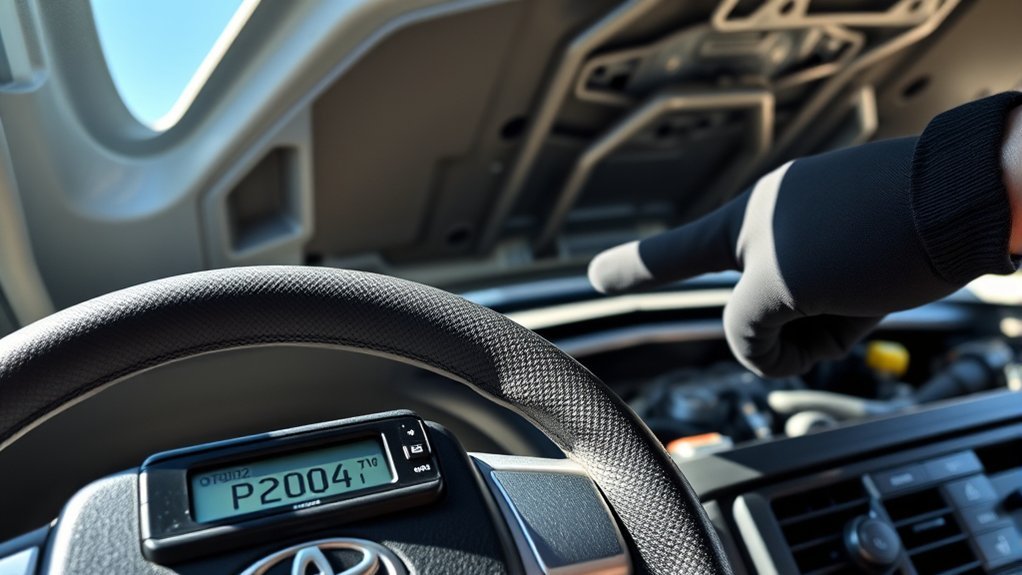
When you encounter a P2004 code, you’ll notice symptoms like decreased engine power and a check engine light. To troubleshoot, check the IMRC solenoid, inspect the wiring for damage, and look for any vacuum leaks. Addressing these issues promptly can restore your engine’s performance and efficiency.
Common Symptoms
If your Toyota Tacoma triggers the P2004 code, you might notice several symptoms that indicate an issue with the Intake Manifold Runner Control (IMRC) on bank 1. These symptoms can greatly impact your engine performance. Pay attention to:
- Check Engine Light: This warning illuminates on your dashboard.
- Rough Idling: Your engine may struggle to maintain a steady idle.
- Hesitation During Acceleration: You might experience delays in power delivery when you press the accelerator.
Using diagnostic tools can help pinpoint the exact cause, whether it’s a faulty IMRC solenoid or vacuum leaks. Ignoring these symptoms can lead to increased fuel consumption and potential engine damage, so it’s vital to address them promptly.
Troubleshooting Steps
Addressing the symptoms associated with the P2004 code is the first step in resolving the issue with your Tacoma’s Intake Manifold Runner Control (IMRC). Begin by visually inspecting the IMRC system for obstructions. Check the solenoid operation and verify all electrical connections are intact. If you encounter issues, consider using diagnostic tools for a thorough analysis; a diagnostic tools comparison can help you choose the right device for your needs. If repairs are made, clear the code and take your Tacoma for a test drive. Monitor for any recurring symptoms. Following these IMRC maintenance tips will help guarantee peak performance and fuel efficiency, liberating you from potential engine troubles down the road.
How to Fix Fuel Trim Problems: Addressing P0171 and P0174
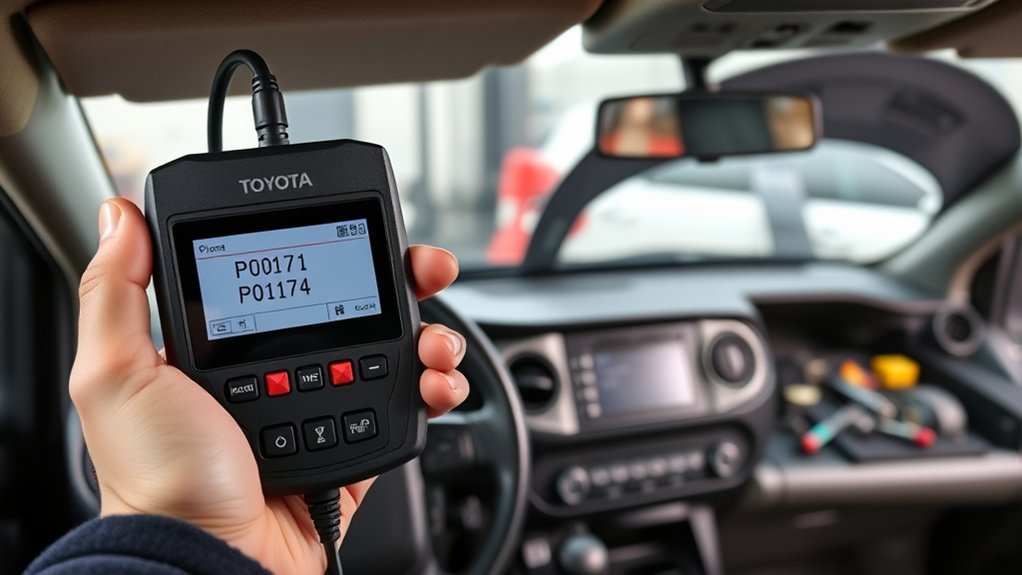
Fuel trim problems, specifically the P0171 and P0174 codes, can indicate a lean condition in your Tacoma’s engine, where there’s too much air or insufficient fuel in the mixture. To address this, you’ll want to look for common lean condition causes and apply effective fuel trim solutions:
- Inspect vacuum hoses: Check for cracks or disconnections that could be introducing excess air.
- Evaluate the MAF sensor: Verify it’s clean and functioning correctly; a faulty sensor can misread airflow.
- Examine fuel delivery: Look for clogged fuel filters or a weak fuel pump that may restrict fuel flow.
After making necessary repairs, clear the codes with an OBD2 scanner and take your Tacoma for a test drive to see if the issue reoccurs. Regular maintenance, like replacing fuel filters and cleaning the MAF sensor, can help prevent future issues and enhance engine performance.
What to Do About P0441: Fixing Evaporative Emission System Issues
When the P0441 code appears, it signals an issue with your Tacoma’s evaporative emission system, specifically indicating incorrect purge flow. This can stem from a faulty purge valve, clogged lines, or vacuum leaks. To tackle the problem, follow these steps:
| Step | Action |
|---|---|
| 1. Inspect | Check the purge valve for proper function. |
| 2. Examine | Look for vacuum leaks in the hoses. |
| 3. Clear Codes | Use an OBD2 scanner after repairs. |
| 4. Maintain | Regularly inspect hoses and valves. |
| 5. Monitor | Watch for any reactivation of the code. |
Addressing these issues promptly can improve fuel efficiency and prevent further complications. Remember, resolving the underlying issue is essential before clearing the fault code to avoid reactivation. Keep your EVAP system well-maintained to sidestep the P0441 code in the future.
Tips for Effectively Using Your Launch Code Reader
To maximize your experience with the Launch Code Reader, verify it’s securely connected to the OBD-II port under your dashboard for accurate diagnostics. This simple step guarantees peak device connectivity and reliable readings.
Maximize your Launch Code Reader experience by ensuring it’s securely connected to the OBD-II port for accurate diagnostics.
- Utilize Autodetect: Quickly identify your Toyota’s model and year. This streamlines the troubleshooting process and enhances accuracy.
- Familiarize with the Interface: Get comfortable maneuvering the touchscreen menu. This will help you efficiently read and clear fault codes.
- Regular Software Updates: Keep your device updated via Wi-Fi to access the latest diagnostic features tailored for Toyota vehicles.
Frequently Asked Questions
What Is the Best Code Reader for a Toyota Tacoma?
The best code reader for your Toyota Tacoma combines Bluetooth compatibility, budget options, and positive user reviews. Brands like Launch and BlueDriver come highly recommended for their reliability and extensive diagnostic capabilities. Choose wisely!
How to Read Toyota Error Code?
To read Toyota error codes, connect your OBD2 reader under the dashboard, turn on the ignition, and scan for codes. Understand the error code basics with your diagnostic tools for effective troubleshooting and liberation from issues.
How to Understand OBD2 Code?
To understand OBD2 codes, familiarize yourself with OBD2 basics and use troubleshooting techniques. Each code reveals specific issues; check manuals or online databases for meanings. This knowledge empowers you to diagnose vehicle problems effectively.
Conclusion
In conclusion, mastering your Toyota Tacoma’s OBD2 codes can save you stress and dollars. Stay sharp and savvy as you streamline your diagnostics. By deciphering diagnostic data like a detective, you’ll tackle trouble codes with confidence. Whether it’s a pesky P0420 or a troublesome P0441, knowing the nuances of your vehicle’s needs is key. So, gear up with your Launch code reader, and get ready to fix faults efficiently and effectively!