When choosing between a locking differential and a limited-slip differential for your Tacoma, consider your driving style and terrain. Locking diffs are fantastic for extreme off-roading, providing maximum traction on rugged surfaces but can be noisy and tricky on hard roads. On the other hand, limited-slip diffs offer smoother handling and comfort for daily driving and light off-road adventures. Knowing these differences can enhance your driving experience. There’s more to discover about each type and how they fit your needs.
Locking vs. Limited-Slip Differentials: Which One Is Right for You?
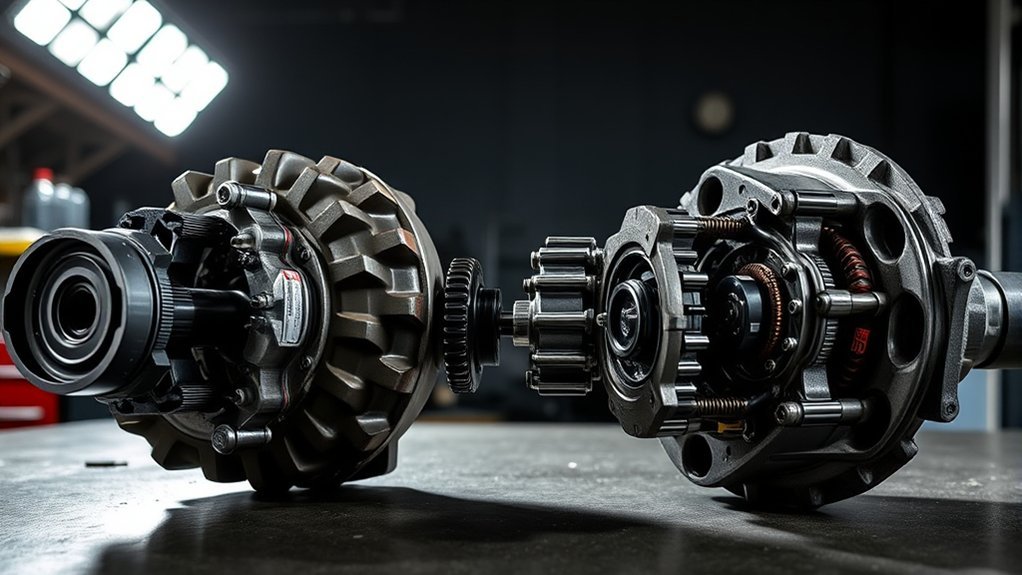
When deciding between a locking differential and a limited-slip differential (LSD), which option fits your driving style best? Both differential types offer unique advantages in torque distribution, but your choice hinges on how you drive. If you’re mostly on the streets or light off-roading, an LSD is your ally. It automatically balances torque between wheels, allowing some speed variance that works well on paved surfaces. However, if you’re hitting extreme off-road conditions—think snow or mud—a locking differential is the way to go. It locks both wheels, ensuring equal torque and maximum traction.
While LSDs are kinder to your drivetrain and perfect for everyday use, TRD Lockers can be overkill for casual adventures and may cause damage if used improperly on hard surfaces. Consider how often you venture off-road: frequent adventurers will appreciate the robustness of a locking differential, while casual drivers may find an LSD more suitable.
How Locking Differentials Work: The Basics
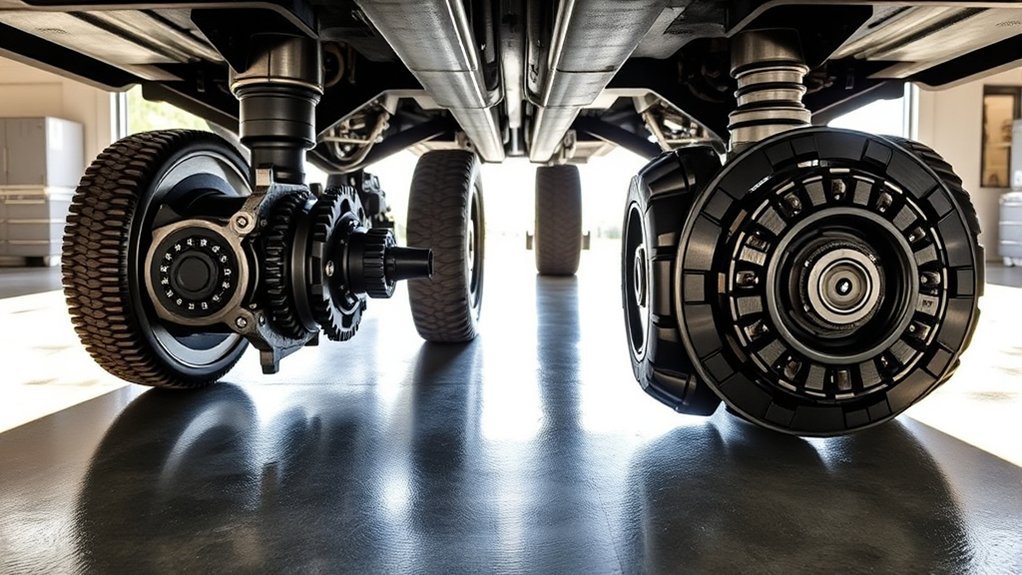
Locking differentials are designed to tackle the toughest terrains by engaging both wheels on an axle, ensuring they turn at the same speed. This locking mechanism physically connects the axle shafts, allowing for axle synchronization that maximizes traction, even in extreme conditions. You can manually activate a locking diff or let it engage automatically, depending on your system. Most effective in low-range 4WD settings, they typically operate below 5 mph to prevent any drivetrain damage. Unlike limited-slip differentials, which permit some wheel speed variance, locking diffs maintain consistent traction even when one wheel is off the ground. This makes them ideal for those daring adventures where obstacles challenge both your vehicle and your skills. When you want liberation from the confines of standard traction, a locking differential is your key to conquering rugged landscapes with confidence.
Why Locking Differentials Excel in Off-Road Conditions
Maneuvering challenging terrains demands a differential system that can rise to the occasion, and that’s where locking differentials truly shine. In extreme conditions, locking diffs guarantee torque equality between your rear wheels, maximizing traction even when one wheel is off the ground. This feature is vital for maintaining wheel stability on slippery mud, rocky paths, or steep inclines.
When engaged, locking diffs completely connect both wheels, preventing slippage and enhancing your vehicle’s ability to tackle tough obstacles. Unlike limited-slip differentials, locking diffs maintain consistent power distribution across all terrains, making them ideal for hardcore off-road adventures. You can manually engage them at low speeds, giving you precise control during obstacle navigation. This off-road versatility empowers you to confidently conquer unpredictable landscapes, making sure you’re always ready for whatever challenge lies ahead.
Choosing Limited-Slip Differentials for Daily Driving: Key Considerations
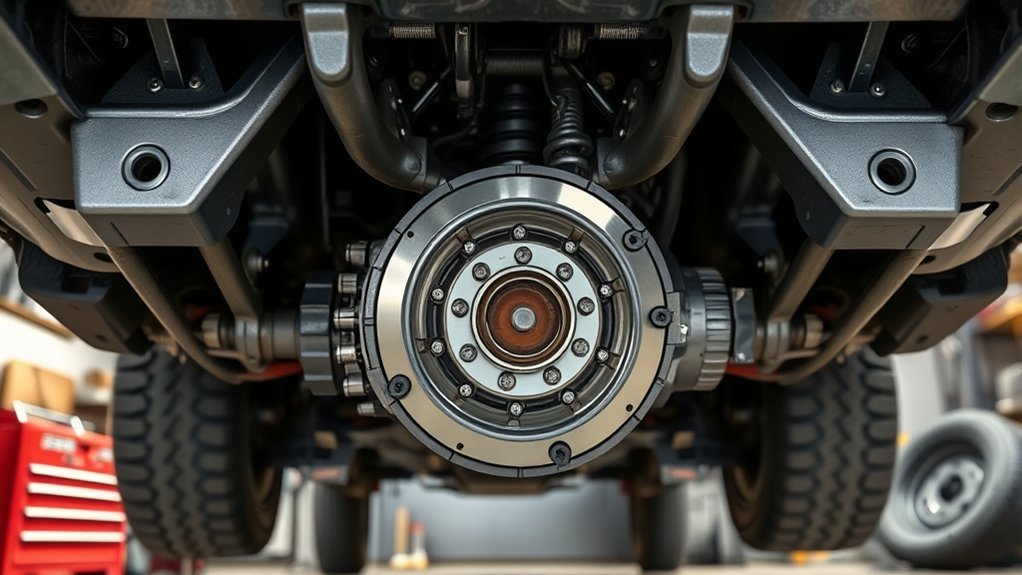
When choosing a limited-slip differential (LSD) for daily driving, you’ll appreciate its balance of traction and smoothness. LSDs enhance performance on wet roads, giving you confidence in slippery conditions without the harshness of a locking differential. They’re perfect for urban settings, providing reliable handling with less maintenance, so you can focus on enjoying your ride.
Daily Driving Benefits
While you may think about enhanced off-road capabilities, choosing a limited-slip differential (LSD) for daily driving offers significant advantages that can improve your overall experience. LSDs provide smoother shifts between wheel speeds, enhancing comfort features that make every commute enjoyable. They automatically engage, ensuring consistent traction management in wet or slippery conditions without any driver input. This means you can focus on the road ahead rather than worrying about traction. Plus, LSDs typically incur less wear and tear, leading to lower maintenance costs and a longer lifespan for everyday use. Their design also minimizes the risk of drivetrain damage, making them a safe choice for drivers who navigate both on-road and light off-road situations.
Performance in Wet Conditions
Even if you drive in wet conditions regularly, a limited-slip differential (LSD) can make a noticeable difference in your daily experience. LSD effectiveness shines through in its ability to maintain traction control, distributing power to the wheel with better grip. This means smoother shifts as you navigate slick roads, enhancing your wet handling. Unlike locking differentials, which can cause skidding, an LSD guarantees driving safety by preventing sudden loss of traction. Plus, it helps with tire preservation, reducing wear during turns. For daily comfort, the automatic engagement of an LSD means you won’t have to think twice about driving in unpredictable weather, allowing you to focus on the road ahead.
Performance Comparison: Locking vs. Limited-Slip Differentials
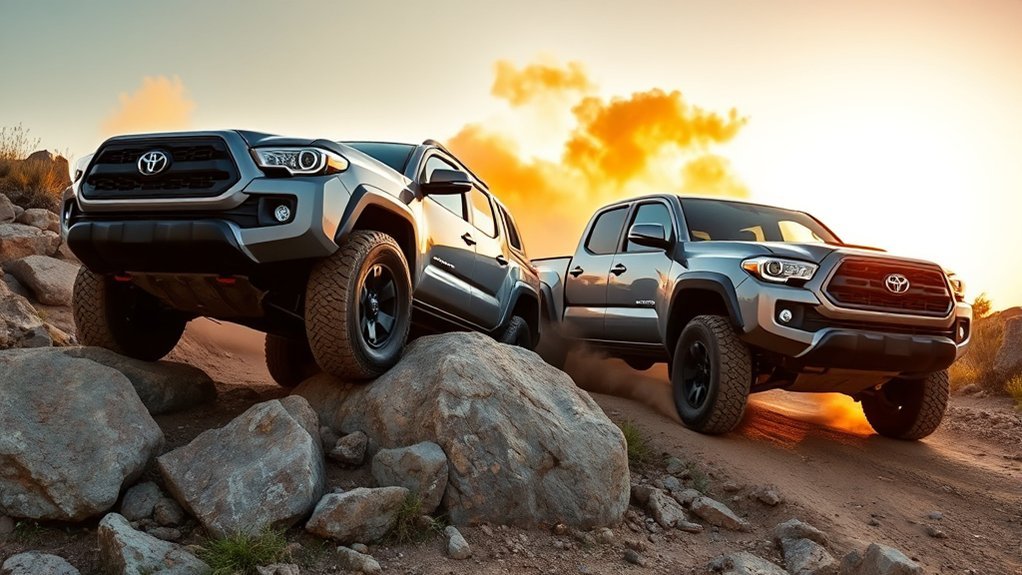
Choosing between a locking differential and a limited-slip differential (LSD) can greatly affect your Tacoma’s off-road performance and everyday drivability. Locking diffs excel in extreme conditions, providing maximum tire traction by fully locking both wheels together. This torque distribution (50/50) guarantees peak vehicle stability, especially when one wheel is off the ground. However, they require manual engagement and can be noisy during operation.
On the other hand, LSDs allow for slight wheel speed variance, making them more user-friendly for daily driving conditions. While they’re always active, their performance may falter if one wheel loses traction, compromising off-road capabilities. This can result in less effective power transfer compared to locking diffs. If you prioritize extreme off-road adventures, a locking differential might be your best bet. But for a balance of comfort and capability, an LSD could be the way to go.
User Experiences: Real-World Feedback on Locking vs. Limited-Slip Differentials
When it comes to choosing between a locking differential and a limited-slip differential, your preferences can make a big difference in performance. Many users have found that while LSDs work well for daily driving, they often wish for the added traction of a locking diff in tough off-road situations. Real-world feedback shows that understanding these trade-offs can help you make the right choice based on your driving style and terrain needs.
User Preferences in Differentials
How do your driving habits influence your choice between a locking differential and a limited-slip differential? Your user preferences and driving styles play a significant role. If you often tackle challenging terrains, you might prefer a locking diff like the TRD Locker, which offers superior traction in snow or mud. Many off-road enthusiasts rave about its reliability, ensuring power to both wheels when it’s needed most. On the other hand, if you’re a casual driver, a limited-slip differential may suit your everyday needs with its automatic operation and ease of use for light off-roading. Understanding your driving habits can help you make an informed choice, balancing performance with practicality to match your lifestyle.
Off-Road Performance Insights
While both locking and limited-slip differentials have their merits, user experiences reveal a clear preference for locking diffs in off-road scenarios. Enthusiasts consistently report that the TRD Locker offers superior traction strategies, especially on uneven terrain where one wheel might be elevated. This prevents the frustrating “sit and spin” issue common with limited-slip differentials. Many users regret not opting for a locking diff after getting stuck in challenging conditions like snow or mud, underscoring the need for maximum traction. While LSD can suffice for light off-roading, locking diffs shine during serious adventures. Community discussions often recommend a dual setup, blending the adaptability of both systems for peak performance across varied terrains, ensuring you’re always ready for whatever lies ahead.
Daily Driving Considerations
Choosing between a locking differential and a limited-slip differential (LSD) for daily driving can greatly impact your overall experience. Many users find that LSDs offer adequate traction for urban driving and moderate off-road conditions, making them a smooth option for daily commutes. However, some drivers wish they’d chosen a locking diff after getting stuck in snowy or muddy situations, where that extra traction management really shines. While LSDs require less driver engagement, locking differentials excel in extreme scenarios. If you often face challenging terrains, consider a dual setup for versatility. Ultimately, knowing your driving style and typical conditions is vital—what works for city streets may not cut it when the going gets tough.
Limitations of Locking Differentials: What You Need to Know?
When tackling off-road adventures, understanding the limitations of locking differentials is essential for maximizing your vehicle’s performance. While these diffs offer unmatched traction in extreme conditions, they require manual engagement and aren’t suitable for hard surfaces or high speeds. Using them improperly can damage your drivetrain. Turning with a locked differential can be tricky, leading to tire wear and making handling a challenge.
Locking diffs are typically restricted to low-range 4WD, limiting their versatility for mixed driving. Plus, their complexity often results in higher maintenance challenges compared to simpler systems like limited-slip differentials. Be cautious, especially when one wheel is off the ground; this can cause excessive drivetrain strain and potential breakage. Knowing these limitations empowers you to make informed decisions, ensuring your off-road experiences remain thrilling without compromising your vehicle’s integrity.
Frequently Asked Questions
Which Is Better, Limited Slip or Locking Differential?
For off-road capability, locking differentials outperform limited slips in extreme conditions, ensuring equal torque. However, if you’re seeking everyday performance, limited slips offer smoother handling and convenience, making them ideal for varied terrains.
Which Tacoma Models Have Locking Differentials?
If you’re seeking adventure, the Tacoma models like the TRD Off-Road and TRD Pro boast locking differentials, enhancing your off-road experience. The TRD PreRunner also features this differential for light off-road capability.
Conclusion
In the battle of traction, choosing between a locking differential and a limited-slip is like picking your trusty steed for an adventure. If you’re conquering rugged trails, locking diffs are your best ally, providing unyielding grip. For daily drives, a limited-slip can offer a smoother ride, balancing performance and comfort. Ultimately, your choice hinges on your driving style and terrain. Whichever path you take, understanding these differences guarantees you’re geared up for the journey ahead.