Most Toyota Tacoma owners do not need Load Range E tires. Start with the tire size and cold pressure on the driver’s door-jamb placard, then verify the original-equipment load index and speed rating for your exact model year and trim. Choose an OE-equivalent SL or XL tire for normal road use, LT Load Range C for moderate hauling or rough roads, and D or E only when repeated heavy loads, towing, permanent accessories, or severe terrain justify the extra weight and stiffness.
Last updated: July 15, 2026 · Reviewed against current Toyota owner resources, NHTSA tire guidance, and tire load-range references.
Quick Answer
Use the Tacoma’s door placard for the original tire size and cold pressure, then match or exceed the original-equipment load index for your exact configuration. Choose SL or XL for daily driving, LT Load Range C for moderate hauling or rough-road use, Load Range D for heavier repeated loads, and Load Range E only for frequent heavy towing, campers, or severe off-road use. A higher load range does not increase the truck’s GVWR, payload, axle, wheel, or tow ratings.
Key Takeaways
- Do not choose by “ply” alone. Load index, load range, tire size, and inflation pressure work together.
- The door placard identifies the original size and cold pressure. Verify the OE load index and speed rating separately for your exact model year and trim.
- P-metric tires used on pickups are commonly load-adjusted by dividing their listed load by 1.10, so compare capacity correctly.
- LT/E tires are strong but heavy and stiff. They are not automatically the best choice for a midsize Tacoma.
- Use placard cold pressure for a stock-equivalent tire. When changing size or moving between passenger-metric and LT tires, use the tire maker’s approved load-inflation table.
At a Glance
| Time Required | 10–20 minutes to inspect the placard, sidewall, and load needs |
| Difficulty | Easy for stock replacement; moderate if changing to LT tires or a different size |
| Tools Needed | Door placard, OE tire specification, current tire sidewall, owner’s manual, pressure gauge, and load-inflation chart if changing tire type |
| Cost | No cost to check; tire cost varies by size, brand, tread, and load range |
Which Tire Load Range Is Best for a Tacoma?
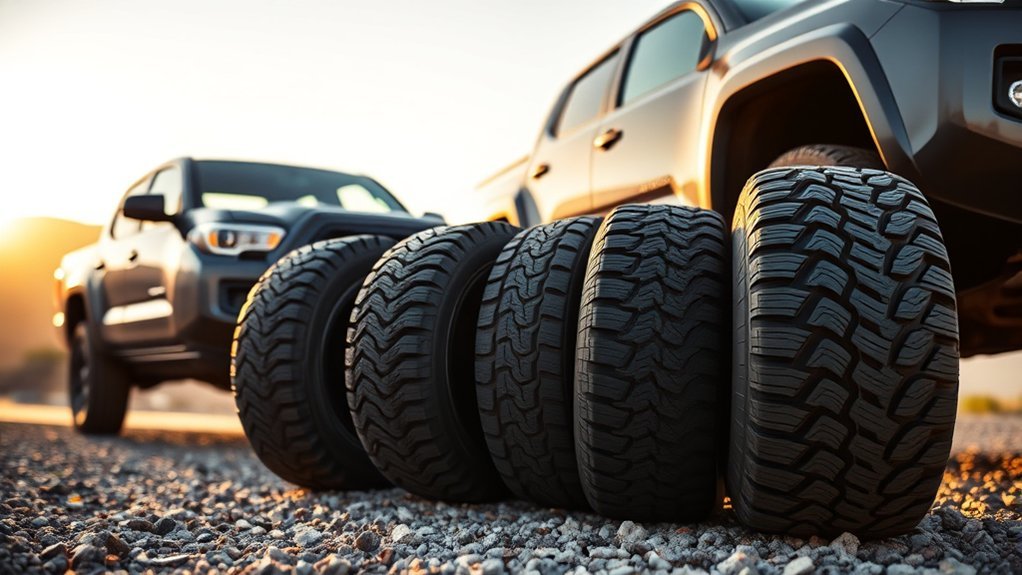
Your Tacoma’s best tire depends on payload, towing frequency, road surface, and ride expectations. Start with the tire size and recommended cold pressure on the driver’s door-jamb placard. Then confirm the original-equipment service description, including load index and speed rating, for your exact model year and trim through the Toyota owner’s manual portal, the OE tire specification, or a qualified tire professional.
| Tire Type / Load Range | Best For | Main Tradeoff |
|---|---|---|
| SL / OE-equivalent | Daily driving, commuting, light camping gear, normal pavement use | Less sidewall toughness than LT tires |
| XL | Slightly more load margin in some passenger-metric sizes when approved for the vehicle | May need higher pressure to use the added capacity |
| LT Load Range C | Moderate hauling, gravel roads, light overlanding, better sidewall support | Heavier and firmer than many OE-style tires |
| LT Load Range D | Frequent payload, rough terrain, heavier accessories, long-distance loaded travel | Noticeably stiffer ride and added rotating weight |
| LT Load Range E | Heavy towing, slide-in campers within Tacoma limits, sharp-rock trails, repeated near-payload use | Firm ride, more weight, possible fuel-economy loss, and unnecessary stiffness for many Tacomas |
Choose SL or XL when comfort, lower tire weight, and daily road manners matter most. Choose LT/C when you need tougher construction without jumping straight to a heavier LT/E tire. Choose D or E only when your real use includes repeated heavy loads, towing, camper weight, permanent accessories, or harsh off-road impacts.
Warning: Do not install a tire below the original-equipment load requirement. The placard may not show the load index, so verify the OE service description separately. An aggressive tread or higher ply rating does not prove the tire is suitable.
[Products Worth Considering]

This smart color coded tire tread depth gauge makes it easy to check tread wear at a glance with clear red, yellow, and green ranges. Calibrated from 0 to 1 inch in 1/32 inch increments, it helps you quickly assess tire condition for safer driving and timely replacements. The pocket clip design makes it convenient to carry and use on trucks, motorcycles, cars, and other passenger vehicles.
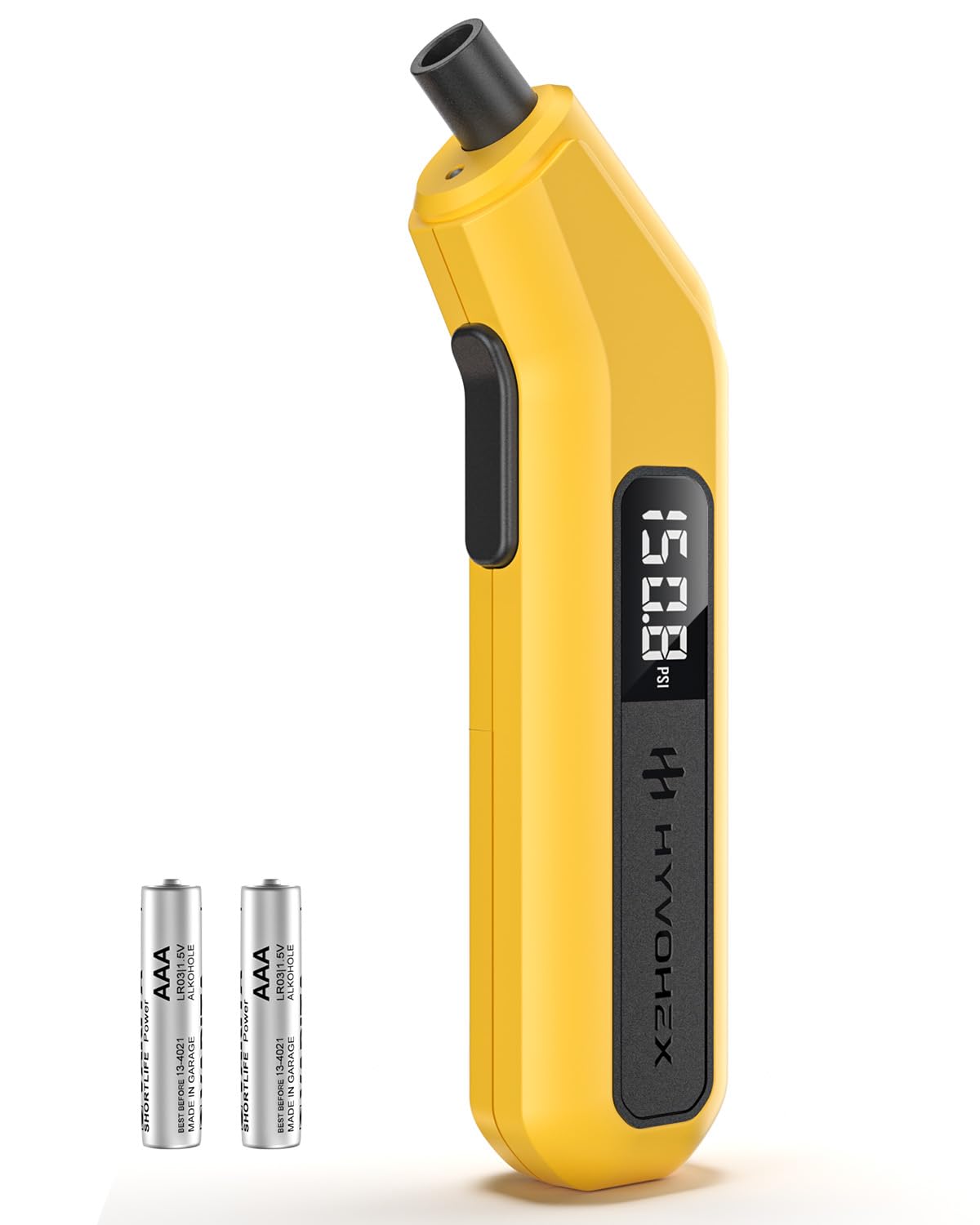
HYVOHEX digital tire pressure gauge delivers fast, accurate readings with an easy-to-read LED backlit display and a high-sensitivity sensor for reliable tire checks. Its valveless one-click operation, rotating valve head, and broad compatibility make it a practical tool for cars, bikes, and trucks. Built with a durable rubber shell and aluminum nozzle, it is compact enough to keep in your glove box or tool bag.
This custom-fit truck cover is designed for Tundra Double and CrewMax Cab short bed models, delivering year-round protection with a waterproof outer layer and all-weather coverage. A driver-side zipper allows easy cabin access, while the soft interior helps protect paint and reinforced wind straps improve stability in strong conditions. It also includes a storage bag and towel for convenient care and storage.
Read Your Sidewall: Load Index & What It Means for Tacoma
Read the load index on the tire sidewall before comparing ply ratings. The load index is the number beside the speed symbol in the service description. It maps to a maximum load in an approved index table, but the usable capacity still depends on tire type, vehicle application, and inflation pressure.
You’ll usually see a service description like 112T, 116S, or 121/118Q. The number is the load index, and the letter is the speed rating. LT tires may show two load indexes when the tire can be used in single or dual-wheel applications; on a Tacoma, you care about the single-tire rating.
Decoding The Load Index
The load index is more useful than old “ply” language because it maps to a defined load capacity. Compare the replacement tire with the original-equipment requirement for your exact Tacoma. Keep the OE size, load index, and speed category unless Toyota or a qualified tire professional approves an alternate fitment using current load-inflation data.
Do not assume a larger tire automatically carries more weight. A larger all-terrain tire with a lower service description can be weaker than a smaller OE-style tire with a higher load index. Always compare the actual number.
Matching Index To Payload
To match a tire to payload, start with the Tacoma’s GVWR, axle ratings, door placard, and the weight you actually carry. Your truck’s load is not always split evenly across all four tires. Tongue weight from a trailer, a bed rack, a rooftop tent, tools, or a camper can add more weight to the rear axle than the front.
Use this practical process:
- Record the original tire size and cold pressure from the door placard.
- Verify the OE load index and speed rating for your exact model year, trim, wheel, and tire package.
- Check the sidewall of the replacement tire for size, load index, load range, and maximum cold inflation pressure.
- Confirm the replacement tire equals or exceeds the original load requirement at the pressure you plan to run.
- If switching from P-metric or metric tires to LT tires, use the tire maker’s load-inflation tables instead of guessing pressure.
- If towing, add trailer tongue weight to the truck’s loaded rear-axle weight before deciding the tire is “enough.”
Note: When P-metric or Euro-metric tires are selected for light-truck use, their sidewall load value is divided by 1.10. That adjustment is why the same passenger-type tire has a lower application capacity on a pickup than on a passenger car. See the P-metric light-truck load adjustment explanation.
How Do You Calculate the Tire Capacity Your Tacoma Needs?
For a modified, loaded, or frequently towed Tacoma, weigh the truck in the condition you actually drive it. Include passengers, fuel, permanent accessories, cargo, and trailer tongue weight. Obtain separate front- and rear-axle weights whenever possible.
- Divide each measured axle weight by two to get a baseline load per tire on that axle.
- Use the heavier axle result as the minimum real-world load reference.
- Confirm the selected tire supports that load at the planned cold pressure in the tire maker’s load-inflation table.
- Make sure the tire still meets or exceeds Toyota’s original load requirement.
- Keep the truck below its GVWR and each axle below its GAWR. Stronger tires do not raise those vehicle limits.
This calculation is a screening tool, not permission to run at the limit. Side-to-side loading can be uneven, so individual wheel-position weights provide a better check when a camper or permanent build places more weight on one side.
What Ply Rating and Load Range Actually Do for Load Capacity
Ply rating is a legacy strength label, not a count of the actual fabric layers inside a modern tire. Modern tires use stronger materials and construction methods, so a “10-ply rated” tire usually does not literally contain ten body plies. Load range is still useful, but the exact capacity comes from the tire’s load index, tire size, and inflation pressure.
Ply Count Vs. Reality
Older bias-ply tires used actual cotton plies, so more plies meant more strength. Modern radial tires are different. A tire may use fewer physical plies while still earning a higher load range because the casing, belts, bead, rubber compound, and sidewall design are stronger.
That means you should treat “6-ply,” “8-ply,” and “10-ply” as shorthand only. A Load Range E tire usually means a 10-ply rating and higher maximum pressure capability, not ten visible layers.
- Use ply rating as a rough toughness clue.
- Use load index to compare actual weight capacity.
- Use load range to understand construction and maximum pressure category.
- Use inflation tables when changing tire type or size.
Load Range Letters
Load range letters describe how much pressure a tire is designed to handle and the general strength category of the casing. Common light-truck examples are C, D, and E. Passenger tires usually use Standard Load (SL) or Extra Load (XL), not LT-style C/D/E markings.
| Marking | Common Ply Rating | Common Max Load Pressure Category | Tacoma Use Case |
|---|---|---|---|
| SL | Standard passenger rating | Max load commonly reached around 35–36 psi, depending on standard | Stock-style daily use |
| XL | Reinforced passenger rating | Max load commonly reached around 41–42 psi | Extra load margin in approved sizes |
| LT/C | 6-ply rating | Often 50 psi | Moderate off-road and hauling |
| LT/D | 8-ply rating | Often 65 psi | Heavier repeated loads |
| LT/E | 10-ply rating | Often 80 psi | Heavy towing, campers, harsh terrain |
These pressure categories are common, but they are not a substitute for the sidewall and manufacturer data for your exact tire. The tire’s sidewall lists maximum cold inflation pressure and maximum load. Your wheel also has a pressure and load limit, so do not assume an E-rated tire should be inflated to 80 psi on a Tacoma wheel.
Pressure Determines Capacity
Inflation pressure is what lets a tire carry its rated load. The National Highway Traffic Safety Administration explains that tire pressure provides load-carrying capacity and affects vehicle performance. Underinflation builds heat, increases sidewall flex, reduces load capacity, and can lead to tire failure.
A stronger tire still needs the right cold pressure. Load range gives the tire the structure; inflation pressure provides the usable load-carrying capacity.
Overinflation creates its own problems: reduced ride comfort, smaller contact patch, harsher impacts, and possible center wear. The goal is not “as much pressure as possible.” The goal is the correct cold pressure for the tire, load, and vehicle.
P-Metric (SL/XL) vs LT Tires: Pros, Cons, and When to Choose
When deciding between P-metric or metric tires and LT tires, match the tire to how your Tacoma is actually used. P-metric and many OE-style metric tires are lighter, smoother, quieter, and usually better for fuel economy. LT tires are heavier, tougher, and better suited to repeated load, towing, and sidewall abuse.
| Feature | P-Metric / Metric SL or XL | LT C/D/E |
|---|---|---|
| Ride comfort | Usually smoother and quieter | Usually firmer, especially D/E |
| Weight | Lighter | Heavier; can affect acceleration and MPG |
| Sidewall toughness | Adequate for normal use | Better for rocks, ruts, and load stability |
| Towing and payload | Good when within placard limits | Better for repeated heavy work |
| Best Tacoma owner | Commuter, weekend adventurer, light-duty hauler | Frequent towing, off-roading, camping, contracting, or overlanding |
Do not fit LT tires just because they sound stronger. A heavy LT/E all-terrain can make a Tacoma ride harshly, add unsprung weight, and reduce efficiency without giving you a benefit if you never run near payload, tow heavy, or drive harsh terrain.
Pro Tip: If your Tacoma is mostly a daily driver but sees gravel, mild trails, or weekend camping, an LT/C all-terrain is often a better compromise than jumping straight to LT/E.
[Products Worth Considering]

The TOPDON BT100 helps you quickly check the health and charge status of 12V lead-acid batteries with clear analytical results, including state of health, state of charge, voltage, and cranking performance. It supports a wide range of battery types and vehicles, making it a practical tool for diagnosing starting and charging issues at home or in the shop. Compact and easy to use, it provides fast, reliable testing without needing to charge the device first.
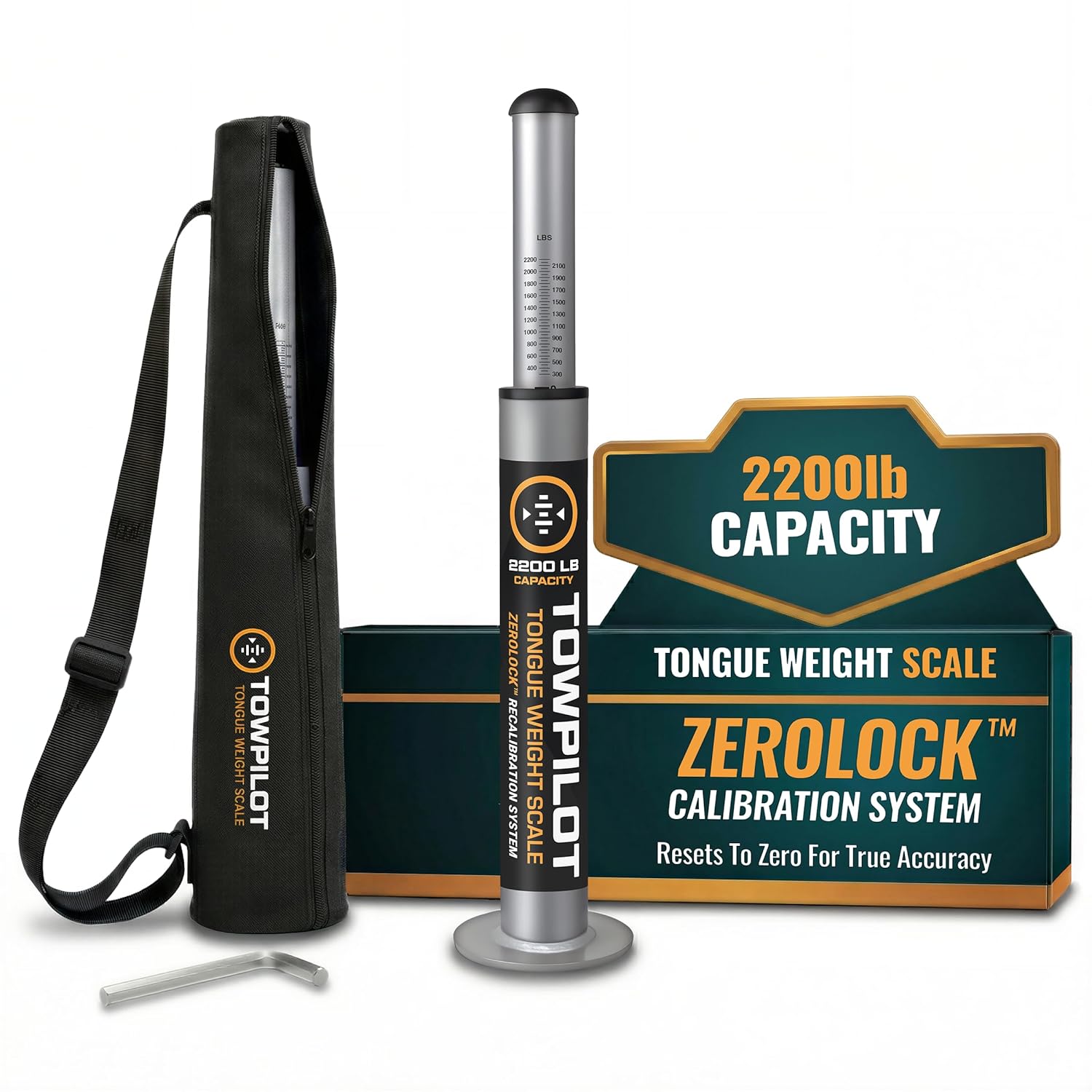
This trailer tongue weight scale helps you check hitch weight quickly and accurately before towing, reducing sway and improving overall safety. Built with durable steel and a spring mechanism, it works without batteries and includes a recalibration feature to maintain true-zero accuracy over time. It is designed for RVs, campers, and utility trailers, with a top plate that helps protect your coupler during use.
Tacoma Tire Pressure: How It Affects Load Capacity and Wear

Check Tacoma tire pressure when the tires are cold. NHTSA defines “cold” for routine checks as a vehicle that has not been driven for at least three hours, and it directs drivers to the door label or owner’s manual for the vehicle manufacturer’s recommended pressure. Toyota’s Tacoma tire information also distinguishes the tire’s sidewall maximum from the vehicle’s recommended setting.
For stock-size, stock-type replacement tires, use the door placard cold pressure unless the owner’s manual or tire manufacturer gives a more specific instruction. For non-stock tire sizes, switching from P-metric to LT, or changing load range, use approved load-inflation tables to match the original tire’s load capacity.
Why Door Placard Pressure Beats Sidewall Pressure
The sidewall maximum pressure is not the everyday recommended pressure. It is the maximum cold pressure the tire is designed to handle. The door placard pressure is the vehicle-specific cold pressure Toyota selected for the original tire size and load rating.
Running the sidewall max on an empty Tacoma can cause a harsh ride and uneven wear. Running too little pressure when loaded can overheat the tire and reduce stability. Pressure should follow the truck, tire, and load, not a guess.
Wear Patterns That Signal Pressure Problems
- Center wear: often points to too much pressure for the load or tire setup.
- Both-edge wear: often points to underinflation or repeated heavy loading.
- One-edge wear: often points to alignment, worn parts, or camber/toe problems.
- Cupping or scalloping: often points to balance, suspension, or shock issues.
- Feathering: often points to toe alignment problems.
Warning: Never “air down” for off-road traction and then drive highway speeds without reinflating. Low pressure at speed creates heat and can damage the tire.
When to Upgrade Load Range: Towing, Payload, and Off-Road Triggers
Upgrade load range when your Tacoma’s use creates a real need for stronger construction or more usable capacity. A higher load range is most useful when the truck is repeatedly loaded, towing with meaningful tongue weight, carrying permanent accessories, or driving terrain that damages lighter sidewalls.
Upgrade For Towing
If you tow occasionally and stay well within the Tacoma’s ratings, an OE-equivalent tire may be sufficient. If you tow often, especially with substantial tongue weight, a correctly selected LT tire can provide firmer sidewall support. Trailer tongue weight counts as payload and usually adds significant load to the rear axle.
Upgrade For Payload And Campers
Bed racks, steel bumpers, skid plates, drawer systems, recovery gear, rooftop tents, and campers add weight before passengers or cargo are even loaded. If these accessories stay on the truck full-time, choose tires based on the truck’s new real-world weight, not the empty factory weight.
Upgrade For Off-Road Use
Sharp rocks, ruts, washboard roads, and repeated impacts can justify LT construction even when the total weight is not extreme. In that case, the upgrade is about durability as much as load capacity. Load Range C or D often gives good sidewall support without the harshness of E-rated tires.
When Not To Upgrade
Do not upgrade load range just because a forum says “E-rated is best.” If your Tacoma is a commuter with occasional dirt-road use, a quality SL, XL, or LT/C tire with the correct load index may perform better than a heavy LT/E. Too much tire can make the truck less enjoyable without increasing real safety.
Can a Higher Load Range Increase Tacoma Payload or Towing Capacity?
No. A higher tire load range does not increase the Tacoma’s GVWR, GAWR, payload rating, tow rating, hitch rating, or wheel capacity. Those limits come from the vehicle and its components, not only the tires.
A stronger tire can add durability or load margin within the truck’s existing ratings. It cannot make an overloaded Tacoma operate within those ratings. Before towing or carrying a camper, compare the loaded truck with the certification label, payload label, axle ratings, wheel ratings, hitch limits, and the owner’s manual for your exact configuration.
Quick Checklist: Right Size, Load Rating, and Inflation for Your Tacoma
Use this checklist before buying Tacoma tires:
- Check the driver’s door placard. Record the OE tire size and recommended cold pressure.
- Verify the OE service description. Confirm the load index and speed rating for your exact model year, trim, wheel, and tire package.
- Check your current sidewall. Look for size, service description, load range, maximum load, and maximum cold pressure.
- Match or exceed the OE load index. Do not rely on tread style or ply marketing.
- Account for P-metric truck derating. Divide P-metric or Euro-metric load by 1.10 when required for light-truck use.
- Choose the lightest tire that safely fits the job. More load range usually means more weight and stiffness.
- Use load-inflation tables when changing tire type. This is especially important when moving from P-metric to LT.
- Check wheel limits. Wheel load and pressure ratings must also be appropriate.
- Recheck pressure cold. Use a calibrated gauge before towing, hauling, or trail driving.
- Inspect after hard use. Look for cuts, bulges, punctures, sidewall scuffs, and uneven wear.
Common Tacoma Tire Load Range Mistakes
The biggest mistake is assuming a higher load range automatically makes a better Tacoma tire. Load range describes a construction and pressure category, but capacity still depends on tire size, load index, and pressure. A heavier tire can also add stiffness and rotating mass, so the choice must respect the truck’s GVWR, axle ratings, wheel limits, and intended use.
Mistake 1: Choosing By Ply Rating Alone
A 10-ply-rated tire is not automatically better than a 6-ply-rated tire for every Tacoma. Compare the load index, weight, tread design, sidewall construction, and the pressure needed to carry the load.
Mistake 2: Using Sidewall Max As Everyday Pressure
Sidewall max pressure is a limit, not a daily target. If you install LT tires, the correct pressure may be higher than the original placard pressure, but it should still come from load-inflation data, not from inflating to the maximum.
Mistake 3: Ignoring Speed Rating
Load is only half of the service description. The speed symbol matters too. Replacement tires should meet or exceed Toyota’s recommended speed rating unless a qualified tire professional verifies that the change is appropriate for your use.
Mistake 4: Forgetting Real Accessory Weight
Armor, racks, winches, tools, fuel, water, recovery gear, and camping equipment can add substantial weight. Weigh the truck loaded as you actually drive it if you are close to payload limits.
Frequently Asked Questions
What load range tire do I need for a Tacoma?
Most Tacoma owners need an OE-equivalent SL or XL tire that matches the original size and load requirement. The door placard gives the original size and cold pressure; verify the OE load index separately. Choose LT/C for moderate hauling or rough-road use, LT/D for heavier repeated loads, and LT/E only when frequent towing, campers, permanent weight, or severe terrain justify it.
Is Load Range E too much for a Tacoma?
Load Range E can be useful for heavy towing, loaded overlanding, campers, or sharp-rock trails, but it is often more tire than a daily-driven Tacoma needs. E-rated tires are typically heavier and stiffer, which can reduce ride comfort and fuel economy. Use E only when the load, terrain, or durability need justifies it.
Is Load Range C good for a Tacoma?
Yes, Load Range C is often a strong middle-ground choice for Tacoma owners who want LT construction, better sidewall support, and more off-road durability without the weight and stiffness of many Load Range E tires. It still must meet or exceed the Tacoma’s required load index.
Do I need LT tires if I tow with a Tacoma?
Not always. If you tow light and stay within the truck’s ratings, an OE-equivalent tire may be enough. LT tires become more useful when you tow often, carry heavy tongue weight, run close to payload limits, or need extra sidewall stability. Always compare loaded axle weight and tire capacity before deciding.
What pressure should I use after switching from P-metric to LT tires?
Do not copy the LT tire’s sidewall maximum or assume the original placard pressure will provide the same capacity. Use the tire maker’s approved LT load-inflation table to find the cold pressure that meets or exceeds the original tire’s required load. Confirm the result with a qualified tire professional and stay within the wheel’s pressure rating.
Should I run the PSI printed on the tire sidewall?
No, not as a default. The sidewall number is the tire’s maximum cold inflation pressure, not the recommended daily pressure. For stock tires, use the Tacoma door placard. For a different tire type or size, use approved load-inflation tables so the new tire carries at least the original required load.
Conclusion
Choose Tacoma tires by original size, load index, load range, and correct cold inflation, not by ply-rating marketing. Use the door placard for size and pressure, verify the OE service description separately, and select SL or XL for normal daily driving. Move to LT/C, D, or E only when towing, payload, permanent accessories, or terrain create a real need. Before buying, compare the exact tire with Toyota’s requirement and the manufacturer’s load-inflation data.
Sources
- Toyota Owners Manuals and Warranties — official source for Tacoma owner’s manual and tire placard guidance.
- Toyota Tacoma Tire Information — sidewall markings, maximum tire load, and maximum cold inflation pressure definitions.
- NHTSA TireWise Tire Safety — cold inflation, tire pressure, safety, and tire maintenance guidance.
- 49 CFR § 571.139 — federal tire standard definitions, including load rating and maximum load rating.
- Tire Rack Load Range and Ply Ratings — practical explanation of modern load range and ply-rating terminology.
- Tire Rack P-Metric Tire Load Adjustment — explanation of the 1.10 load adjustment for P-metric tires used on pickups, SUVs, and vans.