What Platform Is the Toyota GR Supra Built On?

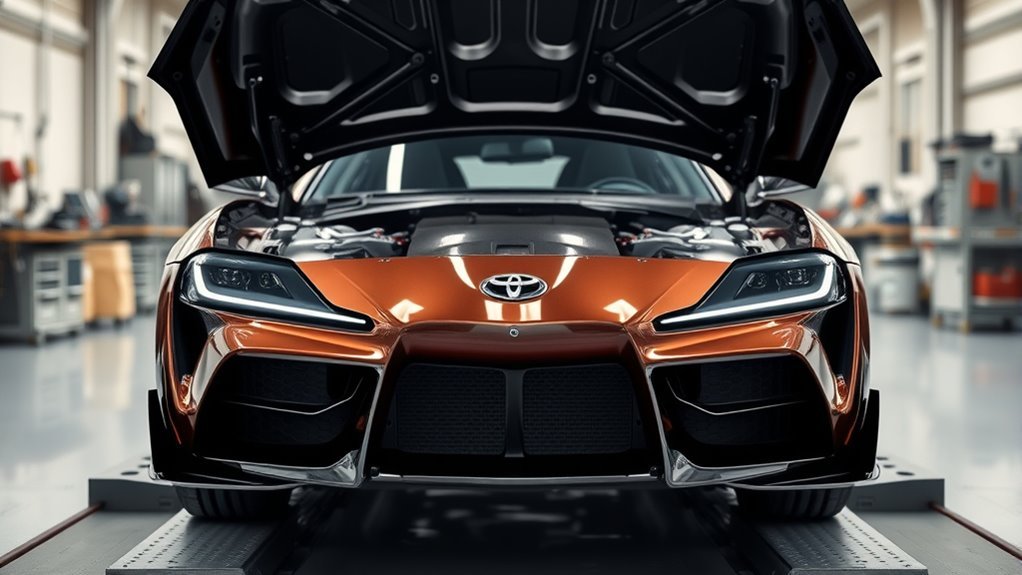
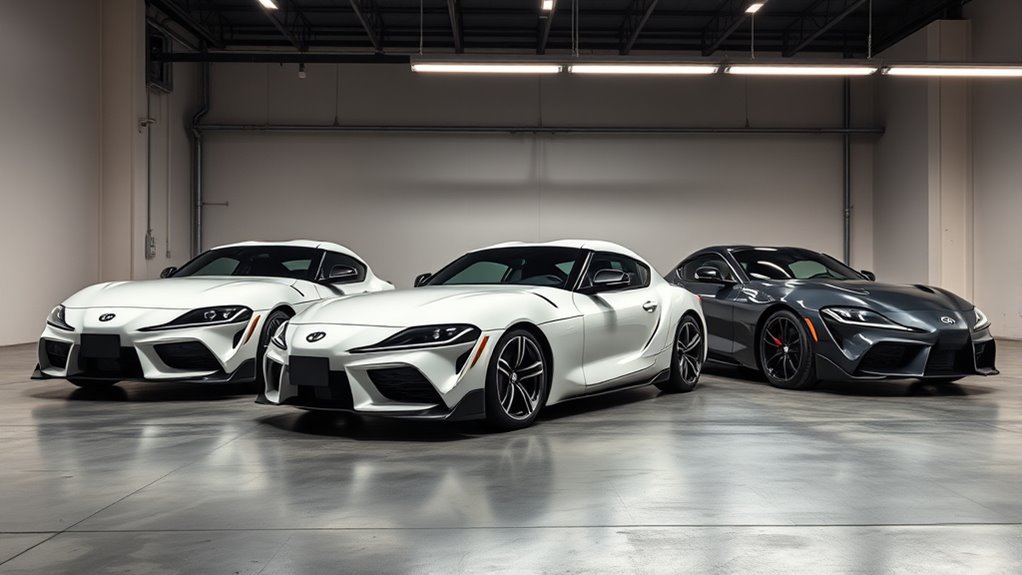
You’re driving a Toyota GR Supra built on BMW’s CLAR-derived platform, the same architecture shared with the Z4. It’s a front-engine, rear-wheel-drive layout engineered for rigidity and balanced weight distribution, using high-strength steel, aluminum and CFRP bits to lower mass and boost torsional stiffness. BMW supplied the turbo straight-six and core chassis systems while Toyota handled exterior and interior design. The shared underpinnings shape handling, usability and future platform choices—keep going to learn more.

Quick Answer: What Platform Is the Toyota GR Supra Built On?

bmw clar platform advantages

Wondering what underpins the GR Supra’s chassis? You get the BMW CLAR platform, a lightweight, modular architecture shared with the Z4 that supports a front-engine, rear-wheel-drive layout. That layout sharpens handling and lets you pursue focused performance upgrades without compromising balance. The CLAR architecture uses advanced materials and adaptable substructures, so you can expect rigidity, predictable dynamics, and potential for varied powertrains — traits that free you to modify and personalize. Built in Austria using BMW manufacturing systems, the Supra benefits from cross-company engineering while retaining Toyota calibration. This platform choice clarifies market positioning: it places the Supra among premium sports cars with engineering depth, giving you a foundation optimized for driver-focused tuning and strategic upgrades.

Engineering Ownership: Toyota vs. BMW-Who Did What?

Now that you know the Supra rides on BMW’s CLAR architecture, it’s worth separating which company handled which engineering responsibilities. You’ll see clear engineering roles: BMW supplied the turbocharged inline-six and core chassis systems, while Toyota led exterior and interior design to preserve brand identity. The collaboration dynamics kept functional boundaries—shared driveline and production in Austria, Toyota-driven styling and tuning choices to meet distinct performance goals. This split let each firm apply its design philosophy: BMW on mechanical systems and driving dynamics, Toyota on visual and ergonomic differentiation. For you seeking liberation from manufacturer ambiguity, this arrangement clarifies market positioning: a jointly engineered sports coupe that marries BMW mechanicals with Toyota-styled identity and targeted performance outcomes.

Chassis and Suspension: Structure, Materials, and Carbon-Fiber Parts

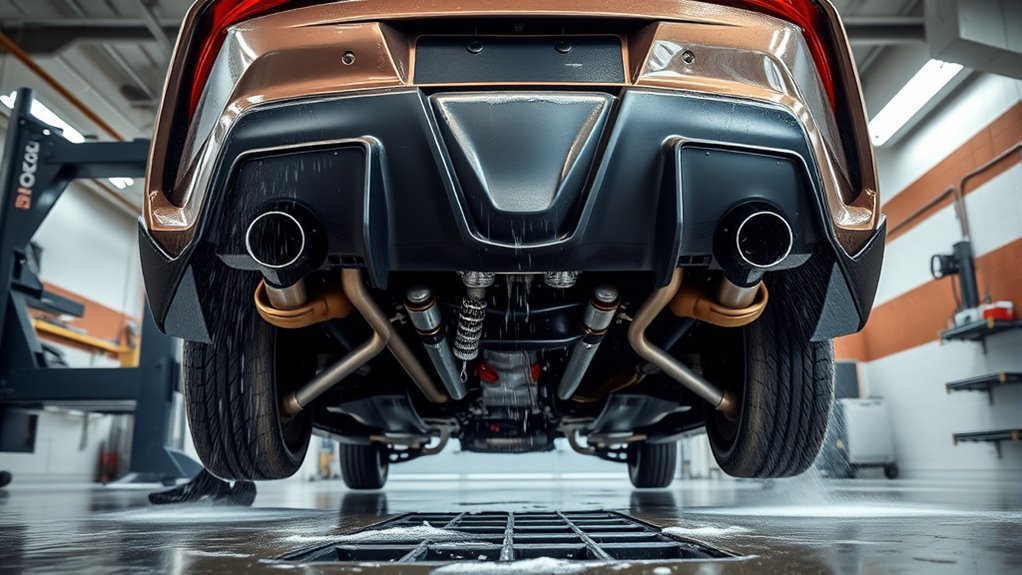
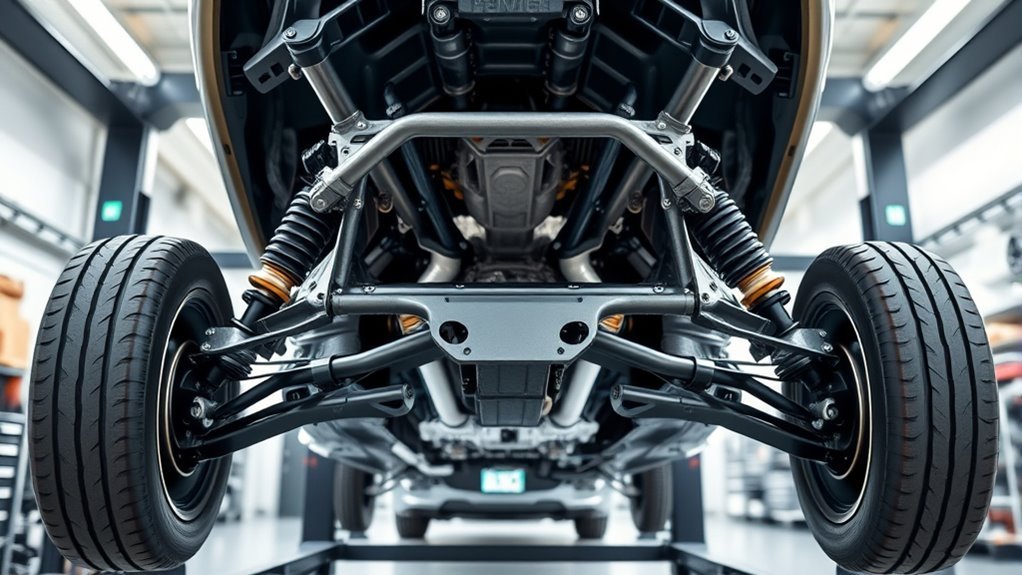
Because Toyota and BMW based the GR Supra on the same rear‑wheel‑drive architecture as the Z4, you get a chassis that blends high‑strength steel and aluminum for targeted stiffness and weight savings, with select carbon‑fiber‑reinforced plastic (CFRP) parts to trim mass without compromising integrity. You’ll notice the chassis design prioritizes torsional rigidity and low unsprung weight; CFRP covers and braces reduce mass while preserving crash performance. Adaptive systems—an electronically controlled adaptive suspension—are integrated into the structure, letting you shift between comfort and razor‑sharp responses. Curb weight (~3,411 lbs) reflects these material choices. The following table summarizes key structural elements:

Component Purpose
High‑strength steel Primary load paths
Aluminum subframes Lower mass
CFRP parts Local mass reduction
Adaptive systems Dynamic damping control

Engine Integration: BMW Straight-Six, Tuning, and Variants

turbocharged inline six performance tuning

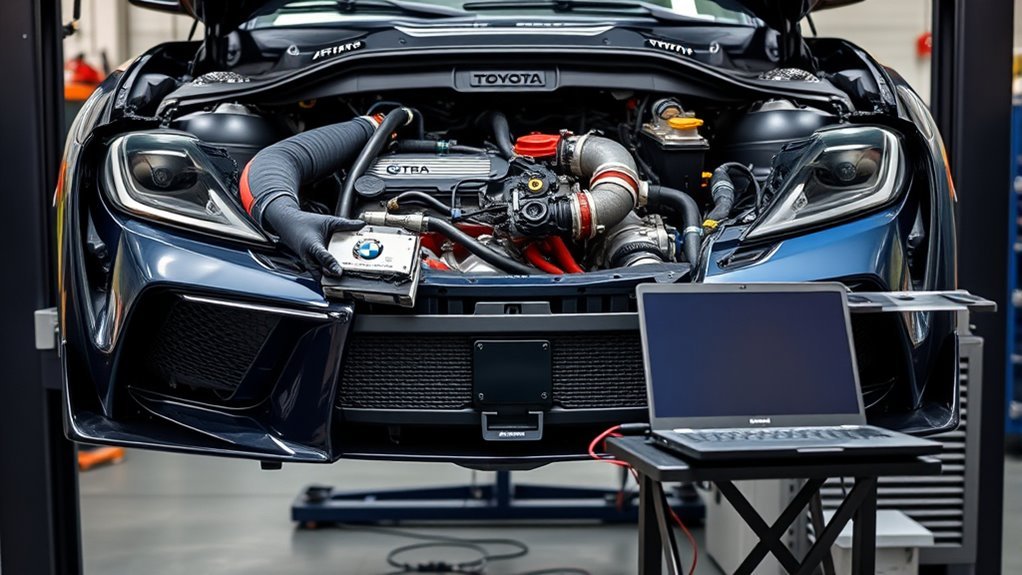
While sharing its underpinnings with BMW allowed Toyota to fit the GR Supra with a compact, turbocharged 3.0‑liter inline‑six, engineers tuned the unit for a distinct Supra character—strong midrange torque, responsive throttle mapping, and a firm redline—so you get a sporty, track‑capable feel without sacrificing daily drivability. You benefit from BMW-derived architecture and M‑Series componentry that raise engine performance and reliability. The 335 hp base was upgraded to 382 hp in 2021–22, cutting 0–60 to about 3.7 seconds in the latter spec. Tuning enhancements focus on torque curve shaping, gearbox calibration, and electronic throttle response to free driving intent without excess intervention.

Shared BMW roots with bespoke tuning: strong midrange torque, responsive throttle, and 382 hp for a liberated, track-ready feel.

  1. BMW straight‑six architecture advantages
  2. Power and torque figures
  3. Targeted tuning enhancements
  4. Driveability and liberation-focused response

Supra vs. Z4: How the Coupe and Roadster Share the Architecture

You’ll see the Supra and Z4 sit on the same rear-wheel-drive chassis with a 97.2-inch wheelbase, which standardizes suspension mounting points and basic structural geometry. You’ll also note their divergent body designs — a fixed-roof coupe versus a convertible roadster — which require different reinforcement strategies and aerodynamic tuning. You’ll compare how those weight and packaging differences, plus distinct tuning, translate to unique handling and performance characteristics.

Shared Chassis Architecture

Two sports cars share a single underbody: the GR Supra and BMW Z4 both sit on the same front‑engine, rear‑wheel‑drive chassis developed jointly by Toyota and BMW. You’ll recognize the shared performance focus: identical 97.2‑inch wheelbases, balanced weight distribution, and matched suspension geometry deliver comparable handling envelopes. The design collaboration concentrated on a rigid platform that supports divergent bodies without compromising dynamic intent.

  1. Shared platform: common chassis, mounting points, and layout.
  2. Weight variance: Supra 3,375 lbs vs Z4 M40i 3,535 lbs affecting dynamics.
  3. Handling parity: balanced front/rear mass and tuned suspension for agility.
  4. Structural flexibility: chassis rigidity allows coupe and roadster adaptations.

You can rely on the joint architecture to provide predictable, liberated driving dynamics and engineering consistency.

Divergent Body Designs

Having established the shared underbody and its performance intent, look next at how two distinct bodies are grafted onto the common CLAR platform. You’ll see that body styles and design philosophy diverge while structural metrics align: both use a 97.2-inch wheelbase, but the coupe vs. roadster layouts change mass distribution and aerodynamics. The Supra’s lighter curb weight (~160 lbs less) sharpens response; the Z4’s convertible skin trades rigidity for open-air experience, requiring reinforcement. Your assessment should focus on how each brand’s design philosophy channels the same chassis into different sensory and handling outcomes, freeing you to choose based on intent rather than pedigree.

Vehicle Body Style Effect on Dynamics
Supra Coupe Increased stiffness, lower mass
Z4 Roadster Added reinforcements, higher mass
Both 97.2″ wheelbase Comparable handling envelope

Toyota’s Changes: Styling, Chassis Tuning, and Weight Savings

Toyota took the shared BMW Z4 architecture and applied distinct styling, chassis tuning, and lighter materials to sharpen the GR Supra’s character and performance. You’ll notice a clear styling evolution: aggressive fascia, sculpted hips, and aero cues that set the Supra apart while signaling intent. Toyota’s engineers tuned springs, dampers, and subframe rates for a firmer, more responsive chassis, delivering targeted feedback and quicker shifts. You’ll also benefit from weight savings—carbon fiber elements and optimized components lower mass to about 3,375 lbs and improve balance. These changes represent focused performance upgrades that free you from generic tuning, giving a liberated, purposeful platform.

  1. Styling evolution: bold, aerodynamic differentiation
  2. Chassis tuning: sport-focused damping and rates
  3. Weight savings: carbon and optimized components
  4. Performance upgrades: improved balance and agility

Real-World Effects: Handling, Ride, and Daily Usability

You’ll notice the Supra’s steering is precise and well-weighted, giving direct feedback and control during cornering and lane changes. Its adaptive suspension strikes a measured balance between ride comfort and composure, switching smoothly from daily compliance to sporty firmness when pushed. The hatchback layout, reasonable cargo volume, and driver-focused ergonomics keep the car practical for routine use without compromising its dynamic intent.

Steering Feel And Precision

While the GR Supra’s steering is tuned for directness, its well-weighted, precise inputs give you immediate, predictable responses that make the car feel nimble and agile on-road. You benefit from steering dynamics that prioritize crisp turn-in and low lag, so inputs translate to chassis reaction with minimal filtering. Precision feedback communicates tire load and grip thresholds, helping you exploit limits without surprise. The car’s relatively light curb weight sharpens transient responses, aiding quick directional changes and confident cornering. You’ll find the steering feels alert—occasionally twitchy—but that contributes to a liberated, engaged drive rather than vague isolation.

  1. Directness: immediate steering response for decisive control.
  2. Weighting: well-balanced feel across speeds.
  3. Feedback: clear precision feedback for limit awareness.
  4. Usability: daily-drivable yet performance-ready.

Suspension Comfort Versatility

Even when you’re switching between daily driving and spirited runs, the Supra’s adaptive suspension adjusts damping to keep ride comfort and cornering performance in balance. You’ll notice suspension tuning that prioritizes a firm chassis connection without sacrificing composure over bumps, delivering a predictable contact patch and confidence through turns. Steering is precise and well-weighted, so directional inputs translate directly to lateral grip—useful whether you’re commuting or pushing limits. The car’s low stance doesn’t negate long-journey comfort; cabin space and supportive seats let you remain focused and free to drive. Hatchback cargo and an adjustable spoiler add utility, though the spoiler’s mass can complicate latch operation. Overall, the system gives you liberated performance with a deliberate comfort balance.

Daily Practicality And Ergonomics

Because it shares the BMW Z4 underpinnings and an adaptive suspension, the GR Supra delivers handling and ride characteristics that suit daily use as well as spirited runs. You get communicative steering, controlled body motions, and a compliant ride that doesn’t punish urban driving. The cabin’s low profile still provides more space than rivals, enhancing interior convenience for daily tasks. The hatchback and cargo accessibility support practical loads, though the adjustable spoiler adds weight when operating the hatch.

  1. Steering: precise feedback for confident lane changes and canyon carving.
  2. Suspension: adaptive damping balances comfort and control on varied roads.
  3. Cabin ergonomics: supportive seats, reachable controls, and usable ingress/egress.
  4. Usability: reasonable fuel economy and cargo space for liberated daily ownership.

Where the Toyota GR Supra Is Built and Why It Matters

austrian built performance collaboration

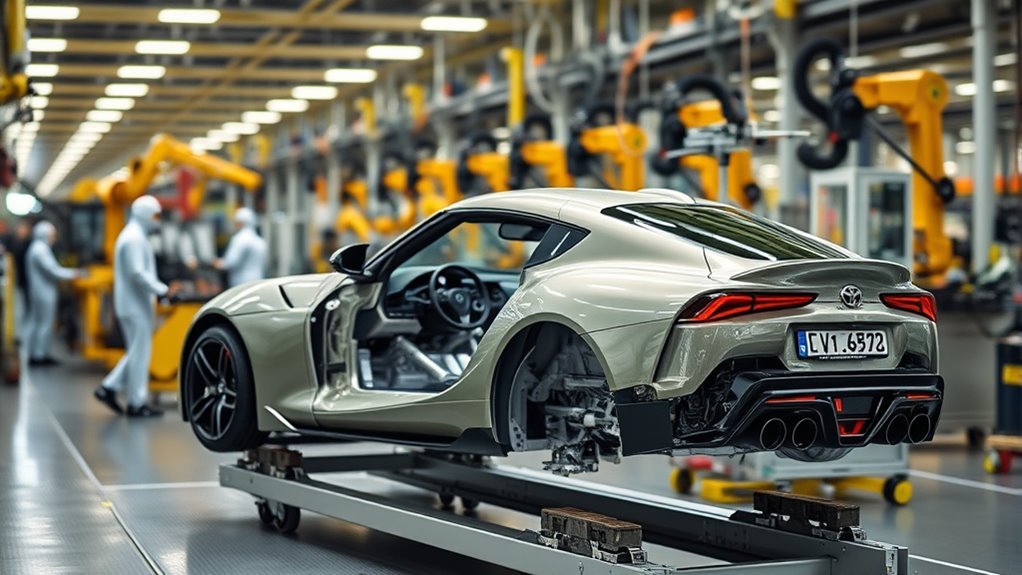
Although many fans expect the Supra to be built in Japan, Toyota assembles the GR Supra in Austria on a BMW-shared platform, a choice that materially affects the car’s engineering, supply chain, and performance. You should note the production location ties Toyota to BMW’s component ecosystem, delivering collaborative benefits like turbocharged inline-six powertrains and M-Series-derived electronics. That shared architecture reduces development time and weight, enabling a 0–60 mph near 3.9-second capability while retaining structural rigidity. For you as a driver who values autonomy and capability, the Austria-built Supra signals deliberate resource allocation: Toyota leverages external expertise to free internal capacity for other innovations. The result is a focused sports car whose provenance improves performance without diluting its heritage.

Platform Lifecycle: Z4 Discontinuation and the Supra’s Future

As the BMW Z4 reaches the end of its run in 2026, the Supra’s future hinges on that shared platform—and on whether Toyota secures a successor architecture or accepts a hard stop. You’ll face a concise technical reality: platform sustainability is central to continued production, performance parity, and cost-efficiency. The Supra’s limited 25,000-unit run and 2025 power bump to 385 hp underline both exclusivity and incremental engineering gains, but they don’t guarantee continuation.

  1. Assess dependency: shared components tie Supra lifecycle to Z4 decisions.
  2. Evaluate options: license a successor platform or develop proprietary architecture.
  3. Consider market signals: demand, collector value, and development ROI.
  4. Prioritize outcomes: platform sustainability enables future innovations and liberation from platform constraints.

Buyer Checklist: Pros, Cons, and Should Platform Sharing Affect Your Choice?

When evaluating the Supra, you’ll weigh the advantages of shared engineering—improved chassis dynamics, refined suspension, and advanced BMW-sourced tech—against potential losses in brand distinctiveness. You should assess whether the Supra’s unique tuning, styling, and driving feel are sufficient to differentiate it from the Z4 for your priorities. Make a checklist comparing performance metrics, feature parity, and subjective driving character to decide if platform sharing helps or hinders your purchase choice.

Pros Of Platform Sharing

Because the GR Supra uses BMW’s CLAR platform, you get many practical advantages: improved structural rigidity for better handling, access to advanced engineering like the turbo inline-six making 385 hp, and lower production costs that help keep the starting price near $66,000. You’ll benefit from cost efficiency and design flexibility that free you to prioritize performance and maintenance access over bespoke development. Shared components simplify repairs and improve parts availability, which supports long-term ownership freedom. Platform commonality also accelerates technology transfer, so safety and drivetrain refinements arrive faster.

  1. Lower development and manufacturing costs improving value.
  2. Faster access to proven engineering and features.
  3. Easier serviceability and parts availability.
  4. Platform-driven reliability and consistent structural performance.

Cons And Trade‑Offs

While platform sharing gives you proven engineering and weight savings, it also introduces trade‑offs you should evaluate: lost exclusivity and brand purity, a driving feel that some purists say leans BMW, and design compromises tied to shared chassis points and packaging. You get BMW hardware—inline‑six power, chassis geometry and tech—that boosts reliability and performance perception, and a lighter curb weight (3,375 lbs) than the Z4. But you may sacrifice distinct Toyota character; some buyers view the Supra as co‑bred rather than wholly Toyota, which can erode brand loyalty. Evaluate whether the Supra’s tuned dynamics and styling deliver the emotional and cultural identity you want. If liberation means owning a unique statement, platform sharing may temper that freedom.

Frequently Asked Questions

What Platform Is the GR Supra Based On?

The GR Supra’s platform is BMW’s CLAR architecture, and you’ll find performance tuning potential and clear design influences from BMW; you’ll leverage its lightweight chassis, RWD layout, and advanced tech to pursue driving liberation.

Does the Supra Have a B58 or S58?

The Supra has a B58 engine, not an S58, and you’ll get liberated performance through targeted performance tuning that refines torque delivery, boost control, and reliability while keeping the inline-six’s smooth, BMW-derived character intact.

What Chassis Is the Supra Built On?

You’re riding the G29 chassis, engineered for precise chassis design and focused performance tuning. You’ll appreciate its front-engine, rear-wheel-drive layout, lightweight architecture, and shared engineering that frees you to chase balanced, liberated driving dynamics.

Conclusion

You’ll appreciate that the GR Supra rides on a shared, BMW-derived platform tuned by Toyota—an efficient marriage of German bones and Japanese refinement that keeps compromises tasteful rather than glaring. The chassis, suspension geometry, and powertrain packaging deliver focused handling and everyday usability, though some components aren’t purely Toyota-made. If you value driving precision with sensible concessions, this cooperation feels like a practical embrace, not a surrender—giving you performance with a polished, reassuring pedigree.

Ryker Calloway

Ryker Calloway

Author

Automotive expert and contributor at Autoreviewnest.

Leave a Comment

Your email address will not be published. Required fields are marked *