When deciding between a naturally aspirated and a turbocharged engine for your Tacoma, it’s essential to take into account the differences. Naturally aspirated engines deliver smooth power and reliability with immediate throttle response. On the other hand, turbocharged engines offer extra power and better fuel efficiency, though they might have turbo lag and added complexity. Each option has its pros and cons, impacting your driving experience. Curious about how these engines can enhance your Tacoma’s performance? There’s more to explore!
What Are Naturally Aspirated and Turbocharged Engines?
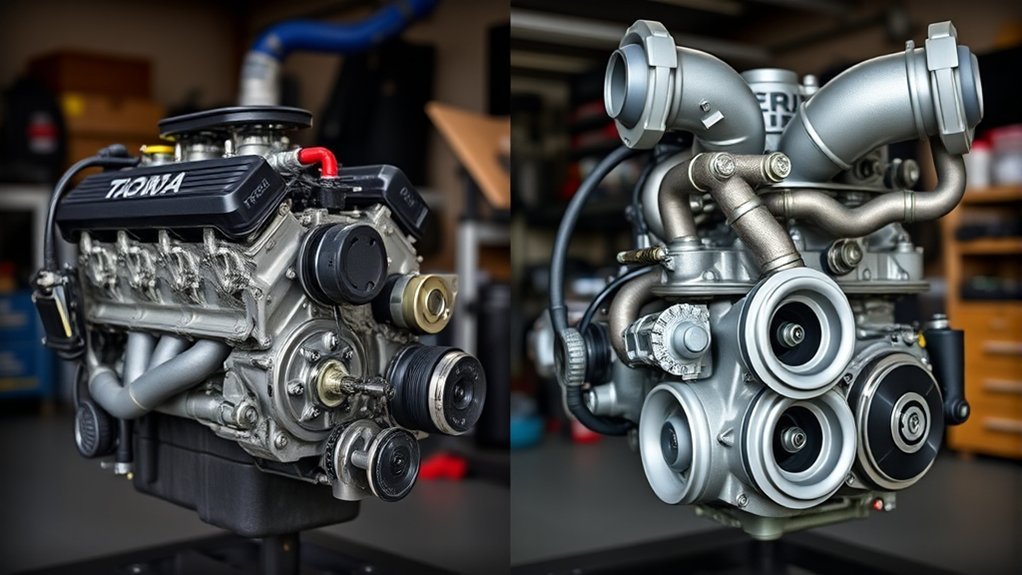
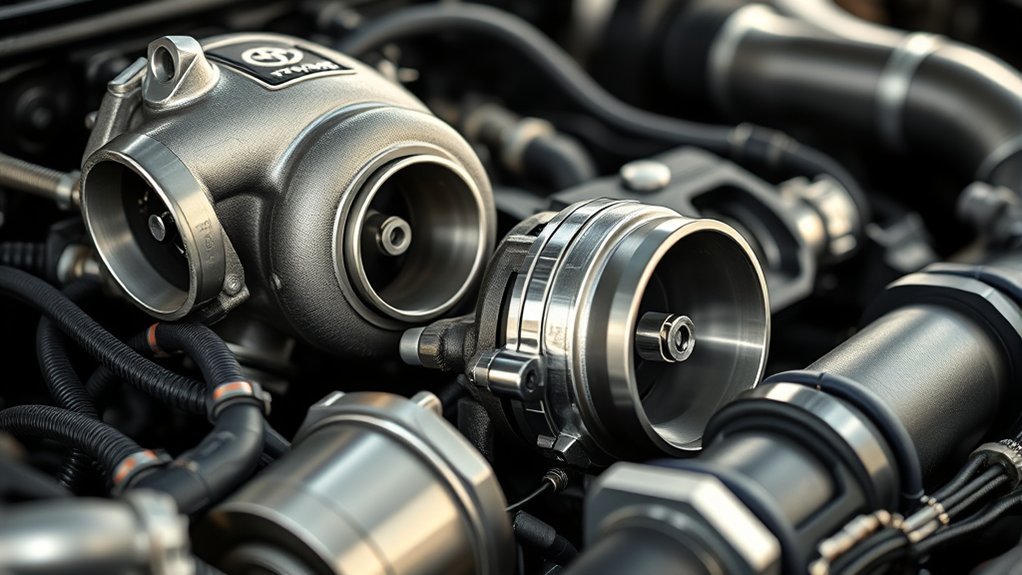
When you’re choosing between naturally aspirated and turbocharged engines, it’s essential to understand how each functions. Naturally aspirated engines draw air into the combustion chamber using atmospheric pressure and piston movement. This design is straightforward, featuring fewer parts, which often translates to reliability and immediate throttle response. On the other hand, turbocharged engines harness the power of a turbocharger, which compresses air using exhaust gases. This allows more air to enter the engine, considerably boosting power output without increasing engine size or displacement.
While turbocharged engines excel in fuel efficiency and maintain performance at high altitudes, they may suffer from turbo lag, causing a delay in power delivery. In contrast, naturally aspirated engines deliver a more immediate response. Understanding these engine types will help you make an informed decision based on your driving preferences and performance needs.
Comparative Analysis of Turbocharged and Naturally Aspirated Engines
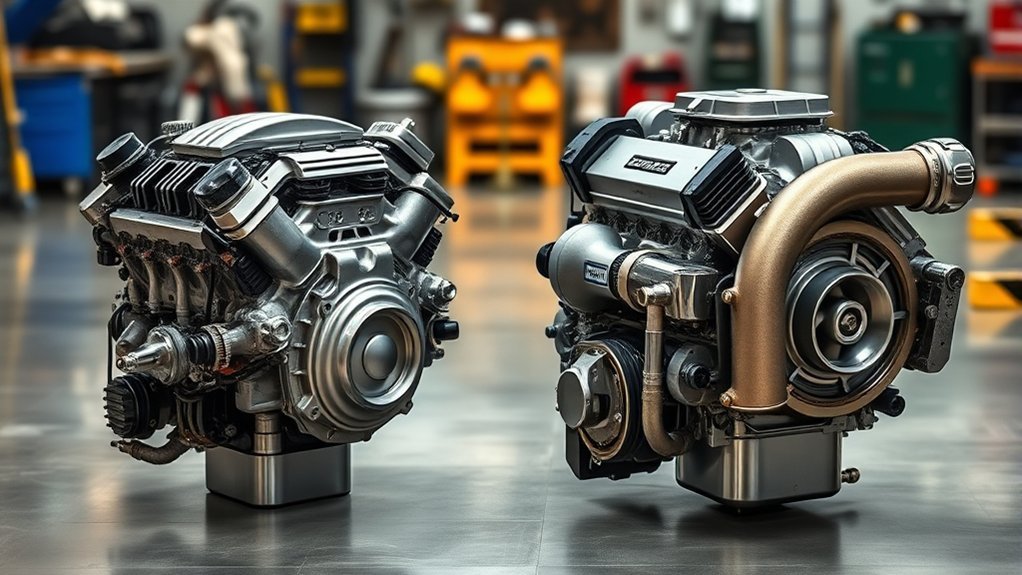
When comparing turbocharged and naturally aspirated engines, you’ll notice key differences in design, performance, and fuel efficiency. Turbocharged engines offer impressive power from smaller displacements, but they come with added complexity and potential reliability issues. On the other hand, naturally aspirated engines provide a straightforward driving experience with immediate throttle response, making them a favorite for many enthusiasts.
Engine Design Complexities
While many drivers appreciate the power and efficiency of turbocharged engines, understanding their design complexities compared to naturally aspirated engines is essential. Turbocharged engines incorporate a turbine and compressor, leading to increased engine complexity and potential failure points. In contrast, naturally aspirated engines boast simpler designs with fewer moving parts, enhancing reliability and reducing maintenance considerations.
| Feature | Turbocharged Engine |
|---|---|
| Design Complexity | Higher |
| Moving Parts | More |
| Reliability | Lower |
Performance Characteristics Comparison
Understanding the differences in performance characteristics between turbocharged and naturally aspirated engines is essential for any driver looking to optimize their driving experience. Turbocharged engines deliver impressive power output and torque thanks to forced induction, making them ideal for performance upgrades. However, they can suffer from turbo lag, resulting in delayed throttle response. On the other hand, naturally aspirated engines excel with their immediate responsiveness and linear power delivery, enhancing driver engagement. Their simpler design often translates to better reliability and easier maintenance. When considering engine tuning, you’ll find that high-quality intake systems are vital for turbocharged engines to maximize power and throttle response, ensuring you get the most from your driving experience.
Fuel Efficiency Considerations
Fuel efficiency plays an essential role in choosing between turbocharged and naturally aspirated engines, especially for drivers seeking cost-effective performance. Turbocharged engines generally offer better fuel economy, typically achieving 10-20% more efficiency due to their ability to generate power from a smaller displacement. This advantage shines at high altitudes, where turbo engines maintain consistent performance and fuel efficiency, compensating for lower air density. In contrast, naturally aspirated engines require larger displacements, often leading to higher fuel consumption as they rely solely on atmospheric pressure. While turbocharging enhances combustion efficiency and reduces emissions, remember that the complexity of turbo systems can result in increased maintenance costs, potentially offsetting your fuel savings in the long run.
Benefits and Drawbacks of Turbocharged Engines
Turbocharged engines have become increasingly popular in modern vehicles due to their ability to deliver impressive power and fuel efficiency. By forcing more air into the combustion chamber, turbo technology enhances performance while allowing for smaller engine displacements. This compact design saves space and weight, making it appealing for those seeking efficient power.
However, there are drawbacks. Turbo lag can result in a delayed throttle response, detracting from the immediate power you might expect. Additionally, the increased complexity of turbocharged engines means more moving parts, which can raise the potential for mechanical failures and affect engine longevity. While these engines generally produce lower emissions, they can still face issues related to heat and air density, impacting overall performance.
Understanding these benefits and drawbacks helps you make an informed choice, ensuring your driving experience aligns with your expectations for power, efficiency, and reliability.
Advantages of Naturally Aspirated Engines
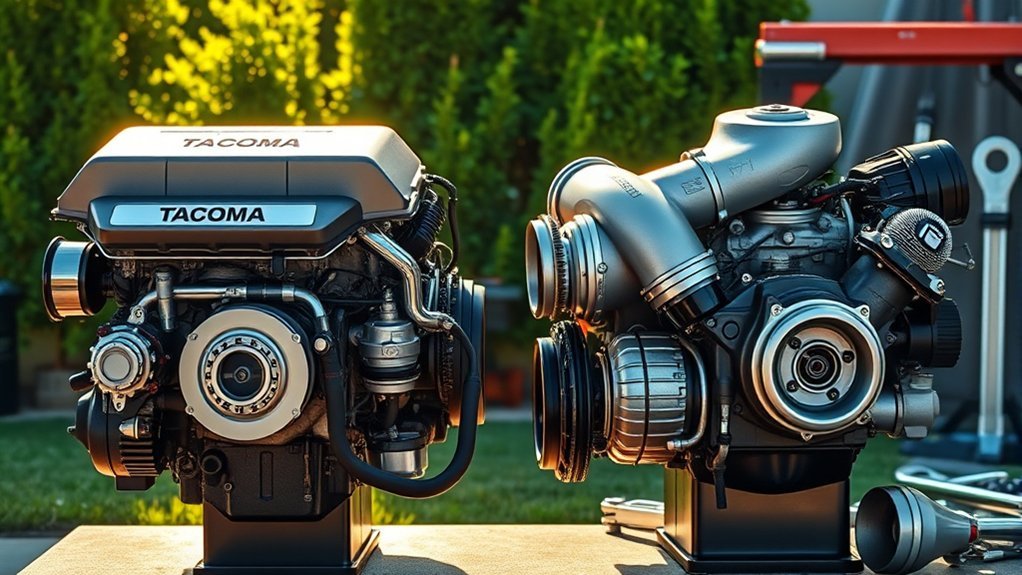
When you consider naturally aspirated engines, you’ll appreciate their simplicity in design, which means fewer components to worry about. You’ll also notice the immediate throttle response, giving you a more engaging driving experience without any turbo lag. Plus, the distinctive engine sound adds a layer of enjoyment that many automotive enthusiasts crave.
Simplicity in Design
Naturally aspirated (N/A) engines stand out for their straightforward design, which offers several advantages over more complex systems. With fewer moving parts, these engines enhance reliability and maintenance ease, making them a solid choice for those who value longevity. They rely on atmospheric pressure and piston vacuum for air intake, simplifying the mechanics involved. This simplicity translates into fewer breakdowns and less frequent service needs compared to turbocharged models. Additionally, the linear torque curve of N/A engines provides smooth power delivery, allowing for an engaging driving experience. Enthusiasts also appreciate the distinct sound produced by these engines, adding character to your ride. Embracing a naturally aspirated engine means embracing reliability and the joy of uncomplicated performance.
Immediate Throttle Response
How does immediate throttle response enhance your driving experience? With naturally aspirated engines, you enjoy a direct connection to your vehicle, thanks to their quick throttle dynamics. This responsiveness allows you to feel in control, making every drive more engaging and liberating.
- Predictable power delivery lets you accelerate smoothly.
- Fewer moving parts mean higher reliability and less maintenance.
- No turbo lag means you get instant power when you need it.
- The linear torque curve enhances your confidence during tricky maneuvers.
Natural aspiration provides a seamless driving experience, ideal for enthusiasts seeking that raw, unfiltered connection. Embrace the joy of immediate engagement, and release the potential of your Tacoma on every journey.
Desirable Engine Sound
The sound of a naturally aspirated engine captivates drivers in a way that few other features can. Unlike turbocharged engines, they deliver a more organic auditory experience, thanks to their direct engine acoustics. This absence of a turbocharger creates a linear audio signature that’s both engaging and predictable, enhancing your driving pleasure. With fewer moving parts, you enjoy a clearer engine tone, resonating with performance enthusiasts. The immediate throttle response gives you dynamic sound feedback as you accelerate, making every drive exhilarating. Ultimately, many drivers appreciate how the sound of a naturally aspirated engine reflects its performance characteristics authentically, leading to greater satisfaction. In the domain of sound engineering, this is where true liberation meets automotive passion.
How Do Turbochargers Enhance Tacoma Engine Performance?
Turbochargers greatly boost Tacoma engine performance by harnessing exhaust gases to drive a turbine, which forces more air into the combustion chamber. This design allows you to enjoy significant power gains without increasing engine size. Here are some turbocharger benefits that enhance performance:
- Improved Fuel Efficiency: More power from a smaller engine displacement means better mileage.
- Consistent Performance: Turbochargers maintain power at high altitudes where naturally aspirated engines struggle.
- Reduced Turbo Lag: Enhanced intake systems lead to quicker throttle response for a thrilling driving experience.
- Superior Towing Capability: Achieve more torque across a wider RPM range, making heavy loads easier to manage.
How Do Intake Systems Affect Turbocharged Engine Performance?
Although you might not realize it, the intake system plays a pivotal role in the performance of your turbocharged Tacoma engine. A well-designed intake system is essential for maximizing airflow optimization, enabling the turbocharger to function efficiently. Stock intakes often limit airflow, causing turbo lag and reducing power.
Upgrading to a high-quality aftermarket intake can enhance both airflow and cooling, leading to improved throttle response. Cooler, denser air helps maintain power levels by mitigating heat generated during compression.
Here’s a quick comparison of intake system features:
| Feature | Stock Intake | Aftermarket Intake |
|---|---|---|
| Airflow | Limited | Enhanced |
| Cooling Efficiency | Moderate | Improved |
| Turbo Lag | Noticeable | Minimized |
| Intake Design | Single inlet | Dual inlets |
| Power Output | Lower | Higher |
Investing in an aftermarket intake can greatly elevate your Tacoma’s performance.
Reliability Comparison: Turbocharged vs. Naturally Aspirated
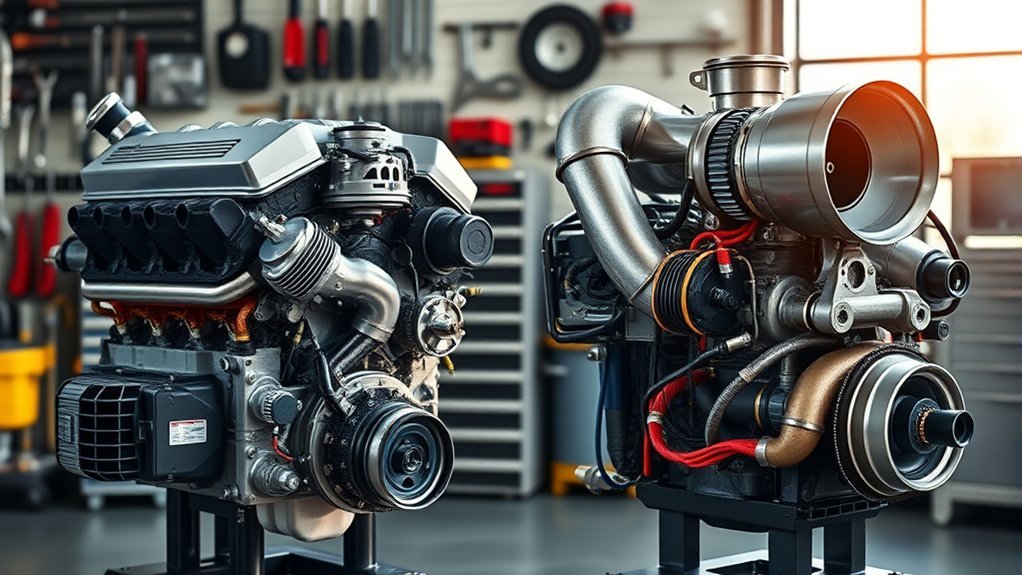
When reflecting on performance upgrades for your Tacoma, reliability becomes a key factor, especially when comparing turbocharged and naturally aspirated engines. Naturally aspirated engines typically offer simpler mechanical designs with fewer moving parts, leading to higher reliability and better engine longevity. In contrast, turbocharged engines can face issues due to their complexity, including potential turbocharger failures and higher oil consumption from low tension piston rings.
Here are some significant points to keep in mind:
- Fewer moving parts in naturally aspirated engines reduce maintenance costs.
- Turbo engines may require more frequent repairs due to their complexity.
- Track record: Naturally aspirated engines have a proven history of consistent performance.
- Reliability of turbo engines can vary widely depending on design and engineering.
Ultimately, if you prioritize reliability and lower maintenance costs, naturally aspirated engines may be your best bet.
Emissions and Fuel Efficiency: The Real Impact on Tacoma
As emissions regulations tighten and fuel efficiency becomes a top priority for drivers, the Tacoma’s engine options present a compelling choice. Turbocharged engines greatly enhance fuel economy by increasing air pressure, allowing smaller engines to deliver power comparable to larger naturally aspirated ones while consuming less fuel. This efficiency isn’t just about performance; it also means lower emissions, helping manufacturers meet stringent emission standards.
Turbo engines optimize the air-fuel mixture, producing fewer pollutants compared to their naturally aspirated counterparts. They excel especially at high altitudes, where naturally aspirated engines struggle due to reduced air density.
While naturally aspirated engines are simpler and may pose fewer maintenance concerns, they typically lag behind turbocharged options in both fuel efficiency and emissions performance. If you’re looking for a balance between power and eco-friendliness, the Tacoma’s turbocharged engine could be your best bet for a responsible driving experience.
How to Pick the Best Engine for Your Tacoma
How do you decide which engine is right for your Tacoma? Start by evaluating your driving preferences and conditions. Here’s what to reflect on:
- Power vs. Smoothness: Naturally aspirated engines deliver smoother power and immediate throttle response, while turbocharged options provide more power and better fuel efficiency.
- Engine Longevity: Naturally aspirated engines have fewer moving parts, leading to lower maintenance needs and greater reliability over time.
- Driving Environment: If you often drive at high altitudes, a turbocharged engine might serve you better due to its performance in lower air density.
- Aftermarket Potential: Think about future upgrades; turbocharged engines can greatly benefit from enhancements, while naturally aspirated ones have limited potential.
Frequently Asked Questions
What Is Better, a Naturally Aspirated or Turbo Engine?
Choosing between a naturally aspirated or turbo engine depends on your priorities. If you value immediate throttle response and simplicity, go naturally aspirated. For better fuel efficiency and power, a turbocharged engine’s performance shines.
How Reliable Is the Toyota 2.4 L Turbo Engine?
The Toyota 2.4 L turbo engine shows promising performance, but its long-term reliability is still unfolding. You might face higher maintenance costs due to its complexity, so keep an eye on oil consumption and overall durability.
Why Does NA Sound Better Than Turbo?
NA engines often produce sound frequencies up to 30% richer than turbocharged ones, enhancing your driving experience. Their linear performance characteristics and simpler design mean lower maintenance costs, making them a favorite for enthusiasts seeking pure engine sound.
Do NA Engines Last Longer Than Turbo Engines?
Yes, NA engines often outlast turbo engines due to their simpler designs and fewer moving parts. While turbo engines excel in performance, their complexity can lead to maintenance issues, impacting overall engine longevity.
Conclusion
In choosing between a naturally aspirated and turbocharged engine for your Tacoma, consider what truly matters to you—performance or reliability? Both options have their distinct advantages and drawbacks, but understanding your driving needs can make all the difference. Whether you seek the responsive power of a turbo or the simplicity of a naturally aspirated engine, your choice will shape your Tacoma experience. So, which engine will fuel your adventures?