
Supra model codes from A40 through A90 track the car’s evolution over four decades. A40 and A60 models feature Celica-based platforms with simple engines, while the A70 shifted to an independent chassis with turbo options. The A80 serves as the iconic Mk4 with the 2JZ-GTE engine, and the modern A90 utilizes BMW architecture. Understanding these codes helps you identify specific engines, common failure points, and market values.
Quick Answer
Supra model codes like A40, A60, A70, A80, and A90 represent the generation of the vehicle. These codes identify the chassis, powertrain, and available parts. Knowing the code for your specific Supra allows you to verify provenance, source compatible parts, and anticipate typical maintenance needs.
Supra Model Codes: A Guide for Buyers

When you shop for a Supra, model codes help you match an era to its performance and parts. This guide breaks down the A40, A60, A70, A80, and A90 generations to help you find the right fit for your goals. Supra history evolved from early coupe roots to dedicated high-performance platforms.
A40 and A60 models offer simple, tunable foundations. The A70 introduced advanced turbo technology and electronic controls. The A80 remains famous for the 2JZ-GTE engine and massive tuning potential. The A90 features modern BMW co-development and refined forced induction.
A40 and A60: The Celica-Based Years
The A40–A60 Supras launched Toyota’s dedicated sports-car line using the Celica platform. The A40 arrived in 1978 as a responsive coupe, while the 1982 A60 added pop-up headlights and a hatch spoiler. Power outputs rose from 145 hp to 160 hp during this era, which allowed these cars to compete with the Porsche 924.
Rooted in the Celica, the A40–A60 Supras launched Toyota’s sports‑car line with lighter handling, pop‑up style, and up to 160 hp.
Collectors highly value post-1984 models because of limited production numbers. Inspect the hatch and shock towers for rust, as structural damage significantly reduces value. While these cars share DNA with the Celica, their racing pedigree in Group A proves their performance capability.
- Engines: Stock power limits and common reliability mods
- Rarity: Production totals and collector appeal
- Red flags: Structural rust and poor patch repairs
- Ownership: Best practices for inspections and preservation
A70: A Dedicated Independent Platform
Toyota launched the A70 in 1986 on its own platform, fully separating the Supra from the Celica. This change introduced double-wishbone suspension and a dedicated coupe body. When shopping for an A70, you must consider the performance difference between the naturally aspirated engines and the 7M-GTE turbo unit. Always verify the history of the head gasket, as this remains a critical service item for the 7M-GTE engine.
Chassis and Design Innovations
The A70 chassis design allowed for better handling and straight-six power delivery. Toyota engineered this car to prioritize sport dynamics over badge-sharing. Because of this focus, the A70 feels more stable on the road and track.
- Structural integrity: Check shock towers and the hatch area for corrosion.
- Suspension: Verify the condition of bushings and control arms.
- Chassis: Inspect the frame for signs of accident repair or poor welding.
- History: Check for Group A racing provenance.
Engine Performance and Reliability
The A70 engine lineup highlights the split from the Celica. You can choose a 2.0L naturally aspirated unit or the 3.0L turbocharged 7M-GTE, which produces about 230 hp. The turbo model provides significant midrange torque, making it the preferred choice for enthusiasts. Note that many 7M-GTE engines require upgraded head bolts or professional torque settings to prevent gasket failure. Always consult a qualified professional before making decisions based on this information.
Maintenance Tips for the A70
When buying an A70, align your expectations with the maintenance needs of a 1980s turbo car. Use these steps to evaluate a potential purchase:
- Check the head gasket area for coolant leaks or oil contamination.
- Inspect suspension bushings and alignment, as double-wishbone systems require precision.
- Review service records to confirm the timing of critical repairs.
- Test the turbo response and wastegate operation on a test drive.
A80: The Iconic Mk4
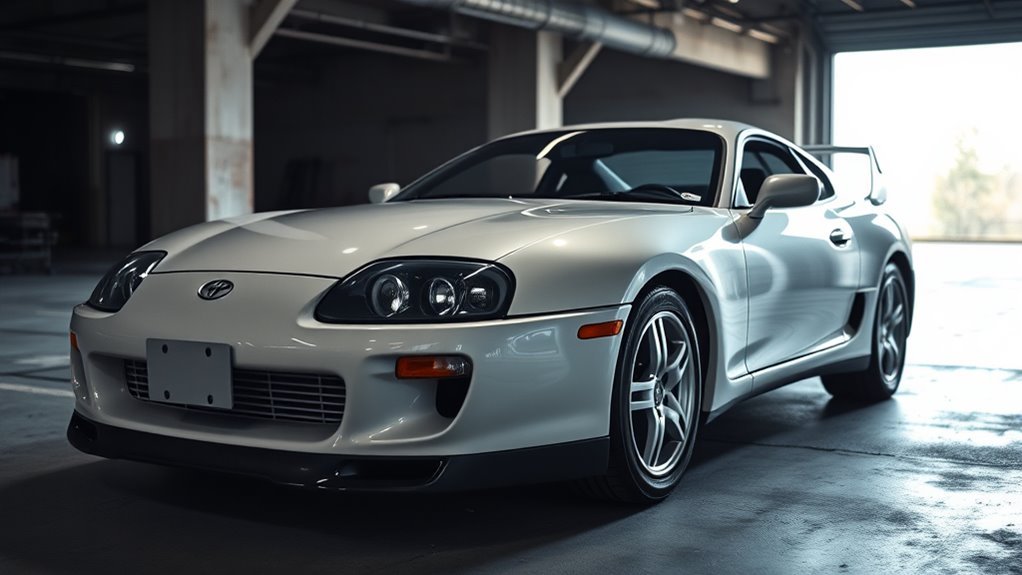
The Mk4 Supra earned legendary status due to the 2JZ-GTE engine and strong factory engineering. Collectors prize manual twin-turbo models, which make up about one-third of the total U.S. production. While these cars offer immense tuning potential, prioritize well-maintained examples to ensure long-term reliability.
Common issues include aging valve stem seals and failing Targa-top seals. Because prices for clean, unmodified Mk4 Turbos continue to rise, document every piece of the car’s history. Budget extra funds for immediate mechanical refreshes after purchase.
A90: Modern Partnership with BMW
The A90, internally known as the J29, shares its architecture with the BMW Z4. This identity affects how you look up parts and assess value. While the shared platform offers benefits, understand that some components are unique to the Toyota model.
Dual Identity and Parts Sourcing
Treat the A90 as a hybrid of Toyota design and BMW engineering. This dual identity allows you to tap into broad support networks but requires technical care. Always verify that a part fits the specific A90 chassis before installation.
- Know the difference between the marketing code A90 and the technical code J29.
- Use shared BMW components to lower standard maintenance costs.
- Verify component-level fitment for all performance upgrades.
- Factor BMW-sourced electronics into your long-term ownership costs.
Parts and Value Considerations
The J29/A90 partnership creates unique parts-sourcing requirements. Some parts appear in catalogs under BMW codes while others use Toyota labels. Use OEM cross-reference tools to ensure you buy the correct components.
- Parts sourcing: BMW-origin components may change your repair timelines.
- Documentation: Use J29 diagrams for accurate component identification.
- Rarity: Manual-transmission A90 models command higher collector interest.
- Strategy: Knowledge of these codes empowers you to negotiate effectively.
Reading VINs and Market Signals
To evaluate a Supra like an expert, look at the VIN, parts diagrams, and marketing codes separately. VINs provide production data, but they often lack the J29/A90 distinction. Use J29 diagrams for all mechanical repairs, as these offer the most clarity. Focus on documented provenance and maintenance history to determine if a specific car is worth the investment.
Frequently Asked Questions
What is the engine code for the Supra A90?
The A90 Supra uses the B58B30 engine for the 3.0L model and the B48B20 engine for the 2.0L model. These engines respond well to professional tuning.
What are the common issues with the A90 Supra?
Some owners report infotainment lag, wind noise, and suspension noises related to the shared chassis. Check for these signs during your test drive.
What is the model code for the Supra?
The Supra uses various codes by generation: A40, A60, A70, A80, and A90. Each code reflects the specific platform and development era of the car.
Final Thoughts
Supra model codes provide the roadmap to understanding the car’s value and mechanical needs. Knowing these codes prevents expensive mistakes and helps you identify the best examples on the market. Once you master the terminology for your preferred generation, you can buy and maintain your Supra with total confidence. Start your search by verifying the chassis code of any model you intend to purchase.