If your tire inflator cord is getting hot, it’s likely due to electrical resistance from poor connections or excessive use, which can pose fire hazards. Loose plugs amplify this risk, leading to potential equipment failure. To prevent overheating, limit usage to 5-10 minutes and allow for cooling time. Regularly check connections for wear and guarantee secure plugs. Taking these precautions can improve safety and prolong the inflator’s life. Discover more about effective safety tips and alternatives next.
Why Your Tire Inflator Cord Gets Hot
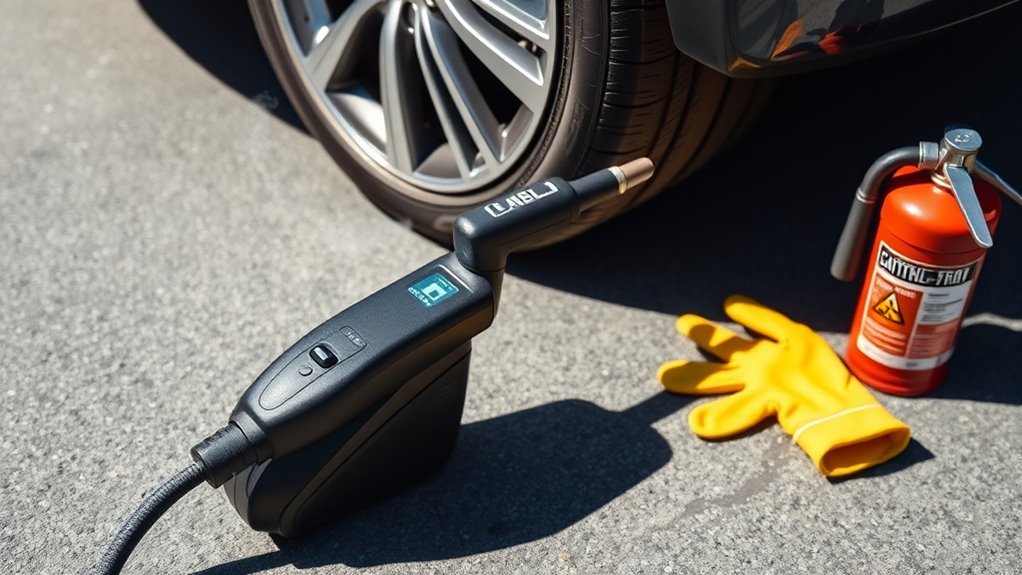
A tire inflator cord can get hot for several reasons, primarily due to electrical resistance at connection points. If the plug doesn’t fit securely in the cigarette lighter socket, it can create extra resistance, leading to overheating. Many tire inflators draw more than the average 10A that a typical cigarette lighter can handle, increasing the risk of heat buildup. Prolonged usage beyond manufacturer recommendations exacerbates this issue, potentially causing burnt wiring or smoke. To mitigate these risks, regularly check your inflator cord and connections for signs of wear, corrosion, or loose fittings. Additionally, using an inline fuse can help protect against overloads, ensuring safer operation and preventing overheating when you’re relying on your tire inflator.
Common Causes of Overheating in Tire Inflators
While operating a tire inflator, overheating can arise from several common issues that users should be aware of. Prolonged use is a significant factor; most manufacturers recommend a maximum continuous operation time of 5-10 minutes to prevent excessive heat buildup. Poor electrical connections, like loose plugs or corroded cigarette lighter sockets, increase resistance, leading to more heat generation in the inflator’s cord. Additionally, if your inflator draws more than the typical 10A capacity of these sockets, it can create overheating risks. Operating in high ambient temperatures or inadequate ventilation exacerbates the problem. Regular maintenance, including checking for damaged cords and ensuring secure electrical connections, can help mitigate overheating risks and prolong your tire inflator’s lifespan.
Dangers of a Hot Inflator Plug
A hot inflator plug often signals poor electrical connections, which can lead to overheating and fire hazards. Many tire inflators draw more current than cigarette lighter sockets can handle, increasing the risk of burnt wiring. Regular inspections and the use of an in-line fuse can mitigate these dangers and protect your vehicle’s electrical system.
Heat Generation Causes
Heat generated in a tire inflator plug can pose significant safety risks if not properly managed. This heat generation often stems from poor connections, which create increased electrical resistance and lead to overheating at junction points. Additionally, most cigarette lighter sockets aren’t rated for high-amperage devices; using an inflator that exceeds 10A can risk smoke, burnt wiring, or even fire. Extended operation of a tire inflator can exacerbate overheating, so it’s vital to limit use to 10 minutes, allowing a 15-minute cooling period afterward. To mitigate heat generation, guarantee the inflator plug is securely connected and regularly clean socket contacts. Using an inline fuse also adds an essential safety measure against overloads, safeguarding your electrical system.
Risks of Overheating Plug
Overheating plugs can lead to serious safety hazards, primarily stemming from poor electrical connections and excessive current draw. If your tire inflator plug feels too hot after use, it may be exceeding the safe limits of your cigarette lighter socket, which typically handles a maximum of 10A. Prolonged use can cause the plug to overheat, raising the risk of smoke or fire hazards, especially if the inflator isn’t designed for continuous operation. Regularly inspect both the plug and the socket for any signs of wear or damage to minimize these safety risks. Additionally, consider using an in-line fuse to cut off power if excessive current draw occurs, providing an extra layer of protection against overheating.
Smart Safety Tips for Using Your Tire Inflator
To guarantee safe operation of your tire inflator, limit its use to 5-10 minutes and allow it to cool for 15 minutes between uses. Regularly check the connections to your cigarette lighter socket and inspect the inflator plug for wear. Additionally, monitor the inflator for excessive heat to prevent potential hazards during operation.
Proper Usage Intervals
When using your tire inflator, it’s vital to limit continuous operation to a maximum of 5-10 minutes. This helps prevent overheating and guarantees safe operation. After each use, allow a cooling period of at least 15 minutes to maintain the inflator’s performance and prevent potential damage. Always check the power specifications of your inflator and verify it doesn’t exceed your cigarette lighter socket’s capacity, usually around 10A. A secure connection between the inflator plug and the socket is important, as loose connections can increase resistance and lead to overheating. If you’re connecting directly to a battery, consider using an inline fuse to protect against overloads and potential hazards. Follow these proper usage intervals for ideal safety and performance.
Check Connections Regularly
Regularly checking the connections of your tire inflator is vital for safe operation and peak performance. Secure and corrosion-free connections prevent overheating, which can lead to hazardous situations. Confirm the plug fits snugly into the cigarette lighter socket; mismatched sizes can create loose connections, increasing heat generation. Clean the contacts of the socket to maintain ideal electrical conductivity, reducing the risk of overheating during use. It’s important to press the tire inflator plug firmly into the socket to minimize resistance and heat buildup. Additionally, consider using an in-line fuse to protect against overloads, helping to prevent damage from overheating connections while using your tire inflator. Prioritize these checks for a safer, more efficient experience.
Monitor Temperature During Use
Monitoring the temperature of your tire inflator during use is key to guaranteeing safe operation. Excessive heat can signal overloading or poor connections, which might lead to electrical failure or fire hazards. Limit the continuous operation of your inflator to 5-10 minutes and allow it to cool down for at least 15 minutes between uses to prevent overheating. Always check that the inflator plug is securely connected to the power source; a loose connection can generate heat from increased electrical resistance. Additionally, inspect the power cord and plug for any signs of wear or damage, as frayed wires can exacerbate overheating risks. Finally, confirm your inflator meets the specifications of your power source to avoid potential damage.
Best Alternatives to Cigarette Lighter Powered Compressors

Are you tired of relying on cigarette lighter-powered compressors that can be unreliable and prone to overheating? Consider these alternatives for more efficient tire inflation:
| Type | Benefits | Ideal Use |
|---|---|---|
| Cordless Tire Inflator | Portable, no power source needed | Quick, on-the-go tasks |
| Power Pack with Compressor | Versatile, jump-start battery | Emergency situations |
| Manual Bicycle Pump | Low-tech, safe, no overheating risk | Infrequent inflation |
Using a cordless tire inflator or a dedicated air compressor can greatly enhance your tire pressure management. These options minimize the risks associated with overheating while ensuring you’re prepared for any situation, giving you the freedom and reliability you deserve.
How to Know When to Get Professional Help for Your Inflator
When using a tire inflator, it’s important to be aware of any signs that may indicate the need for professional help. If the inflator’s cord becomes excessively hot, it could signal an electrical issue or overload, making it wise to consult a technician. A persistent burning smell or visible damage to the cord or plug also warrants inspection. Additionally, if your compressor trips circuit breakers or blows fuses repeatedly, this indicates a deeper electrical problem needing evaluation. Unusual noises, like buzzing or grinding, suggest mechanical failure and should prompt you to seek expert advice. Finally, if the inflator continues to malfunction after troubleshooting, professional assistance is crucial to guarantee safe and effective operation.
Frequently Asked Questions
Why Does My Portable Tire Inflator Get Hot?
Your portable tire inflator gets hot due to electrical resistance and friction during use. Follow inflator maintenance tips, implement overheating prevention measures, and adopt safe usage practices to minimize heat and guarantee peak performance.
Should I Be Worried if a Plug Gets Hot?
Yes, you should be worried if a plug gets hot. Monitor for overheating symptoms, inspect electrical components, and follow safety precautions. Ignoring this can lead to serious hazards, including fire risks and equipment damage.
Why Does My Air Pump Get Hot?
Like a kettle on the boil, your air pump heats up due to heat generation factors like extended use and poor connections. Regular air pump maintenance and safe operating practices can prevent overheating and guarantee efficient performance.
How to Fix Air Compressor Overheating?
To fix air compressor overheating, practice regular compressor maintenance, guarantee proper air pressure regulation, and implement effective cooling methods. Limit usage time and check connections to prevent excessive heat generation during operation.
Conclusion
In summary, keeping an eye on your tire inflator’s cord temperature is vital. Just like a sizzling pan can burn your hand, a hot inflator plug poses risks that shouldn’t be ignored. By following smart safety tips and knowing when to seek professional help, you can guarantee safe, efficient use of your inflator. Remember, a well-maintained inflator is like a trusty sidekick—always ready to assist you on the road, without the worry of overheating.