Toyota Tacoma Cranks But Won’t Start: Causes and Fixes
What’s in This Article
- Quick Answer: Why Your Tacoma Cranks But Won’t Start
- Start With Symptoms, Battery Power, Fuses, and Codes
- Check Fuel Delivery: Pump, Pressure, Lines, and Leaks
- Check MAF and Intake Airflow Without Guessing
- Check Ignition, PCM Power, Grounds, and Wiring
- Follow This Troubleshooting Order Before Replacing Parts
- When to Call a Mechanic or Tow the Truck
- Frequently Asked Questions
A Toyota Tacoma that cranks but won’t start usually has power, but it lacks fuel, spark, sensor data, or engine computer control. Guessing wastes money and can create safety risks, especially when you test fuel lines or wiring. Use the checks below to separate a weak battery, blown fuse, bad fuel pump, faulty mass air flow (MAF) sensor, ignition fault, or wiring damage.
Quick Answer: Why Your Tacoma Cranks But Won’t Start
Your Tacoma cranks but won’t start when the engine can’t get the right mix of fuel, spark, air data, and powertrain control module (PCM) commands. Start with the simple checks first: battery voltage, clean terminals, electronic fuel injection (EFI) and starter (STA) fuses, relay clicks, and stored on-board diagnostics (OBD-II) codes.
Then test fuel delivery, ignition power, MAF readings, and wiring. Toyota fuel pressure specs vary by engine and model year, so don’t use one 60 psi target for every Tacoma. Match your gauge reading to the repair manual for your exact truck before you replace the pump.
Key Takeaways
- Check battery voltage and terminals before you test deeper systems.
- Scan for OBD-II diagnostic trouble codes before you clear anything.
- Test fuel pressure with the correct engine and model-year spec.
- Inspect MAF wiring, intake leaks, coils, PCM grounds, and fuse power.
- Stop DIY testing if you smell fuel, see damaged wiring, or lack safe tools.
Start With Symptoms, Battery Power, Fuses, and Codes
Start by noting the exact symptom. A fast crank, slow crank, single click, no check engine light (CEL), fuel smell, or flashing security light each points you in a different direction.
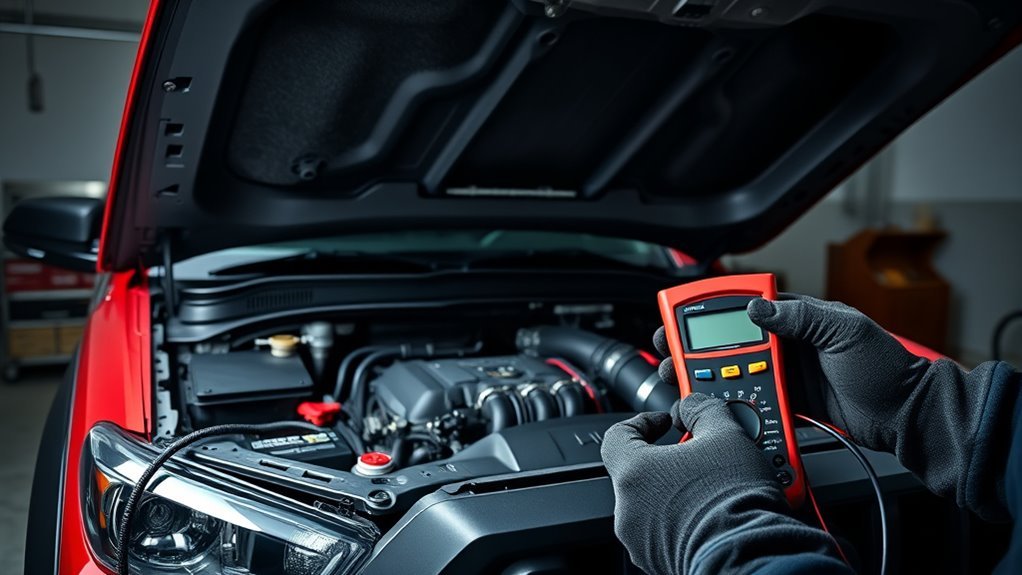
According to Batteries Plus, a fully charged 12-volt car battery should read about 12.6 volts or more at rest. A reading in the 12.4 to 12.7 volt range can look good, but you should still load-test the battery if voltage drops hard while cranking.
Battery and Terminals
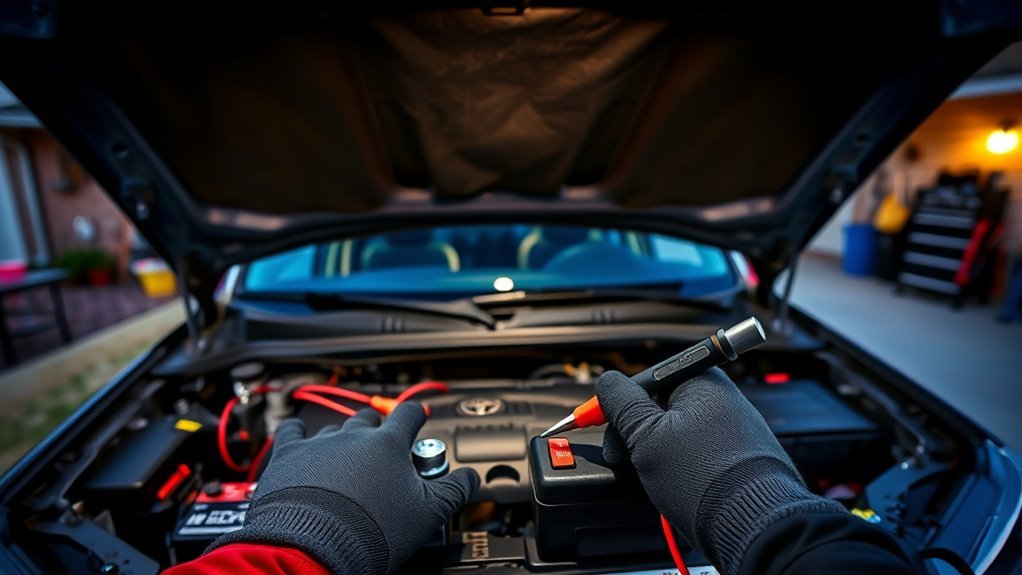
Check the battery voltage and terminal condition before you chase fuel or sensors. Clean, tight terminals matter because corrosion or loose clamps can reduce starter current even when the battery shows fair voltage.
Use a wire brush and baking soda solution to clean the terminals, then tighten the clamps. Coat the terminals with dielectric grease after cleaning, not before, so you don’t trap corrosion under the connection.
If voltage reads low, charge the battery and retest it. If you hear rapid clicks or see voltage crash during cranking, load-test the battery before you blame the starter.
Fuses, Relays, and Codes
Next, verify the EFI and STA circuits with the fuse chart for your Tacoma. Check each fuse visually and with a meter, then confirm the correct amperage sits in each location.
Listen and feel for relay clicks while someone turns the key. A silent relay can point to a bad relay, missing control power, weak ground, or ignition switch problem.
Run an OBD-II scan before you disconnect the battery or clear codes. Kelley Blue Book notes that OBD-II diagnostic trouble codes help identify the system or circuit that triggered the fault, such as fuel, air metering, misfire, or computer output circuits.
Check Fuel Delivery: Pump, Pressure, Lines, and Leaks
Check whether the fuel pump runs when you turn the key or command it with a scan tool. No pump sound can mean a bad pump, failed relay, blown fuse, poor ground, or damaged harness.
Use a fuel pressure gauge and the correct adapter for your engine. Toyota data shows fuel pressure can vary by engine, with 1GR-FE service data listing about 40.8 to 41.7 psi and 2TR-FE data listing about 38 to 56 psi depending on the system.
Warning: Fuel can spray under pressure, so wear eye protection, keep sparks away, and relieve pressure before you open any fuel line.
[Products Worth Considering]

The Pigenius windshield sunshade protects your Tundra's interior from heat and UV damage while keeping the cabin cool. Its accordion design folds easily for storage and quick setup, and the triple‑laminate construction provides durable, reflective protection. Ideal for long trips and daily commutes, it guards dashboards, seats, and steering wheels from sun‑related wear.

Upgrade your vehicle's visibility with this convex, heated side mirror glass that fits a range of Toyota models. It features a built-in defrost function, anti-fog film, and includes a pry tool for easy installation, ensuring clear views in all weather conditions.

Upgrade your vehicle's interior with this universal console cover that combines comfort and organization. The high‑quality microfiber leather resists spills and scratches while the thick memory foam core provides ergonomic support, reducing elbow fatigue on long drives. Dual side pockets keep essentials within reach, and elastic straps with non‑slip dots ensure a secure, tool‑free installation for any sedan.
Fuel Pump Operation
Start by confirming the pump actually runs. Turn the key on, listen near the tank, and watch scan tool data if your tool supports active tests.
No hum does not prove the pump failed. Check pump power, ground, the fuel pump relay, and related fuses before you replace the assembly.
| Symptom | Test | Action |
|---|---|---|
| No pump sound | Listen at key-on | Check pump power and relay |
| Low pressure | Use engine-specific spec | Inspect pump, filter, and lines |
| No fuel pressure | Command pump on | Verify fuse, relay, ground, and wiring |
| Intermittent start | Retest under heat and load | Check connector and harness movement |
Rail Pressure Testing
Attach a fuel pressure gauge with the proper fitting, then follow the repair manual test method for your Tacoma. Some procedures use a scan tool to command the pump on, while others check pressure with the engine idling.
If pressure never reaches spec, focus on the pump, fuel filter, pressure regulator, wiring, or a leak. If pressure bleeds down too fast after shutdown, check the injectors, regulator, pump check valve, and lines.
Use these failure clues:
- Dead pump: no pressure and no pump operation.
- Weak pump: low pressure that worsens during cranking.
- Regulator fault: pressure too high, too low, or unstable.
- Line leak or blockage: fuel odor, wet line, or fluctuating pressure.
Check MAF and Intake Airflow Without Guessing
If your Tacoma won’t start and you suspect the intake side, inspect the air box, intake tube, clamps, and MAF connector first. Cracks, loose clamps, unplugged sensors, and air leaks can make the PCM calculate the wrong fuel amount.
AutoZone explains that the MAF sensor measures incoming air and helps the PCM control fuel delivery. A dirty or faulty MAF can cause rich running, lean running, hard starting, stalling, hesitation, and related codes.
You can briefly unplug the MAF as a clue on some vehicles, but don’t treat that as a final test. If the engine starts with the MAF unplugged, inspect the sensor, wiring, air filter, intake boot, and vacuum leaks before you buy parts.
| Clue | Check | What It Means |
|---|---|---|
| Starts with MAF unplugged | Inspect sensor and wiring | MAF data may be wrong |
| Runs lean | Inspect intake boot and clamps | Unmetered air may enter |
| Rough idle | Clean MAF with proper cleaner | Dirt may skew readings |
| No change after cleaning | Test voltage and scan data | Wiring or sensor may need repair |
| MAF code returns | Check air filter and connector | Root cause may sit outside the sensor |
[Products Worth Considering]

Upgrade your Toyota's front bumper with this premium license plate bracket that fits US and Canada plates perfectly. Made from heavy‑duty, rust‑proof plastic, it protects your paint and stays street legal. The kit includes six unique screws and a wrench for quick, tool‑free installation, ensuring a secure mount without scratches.

Upgrade your Toyota's interior with this ultra-thin, perforated leather steering wheel cover that offers a glove‑like fit and full protection while preserving heating functionality. Installation is quick and tool‑free, snapping into place in under a minute. The cover enhances aesthetic appeal and provides a comfortable, authentic feel for daily driving.
Check Ignition, PCM Power, Grounds, and Wiring
After you rule out battery, fuel, and intake problems, inspect the ignition, PCM power, grounds, and harness. Check the CEL with the key on because a missing light can point toward lost PCM power or communication.
Test coil power and ground at one or two coils. If coils have power and ground but no spark, suspect coil failure, missing trigger control, crank or cam sensor input, or PCM control issues.
If cleaning the MAF doesn’t help, check EFI and STA fuses, PCM power and grounds, coil wiring, and crank sensor input next.
Rodent damage can cut, short, or expose harness wires. Inspect the engine bay, air box area, firewall, and harness runs for nests, droppings, chewed insulation, and green corrosion.
- Look for damaged wiring insulation and bite marks.
- Check for melted connectors and blown fuses.
- Inspect loose PCM, coil, crank sensor, and ground terminals.
- Repair damaged wire with the correct gauge, seal, and routing.
Follow This Troubleshooting Order Before Replacing Parts
Follow a fixed order so you don’t replace good parts. Each step should prove power, signal, fuel, spark, or control before you move on.
- Confirm battery and terminals. Check resting voltage, cranking voltage, terminal tightness, and ground straps.
- Scan for codes. Record OBD-II codes and freeze-frame data before clearing anything.
- Check fuses and relays. Verify EFI, STA, ignition, and fuel pump circuits with a meter.
- Test ignition. Check coil power, ground, spark output, and crank or cam sensor clues.
- Test fuel pressure. Use the right spec for your engine and test method.
- Inspect intake and MAF data. Look for air leaks, dirty sensors, and connector issues.
- Inspect wiring. Look for rodent damage, loose grounds, melted connectors, and broken harness sections.
Document each test result. A simple note like “pump has power but no pressure” can save you from testing the same circuit twice.
When to Call a Mechanic or Tow the Truck
Stop DIY testing if you smell raw fuel, see fuel leaking, find melted wiring, or lack the correct fuel pressure tools. These signs raise the risk of fire, short circuits, and wrong diagnosis.
Call a mechanic if the PCM won’t communicate, the CEL stays off with the key on, or you suspect immobilizer, timing, or internal engine trouble. Tow the truck if repeated cranking creates fuel smell, battery heat, or smoke.
Frequently Asked Questions
Why is my Toyota Tacoma cranking but not starting sometimes?
Intermittent starts often come from a weak battery, loose terminal, failing relay, worn pump, bad ground, heat-sensitive sensor, or damaged wiring. Test when the problem happens, because intermittent faults can disappear after the truck cools down.
Should I replace the fuel pump if I can’t hear it prime?
No, not until you test the circuit. A silent pump can also come from a blown fuse, bad relay, weak ground, damaged connector, or missing PCM command.
Can a bad MAF sensor stop a Tacoma from starting?
Yes, a bad MAF or intake leak can create wrong air data and poor fuel control. Still, you should check wiring, air leaks, codes, and scan data before replacing the sensor.
What fuel pressure should a Tacoma have?
The correct pressure depends on engine, year, and test method. Toyota service data shows different ranges for 1GR-FE and 2TR-FE systems, so use the repair manual for your exact Tacoma.
Safety Disclaimer: This article is for informational purposes only and does not replace professional auto repair advice. Fuel, electrical, and ignition testing can cause fire, injury, or vehicle damage, so consult a qualified mechanic when you lack the right tools or training.
Conclusion
The fastest path is simple: prove battery power, fuse power, codes, fuel pressure, spark, sensor data, and wiring in that order. Don’t replace the pump, MAF, coils, or PCM until a test points there.
Start with the checks you can do safely, then stop when the job needs fuel pressure tools, wiring repair, or advanced scan data. A steady process turns a frustrating crank no start into a clear repair plan.