You should never guess water depth or current; check manufacturer specs (most Tacomas ~28–30 inches), wade the approach, and test substrate firmness before committing. Verify fluids, brakes, tires, recovery gear, and a dry air filter; use a snorkel and breather risers if you expect deeper fords. Engage 4WD low, hold steady throttle to make a bow wave, avoid sharp turns, and never restart a stalled engine in water. Follow post‑crossing inspections and recovery steps to prevent lasting damage.
How Deep Can My Toyota Tacoma Safely Ford Water?
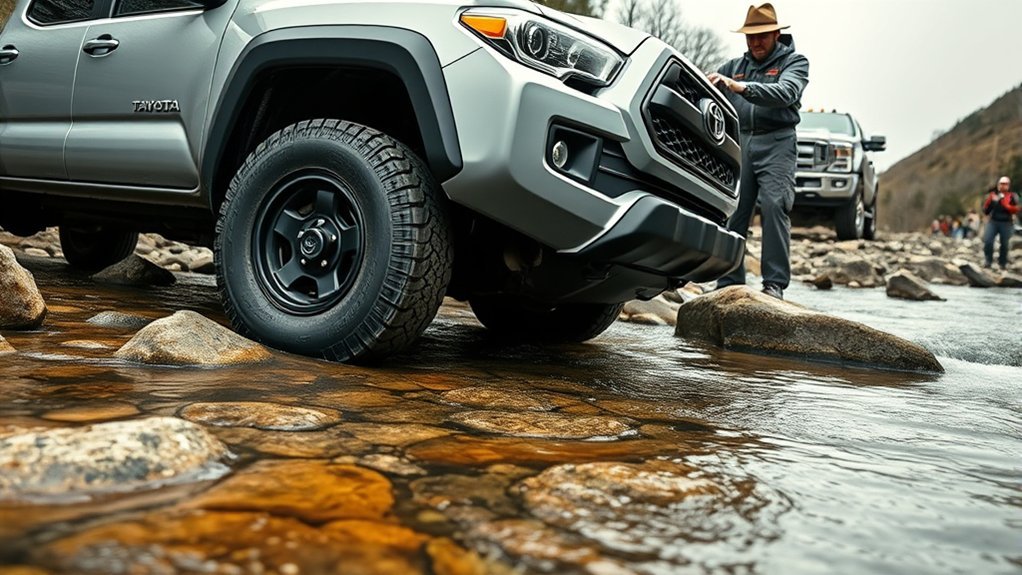
How deep can your Toyota Tacoma safely ford water? You’ll generally rely on a 28–30 inch safe fording depth for most Tacoma models; that’s your baseline, not a guarantee. Check your specific model year and configuration against the manufacturer’s spec so you don’t assume more clearance than you have. With a properly installed snorkel you can extend capability modestly—around 31 inches—but that only protects the intake, not electronics or seals. Practice conservative fording techniques: approach slowly, maintain steady low gear momentum, and avoid turns that let water surge into vulnerable areas. Prioritize water safety by evaluating current speed, depth, bottom composition, and downstream obstacles; muddy or fast-moving water defeats depth ratings. Keep seals, breathers, and maintenance up to date so the vehicle’s fording reliability holds. You’re aiming for liberation on the trail, but true freedom comes from disciplined preparation and choosing crossings that keep you and your Tacoma safe.
Quick Pre‑Departure Checklist for Your Tacoma
Before you head to the crossing, check all vehicle fluids and top off oil, coolant, brake, and transmission levels to prevent failures if water causes strain. Verify your recovery gear—confirm straps, shackles, and winch remote are in good condition and within reach. Inspect tire pressure and tread for proper traction and adjust pressure as needed for the terrain.
[Products Worth Considering]

The Pigenius windshield sunshade protects your Tundra's interior from heat and UV damage while keeping the cabin cool. Its accordion design folds easily for storage and quick setup, and the triple‑laminate construction provides durable, reflective protection. Ideal for long trips and daily commutes, it guards dashboards, seats, and steering wheels from sun‑related wear.

The KUST windshield shade offers a precise, gap‑free fit for Toyota Prius models from 2023 to 2026, covering the entire glass to block UV rays and heat. Its double‑thick reflective polyester layers provide superior shading and thermal insulation, keeping the interior cooler and reducing AC load. Easy to install and store with an elastic steel wire, it folds in seconds without adhesives. Protect your dash and seats while enjoying a more comfortable ride.

Secure your vehicle's fuel tank with this durable ABS locking gas cap that provides a tight, waterproof seal to prevent leaks and theft. The key‑operated lock offers peace of mind while meeting OEM part numbers for a wide range of makes and models. Ideal for harsh weather conditions, it protects the tank from rust and corrosion, ensuring safe and reliable driving.
Vehicle Fluids & Levels
When you’re preparing for a water crossing, check all fluid levels—engine oil, coolant, transmission, differentials, and brake fluid—and confirm they’re within manufacturer specs to reduce the risk of damage or failure. You’ll perform fluid maintenance deliberately: verify engine oil level and clarity to protect internal components, confirm coolant level and condition to prevent overheating, and inspect transmission and differential fluids for correct levels and signs of contamination. Check brake fluid for proper level and moisture intrusion so stopping power remains reliable. Examine the air filter; if it’s wet or clogged, replace it to preserve engine performance. These checks free you from avoidable breakdowns, keep systems resilient against water ingress, and let you cross with confidence and control.
Recovery Gear Check
Gather and inspect your recovery gear so you can respond quickly and safely if your Tacoma gets stuck during a water crossing. You’ll confirm presence, condition, and accessibility of each item and brief companions on roles before departure. Follow a concise checklist:
- Winch, cable, and remote — verify connection and function for immediate use.
- Recovery straps and shackles — inspect webbing and metal for cuts, deformation, or corrosion.
- High‑lift jack and basic tools — ascertain they’re secured and usable in mud or water.
- Spare attachment points and gloves — prevent injury and provide redundancy.
Perform routine winch maintenance: run the winch, clean the drum, and lubricate moving parts. Replace damaged gear immediately. This methodical prep preserves freedom on the trail while prioritizing safety.
Tire Pressure & Condition
Set your Tacoma’s tire pressure to the manufacturer’s recommendation—usually 30–35 PSI—and confirm tread depth and overall condition before you hit water. You’ll verify tire maintenance quickly: check for a minimum 4/32″ tread, inspect for cracks, bulges, or uneven wear, and ascertain valves and caps are secure. Swap to all-terrain tires like ATW4 285 if you want enhanced grip and stability. Remember under-inflation or worn rubber undermines traction control and raises the chance of hydroplaning or loss of steering in a crossing. Make these checks part of a compact pre-departure ritual so you preserve freedom to explore without courting unnecessary risk. Consistent, disciplined checks keep you safe and mobile.
Essential Gear to Install: Snorkel, Breather Risers, Skid Plates
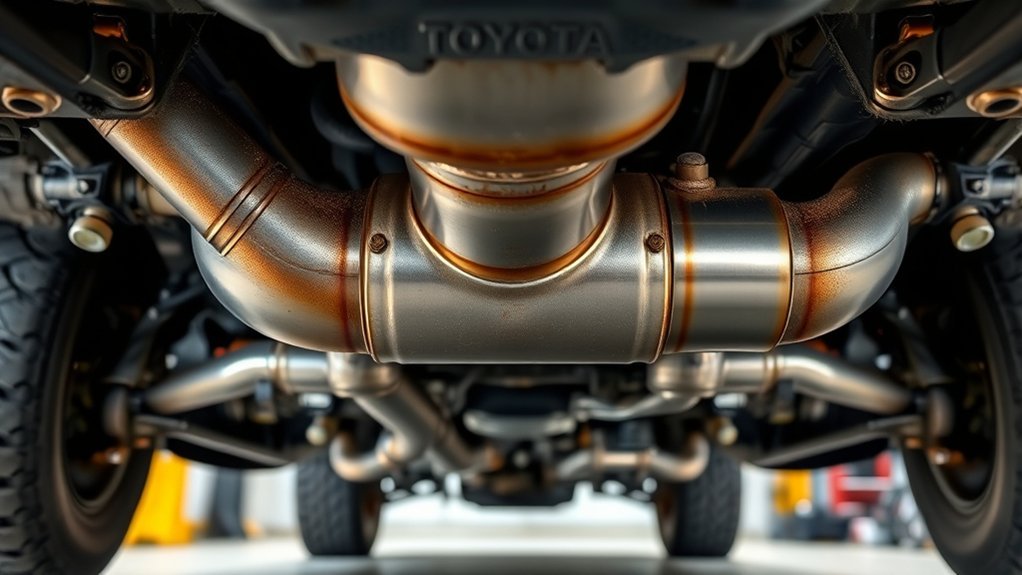
One of the most effective upgrades you can install for reliable water crossings is a coordinated suite of snorkel, breather risers, and skid plates, each positioned and sealed to keep air, lubricants, and essential components protected from immersion. You’ll gain snorkel benefits by raising the intake above likely waterlines, often enabling fording up to ~31 inches when fitted and sealed correctly. Proper breather installation extends differential and transmission vents, preventing water contamination and preserving lubrication. Skid plate advantages include shielding the oil pan, transfer case, and steering components from submerged debris.
Fit a snorkel, breather risers, and skid plates to keep intakes, lubricants, and underbody components safe during water crossings.
- Visualize a raised intake head clearing the waterline.
- Picture breather hoses routed to high secure points on the chassis.
- Imagine steel plates deflecting hidden rocks and logs.
- See sealed joints and clamps preventing leaks.
Maintain and inspect seals, clamps, and fittings regularly. Confirm airflow improvement and leak-free breathers before each excursion to guarantee freedom and safety on water crossings.
[Products Worth Considering]

Upgrade your vehicle's cargo capacity with these heavy‑duty aluminum roof crossbars that lock securely and reduce wind noise. The aerodynamic design and adjustable width provide a quiet, stable platform for luggage up to 260 lb, while the easy‑install kit and labeled front and rear bars simplify setup. Ideal for Toyota Grand Highlander and Lexus TX models from 2024‑2026 with flush side rails.

The CARTIST 420D car cover offers custom fit protection for Toyota RAV4 and Honda CRV models from 1994 to 2026, featuring a durable Oxford fabric that repels moisture while allowing breathability. Reflective safety strips and a driving‑side zipper enhance visibility and convenience, and four buckles with elastic hem secure the cover against strong winds and rain. This all‑weather cover shields against rain, snow, UV rays, and scratches, making it a reliable choice for year‑round vehicle care.
Assess Depth, Current, and Substrate On Site
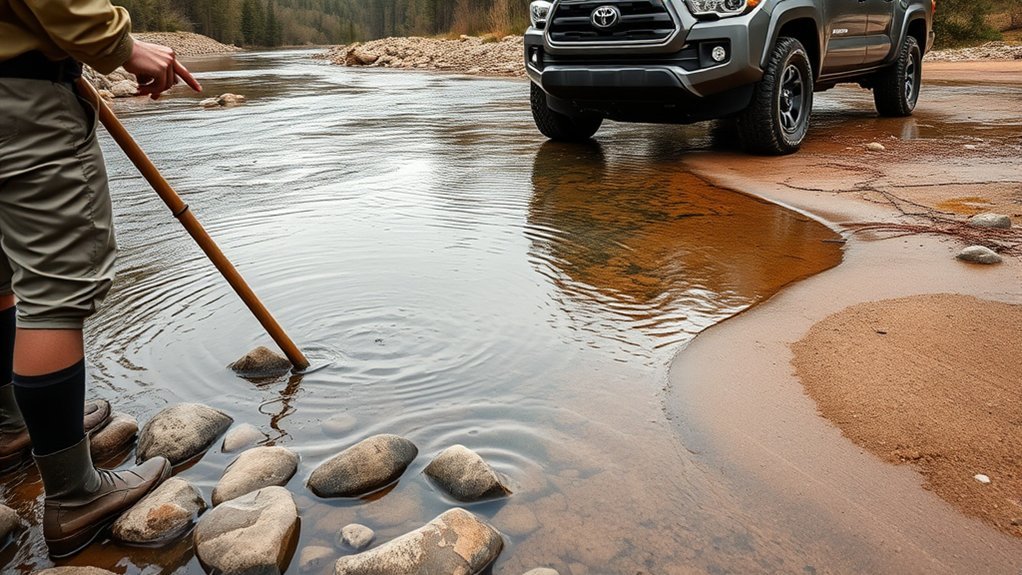
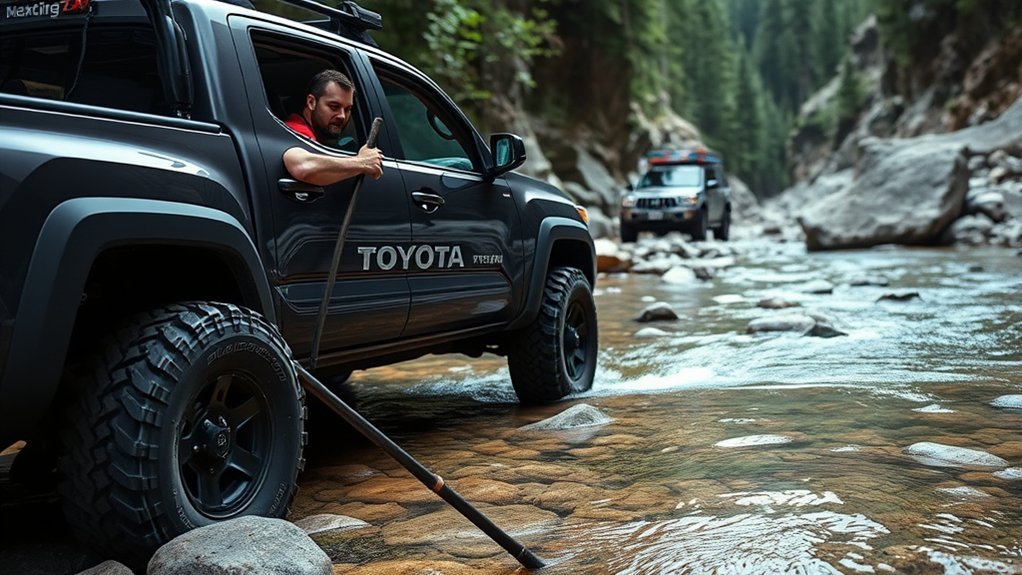
Before you cross, measure the water depth with a stick or by wading to confirm it stays within the Tacoma’s roughly 20–24 inch fording limit. Test the current by observing flow and feeling pressure on your legs or a pole—don’t attempt crossings with fast-moving water that can sweep the truck. Walk the substrate to locate rocks, holes, mud, or debris and factor recent weather that may have raised levels or hidden hazards.
Check Water Depth
How deep is the water and what will it do to your Tacoma? You’ll physically wade in to confirm depth stays within the Tacoma’s fording limit (typically 20–24 inches). Use disciplined crossing techniques and prioritize water safety: measure, observe, decide, act.
- Visualize depth against your bumper, hood, and air intake to judge safe passage.
- Note water clarity—muddy water can hide hazards and raise risk despite acceptable depth.
- Feel the bottom with your feet or a pole; a firm substrate supports traction and control.
- If depth approaches limits or you can’t confirm firmness, abort and seek a safer line.
You’re choosing freedom on your terms; don’t gamble the truck or your safety.
Test Current And Substrate
Wade in and test the channel to confirm it’s safe: use a marked pole or stick to measure depth and probe the bottom so you know whether the substrate is firm enough to support your Tacoma, then watch floating debris or hold the pole against the flow to judge current strength—fast-moving water or a soft, churned bed can overwhelm traction and steering even at otherwise acceptable depths. You’ll perform a deliberate current assessment: note speed by timed floats and feel lateral force on the pole. Probe for substrate stability, checking for soft silt, deep holes, or hidden obstacles that can trap tires. Reassess after weather changes. If depth, flow, or substrate stability are uncertain, choose another route—freedom on the trail depends on safe, informed choices.
Step‑By‑Step Crossing: Still Water Technique
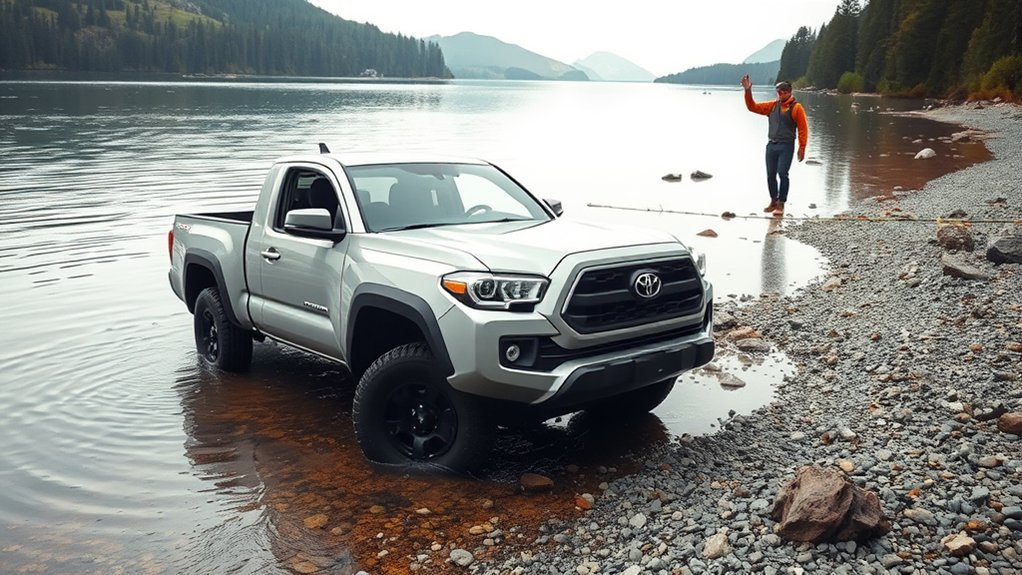
Start by stepping into the water and evaluating depth, current, and bottom composition so you can confirm the level stays below your Tacoma’s safe fording depth (generally 20–24 inches); engage 4WD and low range, plan a straight-line path, and keep your speed steady to form a bow wave while windows remain down and doors open for a rapid exit if needed. You’ll move deliberately, prioritizing crossing safety and confident water navigation. Before you drive, wade to confirm substrate firmness and depth. Engage four-wheel drive and low gearing to control momentum. Maintain steady throttle to hold the bow wave; don’t accelerate or brake abruptly. After you clear the far bank, pull aside and inspect driveline fluids and differentials for water intrusion. If you detect contamination, stop and arrange service. You’re freeing yourself to traverse predictable water crossings with respect for risk, systematic checks, and the authority to exit immediately if conditions change.
Wade first, confirm depth and firmness, engage 4WD low, hold a steady throttle, then inspect for water intrusion.
- Confirm depth and bottom
- Engage 4WD/low range
- Hold steady throttle
- Inspect fluids immediately
Handling Crossings With Current: Angle, Throttle, and Steering
When crossing moving water, angle your Tacoma slightly downstream so the current helps stabilize the truck and reduces the chance of being swept broadside. Hold a steady throttle to form a consistent bow wave and keep water from climbing into the engine bay. Keep four-wheel drive in low range and be ready to correct steering if the current starts to yaw the vehicle.
Angle Into The Current
If a current’s pushing across your path, angle the Tacoma slightly upstream so the flow hits the vehicle at a controlled bias rather than broadside. You’ll reduce lateral force, preserve vehicle stability, and keep water flow predictable around the chassis. Stay deliberate: use four-wheel drive and low range, monitor depth, and make measured steering corrections.
- Point nose upstream a few degrees to counter lateral push.
- Hold a constant heading to avoid abrupt yaw from surges.
- Watch water flow patterns for eddies that could unsettle you.
- Be ready to adjust angle slowly as conditions change.
This methodical approach keeps you safe and free to move—calculated control that empowers your path through current without surrendering momentum.
Steady Throttle Control
Having angled upstream to counter lateral push, shift focus to maintaining a steady throttle to generate a firm bow wave and keep water away from the intake and electricals. You’ll use precise throttle management to hold a consistent speed; avoid sudden acceleration or braking that can suck water toward vulnerable components or stall the engine. Angle slightly downstream as planned, then steer straight using controlled steering techniques to track a direct line and minimize sideways drift. Continuously monitor position, making small steering corrections to stay on course and out of deeper channels. This disciplined approach preserves vehicle control and gives you freedom to navigate confidently—steady inputs, clear intent, and respect for the current protect you and your Tacoma.
If Your Tacoma Stalls or Ingests Water: Immediate Steps (Do Not Restart)
Because stalling in rising water can let liquid into the intake and electronics, don’t restart the engine—stay calm, keep doors unlatched and windows down, and quickly assess whether you can safely exit. You want freedom from danger, not a ruined powertrain; water ingestion risks immediate engine damage. Move deliberately:
- Look outward: judge current depth, flow, and nearby high ground.
- Prioritize escape: if water is rising or moving fast, exit toward safety now.
- Stay ready: keep doors unfastened and windows down to leave quickly if needed.
- Preserve evidence: once safe, document conditions and vehicle state for a mechanic.
After you reach safety, avoid restarting. Check for water in engine oil and transmission fluid only after the vehicle is secured. If contamination is suspected or you saw water enter the cabin or intake, consult a qualified mechanic to evaluate and repair. Act methodically—your calm, informed choices protect you and prevent catastrophic vehicle harm.
Set a Buddy Plan and Pack Recovery Gear Before You Cross
After you’re safely away from a stalled Tacoma, set up a buddy plan and pack recovery gear before attempting any water crossing so you’re prepared rather than reacting under pressure. You’ll insist on at least one other vehicle and use a strict buddy system: assign positions, communication methods, and a clear turnaround point if conditions worsen. Confirm both rigs have rated recovery points and that your winch, shackles, and recovery straps match the Tacoma’s weight.
Brief everyone on recovery protocols before you enter the water. Define who operates the winch, who manages anchors, and who watches for changing currents or vehicle movement. Pack a first-aid kit and a compact tool kit, and carry waterproof communication devices. Know your Tacoma’s fording depth and never exceed it.
This methodical prep gives you freedom to explore while minimizing risk: you’re not gambling with isolation, you’re choosing deliberate, repeatable steps that protect people and vehicles.
Post‑Crossing Inspection: Engine, Drivetrain, and Electronics Checklist
When you come out of the water, stop and perform a systematic post‑crossing inspection of the engine, drivetrain, and electronics so you catch moisture or contamination early; check engine oil for milky discoloration, pull the differential fill plugs to inspect for watered‑down gear oil, and visually scan electrical connectors and exposed modules for dampness or corrosion. You want clear answers quickly to maintain crossing safety and preserve your freedom to explore.
- Check engine oil and air intake seals (including snorkel) for water ingress and milky discoloration.
- Pull differential fill plugs to sample gear oil; look for diluted, cloudy fluid indicating moisture detection.
- Inspect transfer case seals, driveshafts, and visible bearings for water or rust; dry and note affected parts.
- Visually check all electrical connectors, modules, and exposed wiring for dampness, corrosion, or trapped debris.
If you find contamination, isolate the vehicle, document issues, and address them before your next run. Act fast—liberation depends on reliability.
Mods, Maintenance, and Driving Habits to Prevent Long‑Term Water Damage
Those post‑crossing checks give you immediate answers, but preventing long‑term water damage starts with the right mods, disciplined maintenance, and deliberate driving habits. Fit a rear differential breather mod so pressurized water can’t be sucked into gears; factory breathers can fail under force. Add skid plates to shield the undercarriage and critical components from rocks and submerged hazards. Consider a snorkel and seal the air intake system—inspect seals routinely so you don’t invite contamination. Upgrade to all‑terrain tires to improve traction and reduce wheelspin, which keeps water intrusion risks lower. After any axle submersion, monitor differential fluids for milky discoloration and change them promptly to avoid catastrophic failures. Drive deliberately: enter slow, maintain steady momentum, avoid sudden throttle or steering inputs, and pick lines that minimize depth and turbulence. These vehicle upgrades, inspections, and habits extend service life, reduce corrosion, and free you to explore without compromising safety.
Frequently Asked Questions
How Deep of Water Can a Tacoma Drive Through?
You can typically drive a Tacoma through about 28 inches of water depth, but you’ll prioritize driving safety: assess current, maintain steady speed, use breathers/snorkel upgrades, and avoid deeper crossings that risk engine or drivetrain damage.
How Many Inches of Water Is Safe to Drive Through?
Generally, you can safely drive through 20–24 inches of water depth, or up to 31 inches with a snorkel; assess vehicle safety, current, and bottom conditions, and consult your model’s specs before attempting any crossing.
Do You Need to Stop to Switch to 4 Wheel Drive in Tacoma?
You don’t usually need to stop to switch to 4WD; you can perform 4WD engagement on the move in many Tacomas. Stay methodical, check system specifics, and respect water hazards to keep your freedom and safety intact.
Conclusion
You’ve prepared, checked, and crossed with care; now inspect and maintain your Tacoma like a surgeon closing a wound. Don’t rush: drain, dry, and look for water in the airbox, transmission, differentials, and electrical connectors. Change fluids if contamination’s suspected, tighten fittings, and test systems before regular use. Log any issues, adjust driving habits, and install needed mods—these methodical steps keep you safe and keep your truck reliable for the next crossing.