To change the oil filter on your Toyota Tacoma, first gather essential tools like a Motive Tools MX 2320 socket, torque wrench, and new O-ring. Safely elevate the vehicle and remove the engine oil cap and dipstick. Unscrew the oil filter housing plug and remove the casing. Replace the O-ring, torque the housing to 18 foot-pounds, then fill with new oil. Make sure to inspect for leaks and check engine oil levels. Learn about maintenance tips to keep your Tacoma running smoothly.
Top Reasons to Change Your Tacoma’s Oil Filter Regularly

Changing your Tacoma’s oil filter regularly is essential for maintaining engine health. A clean oil filter enhances engine performance by effectively removing contaminants and debris from the oil circulation system. This process prevents wear and tear caused by dirty oil, ultimately extending your engine’s lifespan and avoiding costly repairs. Toyota recommends changing the oil filter every 10,000 miles, but opting for a change at 5,000 miles can provide extra protection.
Using a high-quality OEM Toyota oil filter guarantees compatibility and reliability, reducing the risk of leaks and maintaining ideal oil pressure. Additionally, regular oil filter changes contribute to better fuel efficiency; clean oil allows your engine to operate smoothly and efficiently. By committing to this simple maintenance task, you empower your Tacoma to perform at its best and enjoy a longer, healthier life on the road. Prioritize your oil filter changes to reveal your vehicle’s full potential.
Essential Tools for Your Oil Filter Change
To maintain your Tacoma’s engine performance, having the right tools for an oil filter change is essential. Here’s what you’ll need to guarantee a smooth process:
| Tool | Purpose |
|---|---|
| Motive Tools MX 2320 | Special socket for oil filter casing |
| 3/8 Extension | Helps access the oil filter housing plug |
| Torque Wrench | Tightens oil filter housing to 18 foot-pounds |
| New O-Ring | Prevents leaks when lubricated with oil |
| Funnel | Aids in pouring new oil without spills |
Make sure you’re aware of different oil filter types suited for your Tacoma. Regular maintenance frequency will keep your engine running efficiently. With the right tools at hand, changing your oil filter becomes a straightforward task that empowers you to take control of your vehicle’s health.
Preparing Your Tacoma for an Oil Change
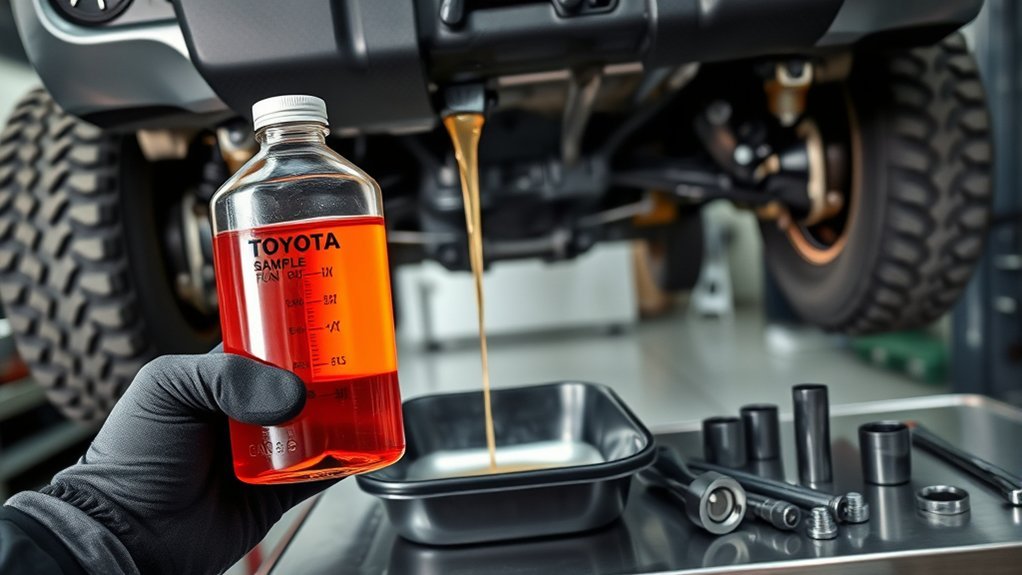
Before starting your oil change, make certain your Tacoma is safely elevated using custom 2×12 ramps for easy access. Gather essential tools, including a funnel, torque wrench, and the Motive Tools MX 2320 for the oil filter casing. Don’t forget to have your 5-quart container of zero W20 full synthetic oil and an OEM Toyota oil filter on hand.
Essential Tools Needed
Having the right tools at your disposal is crucial when preparing your Tacoma for an oil change. Start with a Motive Tools MX 2320 oil filter socket, priced around $26-$27, to easily remove the oil filter. You’ll also need a torque wrench to guarantee the oil filter housing is tightened to the recommended 18 foot-pounds. Gather various sockets, a funnel, and a 5-quart container of zero W20 full synthetic oil. Don’t forget a new OEM Toyota oil filter and a magnetic drain plug (M12 by P 1.25) for peak performance. Finally, have a crush washer ready for the oil drain bolt replacement to maintain a proper seal. These essential tools will streamline your maintenance intervals effectively.
Vehicle Safety First
Making certain your Tacoma is ready for an oil change involves several important safety measures. Start by parking on a level surface and engaging the parking brake to prevent any movement. Use custom 2×12 ramps for over three inches of lift, enhancing access to the oil pan and filter. Before you begin, gather all necessary tools and parts, including a funnel, torque wrench, and the Motive Tools MX 2320 for the oil filter casing; this streamlines your process. Don’t forget to wear protective gloves and eyewear as safety gear to guard against oil spills. Finally, always allow the engine to cool down before starting to prevent burns and make safer handling of components during your vehicle preparation.
Step-by-Step Guide to Removing the Oil Filter
To remove the oil filter on your Toyota Tacoma, start by taking off the engine oil cap and dipstick to allow airflow. Next, use a 3/8 extension to unscrew the oil filter housing plug located at the front of the motor. This step guarantees you can access the oil filter effectively. Employ the Motive Tools MX 2320 socket to carefully remove the oil filter casing; be prepared for oil to flow out during this process.
As you’re working with different oil filter types, make sure you follow your maintenance schedule for peak performance. After removing the old filter, replace the large O-ring in the oil filter housing with a new, lubricated O-ring for a proper seal. Finally, install the new filter and torque the oil filter housing to 18 foot-pounds to secure it in place and prevent any leaks.
Replace the O-Ring in the Oil Filter Housing
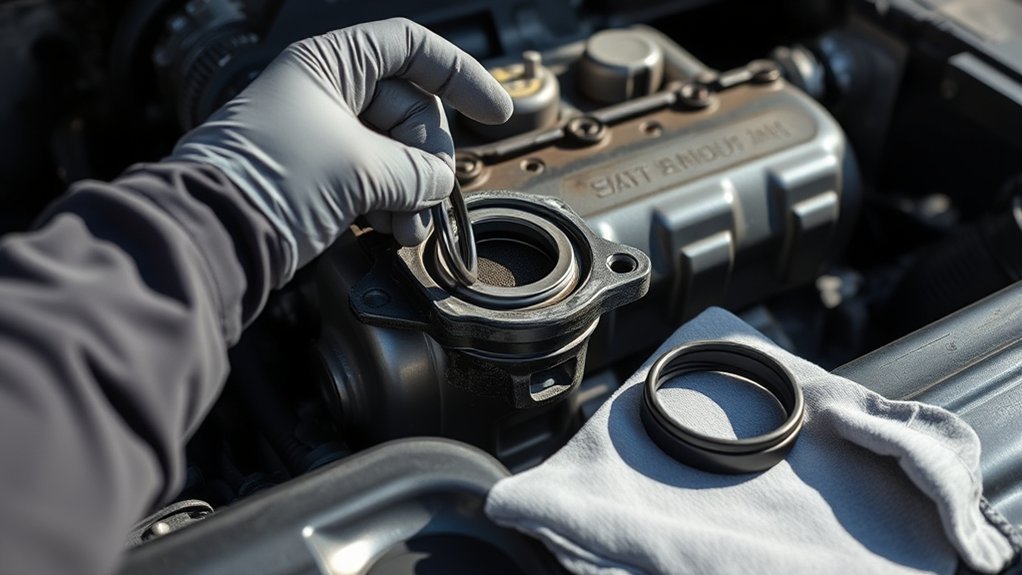
Replace the O-ring in the oil filter housing to maintain a proper seal and prevent leaks. The O-ring is critical; failing to replace it can lead to oil leaks, risking engine damage. Start by removing the old O-ring from the housing. Make sure the surface is clean and free from debris. Next, take your new O-ring and apply a small amount of engine oil to it using effective lubrication techniques. This not only eases installation but also helps create a better seal once the oil filter is reattached.
Once the O-ring is in place, reassemble the oil filter and properly torque the housing to 18 foot-pounds. This step is essential for securing the filter and guaranteeing peak performance. By following these guidelines, you guarantee the longevity of your engine while embracing the significant O-ring importance in your maintenance routine.
What to Inspect Post-Oil Filter Removal?
After you’ve removed the oil filter, it’s essential to inspect several components to confirm everything is in ideal condition. Start with an O-ring inspection; check the large O-ring for any signs of damage or wear, as a compromised seal can lead to leaks. Next, examine the oil filter mounting surface on the engine for debris. Remove any old gasket material or contaminants that could interfere with the new filter’s seal.
Don’t overlook the oil drain plug and crush washer; inspect them for wear or deformation and replace them if necessary to confirm a proper seal. Also, inspect the oil filter housing for cracks or leaks, which could indicate underlying issues. Finally, look for any metal shavings or sludge in the oil, as these could signal internal engine problems. Addressing these points will set you up for a successful oil filter installation.
Installing the New Oil Filter
Begin by ensuring the large O-ring in the oil filter housing is replaced with a new one, lubricating it with fresh engine oil for an effective seal. Before you proceed with filter installation, remove the engine oil cap and dipstick to allow airflow.
Next, use the Motive Tools MX 2320 socket to securely tighten the oil filter housing. Apply a torque of 18 foot-pounds, adhering to the specified torque specifications for ideal fit. After installing the oil filter, start the engine and check for any leaks around the oil filter housing to confirm a successful installation.
Here’s a quick reference table for your convenience:
| Step | Action |
|---|---|
| 1 | Replace large O-ring |
| 2 | Lubricate O-ring with engine oil |
| 3 | Remove oil cap and dipstick |
| 4 | Tighten filter housing to 18 ft-lbs |
| 5 | Start engine and check for leaks |
Filling Your Engine With New Oil After an Oil Change
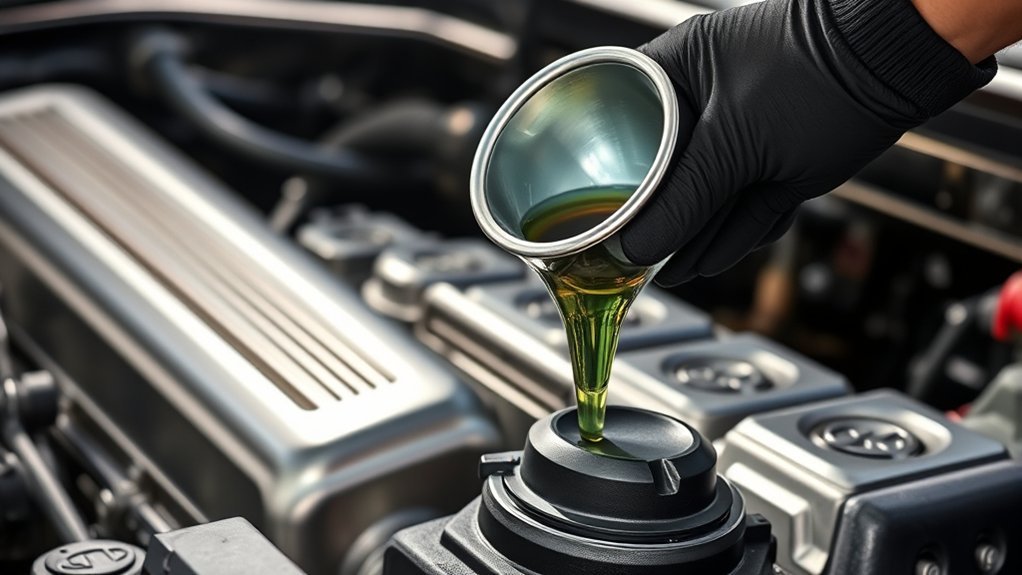
Once the new oil filter is securely installed and you’ve checked for any leaks, it’s time to fill your engine with fresh oil. For the third-gen Tacoma, pour one full 5-quart container of oil and add additional oil as necessary to reach the required 6.1 to 6.2 quarts. Use a funnel to prevent spills, ensuring a cleaner process.
When selecting oil, consider the appropriate oil viscosity for your climate and driving conditions, as well as any oil additives that may enhance performance.
After filling, start the engine and check for leaks around the oil filter housing and drain plug to confirm a proper seal. Remember to torque the oil drain plug to 30 foot-pounds and the oil filter assembly to 18 foot-pounds for safety. Finally, reset the maintenance light through your vehicle menu to keep track of your service intervals accurately.
Tips for Maintaining Your Tacoma Between Oil Changes
To keep your Tacoma running smoothly between oil changes, regularly check fluid levels like engine oil, coolant, and brake fluid. Monitor your tire pressure monthly, ensuring it meets the recommended PSI for peak performance. Establish a routine for visual inspections to catch any potential issues early.
Regular Fluid Checks
Regular fluid checks are crucial for maintaining your Toyota Tacoma’s performance and longevity. Start by checking your engine oil levels between changes; keep them within the ideal range for peak engine performance. Next, inspect the coolant reservoir to verify it’s at the recommended level, preventing overheating and guaranteeing efficient operation. Don’t overlook your brake fluid; low levels can indicate leaks or worn pads, jeopardizing safety. Additionally, monitor your transmission fluid’s level and color—clean and reddish fluid means healthy function. Finally, while not a fluid, checking tire pressure monthly complements your fluid maintenance routine, enhancing safety and fuel efficiency. By regularly evaluating these fluids, you’ll support your Tacoma’s engine longevity and overall reliability.
Tire Pressure Monitoring
Maintaining the correct tire pressure is essential for your Toyota Tacoma’s performance and safety. Check your tire pressure at least once a month and before long trips, aiming for the manufacturer-recommended PSI found in the driver’s side door jamb. Use a reliable digital tire pressure gauge for accurate readings, as under-inflated tires can decrease fuel efficiency and increase wear. Keep an eye on the Tire Pressure Monitoring System (TPMS) alerts; if the warning light activates, adjust your tire pressures immediately. Additionally, inspect tire tread depth using the penny test—if Lincoln’s head is visible, it’s time for new tires. Rotate your tires every 5,000 to 7,500 miles to promote even wear and extend their lifespan.
Visual Inspection Routine
Visual inspections are crucial for keeping your Tacoma in prime condition between oil changes. By performing these checks regularly, you can catch issues early and maintain peak oil condition. Here’s what to look for:
- Engine Oil Level: Use the dipstick to verify oil remains within the recommended range.
- Oil Filter Housing: Inspect for leaks that may require immediate attention or replacement.
- Oil Color and Consistency: Dark or gritty oil indicates it might be time for an oil change, regardless of mileage.
- Unusual Noises or Vibrations: Pay attention while the engine runs; these could signal problems with the oil system or other components.
Stay proactive, and your Tacoma will reward you with reliable performance.
Frequently Asked Questions
How Often Should I Change My Tacoma’s Oil Filter?
You should change your Tacoma’s oil filter every time you do an oil change, typically every 5,000 to 7,500 miles. Regular filter maintenance guarantees peak engine performance and prolongs your vehicle’s lifespan.
Can I Reuse the Old O-Ring During Installation?
You can’t reuse the old O-ring; it’s like trusting a withered branch to bear fruit again. Fresh O-ring materials guarantee a proper seal, extending your oil filter’s lifespan and keeping your engine free from troubles.
What Type of Oil Filter Should I Use?
You should use a high-quality oil filter compatible with your Toyota Tacoma. Look for filters designed for your engine type, considering oil filter types like cartridge or spin-on, ensuring peak performance and reliability in your vehicle.
Are There Any Warning Signs of a Failing Oil Filter?
Did you know that a failing oil filter can reduce engine efficiency by up to 30%? Watch for symptoms of failure like decreased oil pressure, strange noises, or dirty oil—these indicate your oil filter’s lifespan is nearing its end.
Can I Change the Oil Filter Without Changing the Oil?
Yes, you can change the oil filter without changing the oil, but it’s not ideal. For effective oil filter maintenance, consider pairing filter replacement with an oil change for maximum engine performance and longevity.
Conclusion
Changing your oil filter regularly can enhance your Tacoma’s performance and longevity. Did you know that a clean oil filter can improve engine efficiency by up to 10%? By following these steps and maintaining your vehicle between oil changes, you guarantee your Tacoma runs smoothly. Consistent care not only protects your engine but also helps you avoid costly repairs down the road. So, keep up with your maintenance to enjoy a reliable ride for years to come!