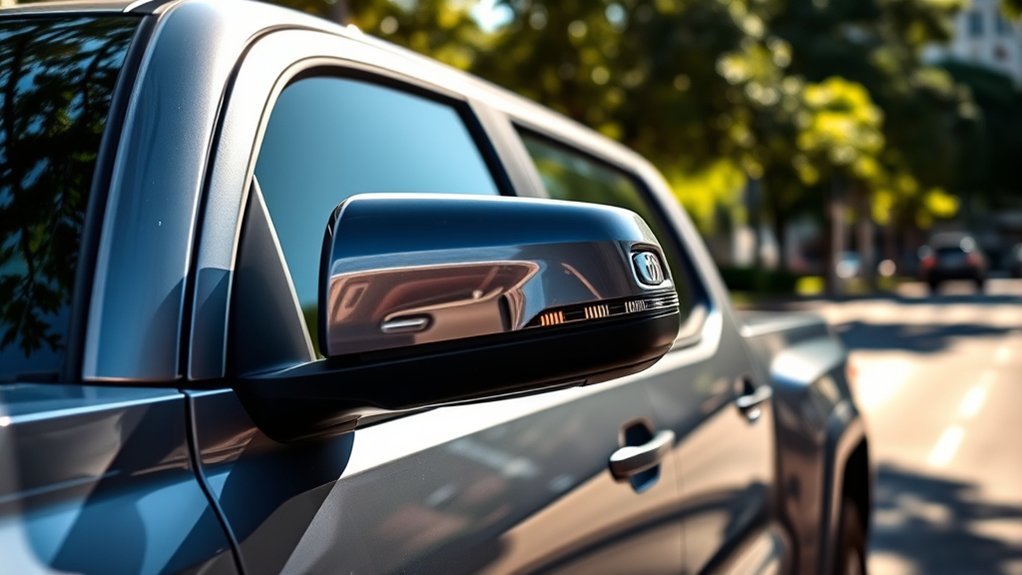
The Toyota Tacoma’s Blind Spot Monitor (BSM) actively enhances your driving safety by alerting you to vehicles in your blind spots. You’ll notice visual indicators in the side mirrors that light up when a vehicle is detected, especially during lane changes. This system works alongside the Rear Cross-Traffic Alert (RCTA), which warns you of approaching traffic while reversing. Keep exploring to discover how to maximize these features and guarantee peak performance while on the road.
What Is the Toyota Tacoma Blind Spot Monitor (BSM)?
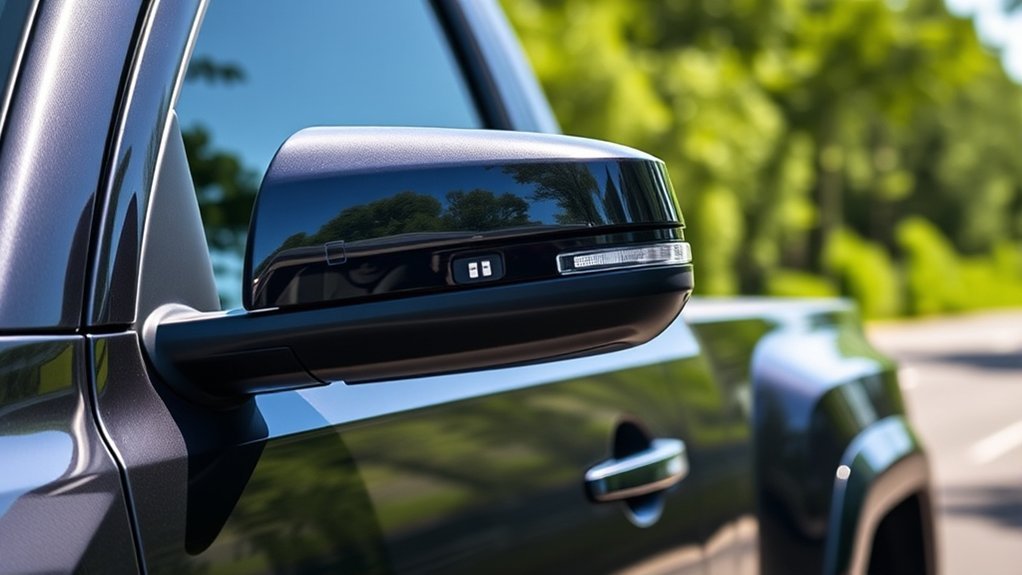
The Toyota Tacoma Blind Spot Monitor (BSM) is designed to keep you safe by alerting you to vehicles in your blind spots, making lane changes and merges less stressful. This advanced safety technology enhances your blind spot awareness, providing a visual cue through an illuminated indicator light in the side-view mirror when a vehicle enters your blind zone. When you activate your turn signal while a vehicle is detected, the indicator flashes, offering an additional warning of potential danger. You can easily activate or deactivate the BSM using a button on the dashboard, but keep in mind that turning it off also disables the Rear Cross-Traffic Alert (RCTA), which helps when backing up by detecting oncoming cross-traffic. By integrating this system into your driving experience, you empower yourself with the confidence to navigate safely, freeing you from the anxiety of hidden hazards on the road.
How Does the BSM Work to Enhance Safety?
The Blind Spot Monitor (BSM) enhances your safety by using visual alerts in the side-view mirrors to indicate when a vehicle enters your blind spot. When you signal a lane change, the system quickly flashes an indicator light if it detects a vehicle, giving you an immediate warning. However, it’s important to remember that environmental factors can impact its effectiveness, so regular system checks are essential for peak performance.
Visual Alerts Mechanism
A sophisticated visual alerts mechanism lies at the heart of the Toyota Tacoma’s Blind Spot Monitor (BSM), enhancing your awareness while driving. This system uses indicator lights in the side-view mirrors to provide essential visual warnings when vehicles enter your blind spot. Here’s how it boosts driver awareness:
- Indicator lights illuminate during startup for functionality checks.
- Alerts activate when a vehicle is detected in your blind spot.
- Flashing indicators signal when you engage your turn signal while a vehicle is nearby.
- Safety improves, reducing the risk of blind spot-related accidents during lane changes.
With this advanced technology, you can navigate the road with greater confidence, ensuring a safer driving experience each time you hit the road.
Turn Signal Integration
Integrating turn signal functionality with the Blind Spot Monitor (BSM) takes safety to another level in the Toyota Tacoma. When you activate your turn signal, the BSM kicks in, flashing an indicator light in your side-view mirror if a vehicle lurks in your blind spot. This combination considerably enhances driver awareness and provides an essential visual warning before you change lanes. With these turn signal benefits, you’re alerted to potential hazards, promoting safer driving practices. Regular system checks and your engagement are key to maintaining ideal performance, ensuring that this high-tech feature remains effective. By leveraging this integration, you reduce the risk of blind spot-related accidents, empowering you to drive with confidence.
Environmental Limitations Acknowledgment
While driving, knowing that your Blind Spot Monitor (BSM) is working effectively can greatly boost your confidence on the road. However, several environmental limitations can affect its performance:
- Heavy rain or fog can obscure sensor detection.
- Snow and ice may hinder visibility challenges, leading to missed alerts.
- Obstructions like larger vehicles can interfere with sensor calibration.
- Vehicles traveling at high speeds might fall outside the detection range.
To maintain peak performance, regularly check your BSM system. This guarantees that sensors remain accurate and functional, enhancing your safety during lane changes and merges. Staying aware of these limitations helps you make informed decisions, empowering you to drive confidently and safely.
What Does the Rear Cross-Traffic Alert (RCTA) Do?
Backing up can be tricky, especially when you can’t see what’s coming from the sides. That’s where the Rear Cross-Traffic Alert (RCTA) comes in. When your Toyota Tacoma is in reverse and traveling under five miles per hour, RCTA activates and keeps an eye out for oncoming vehicles approaching at speeds between 5 to 18 miles per hour from either side.
If it detects a vehicle, you’ll receive RCTA Alerts, including a warning chime and an indicator light on your dashboard. This system is designed to enhance safety by helping you avoid collisions while backing up. Effective RCTA Operation relies on your awareness and engagement, so regular system checks are essential for peak performance.
| Feature | Function | Benefits |
|---|---|---|
| Detection Range | 5 to 18 mph from either side | Prevents accidents |
| Alert Mechanism | Warning chime and dashboard indicator light | Immediate awareness |
| Activation Speed | Under 5 mph | Smooth reversing experience |
| Driver Engagement | Awareness and system checks | Guarantees peak functionality |
Top Safety Benefits of BSM and RCTA
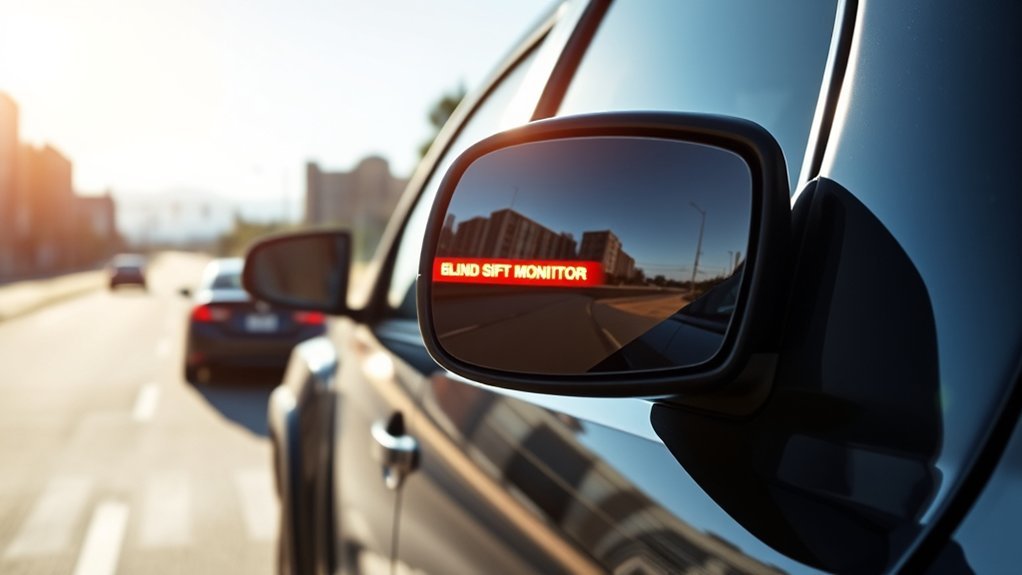
When you’re maneuvering busy roads, the combination of the Blind Spot Monitor (BSM) and Rear Cross-Traffic Alert (RCTA) can considerably enhance your safety. These advanced safety features are designed to boost your confidence while driving, making lane changes and reversing much safer.
Here are key benefits of BSM and RCTA:
- Lane Change Collision Reduction: BSM alerts you to vehicles in your blind spots, helping you avoid dangerous situations.
- Safe Reversing: RCTA detects oncoming traffic when you’re backing up, preventing potential accidents.
- Increased Situational Awareness: Both systems work together, enhancing your overall awareness of surrounding vehicles.
- Visual and Audible Alerts: You receive timely warnings, ensuring you’re alerted to hazards before they become critical.
What Situations May Limit BSM and RCTA Effectiveness?
While the Blind Spot Monitor (BSM) and Rear Cross-Traffic Alert (RCTA) enhance safety, certain situations can limit their effectiveness. Adverse weather conditions, like heavy rain or fog, can obscure sensor visibility, and low-lying vehicles may go undetected. Additionally, if approaching vehicles exceed the system’s speed detection range, your awareness remains essential for safe driving.
Environmental Conditions Impact
Environmental conditions can greatly impact the effectiveness of the Blind Spot Monitor (BSM) and Rear Cross-Traffic Alert (RCTA) systems in your Toyota Tacoma. Various factors can lead to sensor limitations and diminish performance:
- Heavy rain, fog, or snow can obscure sensors and limit visibility.
- Low light conditions, like nighttime driving, impair detection capabilities.
- Large vehicles, such as trucks or buses, may obstruct sensors, causing missed detections.
- Tight spaces or obstacles, like fences or walls, can interfere with RCTA functionality.
Additionally, dirt, ice, or debris covering the sensors can hinder their operation. Regularly cleaning these areas guarantees that your systems function effectively, keeping you and others safe on the road.
Vehicle Size and Speed
The effectiveness of the Blind Spot Monitor (BSM) and Rear Cross-Traffic Alert (RCTA) systems can be compromised by the size and speed of nearby vehicles. Smaller or low-profile objects often go undetected due to their height and position relative to the Tacoma. Additionally, these systems are optimized for detecting vehicles traveling between 5 to 18 miles per hour, leaving faster-moving traffic at risk of being missed. If you’re towing or carrying heavy cargo, the Tacoma’s increased height and altered weight distribution can further affect sensor sensitivity, limiting detection range. Remember, while BSM and RCTA enhance safety, they can’t replace your vigilance. Always stay aware of your surroundings for a safer driving experience.
Activating and Deactivating the BSM System
Activating and deactivating the Blind Spot Monitor (BSM) system in your Toyota Tacoma is a straightforward process that enhances your driving safety. Here’s how you can easily manage the BSM:
- Locate the BSM button on your dashboard and press it to activate the system.
- Look for the indicator that lights up in your side-view mirror, confirming BSM is operational.
- Listen for the chime, which further assures you that the system is ready to assist.
- To deactivate the BSM, simply press the BSM button again, which will also disable the rear cross-traffic alert feature.
When activated, the BSM will illuminate an indicator whenever a vehicle enters your blind spot. If you use your turn signal while a vehicle is detected, the indicator will flash, providing an extra layer of warning. Embrace these BSM activation methods and deactivation procedures for safer driving!
Maintaining Your BSM for Optimal Performance
To guarantee your Toyota Tacoma’s Blind Spot Monitor (BSM) operates at its best, regular maintenance is key. Start by checking the BSM indicator lights in your side-view mirrors during initial system checks to confirm everything’s functioning correctly. Keeping the sensors and cameras clean is vital; dirt or debris can seriously impair detection accuracy. Make it a habit to verify that the BSM button is activated, as deactivating it also disables the rear cross-traffic alert (RCTA) feature. Be mindful of environmental conditions like heavy rain or fog, which can affect the BSM’s performance. Finally, consult your vehicle’s manual for recommended maintenance schedules and procedures. By prioritizing sensor maintenance and following these steps, you’ll enhance your BSM’s effectiveness, assuring a safer driving experience. Your Tacoma deserves the best—so give it the care it needs!
How BSM and RCTA Boost Driving Confidence
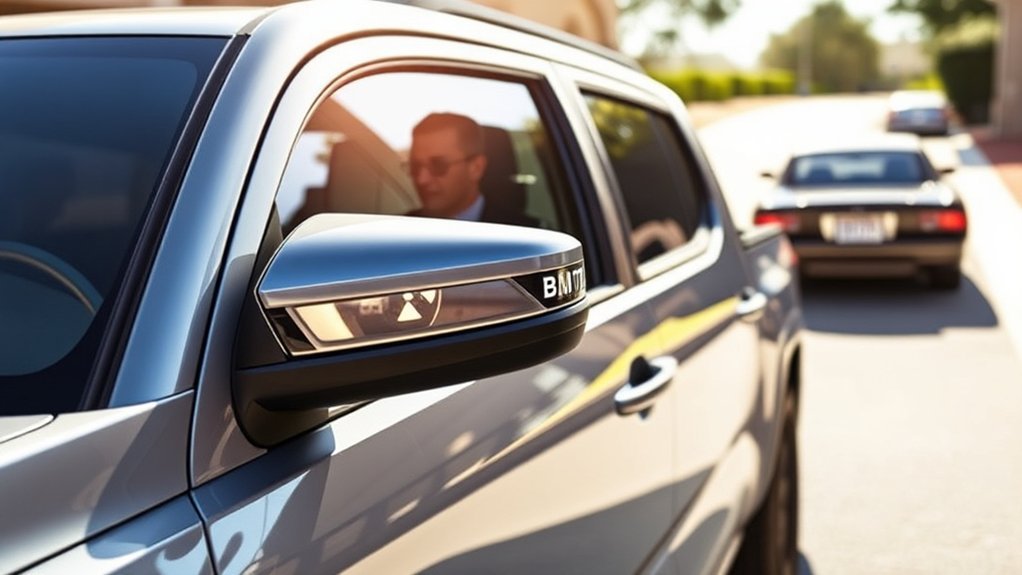
Blind Spot Monitor (BSM) and Rear Cross-Traffic Alert (RCTA) systems work together to substantially boost your driving confidence. By enhancing your situational awareness, these technologies reshape driver psychology, allowing you to navigate more freely and securely.
Here’s how BSM and RCTA contribute to confidence building:
- Visual Alerts: BSM alerts you with flashing lights in the side-view mirrors when a vehicle enters your blind spot.
- Signal Integration: When you activate your turn signal, BSM reinforces your awareness by highlighting potential hazards.
- Reverse Safety: RCTA detects oncoming traffic while you’re backing up, operating effectively at speeds of 5 to 18 mph.
- Accident Reduction: Together, these systems considerably lower the chances of blind spot-related collisions.
With BSM and RCTA, you’re empowered to make maneuvers with assurance, transforming your driving experience into one of liberation and confidence.
Common Misconceptions About Blind Spot Monitoring Systems
While many drivers embrace Blind Spot Monitoring Systems (BSM) as a safety solution, a number of misconceptions can lead to misunderstandings about their capabilities. One common belief is that BSM can detect all vehicles in blind spots, but its effectiveness often hinges on environmental conditions and vehicle types. You might also think BSM eliminates the need for shoulder checks, but it’s essential to maintain these for complete situational awareness. Some users assume BSM is always active, yet it can be deactivated, which also disables the Rear Cross-Traffic Alert (RCTA). Importantly, BSM doesn’t prevent accidents; it merely enhances your awareness and demands your engagement. Finally, the BSM indicators in side-view mirrors only activate when a vehicle is detected while changing lanes, not at all speeds. Understanding these safety misconceptions can help align your driver expectations with the true capabilities of BSM.
Frequently Asked Questions
How Does a Toyota Blind Spot Monitor Work?
A Toyota’s Blind Spot Monitor uses advanced technology to detect vehicles in your blind spots. When it senses a vehicle, it activates safety features like illuminated indicators, helping you make safer lane changes.
What Is the Blind Spot Monitor Button on a Toyota Tacoma?
The blind spot monitor button in your Tacoma enhances safety by activating alerts for vehicles in your blind spots. This feature empowers you to drive confidently, making the most of Tacoma’s advanced safety technology.
Can BSM Be Temporarily Disabled?
Yes, you can temporarily disable the BSM like flipping a light switch. Adjusting to your driver preferences enhances control, but remember, without it, you must stay vigilant for a safe driving experience.
Conclusion
In the ever-evolving landscape of driving safety, the Toyota Tacoma’s Blind Spot Monitor and Rear Cross-Traffic Alert act as your vigilant co-pilots, scanning the road like watchful sentinels. They elevate your awareness, ensuring you navigate with confidence through the chaos of traffic. By understanding and maintaining these systems, you’re not just driving—you’re embracing a shield of protection, steering through life’s twists and turns with a newfound sense of security. Trust in the tech, and drive with peace of mind.