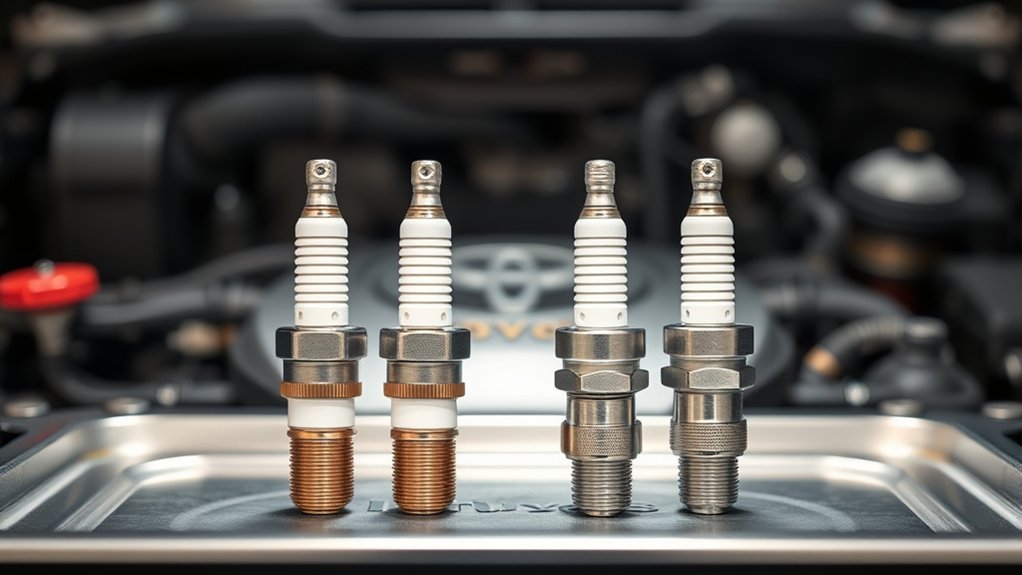
You need the right spark plug material and part number for your Tacoma to keep power, efficiency, and service intervals ideal. Pre‑2005 models use copper, some 2000s fours used platinum, and most 2005+ Tacomas use iridium (up to ~100k miles); ruthenium is a high‑end option. Match plugs to engine code and OEM Denso/NGK numbers, check gap and torque, and inspect coils. Keep one brand per set to avoid misfires, and continue for specific fitments and tips.
Quick Answer: The Right Spark Plugs for Your Tacoma
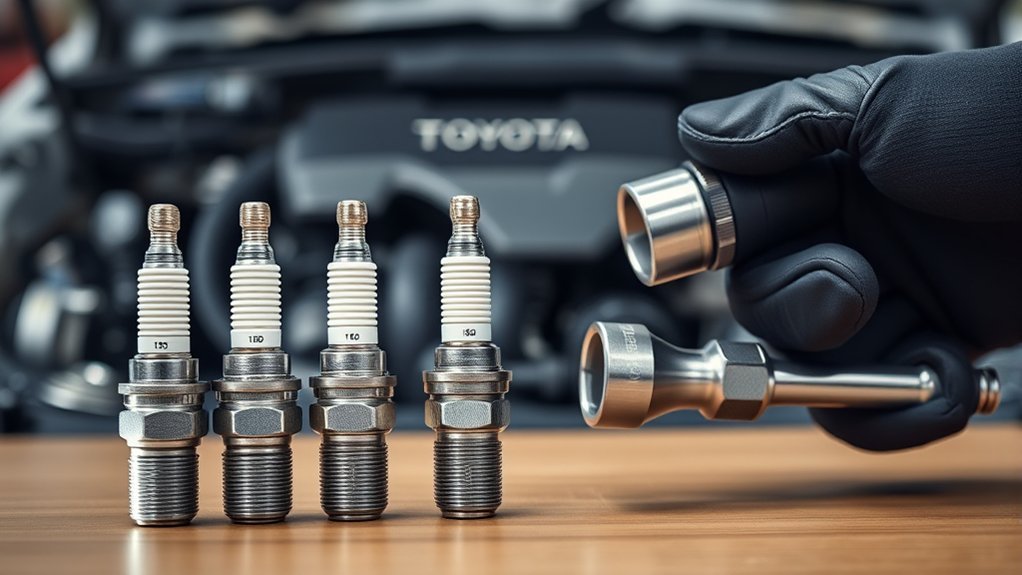
One clear rule: for 2005-and-newer Tacomas use iridium plugs for longest life (up to ~100,000 miles), while pre-2005 models typically use copper-core plugs with roughly a 30,000-mile service interval. You’ll choose iridium for longevity and stability, copper when OEM fitment or cost dictates for older engines. Use Denso or NGK; the 2017 OEM Denso is #90919-01263 (FK20HBR8), and matching OEM specs matters if you mix brands. Always verify the factory pre-gapped gap—incorrect spacing kills efficiency and can mask ignition faults. For spark plug maintenance, inspect electrodes, ceramic, and torque to spec; replace based on wear or symptoms rather than arbitrary mileage if you want control. If you’re pursuing performance upgrades, pick plugs that support ignition timing and boost changes, and keep consistent brand/spec choices to avoid cross-compatibility issues. This keeps your Tacoma reliable, responsive, and ready for independent modification.
Spark Plug Types Used in Tacomas (Copper, Platinum, Iridium, Ruthenium)
If you’re maintaining or upgrading a Tacoma, know that four main electrode materials—copper, platinum, iridium, and ruthenium—cover virtually all factory and aftermarket options, each chosen for a specific balance of cost, longevity, and ignition performance. You’ll pick based on lifespan needs and desired spark plug performance. Follow maintenance tips to keep any choice reliable.
- Copper: economical, used in pre-2005 Tacomas, ~30,000-mile life; replace frequently to preserve efficiency.
- Platinum: common in some 2000s four-cylinder models; better durability than copper, improved stability under varied conditions.
- Iridium: standard from 2005 onward; up to 100,000 miles, best tradeoff of longevity and fuel-efficient ignition.
- Ruthenium: high-performance alternative to iridium; long life and strong ignition, though less common.
Stick to one brand where possible for consistency. Choose the material that frees you from frequent service while matching your performance priorities.
Which Plugs for Your Tacoma: Year, Engine Code, and OEM Part Numbers
Check your Tacoma’s year and engine code (for example 2GR‑FKS) before ordering plugs so you match the correct heat range and OEM part number. For 2016–2023 3.5L V6 models use Denso 90919‑01263 (FK20HBR8) rated for 100,000‑mile service, while older pre‑2005 trucks typically use copper cores and 2005+ models need iridium-type plugs. Also confirm the specified gap and avoid mixing brands—stick to Denso or NGK equivalents to prevent misfires (FK20HBR11 can misfire in some 2018 Sport V6 applications without gap changes).
Year And Engine Match
When matching plugs to your Tacoma, start by confirming the model year and engine code (for example, 2GR-FKS) so you buy the exact OEM type required; a 2017 3.5L V6, for instance, uses Denso #90919-01263 (FK20HBR8), while pre-2005 vehicles typically took copper cores and many post-2005 models use long-life iridium plugs rated up to 100,000 miles. You’ll verify engine compatibility before spark plug installation to avoid misfires or reduced efficiency. Match materials and service intervals to free yourself from frequent shop visits.
- Pre-2005: copper cores, ~30k mile interval.
- 2000s 4-cyl: some platinum variants for durability.
- Post-2005: iridium, up to 100k miles.
- Brand consistency: stick with Denso or NGK.
OEM Part Number Guide
Start by identifying your Tacoma’s model year and exact engine code (for example, 2GR-FKS) so you can match the OEM part number to the correct plug type; a 2017 3.5L V6 uses Denso #90919-01263 (FK20HBR8) and later models generally call for iridium plugs rated up to 100k miles, while pre-2005 engines use copper-core plugs with ~30k-mile intervals. Check OEM specifications against your engine code before ordering—mismatches reduce performance and waste resources. Note some Tacomas use different plugs per bank (Bank 1: Denso K20HR-U11; Bank 2: NGK LFR6C11) so confirm bank assignments. Follow OEM recommendations to maximize Spark plug longevity and maintain liberation from frequent replacements; verify gaps and part numbers from dealer or parts catalog.
Gap And Heat Range
Although plug choice varies by year and engine code, you’ll always need to match both gap and heat range to the OEM spec for reliable performance; check and set gaps, and confirm heat range, to preserve spark plug maintenance and engine performance. Use the correct plug type—iridium for post-2005, platinum or copper for older models—and verify factory pre-gapped plugs like FK20HBR8 at ~0.032″. Match heat range to avoid pre-ignition or fouling. Picture the steps:
- Remove plug, visually inspect electrode wear and deposits.
- Measure gap with a feeler gauge; adjust carefully if needed.
- Confirm heat range matches OEM spec for your year/engine code.
- Reinstall to torque spec, noting service interval (30k–100k).
Do this and reclaim control of reliability and freedom on the road.
Plug Materials: Lifespan, Heat Range, and Real-World Performance
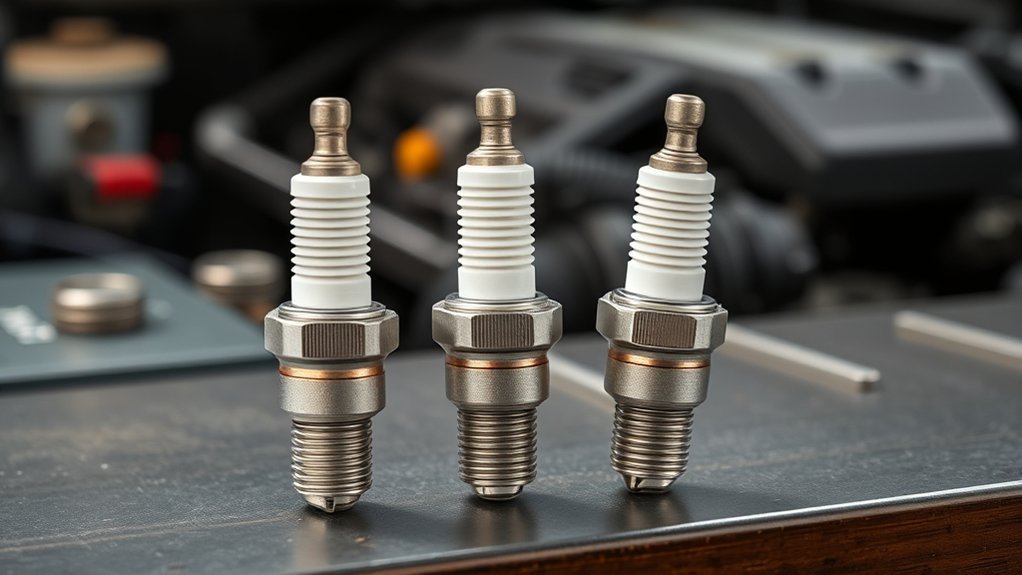
Because spark plug material directly affects service interval, thermal behavior, and on-road feel, you should match plug type and heat range to your Tacoma’s engine and factory specs. In a practical spark plug comparison, copper core plugs are budget-friendly and simple to source but only last ~30,000 miles; you’ll accept frequent swaps. Platinum sits mid‑range at ~60,000 miles, offering balanced durability and cost. Iridium, standard on post‑2005 Tacomas, delivers up to 100,000 miles with superior thermal stability and resistance to wear.
Heat range compatibility remains critical: stay within factory‑specified ranges to avoid pre‑ignition or fouling that erode efficiency and torque. Real‑world performance varies—many drivers praise iridium longevity, though switching materials can change idle smoothness and throttle response. For liberation-minded owners, choose plugs that minimize service constraints: follow maintenance tips, document outcomes, and favor parts from consistent, reputable brands to keep your Tacoma reliable and free from avoidable maintenance burdens.
Tacoma OEM Plugs: Denso vs NGK – Fit, Gaps, and Counterfeit Warnings
When you’re matching OEM spark plugs for a Tacoma, stick to the factory-approved Denso FK20HBR8 or NGK LFR6C11 and verify fitment, gap, and markings before installation. You’ll confirm engine-type compatibility and avoid cross-year mismatches. Denso’s spec typically lists a 0.32-inch gap; NGK gaps can vary, so measure each plug to prevent misfires. Use one brand per service to keep combustion consistent and reduce tuning drift.
Stick to factory-approved Denso FK20HBR8 or NGK LFR6C11; verify fitment, gap, markings, and use one brand per service.
- Visual: crisp lettering, proper part code stamped.
- Fit: thread engagement depth and seat type match.
- Gap: measured with feeler gauges, adjust within spec.
- Source: buy from authorized dealers to reduce counterfeit risk.
Practice routine spark plug maintenance—inspect electrodes, porcelain, and torque. For counterfeit detection, check packaging, compare markings, and verify seller reputation. Follow factory specs for longevity and liberated confidence under the hood.
Should You Stick With OEM Plugs or Upgrade? A Decision Flow
Curious whether you should stick with OEM plugs or step up to aftermarket options? Start by evaluating needs: if you drive daily under standard conditions, OEM Denso iridium plugs already deliver optimized combustion, compatibility, and up to 100,000 miles of spark plug longevity. They’re engineered for Tacoma engines, so they minimize risk and free you from tweaks.
If you pursue specific performance benefits — racing, forced induction, or nonstandard fuel — assess high-performance plugs that match heat range and specs. Don’t mix brands; inconsistent electrodes can cause uneven firing and misfires. For older Tacomas or budget builds, copper plugs work but require more frequent change (≈30,000 miles).
Prioritize maintenance and manufacturer intervals over chasing marginal gains. Choose one brand that meets OEM specs, and only upgrade when your use-case demands measurable improvements. That keeps your engine reliable and gives you the freedom to pursue true performance when it actually matters.
Buying & DIY: Pricing, Gap Check, Torque, Coil Care, and Rear-Plug Tips
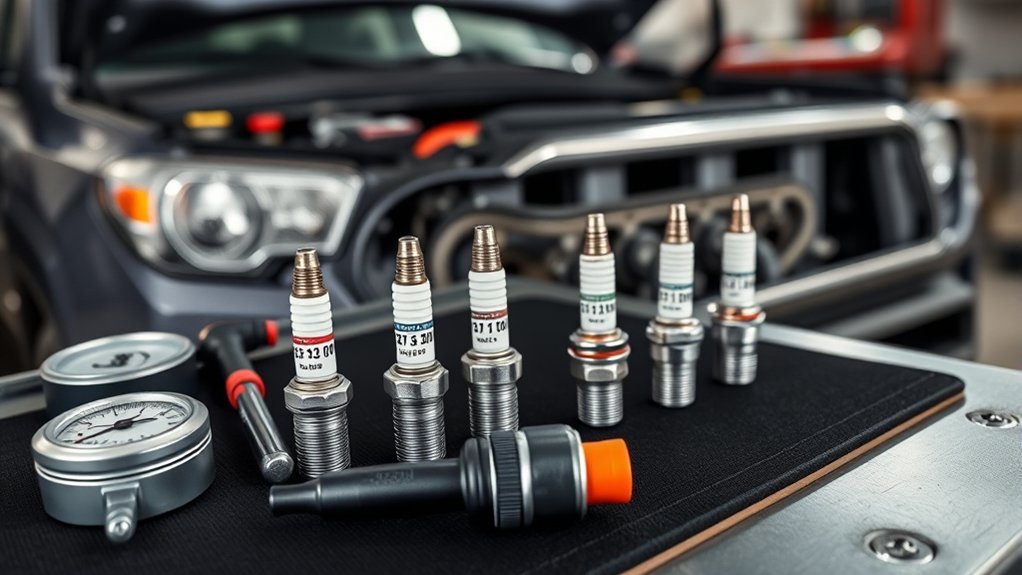
Expect to pay about $8–$25 per plug (roughly $50–$140 for a V6 set) depending on brand and seller, so buy a matched set to avoid cross-brand issues. Always check and adjust the gap to the engine spec and use a calibrated torque wrench when installing to protect the aluminum head, and inspect or swap coils if they show wear. Note that rear plugs on 2016+ Tacomas may need intake-manifold removal for proper access, so plan time and parts accordingly.
Pricing And Availability
Cost matters: individual spark plugs for a Toyota Tacoma typically run $8–$25 each, with a full V6 set costing about $50–$140 depending on brand and heat range. You’ll weigh cost against spark plug longevity and ignition performance when choosing replacements. Shop OEM or reputable aftermarket brands; availability varies by region and online retailers.
- Plan for tools: torque wrench and gap gauge — they protect threads and guarantee correct gap.
- Inspect coils during swap to avoid repeat labor and preserve ignition performance.
- Expect rear-plug access on 2016+ Tacomas to add time or require manifold removal.
- Buy a spare plug and gasket — small insurance for field repairs.
Buy smart, stay independent, and prioritize long-term reliability over short-term savings.
Gap, Torque & Coils
When you replace Tacoma spark plugs, set the gap to the specification for your model and plug type—typically between 0.032″ and 0.044″—and verify it with a feeler or digital gap gauge before installation. You’ll use a torque wrench to tighten plugs to the manufacturer’s spec—around 13 lb-ft for many Tacomas—to avoid sealing or thread damage. Check pricing per plug ($8–$25) and total cost for a V6 set ($50–$140) so you don’t overpay. Include spark plug maintenance in your schedule: clean seats, confirm correct heat range, and replace on mileage. Perform ignition coil inspection when changing plugs; worn coils cause misfires. Note rear plugs on 2016+ models may need intake removal—plan time and tools.
Frequently Asked Questions
What Kind of Spark Plugs Do Toyotas Use?
Toyotas use Denso or NGK OEM plugs—copper, platinum, or iridium—so you’ll choose based on spark plug materials and desired spark plug longevity; pick iridium for max life, verify gap and heat range to stay liberated.
Conclusion
So you’ve read spark plug hieroglyphics and still wonder if your Tacoma deserves iridium or sacrificial copper. Spoiler: your engine doesn’t care about brand prestige, just correct heat range, gap, and torque. Stick with OE-spec Denso/NGK or upgrade to iridium for longevity, but don’t heroically overtighten or reuse coils. Buy genuine parts, check gaps, torque to spec, and laugh as your truck keeps running perfectly while you fret about metallurgy.