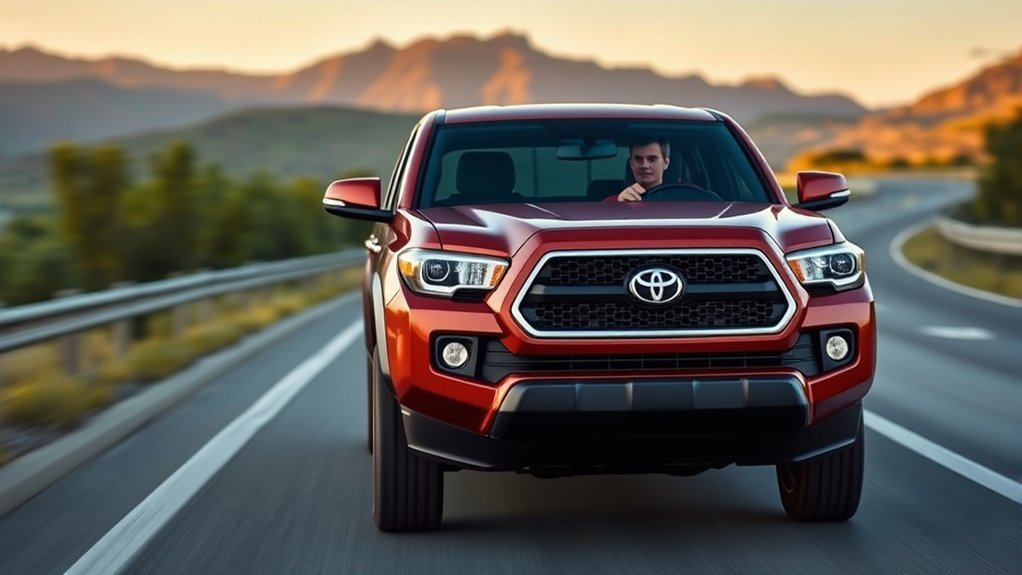
The Toyota Tacoma’s adaptive cruise control automatically adjusts your speed to maintain a safe distance from vehicles ahead, enhancing both safety and comfort on highways. To activate, simply set your desired speed and let the system manage adjustments based on traffic conditions. You can customize following distances for ideal comfort. While it’s great for steady traffic, it’s essential to be ready for manual control. Stick around to uncover tips for maximizing your experience with this feature.
Activating Adaptive Cruise Control
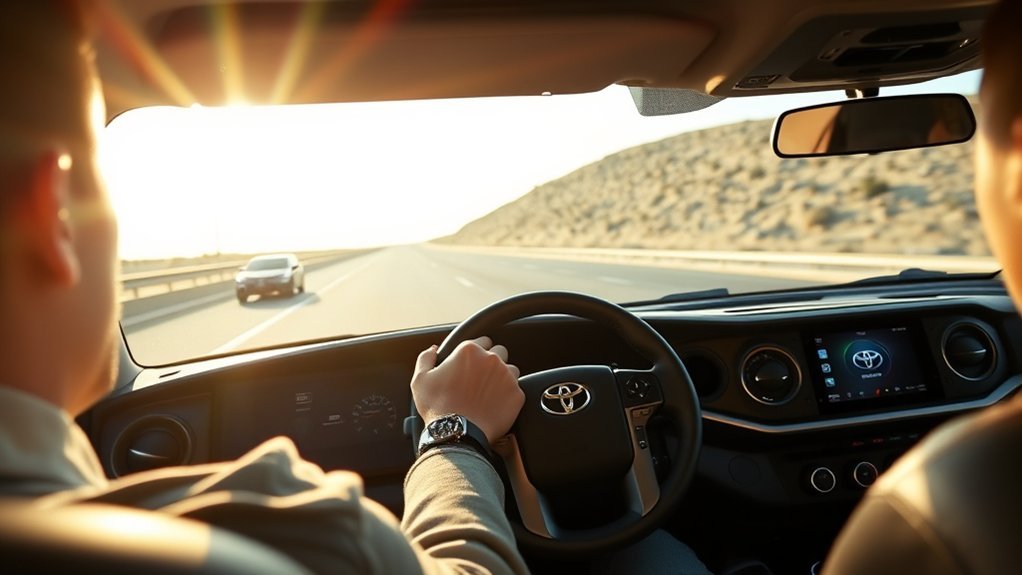
To activate Adaptive Cruise Control in your Toyota Tacoma, start by pressing the driving assist mode button to select the feature. Once you’ve initiated it, accelerate to your desired speed and then press the set button to lock in that speed. This system isn’t just about convenience; it brings valuable safety considerations. By continuously monitoring the distance to the vehicle ahead, it automatically adjusts your speed, maintaining a preset gap that enhances your driving experience.
User experiences reveal that this feature can greatly reduce fatigue on long trips, allowing for a more enjoyable journey. You can also adjust the distance setting, typically offering 1 to 4 options, tailoring the gap to your comfort level. If you prefer conventional speed management, simply press the mode button twice. This flexibility empowers you, making your drive in the Tacoma not just about transportation, but about liberation on the road.
How Does Adaptive Cruise Control Work?
Adaptive cruise control in your Toyota Tacoma leverages front radar cameras to monitor the distance to vehicles ahead, automatically adjusting your speed for safety. You can easily toggle between adaptive and conventional modes, tailoring your driving experience to your preferences. Understanding how to activate and customize these features enhances both comfort and safety on the road.
Key Features Explained
As you navigate the roads in a Toyota Tacoma, understanding how adaptive cruise control enhances your driving experience is essential. This advanced feature not only simplifies your drive but also prioritizes safety. Here are three key aspects:
- Distance Monitoring: The system uses front radar cameras to maintain a safe following distance, adjusting speed as traffic changes.
- Customizable Gaps: You can select from 1 to 4 car lengths, tailoring your experience to your comfort level.
- Seamless Shift: If you prefer manual control, just press the mode button twice to switch back to conventional cruise control.
These features collectively improve your user experience, making every journey smoother and more enjoyable, liberating you from constant speed adjustments.
Activation Process Overview
When you’re ready to engage the Toyota Tacoma’s Adaptive Cruise Control (ACC), the process is straightforward and intuitive. Start by pressing the driving assist mode button and accelerate to your desired speed. Once you’re at speed, press the set button to lock in your cruise control, enabling automatic regulation. The ACC system continuously monitors the distance to the vehicle ahead using radar cameras, adjusting your speed to maintain a safe preset gap. You can customize this distance with a dedicated button, choosing from options between 1 and 4. If you prefer manual control, simply press the mode button twice to switch to Conventional Cruise Control, allowing for manual speed adjustments without radar assistance.
Troubleshooting Common Problems With Adaptive Cruise Control
Troubleshooting common problems with your Tacoma’s adaptive cruise control can enhance your driving experience and safety. Here are some effective troubleshooting techniques to take into account:
- Check Speed: Verify you’re driving above the minimum speed, typically around 25 mph, to activate the system.
- Inspect Warning Lights: Look for any warning lights on your dashboard. Issues like a malfunctioning radar sensor or low battery can prevent proper function.
- Clean the Radar Area: Regularly clean the front radar camera to remove any debris or dirt obstructing its view, which can lead to inaccurate system responses.
If your adaptive cruise control unexpectedly disengages, it might be due to rapid changes in traffic or the system’s safety features. For specific error codes and troubleshooting steps, refer to your owner’s manual. By addressing these common issues, you can enjoy a smoother and safer driving experience.
Key Differences Between Adaptive and Standard Cruise Control
When comparing adaptive and standard cruise control, you’ll notice key differences in functionality and activation. Adaptive cruise control automatically adjusts your speed based on the distance to the vehicle ahead, while standard cruise control sticks to the speed you set. Understanding how each system operates can enhance your driving experience and safety on the road.
Functionality Comparison
While both adaptive and standard cruise control aim to enhance driving comfort, they differ considerably in functionality and user experience. Here are the key differences:
- Speed Adjustment: Adaptive cruise control automatically adjusts your speed based on the distance to the car ahead, enhancing safety benefits, while standard cruise control maintains a constant speed without considering traffic.
- Distance Settings: Adaptive systems typically offer multiple distance settings (1 to 4), allowing you to maintain a safe gap from the vehicle in front. Standard cruise control lacks this feature.
- Activation Flexibility: You can switch from adaptive to standard cruise control with a simple button press, providing flexibility based on driving conditions and personal preference, ultimately improving your user experience.
Activation Process Differences
Understanding the differences in activation processes between adaptive and standard cruise control can greatly enhance your driving experience. Adaptive cruise control offers unique activation nuances; simply press the driving assist mode button and accelerate to your desired speed. In contrast, standard cruise control requires you to manually hit the set button once you reach that speed.
Moreover, adaptive mode allows you to adjust the following distance from the vehicle ahead, enhancing comfort, while standard mode doesn’t offer this feature. Speed adjustments in adaptive mode happen automatically based on traffic, freeing you from constant changes. If you prefer more control, switching back to standard requires just two presses of the mode button. Tailoring your driving experience to your user preferences has never been easier.
How to Adjust Following Distance With Adaptive Cruise Control
Adjusting the following distance with Toyota’s Adaptive Cruise Control is straightforward and greatly enhances your driving experience. By fine-tuning your following distance settings, you not only improve comfort but also maximize safety benefits on the road. Here’s how to do it:
Adjusting Toyota’s Adaptive Cruise Control enhances comfort and safety, making your driving experience smoother and more enjoyable.
- Engage Adaptive Cruise Control: Accelerate to your desired speed and press the set button to activate the system.
- Select Following Distance: Use the distance setting button to cycle through the available options, usually ranging from 1 to 4 gaps. Choose the one that fits your comfort level.
- Monitor Adjustments: The system continuously adjusts your speed to maintain the selected distance to the vehicle ahead, ensuring a smooth driving experience.
Enhance Your Driving Experience With Adaptive Cruise Control
When you embrace Toyota Tacoma’s Adaptive Cruise Control, you’re not just enhancing your driving comfort; you’re also transforming how you navigate the roads. This innovative system uses front radar cameras to monitor the distance to the vehicle ahead, automatically adjusting your speed for a safe following distance. Imagine enjoying long highway drives without the constant need for manual speed adjustments. You can easily set your desired speed and customize the gap between 1 to 4 distance levels, optimizing your comfort benefits while enhancing highway efficiency.
If you prefer traditional speed management, switching to conventional cruise control is just a button press away. Overall, Adaptive Cruise Control simplifies your driving experience across various traffic conditions, allowing you to focus on the journey ahead while ensuring safety. By integrating this feature into your Tacoma, you’re liberating yourself from the stress of constant speed regulation, making every drive a more enjoyable experience.
Tips for Safe Use of Adaptive Cruise Control
Utilizing Adaptive Cruise Control effectively requires a few important considerations to secure a safe driving experience. Keeping these safety reminders in mind will enhance your confidence on the road:
- Adjust Following Distance: Always set a comfortable gap to maintain safety. This helps you react smoothly to sudden changes in traffic flow.
- Maintain Your Sensors: Regularly check your vehicle’s radar system and front sensors. Confirm they’re clean and unobstructed to optimize performance, especially in varying driving conditions.
- Know When to Use It: Adaptive cruise control is best suited for highways or open roads where traffic is steady. Stay prepared to take manual control in heavy traffic or unpredictable situations.
Frequently Asked Questions
Can Adaptive Cruise Control Be Used in Heavy Traffic?
Yes, adaptive cruise control can be used in heavy traffic conditions, but you need to maintain driver awareness. It helps manage speed, yet your attention’s essential to navigate stop-and-go situations safely and effectively.
Does Adaptive Cruise Control Work in Inclement Weather?
Adaptive cruise control can struggle in inclement weather, like a fish out of water. Safety concerns arise as sensors may falter under heavy rain or snow, so always adjust your driving to match the weather conditions.
Is Adaptive Cruise Control Available on All Tacoma Trims?
Adaptive cruise control isn’t available on all Tacoma trims. You’ll find it on higher trims, so check the trims comparison carefully to understand feature availability and choose the model that suits your driving needs best.
How Does Adaptive Cruise Control Affect Fuel Efficiency?
You’ve hit the nail on the head—adaptive cruise control can improve fuel consumption. By maintaining steady speeds, it encourages efficient driving habits, ultimately leading to better mileage and less frequent trips to the gas station.
Can I Override Adaptive Cruise Control at Any Time?
Yes, you can override adaptive cruise control at any time. This feature enhances driver control and safety, allowing you to adjust speed or braking as needed, ensuring you feel empowered behind the wheel.
Conclusion
Incorporating adaptive cruise control into your driving routine can elevate your experience considerably. Imagine cruising down a highway, feeling relaxed as your Tacoma effortlessly adjusts speed while maintaining a safe distance from the car ahead. It’s not just about convenience; it’s a blend of safety and technology designed to enhance your journey. By understanding its functionalities and using it wisely, you’ll find that driving becomes less stressful and more enjoyable, turning mundane trips into pleasant adventures.