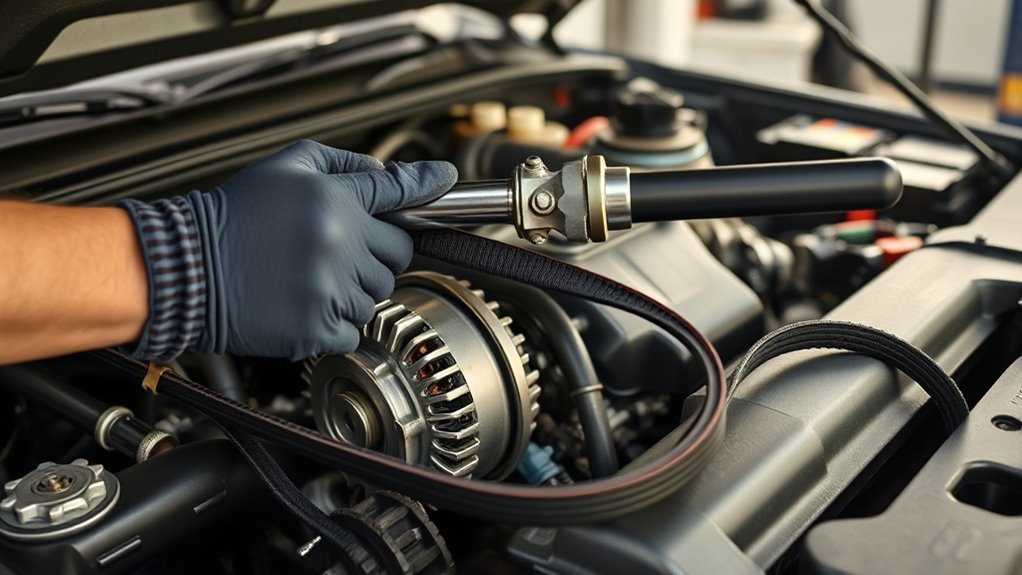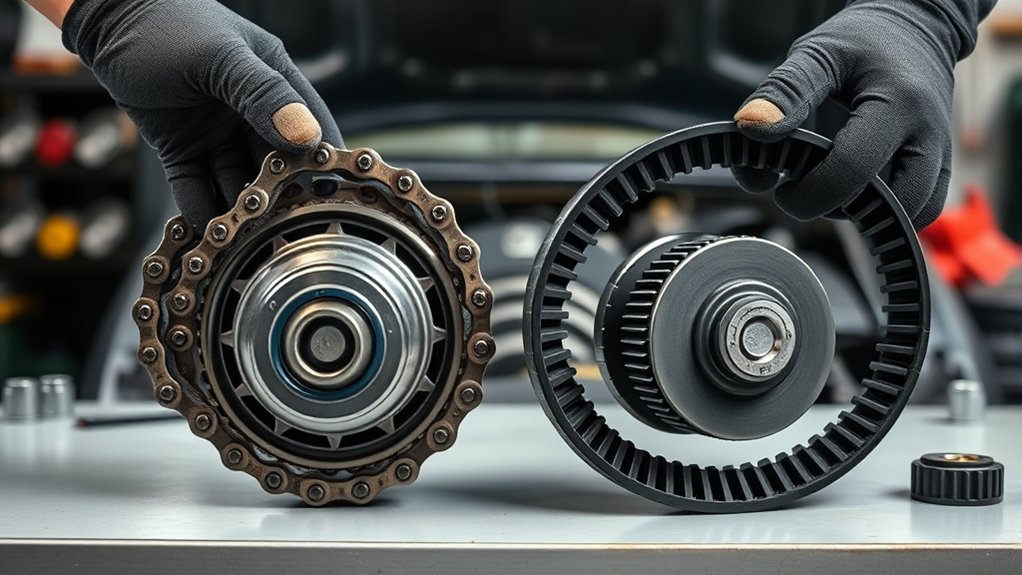
Your Tacoma uses a belt on the 2004 models and chains from 2005 onward, and you’ll want to treat them differently: belts are reinforced rubber, need replacement around 70–80k miles (replace water pump/tensioner too), and failures are predictable and relatively affordable; chains are metal, often last 150–200k or the engine’s life, but can rattle, stretch, and cause costly engine damage if neglected. Keep oil and inspections up, and scroll down to learn service details.
Tacoma Timing Systems: Which Engines Use a Belt or Chain
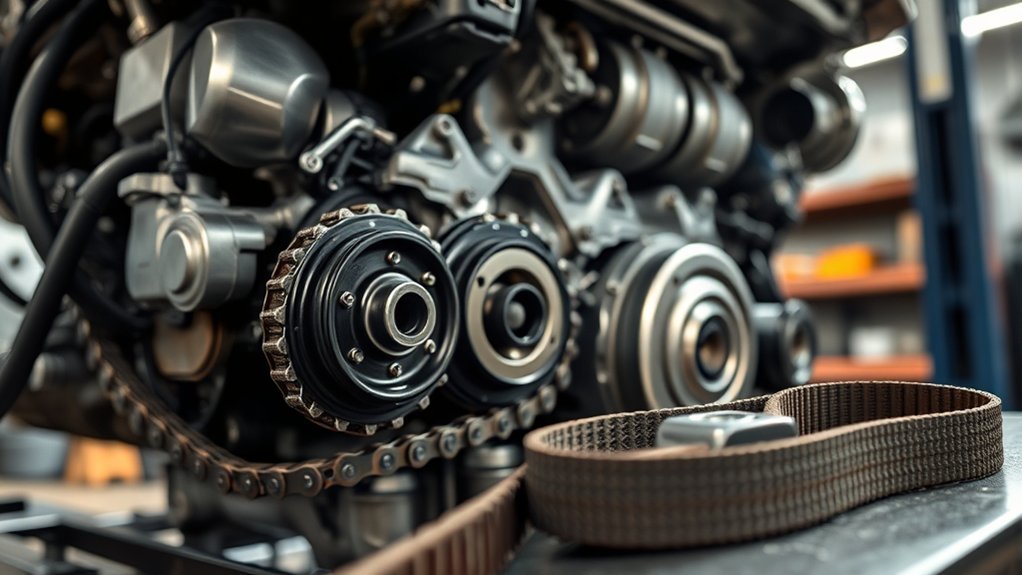
While Toyota used a timing belt on the 2004 Tacoma, it switched to a more durable timing chain from 2005 onward, so you’ll find belts on early models and chains on later ones (including the 2014 4.0L, which uses a chain designed to last the engine’s life). You’ll note belt specifications: reinforced rubber construction, external mounting, and recommended replacement roughly every 70,000–80,000 miles. Those specs demand scheduled inspection and proactive replacement to avoid catastrophic failure.
From 2005 forward, Toyota adopted metal timing chains located inside the engine. You’ll appreciate chain advantages: greater service life (commonly 150,000–200,000 miles or effectively the engine’s lifetime), superior durability under load, and reduced maintenance intervals. Chains depend on clean engine oil for lubrication, so your routine oil changes are critical to preserve timing components. Understand which engine you have, follow the respective maintenance protocols, and you’ll keep control over reliability and freedom from unexpected downtime.
Why Timing System Type Matters for Your Tacoma
Because the timing system governs valve-to-piston synchronization, knowing whether your Tacoma uses a belt or chain directly affects maintenance, cost, and engine risk. You’ll choose maintenance strategy, budget, and inspection frequency based on that choice. A 2004 Tacoma with a rubber timing belt demands scheduled replacement (70k–80k miles), a predictable expense and relatively simple service. Post-2005 Tacomas use an internal, oil‑lubricated timing chain intended to last the engine’s life, reducing routine replacement but raising stakes if failure occurs.
You’ll pay less up front for belt service (~$500) yet accept periodic downtime; chains can cost $1,000–$2,500+ to repair due to complexity. More critically, chain failure risks catastrophic engine damage in interference designs, so you’ll perform regular inspections of the chain, tensioner, and related components to protect engine performance. Knowing your timing system frees you to plan maintenance, preserve reliability, and avoid costly, liberation‑focused surprises.
Tacoma Timing Belt: Lifespan, Warning Signs, and Service Steps
If your Tacoma is the 2004 model, plan to replace the rubber timing belt at about 70,000–80,000 miles to avoid catastrophic failure; neglecting that interval raises the risk of belt breakage, engine misfires, and severe internal damage. You’ll perform timing belt maintenance to preserve engine integrity and free yourself from avoidable breakdowns. Watch for ticking noises, engine misfires, or oil leaks—these are actionable warning signs that demand service.
When you schedule timing belt replacement, have the water pump and tensioner replaced concurrently for reliability. A professional service typically requires 4–6 hours and costs about $500. Follow torque specs precisely—apply roughly 20 ft-lbs to the belt tensioner—to prevent slippage or premature wear.
- Replace belt at 70k–80k miles
- Monitor for ticking, misfires, oil leaks
- Replace water pump and tensioner together
- Expect 4–6 hour labor, ~$500 cost
- Torque tensioner to ~20 ft-lbs
Execute maintenance decisively to reclaim control over your vehicle’s longevity.
Tacoma Timing Chain: Lifespan, Noises/Stretch Symptoms, and Inspection Checklist
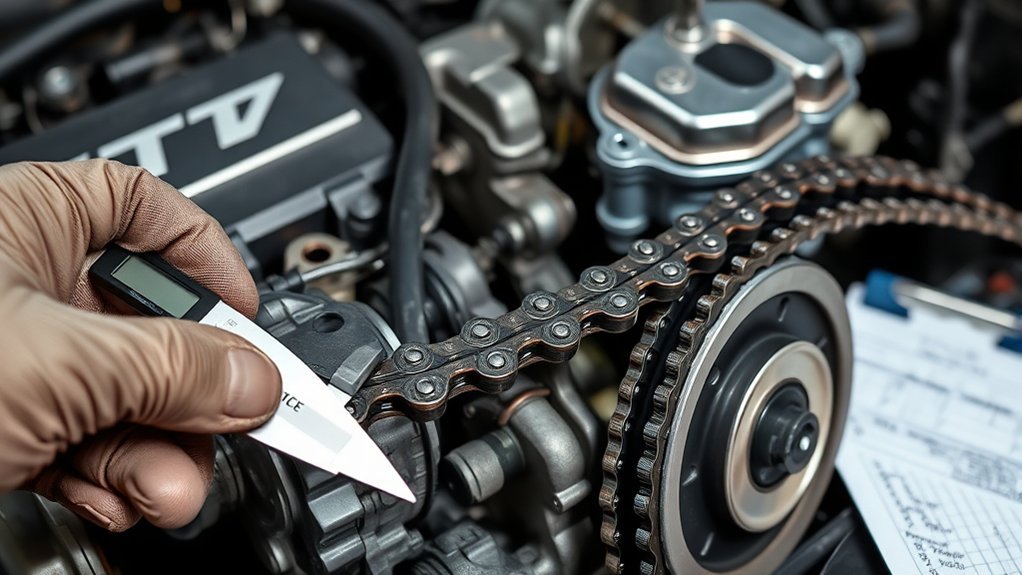
You can expect the Tacoma’s timing chain to last the engine’s lifetime—commonly 150,000–200,000 miles—so there’s no routine replacement interval from Toyota. Listen for rattling at startup, loss of acceleration, or a check engine light with timing codes, all of which indicate chain stretch or wear. After about 100,000 miles inspect the chain, tensioners, guides, and lubrication condition to catch stretch-related issues before they cause engine damage.
Expected Chain Lifespan
In most Tacomas the factory timing chain is built to last roughly 150,000–200,000 miles under normal driving, so you won’t usually see a scheduled replacement interval from the manufacturer. You should still plan inspections after about 100,000 miles to assess chain wear and identify replacement indicators early. A well-lubricated chain and intact tensioner/guides extend service life; poor oil maintenance accelerates degradation. Monitor service records, oil condition, and perform visual/tensioner checks during major services to avoid sudden failure.
- Inspect chain tensioner and guides at major intervals
- Check oil quality and change frequency
- Schedule visual inspection after 100,000 miles
- Note performance drops or irregular timing behavior
- Replace components proactively if wear is confirmed
Noise And Stretch Signs
Although Tacoma timing chains are built for longevity, you’ll start noticing specific noises and performance cues when the chain stretches or its tensioner and guides wear. You’ll hear rattling at startup or under acceleration — classic noise diagnosis signs pointing to reduced chain tension or failing tensioner. Inspect after 100,000 miles and more closely between 150,000–200,000 miles. Listen for intermittent slap, check oil condition, and confirm timing alignment to prevent misfires or engine damage. Use this quick checklist to guide action.
| Symptom | Likely Cause | Action |
|---|---|---|
| Rattling at startup | Chain stretch/tensioner | Inspect tensioner, measure slack |
| Noise under accel | Guide wear | Replace guides/tensioner |
| Poor performance | Misaligned timing | Verify timing, repair chain |
Cost Comparison: Timing Belt Service vs. Timing Chain Repair
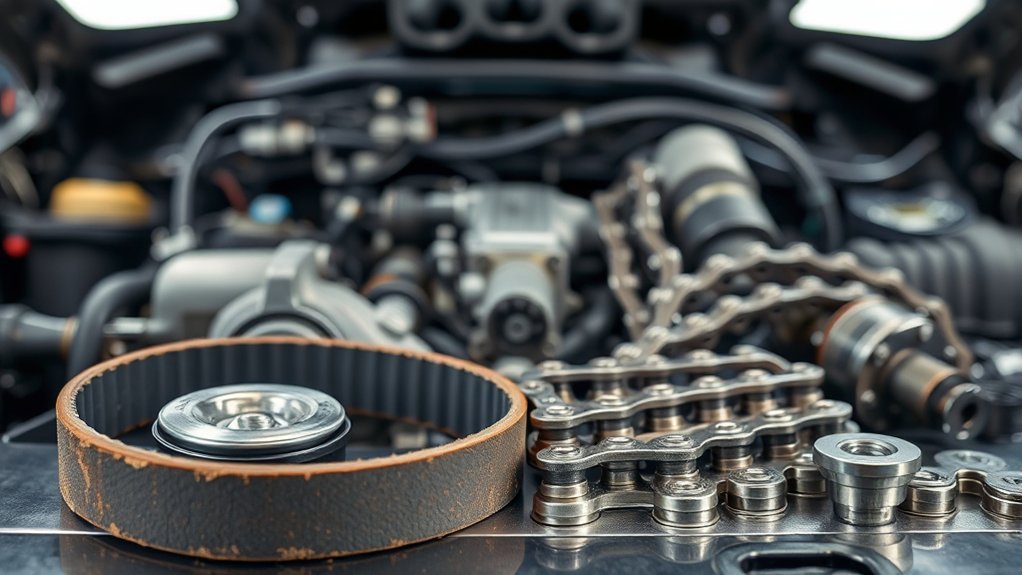
You’ll usually pay $500–$1,000 for a timing belt service, which is quicker and less labor-intensive than timing chain work. Timing chain repairs can run $1,000–$2,500+ because they often require extensive engine disassembly. Factor in replacement intervals—belts at 60k–100k miles versus chains at 150k–200k—when weighing short-term service cost against potential long-term repair expenses.
Short-Term Service Cost
One clear cost difference you’ll notice right away is that timing belt service typically runs $500–$1,000 and takes about 4–6 hours, while timing chain repairs can cost $1,000–$2,500 or more because they often require extensive engine disassembly. You should weigh short term expenses and service duration against your freedom from frequent interventions. Belts are cheaper to replace and quicker to service; chains are more durable but costlier if they fail. Choose proactively to avoid sudden failures that limit your mobility.
- Timing belt: $500–$1,000, 4–6 hours service duration
- Timing chain repair: $1,000–$2,500+, extensive disassembly
- Belt replacement frequency: 60k–100k miles
- Chain: designed to last engine life under normal use
- Neglect increases risk of catastrophic failure
Long-Term Repair Expenses
Because timing belts require scheduled replacements while chains usually don’t, your long-term repair picture looks very different depending on which system your Tacoma uses. You’ll pay $500–$1,000 each 60k–100k miles for a belt swap, plus water pump and tensioner, so cumulative expense considerations favor planning predictable intervals and savings strategies. A chain’s repair longevity is greater—often 150k–200k+ miles—and you avoid routine replacement costs, but when chains fail or stretch, repairs can jump to $1,000–$2,500+ because of complexity and labor. You should factor frequency versus severity: belts cost regularly but predictably; chains cost rarely but potentially catastrophically. Choose based on service access, budget discipline, and desire for mechanical independence.
Maintenance Checklist and When to DIY vs. Hire a Pro
When your Tacoma reaches major service intervals or you hear unusual noises, follow a focused maintenance checklist to catch timing-belt or timing-chain issues early. You’ll inspect for ticking or misfires (belt) and rattling or poor acceleration (chain). Note intervals: belts at 60k–100k miles; chains inspect after 100k. If you tackle work, use proper maintenance tips and DIY tools—torque wrench, service manual, jack stands—and plan 4–6 hours for a belt job. Replace water pump and tensioner with the belt to avoid repeat labor.
- Check service interval and visual belt/chain condition
- Listen for diagnostic noises during idle and revs
- Verify tensioner and water pump condition when accessing belt
- Use calibrated torque wrenches and OEM specs for installation
- If chain replacement is likely, hire a pro due to complexity and higher cost
Hire a pro for chain replacement or uncertain diagnoses; DIY is reasonable for belt jobs if you’re methodical and properly equipped.
Frequently Asked Questions
What Year Did Tacoma Switch to Timing Chain?
2005. You’ll gain timing chain advantages like longer life and less maintenance, while avoiding timing belt disadvantages such as routine replacements and failure risk; you’ll inspect chains after high mileage, embracing durable, liberating mechanical reliability.
When Should a Toyota Tacoma Timing Chain Be Replaced?
Like a well-oiled clock, you shouldn’t routinely replace the timing chain; timing chain lifespan is typically the engine’s life. Inspect after 100,000 miles, follow chain maintenance tips, and replace only if wear, noise, or failure.
How Much Does It Cost to Replace a Timing Chain on a 2017 Toyota Tacoma?
You’ll pay about $1,000 to $2,500 to replace a 2017 Tacoma timing chain; labor costs dominate the bill, so prioritize proper service and oil maintenance to preserve engine longevity and avoid catastrophic failures.
Conclusion
You think a silent chain means forever and a belt means doom—funny, right? In reality, your Tacoma’s engine bay is a ticking metronome: some engines use chains, some belts, and both need vigilance. Chains resist wear but can stretch; belts wear predictably but fail fast. Follow the inspection checklist, heed noises, and budget appropriately. Do the routine maintenance, or let irony strike when the “forever” part fails on the freeway.