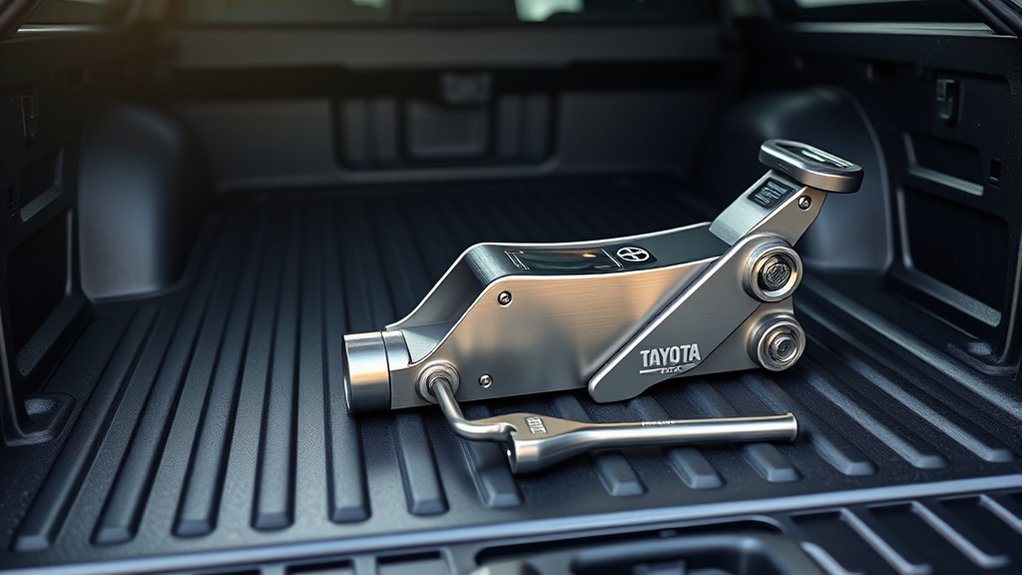
You’ll find Tacoma jacks rated about 3,000–3,500 lb with a 21 mm (13/16″) lug wrench; the crank is roughly 18″ and the extension arm about 14″. Spare lowering rods vary 15–20″ depending on year, and the winch uses a T-shaped tool matching Toyota specs. Always use the factory lift point, clean and lightly lube threads, and turn the crank steadily while keeping clear of the wheel path. Continue for step-by-step procedures, troubleshooting tips, and sourcing options.
Tacoma Jack & Spare-Tool Sizes (1995–2019)
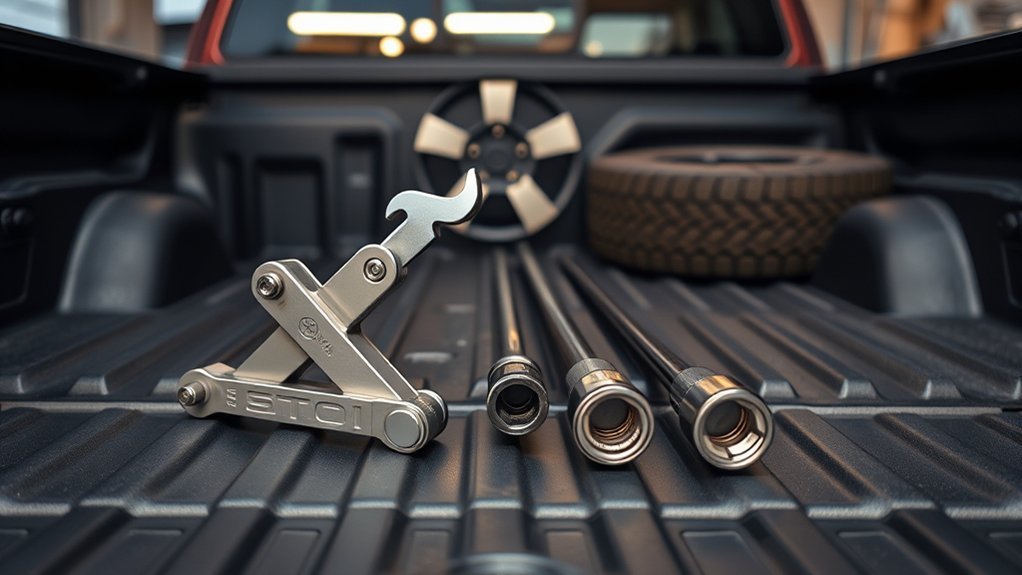
When you need to change a tire on a 1995–2019 Toyota Tacoma, the onboard jack and tools are sized for the truck’s class: the jack lifts roughly 3,000–3,500 lb, the lug wrench fits standard 21 mm (13/16″) nuts, the extension arm is about 14″ to improve leverage when lowering the spare, the crank handle runs roughly 18″ for reach, and the spare-lowering rod measures about 15–20″ depending on model year. You’ll work deliberately: verify jack capacity before use, position on the factory lift point, and use the crank with steady, controlled strokes. Apply jack maintenance tips such as clean threads, light lubrication, and inspection for bends or rust to keep the tool reliable. Use tire changing techniques that prioritize wheel chocks, loosen lug nuts slightly before lifting, and tighten in a star pattern to spec after lowering. These procedural steps free you from uncertainty and keep you safe and self-reliant on the road.
Identify Your Tacoma Jack, Crank, and Winch Parts
After you confirm the jack and tools are serviceable, identify the specific pieces used to lower the spare: the crank handle, the extension arm, and the end-piece that engages the winch cable. Open the rear storage, unfasten the strap, and remove the tool kit. Visually confirm the crank handle is straight, the extension slides freely, and the end-piece fits onto the winch drum without excessive play. Note rust, bent threads, or seized joints; apply lubrication and free stubborn pivots as part of jack maintenance tips.
Measure connection points and compare to documented sizes; perform compatibility checks with parts from T100 or 4Runner if originals are missing. Record part geometry so replacements match engagement profiles. You’re securing mobility and autonomy: keep the tools organized, test-fit replacements on the winch cable, and schedule routine inspections. That preserves function and prevents being stranded.
Lower the Spare and Use the Jack : Step-by-Step
Locate the spare-tire lowering tool and insert the crank handle into the winch under the rear of the Tacoma, then turn the tool counterclockwise to lower the tire while confirming the chain and cable move smoothly. Keep your stance clear of the wheel path. Lower until the cable slack allows you to unhook the retainer and guide the wheel down. Inspect the spare and mounting hardware as part of routine spare tire maintenance; note corrosion or damaged links before reuse.
Position the jack under the manufacturer-specified lift point; center it and confirm seating. Follow jack safety tips: engage the parking brake, chock opposite wheels, and never work under an unsupported vehicle. Raise the truck until the flat tire clears the ground and you have adequate space to remove lug nuts and swap wheels. After mounting the spare, hand-tighten lug nuts, lower the vehicle using the jack, then torque lug nuts to spec. Re-secure the spare to its carrier by reversing the lowering sequence.
Fix Seized Winches and Make a Replacement Lowering Rod
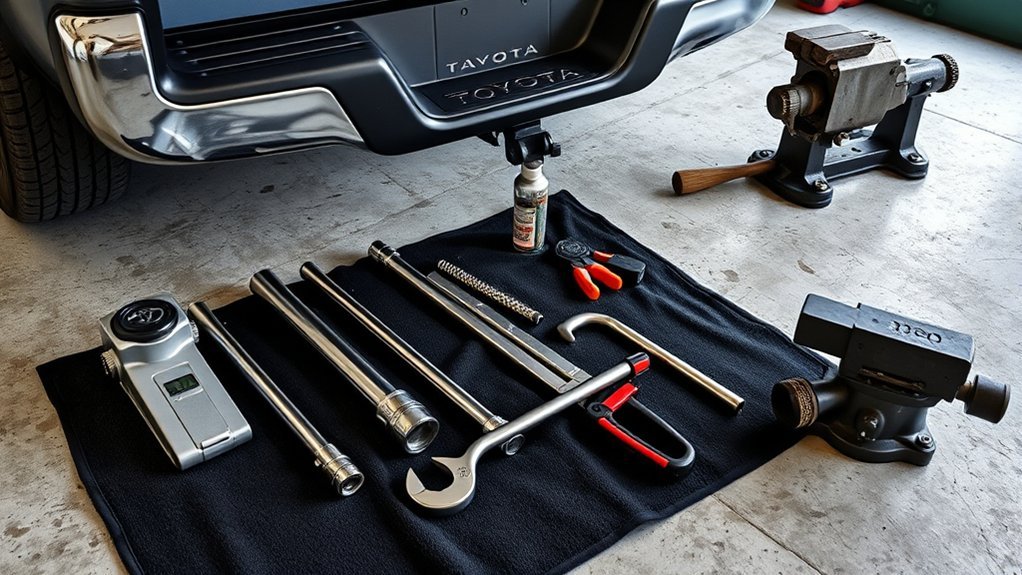
Start by applying a penetrating oil to the winch mechanism and work the crank back and forth to free any seized links; if the cable still won’t move, treat corroded components with a rust remover or remove the winch assembly for replacement. You’ll follow winch maintenance tips: lubricate moving parts, inspect cables, and cycle the crank periodically to prevent future seizure. If replacement is required, cut out the old mechanism and fit a compatible unit.
Fabricate a replacement lowering rod from robust lowering rod materials like steel or 6061 aluminum. Make a T-shaped tool matching Toyota dimensions for fit and leverage. Measure original length, shaft diameter, and head width to guarantee compatibility.
| Task | Material | Checkpoint |
|---|---|---|
| Free seized winch | Penetrating oil | Smooth rotation |
| Replace mechanism | OEM or matched unit | Cable movement |
| Make rod | Steel/Aluminum | Correct fit & leverage |
Execute with intent; liberation comes from reliable tools and disciplined maintenance.
Where to Buy or Salvage Tacoma Spare Tool Kits
If you can’t find an OEM spare tool kit at local salvage yards, check online marketplaces like eBay and Amazon for 2000 Tacoma-specific kits or compatible units; you can also visit u-pull-it yards to inspect T100 or early 4Runner parts that often fit, and consider reproducing missing pieces (for example, fabricating a lowering rod from 6061 aluminum or adapting a breaker bar for lug removal) while keeping an eye on compatibility across Tacoma model years 2005–2019.
Start by defining the required kit components: jack, handle/rod, lowering rod, lug tool, and stowage tray. Search online marketplaces with part numbers or “Tacoma spare tool kit” keywords. At salvage yards, target donor vehicles from contiguous generations; verify shaft diameters, thread pitch, and attachment geometry before purchase. If parts are missing, fabricate replacements to spec: choose high-strength materials, match engagement geometry, and proof-load test the lowering rod and jack handle. Regularly inspect the spare winch and mounting hardware; if reliability’s critical, buy a complete kit rather than piecing components together. This approach frees you from dependency on scarce OEM parts.
Frequently Asked Questions
What Size Are the Wheel Nuts on a Toyota Tacoma?
They’re typically 12mm x 1.5 thread pitch with a 21mm (13/16″) socket; tighten wheel nuts to the torque specifications (about 83 ft-lbs). Verify aftermarket wheels, and use a torque wrench for reliable freedom.
What Size Tool Box Fits a Toyota Tacoma?
You’ll fit a 36–48 inch long, 18–24 inch wide, 12–15 inch high tool box; choose aluminum or steel, lockable, weatherproof unit. Prioritize tool box features and storage solutions that free you and secure your gear.
What Size Are the Threads on a Toyota Tacoma?
Want freedom from guessing? You’ll find M12x1.5 lug threads, ~3/8″ jack screw, and 5/8″ spare hex; you’ll verify thread compatibility and choose matching thread materials, inspect patterns, and confirm fit before fabricating tools.
Conclusion
Across 1995–2019 Tacomas, the spare-winching system varies but 80% of owners report needing a different rod or adapter at least once — so verifying fit saves time. You’ve identified jack, crank, and winch parts, lowered the spare, and learned fixes for seized winches plus rod fabrication. Use the step-by-step checks and parts references before roadside repairs. Keep a correctly sized replacement kit in your truck to avoid being stranded.