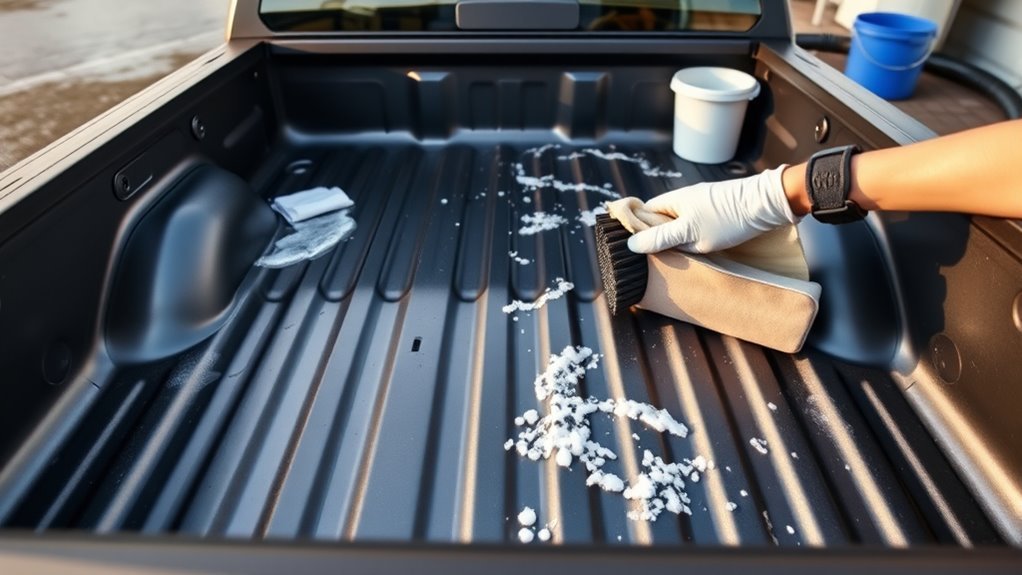
You’ll start by removing bed caps and loose debris, then wash rails and tie‑downs with pH‑neutral soap to lift grime. Use soft brushes and microfiber towels to reach crevices, dry thoroughly, and degrease stubborn spots. Treat rust by sanding to bare metal, priming, and repainting or applying a bed liner. Restore plastic trim with non‑greasy renovators and seal bolt holes with Sikaflex to stop leaks. Follow torque specs on reassembly and continue for full maintenance tips.
Quick Answer: How to Clean Tacoma Bed Rails & Tie‑Downs Fast
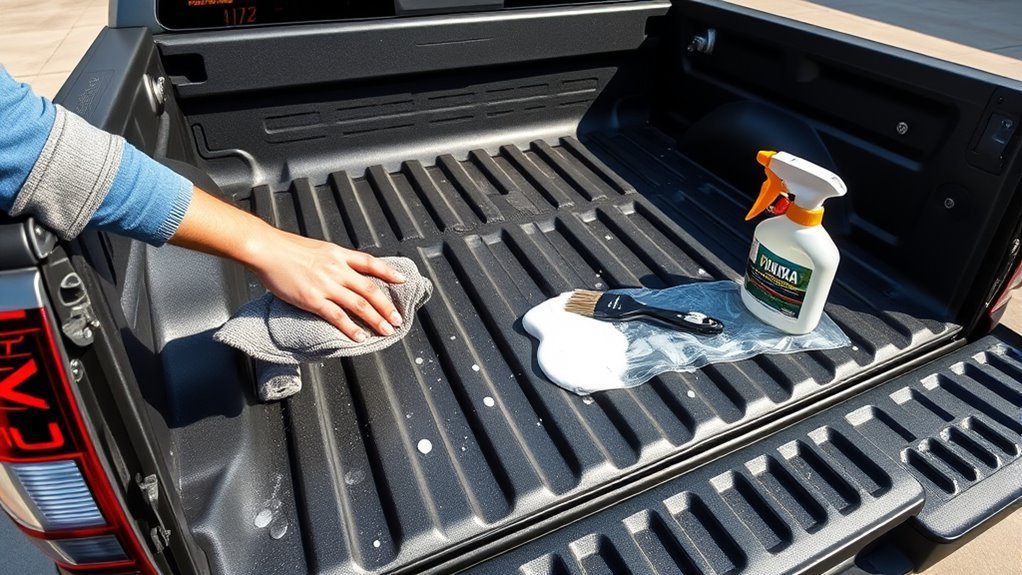
Start by washing the rails and tie‑downs with a suitable vehicle soap to remove dirt and grime, then dry them completely. You’ll use targeted cleaning techniques: apply a non‑greasy product like Mothers Back to Black so surfaces aren’t slippery and appearance stays uniform. For persistent dullness, spot‑test Tonno Tonic on a small area first; it restores trim effectively but costs more. After cleaning, apply a protective layer such as Black Renew to seal and defend against future wear. Keep maintenance tips simple: clean regularly with appropriate soap to prevent buildup, inspect tie‑downs for compatibility issues after product trials, and retouch the protective layer as needed. You’ll avoid over‑application that causes residue or slippage. This approach gives you control—practical, technical steps that free you from recurring degradation and keep your Tacoma’s rails functional and visually consistent without risking damage.
Tools & Products for Cleaning Tacoma Bed Rails (Recommended Picks)
Start with a compact tools checklist so you can work efficiently: soft-bristle brush, microfiber towels, detailing brushes for crevices, and a bucket with automotive soap. For trim restoration, pick targeted products—Mothers Back to Black for faded caps, Bumper Black for a matte reset, and Wizards Vinyl Shine for vinyl, rubber, and plastic where you want a non-greasy finish. If you want a premium option for long-lasting black trim, consider Tonno Tonic (8 oz. ≈ $9.95), and always finish maintenance with non-greasy cleaners to prevent buildup.
Cleaning Tools Checklist
When you’re prepping to clean Tacoma bed rails, assemble a compact kit with targeted products so you can tackle fading, grime, and rubber/surface buildup efficiently. Include Mothers Back to Black for faded trim restoration and Wizards Vinyl Shine for vinyl, rubber, and plastic tie-downs; these choices reflect clear cleaning techniques and concise product comparisons. Add Tonno Tonic for stubborn black-trim jobs—note the higher cost ($9.95/8 oz) but strong performance. Pack a pH-neutral automotive soap for regular maintenance to prevent buildup. Bring soft microfiber towels, a soft-bristle brush for seams, and a foam applicator for controlled product distribution. Always test cleaners on a small hidden area first to confirm compatibility and avoid surface damage. Work deliberately and reclaim control.
Best Trim Products
You’ve got your cleaning kit ready, so next focus on choosing the right trim products to restore and protect Tacoma bed rails. Pick Mothers Back to Black for faded black trim restoration; it removes cloudiness and delivers lasting shine while improving trim durability. Use Tonno Tonic (8 oz., $9.95) when you want a stronger, longer-lasting reset—worth the price for resilient black trim. Wizards Vinyl Shine is your multi-surface option for vinyl, rubber, and plastic tie-downs, maintaining appearance without greasy buildup. For persistent dullness, apply bumper black to refresh black rails and add UV protection. Maintain results with regular, non-greasy applications to prevent residue and preserve function, aesthetics, and the liberated confidence you want from your Tacoma.
Prep: Remove Debris, Bed Caps, and Expose Tie‑Downs
Start by pulling off the plastic bed caps so you can access the tie‑downs and any trapped grime. Shake or vacuum out loose debris, dirt, and dust from the rail channels before you start cleaning. Inspect the exposed areas for rust or damage so you can address mechanical issues before applying cleaners.
Remove Bed Caps
Clear away loose dirt and debris from the bed rails and tie‑downs so you’ve got a clean work area before removing the plastic bed caps. You’ll note different bed cap materials—hard ABS, soft PVC, or painted metal—so use firm, even pulls to avoid snapping clips. Start at one corner, lift gently, and work along the clip line; don’t yank. As each cap comes off, expose tie down types (flush, loop, recessed) and inspect mounting points for rust or deformation. Collect clips and fasteners in a container so reassembly stays orderly. If you find open holes or corrosion-prone seams, apply temporary tape or a light sealant to block water and grit. This method keeps components serviceable and ready for cleaning.
Clear Loose Debris
With the bed caps removed and tie‑downs exposed, remove all loose debris—dirt, leaves, and grit—from the rails and mounting areas so you can see what needs attention. You’ll clear the field for precise bed rail maintenance and an effective tie down inspection. Use a soft brush, vacuum, or compressed air to dislodge particles without scratching surfaces. Check for visible rust or trapped grime at mounting points.
- Sweep or vacuum debris from rail channels and corners.
- Use a soft brush to scrub exposed tie‑down hardware gently.
- Blow out remaining grit with compressed air; recheck fasteners.
- Note corrosion, loose bolts, or damaged seals for repair.
This clears contaminants, reveals defects, and frees you to act—maintain control, prevent damage.
Step‑by‑Step Cleaning: Wash, Degrease, and Scrub Safely
Begin by washing the Tacoma’s bed rails and tie‑downs with a mild automotive soap and water solution, using a soft sponge or microfiber cloth to lift surface dirt without scratching the finish. For effective bed rail maintenance and tie down safety, work methodically: wet a section, apply soap, and scrub with controlled strokes. Avoid abrasive pads that compromise finish or anchor points.
When grease or stubborn grime remains, apply a dedicated degreaser (e.g., Castrol GTX) sparingly, let it dwell a few minutes, then agitate with the sponge. Rinse each treated area immediately to remove residue; trapped cleaner can dull surfaces or leave film.
After rinsing the entire bed, dry every rail and tie‑down completely with a clean microfiber towel to prevent water spots and preserve appearance. Finish by inspecting attachment hardware for secure fitment. Clean, dry, and inspected rails free you to load gear confidently—practical, precise maintenance that protects freedom on the road.
Fixing Rusted Rails: Sand, Prime, and Stop Corrosion
If cleaning exposed rust and loose debris didn’t restore the rails, you’ll need to remove corrosion down to clean metal before coating. You want durable rust prevention and disciplined surface preparation to free your truck from decay. Start by sanding to shiny metal with appropriate grit sandpaper; remove scale and feather edges for consistent adhesion.
- Sand thoroughly to bare metal, then clean dust and oils.
- Apply a rust-inhibiting or rust-conversion primer to stabilize remaining corrosion.
- Use high-quality metal paint formulated for durability and chemical resistance.
- Optionally, finish with a bed-liner layer for added mechanical protection.
Work methodically—mask surrounding areas, ventilate, and follow product cure times. A conversion primer gives chemical stabilization; a dedicated primer-plus-paint system gives the best adhesion. The goal is functional liberation: reclaim the rails, halt corrosion progression, and restore a protective surface that endures.
Service Moving Parts: Clean, Lubricate, and Protect Tie‑Downs
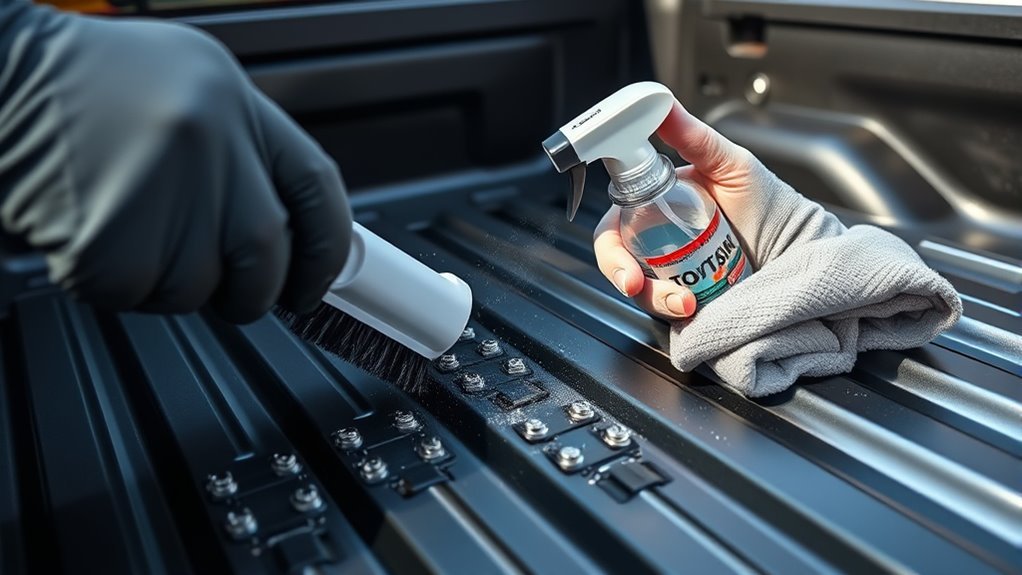
Keep your Tacoma’s tie‑downs working smoothly by regularly cleaning, inspecting, and protecting their moving parts. For effective tie down maintenance, wash components with mild soap and water to remove dirt and debris that binds mechanisms. Use a soft brush to reach crevices and dislodge buildup without scratching metal. Dry thoroughly to prevent trapped moisture.
After cleaning, apply a silicone‑based lubricant to pivot points, slides, and pins; this enhances operation and creates a barrier against moisture that fosters corrosion. Follow manufacturer torque specs when reassembling and test movement under load to confirm smooth function. During service, inspect for wear, cracked welds, bent hardware, or compromised fasteners; replace parts that fail inspection to preserve safe cargo control.
Finish with a light coat of rust inhibitor on exposed metal for corrosion prevention, focusing on seams and drain areas. Schedule this regimen regularly—consistent, deliberate tie down maintenance frees you from roadside failures and keeps your bed ready for work or escape.
Restore Plastic & Rubber Trim Without Greasy Dressings
After you’ve cleaned and serviced tie‑downs, turn attention to the trim: faded plastic and rubber look worn and attract grime, but you don’t need greasy dressings to fix them. Use Mothers Back to Black or Tonno Tonic for trim restoration techniques that revive color without residue. Test on a small area first to confirm compatibility. Clean stubborn grime with a gentle scrub and non‑abrasive sponge before application, then spread product evenly to avoid streaks and uneven shine.
- Clean: remove dirt with appropriate soap; rinse thoroughly.
- Test: apply product to an inconspicuous spot; wait, inspect.
- Apply: even strokes; work methodically to maintain uniform finish.
- Maintain: schedule upkeep according to maintenance frequency; avoid oily dressings.
You’ll regain clean, matte surfaces that repel dirt longer and free you from greasy, temporary fixes. Stay disciplined with routine care and reclaim control of your bed‑rail appearance.
Seal Holes, Bolt‑Locations, and Bed Caps to Stop Leaks
Start by removing the plastic bed caps and exposing every bolt hole and clip location so you can apply sealing materials precisely; don’t skip this step because trapped gaps let water run into the bed and cause corrosion. Inspect each hole and clip. For factory bed rails, run a bead of Sikaflex 221 around every bolt hole and around clip mounts—this is core to leak prevention strategies. Cover small holes with one or two layers of Aluminum Foil Tape for durable backing, then apply Sikaflex over the tape. Use Waterproof & Airtight Sealant Tape for larger holes and corner gaps, following with a Sikaflex fillet to bond edges and shed water. Reinstall bed caps only after the sealant skins; press clips into the sealed locations to compress the joint. Consider adding a tailgate seal to improve dust and water resistance on 2007–2025 Tacoma/Tundra applications. These sealant application techniques give you a watertight, low-maintenance rail system that resists corrosion and liberates you from recurring leaks.
When to Repaint, Apply a Bed Liner, or Replace Parts
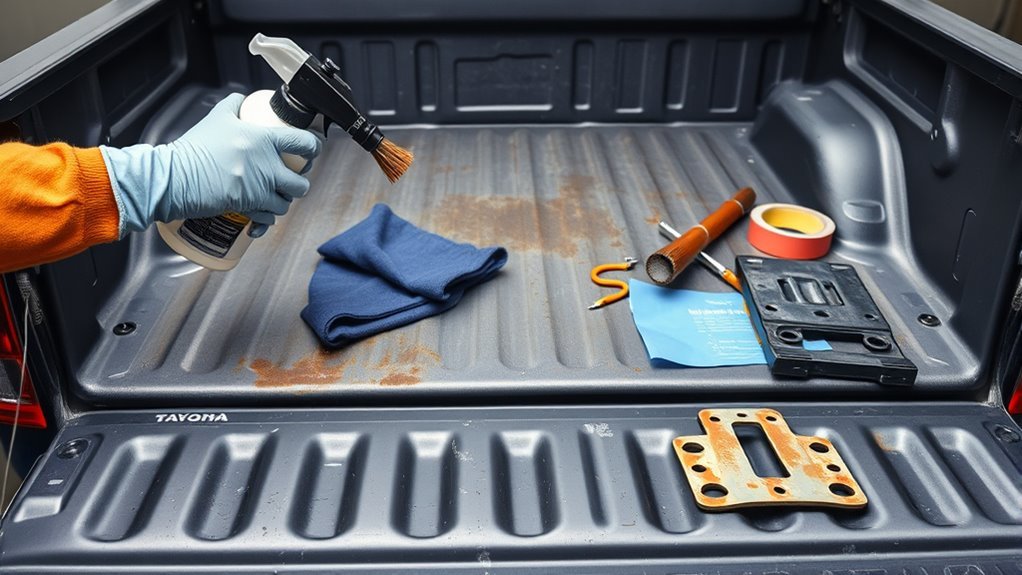
Once you’ve sealed and reinstalled the bed caps, inspect the rails for surface condition and structural soundness to determine whether paint, a liner, or part replacement is needed. If you find rust, sand to shiny metal, apply primer, then paint using proven repainting techniques to stop corrosion and restore finish. Choose a bed liner after rust treatment for long-term protection; match color to trim for cohesive aesthetics.
- Assess: check chips, fading, and tie-down integrity; significant structural rust means replace parts.
- Restore: use targeted repainting techniques on small areas; full respray for widespread damage.
- Protect: evaluate bed liner options—spray-in for permanence, brush-on for DIY access—to prevent recurrence.
- Replace: swap compromised tie-downs or rail sections to secure cargo and reclaim control.
You’ll act strategically: repair what’s salvageable, apply the right bed liner options, and replace parts when safety or structure is compromised.
Troubleshooting: Slippery Dressings, Streaks, and Stubborn Stains
Watch for slippery product residue from dressings like Armor All that leaves a slick surface and attracts grime, creating safety and appearance issues. If you see streaks, reapply cleaner evenly with a microfiber pad and buff in straight passes to restore a uniform finish. For persistent stains, spot-test and use targeted restorers like Mothers Back to Black or Tonno Tonic, then rinse and maintain with mild soap to prevent recurrence.
Slippery Product Residue
If you’re dealing with slippery residue on your Tacoma’s bed rails, pick non-greasy dressings like Mothers Back to Black or Wizards Vinyl Shine and test them on a small, hidden area first to confirm they won’t leave streaks or slick film. For slippery surface prevention and residue comparison, follow a controlled routine so you reclaim grip and control.
- Clean: wash with mild soap, remove dirt and old product.
- Test: apply dressing on a hidden patch; inspect for tackiness.
- Apply: use a soft cloth, spread thinly to avoid buildup.
- Rinse: flush thoroughly after product dwell time to eliminate excess.
Maintain regularly; consistent care prevents stubborn stains and slippery residues, freeing you from constant rework.
Uneven Application Streaks
After you’ve removed slippery residue and picked a non-greasy dressing, pay attention to application technique to avoid streaks and uneven coverage. You’ll apply products in thin, controlled layers and use a clean microfiber cloth for absorption and leveling—this is core streak prevention. Work in overlapping passes along the rail’s grain, maintaining consistent pressure and speed so each pass deposits equal product. Test a small hidden area first to confirm compatibility and avoid surprises. Choose non-greasy protectants like Mothers Back to Black to reduce dust attraction and improve uniformity. Schedule regular maintenance to prevent buildup that complicates future application. If marks persist, don’t over-apply; strip and reset with a vinyl cleaner then repeat disciplined application techniques.
Persistent Stain Removal
Tackle persistent stains by combining the right cleaners with disciplined technique: start by testing a non-greasy product (Mothers Back to Black or Tonno Tonic) on a hidden spot, then use a baking-soda paste for entrenched grime—apply, let it sit briefly, and scrub gently with a soft cloth—followed by a rinse and dry; if residue or dulling persists, strip remaining deposits with a vinyl cleaner and finish with a sealant like Black Renew to restore appearance and protect against repeat staining.
- Test: verify product compatibility to avoid streaks and slippery dressings.
- Remove: apply baking-soda paste, dwell, then scrub with a soft cloth.
- Rinse/dry: eliminate residue to prevent attracting dust.
- Protect: seal and set a cleaning frequency for stain prevention.
You’ll free your rails through routine, empowered maintenance.
Frequently Asked Questions
What to Clean a Metal Bed Frame With?
Use warm water with mild dish soap and a non-abrasive sponge, rinse and dry thoroughly, then apply metal polish; for stubborn spots use a rust remover, scrub gently, rinse, dry, and seal to protect your freedom.
How to Make a Bed Liner Look New?
Imagine freedom: you’ll clean thoroughly, sand rusted spots with 120 grit, apply quality bed liner product evenly, and use rubbing compound for stains; bed liner maintenance and restoring appearance keep it durable, fresh, and liberating.
How to Clean a Dirty Bed Frame?
You clean a dirty bed frame by evaluating bed frame materials, removing debris, scrubbing with a suitable cleaner and soft brush, treating rust, rinsing, drying, protecting surfaces, and setting a cleaning frequency to prevent buildup and maintain freedom of use.
Conclusion
You’ve covered the essentials—clean, degrease, and protect the rails and tie‑downs so they function like new. Tackle rust with sanding, priming, and corrosion inhibitor; restore plastics with non‑greasy trim restorers; seal bolt holes and bed caps to stop leaks. When damage’s beyond repair, repaint, liner, or replace. Keep tools handy and work methodically—maintenance is a small investment that pays big dividends, like oiling the hinges of long‑term reliability.