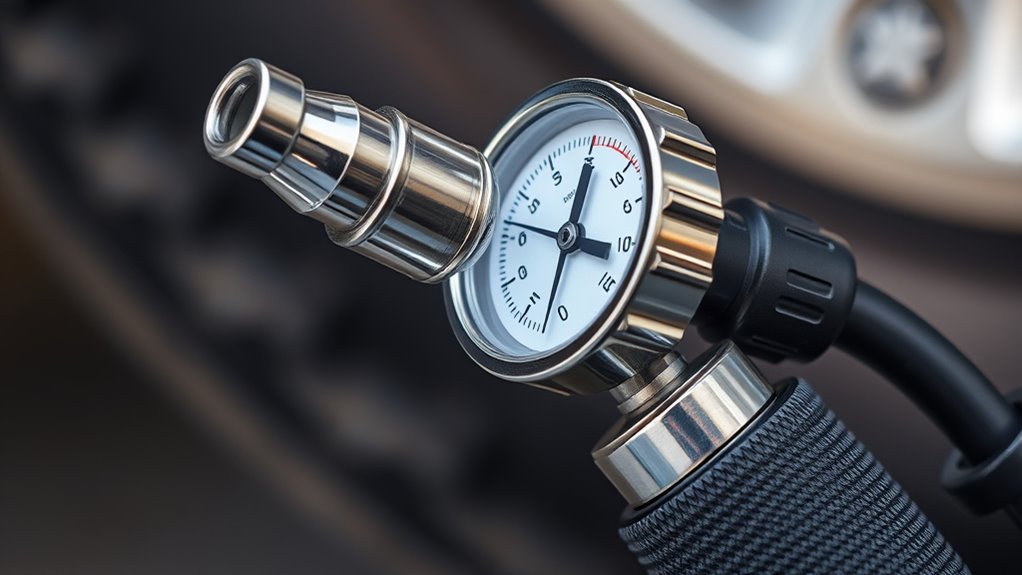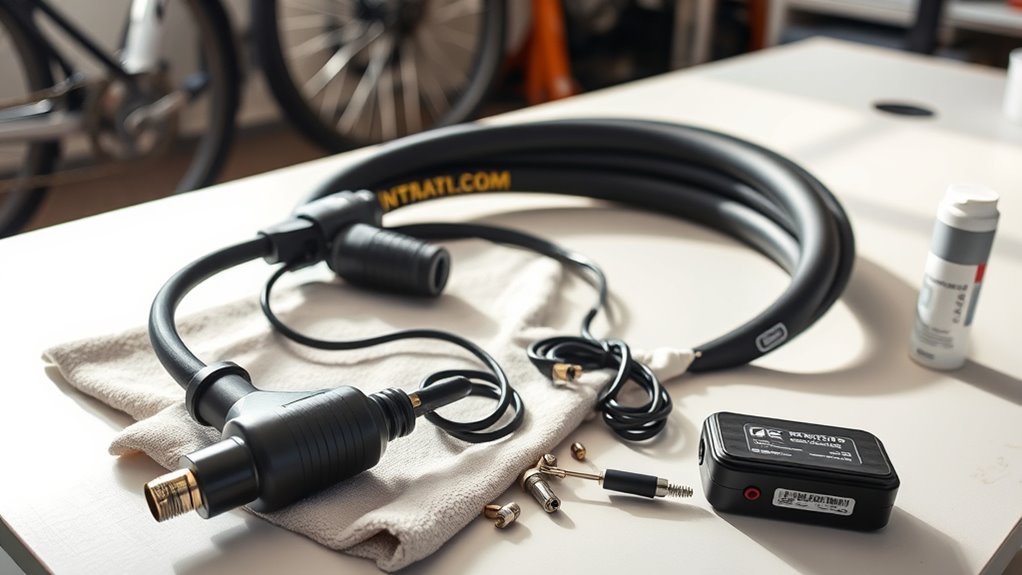
To clean and store your tire inflator, start by disconnecting it from the power source and removing the battery. Wipe the exterior with a soft cloth, and inspect the cord and hose for damage. Store the battery at a 50-60% charge in a cool, dry place, and avoid extreme temperatures. Coil the cords neatly to prevent tangling, and check for blockages before future use. There’s more to effective maintenance that guarantees your inflator remains reliable.
Disconnect and Clean Your Tire Inflator: A Step-by-Step Guide
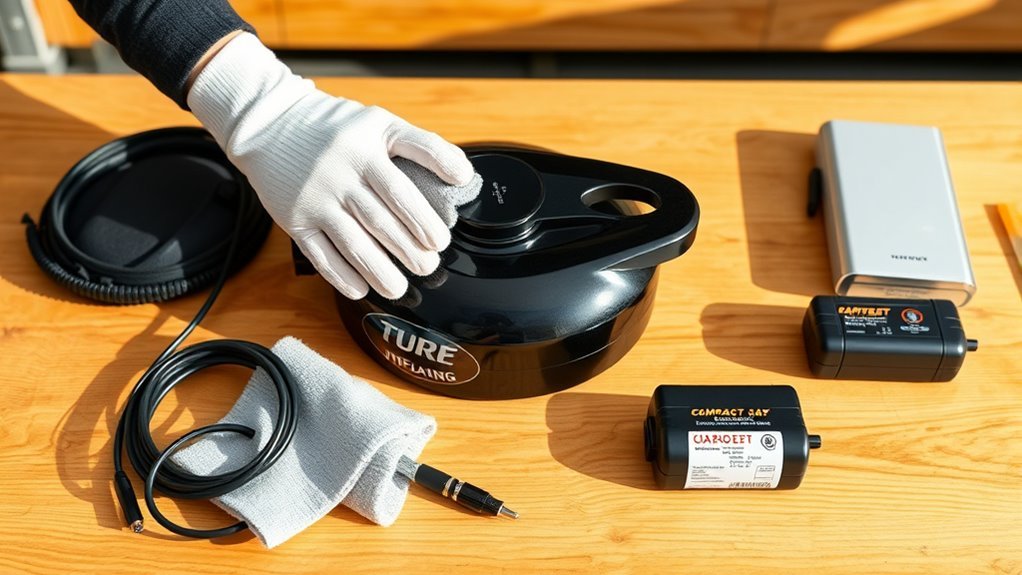
To guarantee your tire inflator remains in prime condition, start by disconnecting it from the power source and removing the battery. This guarantees safety during maintenance. Next, use a soft cloth to clean the exterior, paying close attention to any dirt or moisture buildup. Avoid abrasive materials that could scratch the surface. Inspect the power cord and pressure hose for signs of wear or damage. Clear any debris from connectors to maintain peak performance. After cleaning, store the inflator in a cool, dry place to protect it from humidity and temperature extremes. Keep the air hose connected to prevent dust ingress, guaranteeing the integrity of internal pressure sensors and prolonging the inflator’s lifespan with proper storage.
How to Manage Your Battery Before Storing It
Before storing your tire inflator, make certain the battery is charged to about 50-60% to prevent deep discharge and voltage stress. Keep an eye on the storage environment, as extreme temperatures can adversely affect battery lifespan. Regularly check the battery level every 90 days to guarantee peak health and readiness for future use.
Charge Level Maintenance
Maintaining your tire inflator’s lithium-ion battery at an ideal charge level is vital for its longevity and performance. For best storage, keep the battery charged between 50-60%. Storing it fully charged can lead to chemical breakdown and shorten its lifespan. Regular charge level maintenance is important; check the battery every three months to guarantee it stays within this best storage range. If you’re planning long-term storage, disconnect the battery from the inflator to prevent parasitic drain and potential damage. Always monitor for signs of swelling or damage before storing, as these indicate the battery may need immediate replacement or professional assessment. By following these steps, you can make certain your battery remains in excellent condition for future use.
Storage Environment Considerations
When storing your tire inflator, it’s important to take into account the environment to assure ideal battery health and performance. Follow these guidelines to guarantee proper maintenance:
- Store the battery at a 50-60% charge level to reduce voltage stress.
- Keep it in a dry place with controlled storage temperatures, avoiding extremes above 95°F (35°C) or below freezing.
- Use silica gel packets to absorb moisture and protect against corrosion.
- Regularly check the storage area for changes to maintain optimal conditions.
- Avoid direct sunlight exposure, as prolonged UV light can degrade the battery and inflator casing.
Battery Health Monitoring
To guarantee your tire inflator’s battery remains in peak condition before storage, it’s crucial to monitor its charge level closely. Aim to maintain the battery charge between 50-60% to reduce voltage stress and minimize the risk of deep discharge. Avoid storing it fully charged or completely drained to extend its lifecycle. Keep your inflator in a cool, dry, temperature-controlled environment to prevent damage from extreme temperatures. Regularly check for signs of swelling or leakage; if you notice any, discontinue use immediately and consult a professional. Additionally, employing silica gel packets in the storage container can help manage humidity, preserving battery health and performance over time. This proactive approach guarantees your tire inflator is ready for use when you need it.
Where to Store Your Tire Inflator for Best Results?
To guarantee your tire inflator remains in peak condition, store it in a cool, dry environment, ideally within a temperature range of 50-70°F. Avoid direct sunlight to prevent overheating, which can damage the battery and pressure sensors. Incorporating humidity control measures, like silica gel packets, will further protect your inflator from moisture-related issues.
Ideal Temperature Range
Storing your tire inflator in an environment with controlled temperatures is crucial for maintaining its performance and longevity. Aim for an ideal temperature range between 50°F (10°C) and 80°F (27°C). This minimizes the risk of damage from temperature swings and protects sensitive components like pressure sensors.
- Avoid temperatures exceeding 95°F (35°C) to prevent battery degradation.
- Store in a dry area to avoid humidity-related corrosion.
- Use silica gel packets to absorb excess moisture.
- Regularly check storage conditions to guarantee stability.
- Protect your inflator through proper maintenance practices.
Humidity Control Measures
When you want to guarantee your tire inflator remains in prime condition, choosing the right storage location is essential. Store your inflator in a cool, dry place to prevent moisture buildup that can lead to internal corrosion. Utilizing silica gel packets in your storage container helps absorb humidity, further protecting the inflator’s components. Make sure your storage area is temperature-controlled, avoiding extreme thermal cycling that could compromise battery health and material integrity. Regularly check the environment for changes in humidity and temperature to maintain peak conditions. By controlling humidity and guaranteeing a stable environment, you can ensure your tire inflator stays functional and ready for use, ultimately prolonging its lifespan.
Avoid Direct Sunlight
Even though it might seem convenient to keep your tire inflator in a sunny spot, doing so can lead to significant damage over time. Exposure to direct sunlight can degrade the lithium-ion battery and cause calibration drift in pressure sensors. To guarantee your portable tire inflator remains in prime condition, store it in a cool, dry place. Here are some tips:
- Choose a storage area with stable temperatures below 95°F (35°C).
- Monitor for humidity to prevent internal corrosion.
- Use silica gel packets to help absorb excess moisture.
- Avoid extreme thermal cycling by regularly checking the environment.
- Keep the inflator away from direct sunlight to protect its components.
Prevent Moisture Damage and Protect Sensors
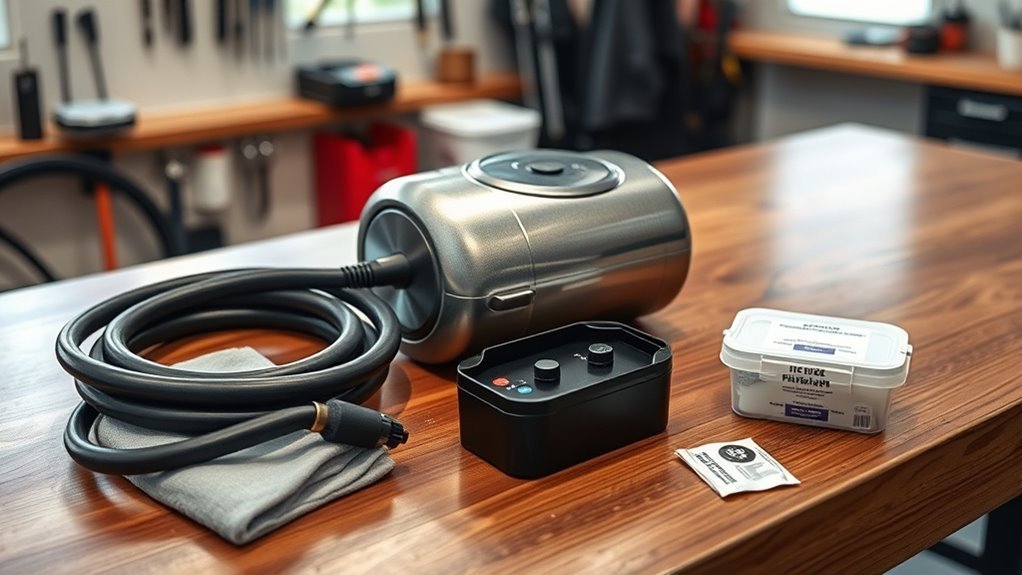
To safeguard your tire inflator from moisture damage and protect its sensors, always choose a cool, dry storage location. High humidity can lead to corrosion on internal components, especially sensors, compromising their functionality. To further prevent moisture damage, place silica gel packets in the storage container; they absorb excess moisture and maintain a dry environment. When you clean and store your inflator, keep the air hose connected to prevent dust ingress, which helps maintain sensor accuracy and prevents calibration drift. Regularly inspect the air hose and connectors for dirt or debris, as contaminants can lead to inaccurate pressure readings. Additionally, avoid extreme temperature fluctuations, as these can negatively affect battery health and sensor calibration.
Conduct Regular Maintenance Checks for Longevity
Maintaining your tire inflator is essential for ensuring its longevity and reliable performance. Regular maintenance checks keep your equipment in top shape, so make it a habit to:
- Inspect the power cord and pressure hose for wear or damage.
- Conduct functionality tests every 90 days to check compressor operation and gauge accuracy.
- Clean connectors and air hoses after each use to eliminate dirt and prevent blockages.
- Store the inflator in a cool, dry place, avoiding extreme temperatures and humidity.
- Monitor battery health quarterly, keeping it at a 50-60% charge when not in use.
Troubleshoot Common Issues With Your Tire Inflator
Troubleshooting common issues with your tire inflator can save you time and frustration when you’re in need of quick tire maintenance. If your inflator won’t turn on, check the battery health, inspect for blown fuses, and verify all connections are tight. For slow inflation, inspect the air hose for blockages and confirm the pressure setting matches your tire specifications. Inaccurate pressure readings may signal a faulty pressure gauge or air leaks; recalibrate or replace as necessary. Overheating can occur after prolonged use, so allow a cooldown period of at least 5 minutes after 10-15 minutes of operation. To fix air leaks, tighten loose connections and inspect hoses or nozzles for damage before storage to verify effective inflation next time.
Frequently Asked Questions
How to Keep Tires From Getting Flat Spots During Storage?
To prevent flat spots during storage, guarantee proper tire inflation, utilize tire covers, and follow tire rotation tips. Store in climate-controlled locations, avoiding temperature effects, and consider seasonal tire changes for ideal maintenance.
Can a Tire Inflator Drain a Car Battery?
Yes, tire inflator usage can drain your car battery due to high power consumption. For battery maintenance, run the vehicle during use, store properly, and guarantee vehicle readiness for emergency preparedness and inflator longevity.
Should Tires Be Stored Flat or Standing Up?
For ideal tire preservation, you should store tires standing up, not flat. This method maintains tire condition, prevents deformation, and allows for better airflow. Always choose a cool, dry, dark storage environment for best results.
How to Store Tires Without Dry Rotting?
To prevent dry rotting, store tires in a cool, dry place, use tire protection products, maintain proper tire pressure, follow storage temperature guidelines, and adhere to a tire rotation schedule for ideal tire maintenance.
Conclusion
By following these simple steps, you’ll guarantee your tire inflator remains in peak condition, ready to come to your rescue like a trusty sidekick in a superhero movie. Regularly maintaining and properly storing your inflator will prevent issues and extend its lifespan, making certain it’s always there when you need it. So, treat your equipment well, and it’ll serve you faithfully, helping you navigate any road ahead with confidence.