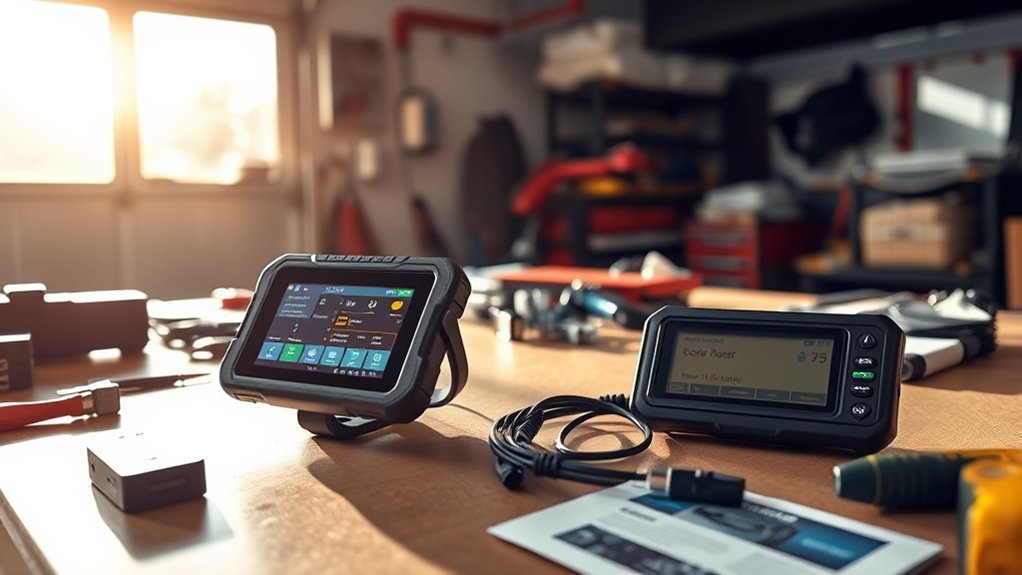
When comparing an OBD2 scanner and a code reader, you’ll find key differences. Code readers are basic tools for reading and clearing generic trouble codes, perfect for quick diagnostics. In contrast, OBD2 scanners offer advanced features like real-time data tracking and bi-directional control. They can also access manufacturer-specific codes and perform complex tasks, including ECU programming. Choosing the right tool depends on your needs, and there’s more to uncover about selecting the best option for your vehicle.
Understanding the Key Differences Between OBD2 Scanners and Code Readers
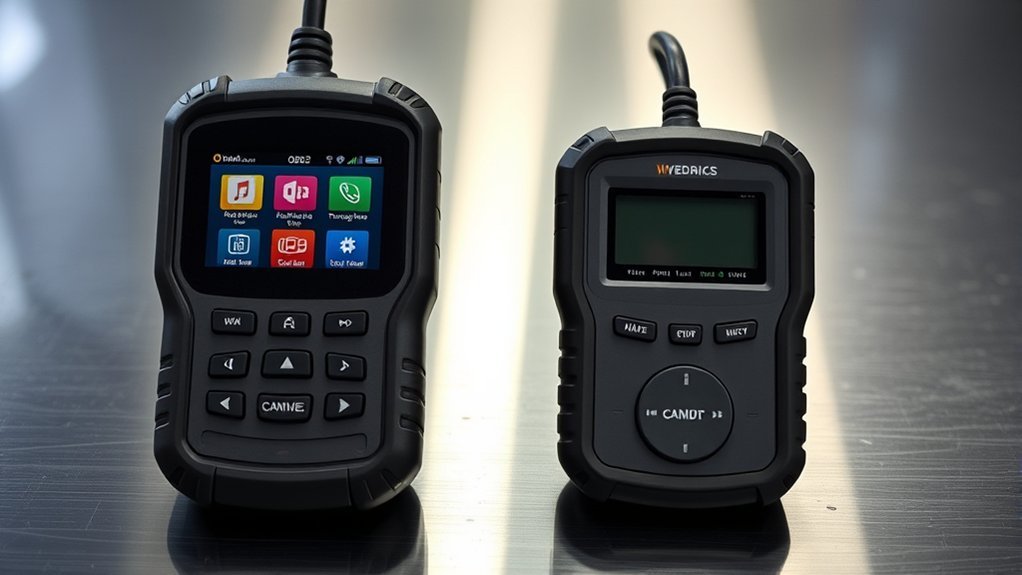
When you’re trying to diagnose vehicle issues, understanding the key differences between OBD2 scanners and code readers is essential. OBD2 code readers are basic tools that connect to your vehicle’s OBD-II port, allowing you to read and clear generic diagnostic trouble codes (DTCs). They’re affordable, typically ranging from $30 to $100, making them suitable for casual users with simple diagnostic needs. In contrast, OBD2 scanners offer advanced diagnostic capabilities, including real-time data monitoring, access to manufacturer-specific codes, and features like bi-directional control. These scanners cater to more complex user requirements, ideal for professional mechanics, with prices often between $150 and $500 or more. While both tools can clear codes, only scanners can perform intricate tasks such as resetting the ECU. If you need in-depth diagnostics, investing in a scanner is your best bet.
What Advanced Features Do OBD2 Scanners Offer?
Have you ever wondered what sets OBD2 scanners apart from basic code readers? These advanced tools offer a range of functionalities that empower you to diagnose and maintain your vehicle effectively. Here’s what you can expect:
- Real-time monitoring: View engine performance metrics like RPM, speed, and fuel economy live as your vehicle operates.
- Bi-directional control: Perform active tests by turning on specific components, such as fuel pumps or fans, for precise diagnostics.
- ECU programming: Reprogram or replace vehicle control units, a necessity for modern automotive repairs.
- Extensive DTC libraries: Access manufacturer-specific codes for in-depth insights and troubleshooting guidance beyond basic codes.
Additionally, advanced scanners often support various reset functions, such as oil light resets or ABS bleeding, essential for maintaining vehicle systems after repairs. This level of advanced diagnostics liberates you, enabling informed decisions about your vehicle’s health.
When Should You Use a Code Reader for Basic Diagnostics?
For routine vehicle diagnostics, a code reader is often your go-to tool. It’s ideal for basic troubleshooting scenarios where you need to read and clear OBD-II trouble codes without getting into manufacturer-specific diagnostics. Code readers connect easily to the OBD-II port, typically found under your dashboard, allowing you to access fault codes quickly. This functionality is particularly effective for newer vehicles that often trigger common issues like the check engine light.
Using a code reader can save you time and money, enabling you to tackle simple problems yourself before consulting a mechanic. Many models feature user-friendly interfaces, making them accessible even for those with minimal automotive knowledge. With straightforward diagnostics at your fingertips, you can confidently address basic issues and maintain your vehicle’s health efficiently.
Cost Factors: How to Choose the Right Diagnostic Tool Within Your Budget
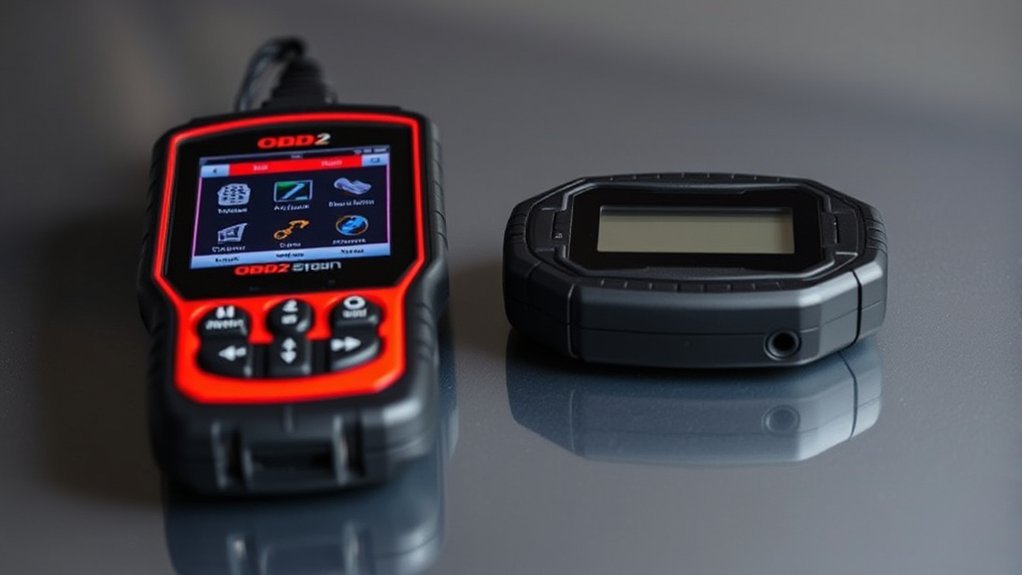
Selecting the right diagnostic tool hinges on understanding your budget and specific needs. Cost considerations are vital, especially with budget limitations. Here’s what to keep in mind:
Choosing the appropriate diagnostic tool depends on your budget and unique requirements, making cost considerations essential.
- Code Readers: Typically range from $30 to $100, ideal for casual drivers needing basic diagnostics.
- Scanners: Cost between $150 and $500 for DIY enthusiasts, and over $500 for professionals, reflecting advanced features.
- Brand Reliability: Opt for reputable brands like VDIAGTOOL or ACARTOOL for durability and performance.
- Compatibility: Verify the tool suits your vehicle’s make, model, and year to avoid unnecessary spending.
Essential Tips for Selecting the Right Diagnostic Tool for Your Vehicle
When you’re in the market for a diagnostic tool, understanding your vehicle’s specific requirements is essential. Start by checking for vehicle compatibility; not all tools work with every make and model. If you only need basic code checks, a code reader, usually more affordable, might suffice. However, for advanced diagnostics, a scanner is the way to go.
| Feature | Code Reader |
|---|---|
| Price Range | $30 – $100 |
| Compatibility | Basic, limited |
| Functions | Read/Clear codes |
| Advanced Features | No |
| Brand Reliability | ANCEL, VDIAGTOOL |
Prioritize your actual needs. For DIY enthusiasts or professionals, investing in a scanner with advanced features is worthwhile. Always choose trusted brands to guarantee reliability and support for your vehicle diagnostics.
Frequently Asked Questions
What Is the Difference Between OBD2 Reader and OBD2 Scanner?
An OBD2 reader primarily offers basic code reading and clearing, while an OBD2 scanner provides extensive diagnostics, including real-time data and manufacturer-specific codes. Understanding this OBD2 functionality comparison helps you choose the right tool for your needs.
What to Look for When Buying an OBD2 Scanner?
Think of buying an OBD2 scanner as choosing a key for your car’s health. Focus on features comparison, price factors, user reviews, brand reliability, connectivity options, and software updates to access effective diagnostics.
Conclusion
To summarize, whether you choose an OBD2 scanner or a code reader depends on your needs and budget. You might think OBD2 scanners are too complex, but many are user-friendly and perfect for both enthusiasts and casual users. A code reader works well for quick diagnostics, but if you want deeper insights, investing in an OBD2 scanner pays off. Ultimately, picking the right tool can save you time and money, enhancing your vehicle maintenance experience.