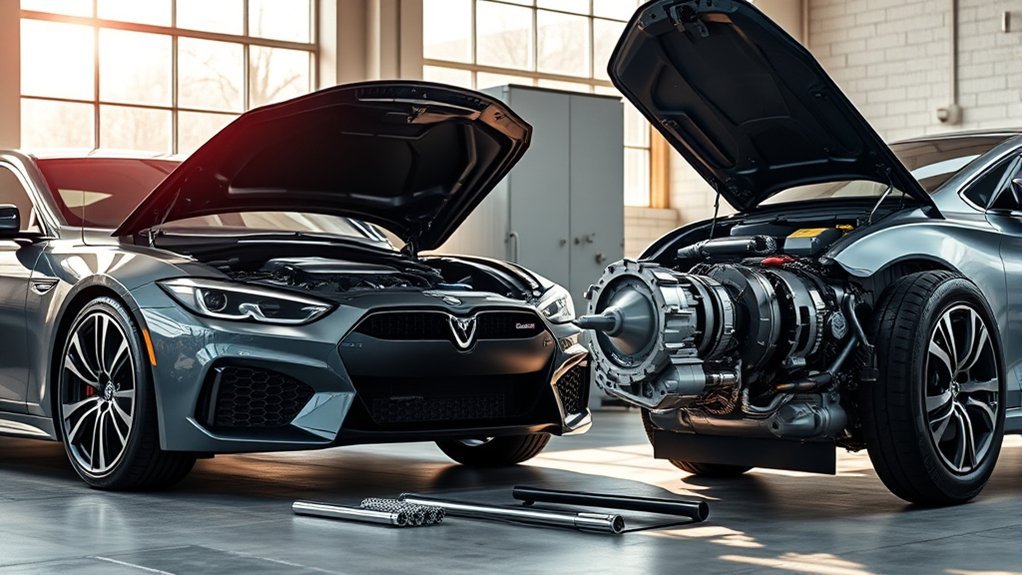
E-CVT and traditional automatic transmissions both let you drive without shifting gears yourself, but they do it in very different ways. A traditional automatic changes through fixed gears. An E-CVT, most often found in hybrid vehicles, blends engine and electric-motor power so the car can choose the most efficient power path for the situation.
Quick Answer
An E-CVT is usually better for smoothness and fuel economy in a hybrid, while a traditional automatic often feels more familiar and direct because it shifts through real gears. The best choice depends on the vehicle, not the transmission name alone.
Key Takeaways
- An E-CVT is not the same as a belt-and-pulley CVT used in many gasoline-only cars.
- Toyota-style E-CVTs use a power-split hybrid transaxle with motor-generators and a planetary gear device.
- Traditional automatics use fixed gear ratios, usually with clutch packs, planetary gears, hydraulic controls, and often a torque converter.
- E-CVTs usually feel smoother, but some drivers dislike the high-rpm “rubber band” sensation under hard acceleration.
- Reliability depends on the exact vehicle, service history, cooling, fluid condition, and manufacturer design.
What Is E-CVT and How Does It Work?
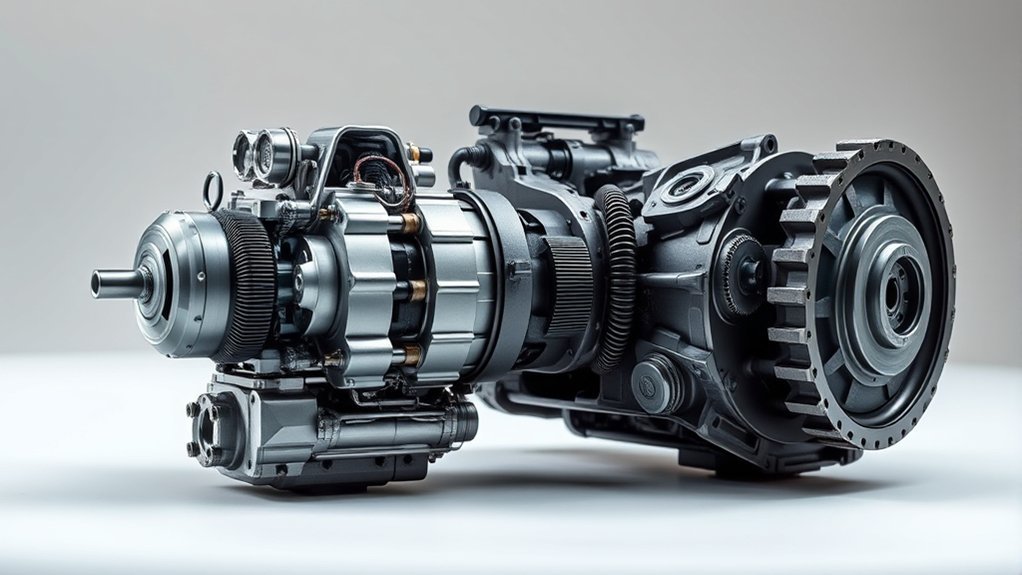
E-CVT stands for electronically controlled continuously variable transmission. In many hybrids, it is better understood as a power-management system than as a normal gearbox. Instead of stepping through fixed gears, it uses electronic controls to balance engine speed, generator speed, motor speed, battery charge, and wheel speed.
In a Toyota-style hybrid system, the transmission includes a power split device, electric generator, electric motor, and planetary gear. Toyota describes this system as functioning like an electronically controlled continuously variable transmission because it fluidly adjusts engine, generator, and motor speeds during acceleration and deceleration.
That is why an E-CVT often feels so smooth. There is usually no normal first-to-second or second-to-third gear change. The system simply changes how power flows between the engine, electric motor, generator, battery, and wheels.
Note: The term “E-CVT” is used differently by different manufacturers. Toyota, Honda, Ford, and other brands do not all use the exact same hardware layout, even when the driving result feels similar.
E-CVT vs CVT vs Automatic: Do Not Confuse Them
A common mistake is assuming an E-CVT is just a regular CVT with electronics added. That is usually not true.
| Transmission type | How it changes ratio | Common use | Driving feel |
|---|---|---|---|
| E-CVT | Uses electric motors, software control, and often a planetary power-split device or hybrid drive unit | Hybrid vehicles | Very smooth, sometimes high-rpm under hard acceleration |
| Belt CVT | Uses pulleys and a belt or chain to vary ratio | Many small gasoline cars and crossovers | Smooth but can feel droney or elastic |
| Traditional automatic | Shifts through fixed gear ratios using internal gearsets and clutches | Gasoline, diesel, and some hybrid vehicles | More familiar shift feel, sometimes more direct |
This distinction matters because E-CVT reliability and driving feel should not be judged by the reputation of belt-driven CVTs. Many E-CVT hybrids do not use the belt-and-pulley arrangement that shoppers often worry about.
[Products Worth Considering]

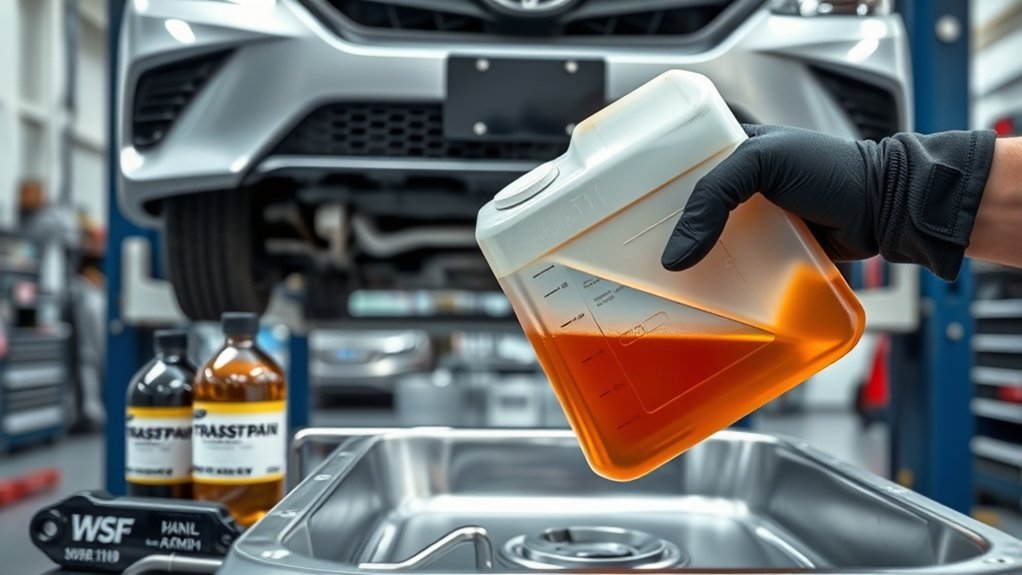
GENUINE OEM FLUID: Specially formulated and tested by Toyota for optimal performance in hybrid and electric vehicle transaxles
Key Differences Between E-CVT and Traditional Automatics
When you compare E-CVT and traditional automatic transmissions, the biggest differences are gear ratio behavior, power delivery, fuel-saving strategy, and driving feel. An E-CVT focuses on keeping the hybrid system efficient. A traditional automatic focuses on selecting the best fixed gear for speed, load, and throttle input.
Gear Ratio Flexibility
An E-CVT can vary the relationship between engine speed and wheel speed without normal step shifts. In Toyota-style systems, this happens through a planetary power split device and motor-generators. In Honda’s e:HEV systems, Honda explains that the vehicle can operate in electric, hybrid, and engine-drive modes, using the electric motor heavily in daily driving and connecting the engine directly in certain efficient cruising conditions.
- E-CVT systems can keep the engine closer to its efficient operating range.
- Traditional automatics shift between fixed ratios such as first, second, third, and so on.
- E-CVTs usually avoid the normal shift shock that can occur during gear changes.
- Some modern automatics shift very smoothly, so the difference is less dramatic than it used to be.
Power Delivery Mechanisms
Traditional automatics rely on a set of physical gear ratios. Many also use a torque converter to help the vehicle launch smoothly from a stop. By contrast, an E-CVT in a hybrid can launch with electric motor torque, start or stop the engine as needed, and recover energy through regenerative braking.
This is why many E-CVT hybrids feel calm in traffic. At low speeds, the electric motor can do much of the work. At steady speeds, the gasoline engine can run where it is efficient. During braking, the motor can act as a generator and send energy back to the battery.
Efficiency and Performance
An E-CVT does not create fuel economy by itself. The benefit comes from the whole hybrid system: efficient engine operation, electric assist, regenerative braking, automatic engine stop/start, and software that decides when to use each power source. Toyota’s hybrid system explanation notes that fuel efficiency is boosted by cutting the engine at stops and regenerating energy during deceleration.
A traditional automatic can still be efficient, especially modern 8-speed, 9-speed, and 10-speed units. However, in stop-and-go driving, a full hybrid with an E-CVT often has an advantage because it can move, coast, and brake using electric power more often.
Advantages of E-CVT: Efficiency and Performance
E-CVT systems are popular in hybrids because they match the strengths of electric motors. Electric motors make strong torque at low speed, while gasoline engines are usually more efficient in a narrower rpm range. The E-CVT helps the vehicle blend both sources smoothly.
[Products Worth Considering]

Enhanced friction durability for smooth transmission performance
Enhanced Fuel Efficiency
Modern hybrid vehicles with E-CVT-style systems can return excellent fuel economy because the system can:
- Use electric power at low speeds when the engine would be inefficient.
- Shut the engine off at stops or during some low-load conditions.
- Recover energy through regenerative braking.
- Keep engine rpm closer to an efficient operating range.
- Reduce unnecessary gear hunting in traffic.
The main fuel-saving advantage is not the E-CVT alone. It is the E-CVT working with the engine, battery, electric motor, generator, and regenerative braking system.
Smooth Power Delivery
Smooth power delivery is one of the strongest E-CVT advantages. Because there are no normal stepped gear changes in many systems, acceleration can feel clean and uninterrupted. This is especially noticeable in city driving, parking-lot speeds, and gentle acceleration.
Ford described the 2005 Escape Hybrid’s transmission as changing its gear ratio “seamlessly and continuously,” with no feeling of gear shifts as speed increased. That same basic benefit is why many hybrid shoppers like E-CVT vehicles today.
Adaptive Performance Capabilities
An E-CVT can quickly change how much work is handled by the engine, electric motor, generator, or battery. Depending on the vehicle, it may support:
- Electric-only low-speed movement for short distances.
- Engine assist during harder acceleration.
- Battery charging while cruising.
- Regenerative braking during deceleration.
- Software-controlled drive modes such as Eco, Normal, and Sport.
Toyota’s newer hybrid systems also show how E-CVT-related hardware continues to improve. Toyota describes its 2.0-liter THS II as a two-motor mechanical power split type and notes transaxle loss reduction in that system.
Comparing Driving Experiences: E-CVT and Traditional Automatics
Driving feel is where shoppers notice the biggest difference. An E-CVT hybrid often feels quiet, smooth, and relaxed. A traditional automatic often feels more familiar because the engine rises and falls with each gear change.
Under gentle acceleration, an E-CVT can feel refined. Under hard acceleration, the engine may jump to a higher rpm and stay there while the vehicle catches up in speed. Some drivers like the smoothness. Others miss the rising-and-falling rhythm of a normal automatic.
A traditional automatic can feel more direct when you press the accelerator, especially in a vehicle tuned for performance. It may also feel better for drivers who like hearing and feeling each shift. The trade-off is that gear changes, gear hunting, and torque-converter behavior can sometimes make a traditional automatic less smooth in traffic.
Addressing the “Rubber Band Feel” in E-CVT Performance
The “rubber band feel” is the sensation that the engine gets louder before road speed increases in the way the driver expects. This can happen because the E-CVT allows the engine to run at an efficient or power-producing rpm while vehicle speed changes separately.
Manufacturers reduce this sensation through software tuning. Some systems simulate stepped ratios. Others adjust engine sound, motor response, and throttle mapping to make acceleration feel more linear. Toyota has described newer hybrid tuning as delivering a more linear and lengthened sense of acceleration, while Honda has developed hybrid control technologies aimed at a more engaging driving feel.
Pro Tip: Test-drive an E-CVT hybrid on a highway on-ramp before buying. Gentle city driving may feel excellent, but hard acceleration is where you will know whether you like the E-CVT feel.
Reliability and Maintenance: What Owners Should Know
E-CVTs are often praised because many designs avoid belts, pulleys, and frequent gear shifting. That can be a real advantage. However, it is not accurate to say every E-CVT is automatically more reliable than every traditional automatic.
Reliability depends on the specific vehicle and how it was maintained. Important factors include:
- Correct hybrid transaxle fluid or HEV oil.
- Proper cooling for the transmission, inverter, and hybrid components.
- Battery condition and high-voltage system health.
- Software updates or technical service bulletins.
- Driving use, including towing, heat, hills, and heavy stop-and-go duty.
Warning: Do not assume all E-CVT fluid is lifetime fluid or interchangeable. Toyota owner information for hybrid models specifies approved fluid types and warns that the wrong fluid can cause abnormal noise, vibration, or transmission damage. Always follow the owner’s manual for your exact model and year.
A traditional automatic also needs correct fluid and service. In some vehicles, automatic transmission repairs can be expensive because of complex valve bodies, clutch packs, sensors, and control modules. In an E-CVT hybrid, repair costs may involve different expensive parts, such as motor-generators, inverters, or hybrid transaxle assemblies.
Not All Hybrids Use E-CVT
Many Toyota and Lexus hybrids use E-CVT-style power-split systems, and many Honda hybrids are marketed with electric CVT operation. But not every hybrid works this way.
For example, Hyundai Transys describes hybrid automatic and hybrid dual-clutch transmission systems that use fixed gearsets and hybrid motors. That means shoppers should not assume “hybrid” always equals “E-CVT.” Some hybrids feel more like traditional automatics because they actually use automatic or dual-clutch hardware.
Historical Development of E-CVT Technology
E-CVT-style hybrid transmission technology became widely known through Toyota’s Prius. Toyota says the Toyota Hybrid System was incorporated in the first-generation Prius in 1997 and evolved into THS II in 2003. The early Toyota system used a power split device with a planetary gear to divide engine power between the wheels and a generator.
Ford also played an important role in bringing the experience to SUV buyers. The 2005 Ford Escape Hybrid showed that a hybrid SUV could drive like a conventional automatic vehicle while using a transmission that changed ratio smoothly and continuously.
Since then, the technology has continued to branch out. Toyota has refined its power-split hybrid transaxles. Honda’s e:HEV hybrid system uses motor drive for much daily driving and can connect the engine directly during efficient cruising. Newer Honda information also describes electric CVT drive units with two built-in motors and direct engine-connected gearing in some next-generation systems.
When to Choose E-CVT vs. Automatics
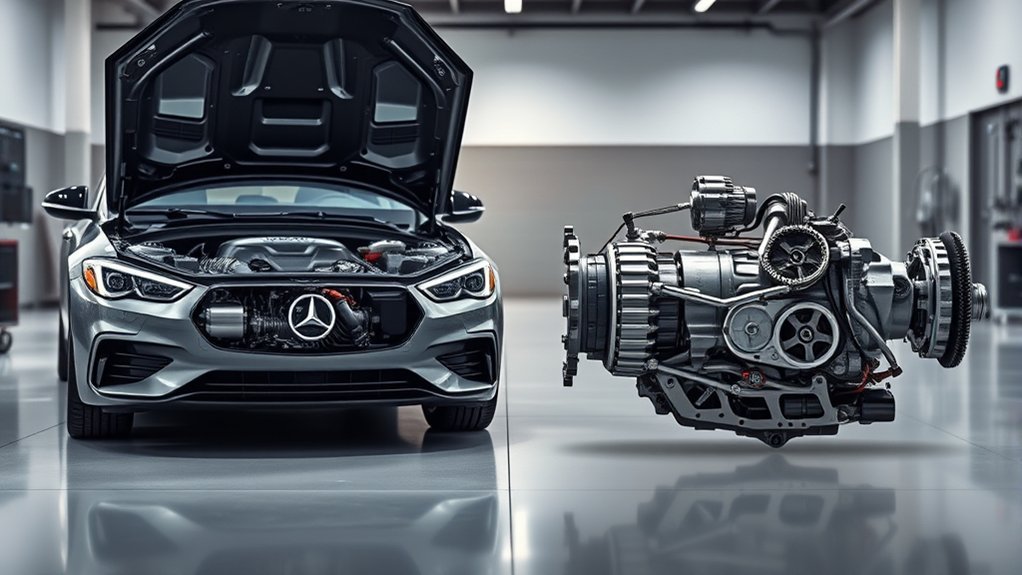
Choose an E-CVT hybrid if your priorities are smoothness, city fuel economy, low-speed quietness, and relaxed commuting. It is especially appealing if you spend a lot of time in traffic, where electric assist and regenerative braking can help.
Choose a traditional automatic if you prefer a more familiar shift feel, want a non-hybrid vehicle, tow often, or care more about direct acceleration feel than maximum hybrid efficiency. A well-tuned modern automatic can be very smooth and responsive.
Use this simple buying checklist:
- Mostly city driving: E-CVT hybrid is usually a strong fit.
- Mostly highway driving: Compare actual EPA or official fuel-economy ratings for the exact models.
- Sporty feel matters: Test-drive both; a traditional automatic may feel more natural.
- Long-term ownership: Check maintenance records, fluid history, recalls, and hybrid battery warranty.
- Towing or heavy loads: Follow the manufacturer’s tow rating and service schedule, not generic transmission advice.
Future of E-CVT: Trends and Innovations
The future of E-CVT is less about adding more “gears” and more about improving the whole hybrid system. Manufacturers are working on lower mechanical losses, smaller transaxles, better motor cooling, improved battery control, and software that makes acceleration feel more natural.
Toyota’s newer hybrid systems show this direction with compact transaxles and loss-reduction work. Honda’s next-generation e:HEV information points to electric CVT units with built-in motors, improved engine efficiency, better cooling, and direct engine-connected gearing for certain conditions.
For drivers, the likely result is simple: future E-CVT hybrids should feel quieter, more responsive, and less “rubber band” than older models while keeping the smoothness and efficiency that made the technology popular.
Common Myths About E-CVT and Automatic Transmissions
Before choosing between E-CVT and automatic, it helps to clear up a few common myths.
- Myth: An E-CVT is just a regular CVT. In many hybrids, it is a different system that does not use a belt-and-pulley layout.
- Myth: E-CVTs are always slow. Many feel quick from a stop because electric motors deliver strong low-speed torque.
- Myth: Traditional automatics are always less efficient. Some modern automatics are highly efficient, and the full vehicle design matters more than the label.
- Myth: E-CVTs require no maintenance. They still use specified fluids and model-specific service procedures.
- Myth: All hybrids use E-CVT. Some hybrids use automatic or dual-clutch transmissions instead.
Frequently Asked Questions
Is an E-CVT more reliable than an automatic?
It can be, especially in well-proven hybrid systems that avoid belts, pulleys, and frequent stepped shifts. But reliability is not guaranteed by the transmission name alone. Vehicle design, fluid condition, cooling, battery health, service history, and driving use all matter.
Is an E-CVT transmission automatic?
Yes. From the driver’s seat, an E-CVT works like an automatic because there is no clutch pedal and you do not shift gears yourself. Mechanically, though, it works differently from a traditional automatic transmission.
Is an E-CVT the same as a regular CVT?
No. A regular CVT commonly uses pulleys and a belt or chain. Many hybrid E-CVT systems use motor-generators, electronic control, and a gear-based power-split or electric drive layout instead.
Why does an E-CVT sometimes sound loud during acceleration?
The engine may hold a higher rpm while the hybrid system delivers power efficiently. Because road speed and engine speed are not tied to fixed gear steps, the sound can feel different from a traditional automatic.
Which is better for fuel economy: E-CVT or automatic?
An E-CVT hybrid is often better in city driving because it can use electric power, stop the engine, and recover braking energy. For highway driving, compare the official fuel-economy ratings for the exact vehicles you are considering.
Do E-CVT transmissions need fluid changes?
They use manufacturer-specified fluid or HEV oil, but service intervals vary by model and market. Always follow the owner’s manual for your exact vehicle, especially if you drive in heat, mountains, heavy traffic, or towing conditions.
Conclusion
E-CVT and traditional automatic transmissions are built around different priorities. An E-CVT is usually the better match for a hybrid focused on smoothness, low-speed efficiency, and easy daily driving. A traditional automatic is often better for drivers who want familiar shift feel, direct response, or a non-hybrid powertrain.
The smartest choice is to compare the exact vehicles, not just the transmission labels. Check official fuel-economy ratings, maintenance requirements, tow ratings, warranty coverage, and service history. Then test-drive both in the conditions you actually drive every day.
Sources
- Toyota Global: Toyota Introduces New Passenger Vehicle Hybrid System — backs up Toyota hybrid power split, planetary gear, E-CVT function, engine stop, and regenerative braking.
- Toyota Global: 2.0-liter Toyota Hybrid System THS II — backs up newer Toyota hybrid transaxle and loss-reduction details.
- Toyota Global: Inheriting Hybrid Technologies — backs up Toyota Hybrid System use in the first-generation Prius in 1997.
- Honda Global: e:HEV Original Honda Hybrid System — backs up Honda e:HEV operating modes and two-motor hybrid behavior.
- Honda Global: Evolution of the e:HEV Powertrain — backs up newer Honda electric CVT drive-unit details.
- Hyundai Transys: Hybrid Drive System — backs up the point that some hybrids use hybrid automatic or hybrid DCT systems rather than E-CVT.