You should check your tire pressure at least once a month, ideally in the morning when tires are cold for accurate readings. Use a reliable tire pressure gauge; press it firmly against the valve stem to guarantee precision. Maintain tire pressure between 32 to 33 PSI for peak performance. Pay attention to seasonal changes, as temperature fluctuations can affect pressure. Keep an eye out for signs of issues, and you’ll uncover more tips for effective tire maintenance next.
How to Check Tire Pressure Regularly

To guarantee ideal performance and safety, check your tire pressure at least once a month. Use a reliable tire pressure gauge, whether manual or digital, for consistent readings. Always check your tire pressure when your tires are cold, ideally after the vehicle has been parked for a few hours. Firmly press the gauge against the valve stem to obtain an accurate psi reading. Document each tire’s pressure to monitor changes over time, which can help identify potential issues early. Make checking tire pressure a key part of your tire maintenance routine, especially before long trips or following significant temperature changes. By staying proactive, you ascertain your tires maintain proper pressure, enhancing both safety and performance.
Best Times to Check Tire Pressure?
Monitoring tire pressure regularly is essential for maintaining ideal performance and safety. The best times to check tire pressure are in the morning when tires are cold, ideally after they’ve rested for a few hours. At this time, you’ll obtain the most accurate reading of your tire’s best tire pressure. Remember, tire pressure can fluctuate by 1-2 psi for every 10-degree temperature change, making consistent checks vital, especially during seasonal changes. Although evening checks can reveal pressure changes due to heat buildup from driving, morning readings provide a reliable baseline. By checking your tires at the same time each month, you’ll identify unusual pressure patterns and guarantee your tires remain properly inflated, enhancing your overall driving experience.
How to Properly Measure Tire Pressure
When you’re ready to check your tire pressure, grab a tire pressure gauge for the most accurate results. Begin by removing the valve cap from the tire and pressing the tire gauge firmly against the valve stem until it displays pressure readings. For ideal performance, maintain tire pressure between 32 to 33 PSI, as indicated in the owners manual or on the sticker inside your driver’s door. Regular tire pressure monitoring is essential—check the pressure at least once a month and after significant temperature changes, since low tire pressure can drop by 1 PSI for every 10-degree decrease. Keep an eye on your TPMS light; it’s your vehicle’s warning system for low tire pressure. Record all readings to track changes over time.
Signs Your Tire Pressure Needs Immediate Attention
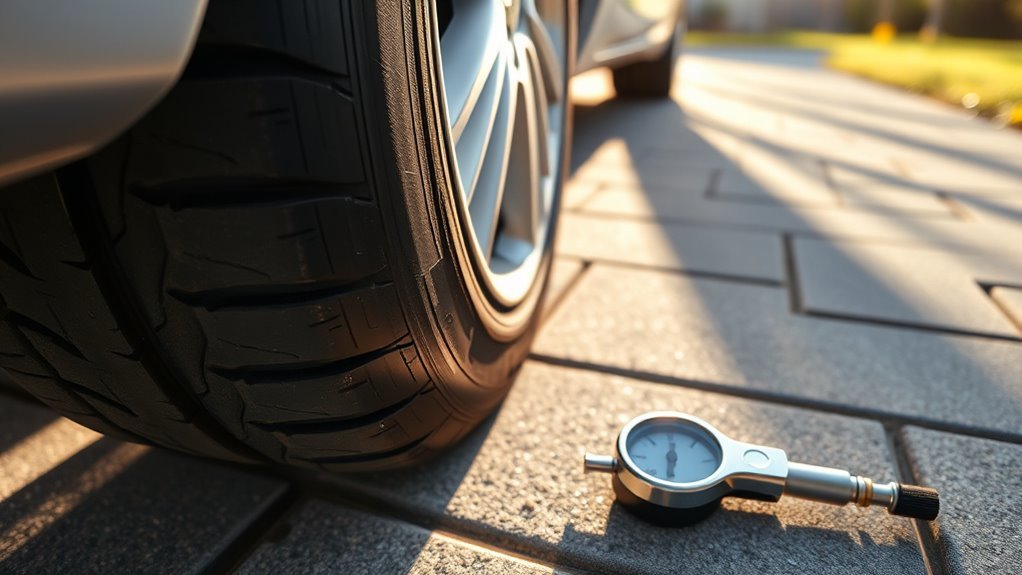
Regular tire pressure checks are essential, but knowing the signs that indicate immediate attention is just as important. Keep an eye out for these warning signals:
| Warning Sign | Cause | Action Required |
|---|---|---|
| TPMS light activated | Low air pressure in at least one tire | Check and inflate tires |
| Increased road noise/vibrations | Underinflated tires | Inspect and adjust pressure |
| Uneven tire wear | Improper pressure levels | Realign and inflate tires |
| Longer braking distances | Low tire pressure | Inspect and inflate tires |
If you notice any of these signs, address them promptly. Ignoring them can compromise your driving experience and lead to costly repairs. Regular pressure checks at the valve stem can help maintain ideal tire performance.
How Seasonal Changes Affect Your Tire Pressure?
As temperatures fluctuate with the changing seasons, your tire pressure can be greatly affected, requiring you to pay closer attention to it. During cold temperatures from November to March, tire pressure typically drops by 1 PSI for every 10-degree Fahrenheit decrease, so monitor tire pressure more frequently. In contrast, summer heat can cause pressure to rise considerably; checking your tires in the morning yields the most accurate cold readings. Seasonal shifts between spring and fall can also result in temperature fluctuations, making weekly checks essential. Remember, changes in tire pressure directly impact vehicle handling and grip, affecting your overall driving performance. Verify you maintain your tires properly to navigate these seasonal challenges safely.
Year-Round Tire Pressure Maintenance Tips
Checking your tire pressure monthly is essential for maintaining perfect vehicle performance and safety. Establish a habit of checking tires regularly, especially during seasonal fluctuations. Here are some tips to guarantee peak performance:
- Check in the morning: Get cold readings before driving to avoid heat-induced inflation.
- Monitor during temperature changes: Expect a 1 PSI variation for every 10-degree shift; adjust your checks accordingly.
- Document your readings: Keep a gauge in your glove box and record each measurement to track changes over time.
Finding Help for Tire Pressure Issues

When you encounter tire pressure issues, seeking expert assistance can make all the difference. A qualified service team, like those at Sommers Subaru in Mequon, can help resolve TPMS warnings and check the tire for slow leaks or valve problems. Regular maintenance, ideally twice a month, enhances your vehicle’s safety and performance. Keeping a log of tire pressure readings with professional help aids in identifying patterns that may indicate deeper issues. Additionally, consider acquiring a portable air pump for quick adjustments. For best results, consult tire professionals on best practices to maintain proper tire pressure and prevent excessive tire heat, ensuring a smoother, safer ride. Don’t underestimate the value of expert guidance.
Frequently Asked Questions
What Is the Best Time of Day to Check Tire Pressure?
You should check your tire pressure in the morning as part of your morning routine. It’s more accurate then, minimizing temperature effects and humidity impact, ensuring ideal vehicle maintenance before your travel preparation begins.
What Is the 3% Tire Rule?
The 3% Tire Rule states a 1 PSI drop reduces fuel efficiency by 3%. For peak performance, regularly monitor pressure using tools, apply proper inflation methods, and debunk common tire myths for safety benefits.
What Is the 4 Psi Rule?
The 4 psi rule states that for every 10-degree drop in temperature, tire pressure decreases by about 1 psi. Regular pressure monitoring and seasonal adjustments guarantee safety checks and peak performance, enhancing your vehicle’s maintenance schedule.
Should I Check My Tire Pressure When It’s Hot or Cold?
You should check your tire pressure when it’s cold. Cold tire checks minimize pressure fluctuations caused by ambient temperature and guarantee accurate readings. This practice enhances tire lifespan and maintains ideal driving conditions for safety.
Conclusion
In summary, regularly checking your tire pressure is essential for safety and performance. By monitoring it at least once a month and adjusting for seasonal changes, you guarantee your tires aren’t just inflated, but perfectly prepared for the road. Don’t underestimate the impact of proper tire pressure; it can feel like driving on clouds! Stay vigilant for signs of pressure issues, and always seek professional help when needed to maintain peak vehicle performance.