Your Toyota Tundra typically uses a 2″ trailer ball for light trailers (under ~8,000 lb GTW) and a 2‑5/16″ ball for heavy trailers (over ~10,000 lb GTW); match the ball to the coupler diameter and confirm the ball and shank are rated above the trailer’s tongue and gross weights. Check coupler markings, measure tongue weight (10–15% GTW), fit the shank to your receiver, and torque to spec; keep components inspected and tightened for safe towing—more specifics follow.
Which Trailer Ball Size Does a Toyota Tundra Need?

Wondering which trailer ball size your Toyota Tundra needs? You’ll match trailer ball compatibility to the trailer coupler and towing load. Your Tundra’s standard 2-inch receiver accepts balls for medium-duty trailers—most commonly a 2-inch ball—while heavier trailers require a 2-5/16-inch ball. You’ll choose the ball size that corresponds to the coupler diameter and the trailer’s gross trailer weight; the wrong size compromises coupling integrity. The Tundra’s towing capacity supports both sizes when rated components are used, so pick the ball with the correct shank diameter, rise/drop, and load rating. Regularly inspect the hitch assembly, fasteners, and ball for wear, deformity, or corrosion, and replace parts that don’t meet specifications. Prioritizing precise, rated connections reinforces safe towing practices and frees you from preventable failure. Stay disciplined about compatibility and inspection, and you’ll keep towing predictable, compliant, and liberating.
How to Read Your Trailer Coupler and Measure Tongue Weight
Now that you know which ball diameter your Tundra can use, confirm the coupler’s stamped size and measure tongue weight before you hitch up. Look for coupler markings on the coupler face or latch—most trailers state 2″ or 2-5/16″ there. Match that stamped diameter to your hitch ball for a secure fit; mismatches create play and risk failure.
For weight measurement, use a calibrated scale or tongue weight gauge. Position the trailer on level ground and measure static tongue load; target 10–15% of Gross Trailer Weight (GTW). Example: a 6,000 lb GTW needs 600–900 lb tongue weight. If readings fall outside that band, shift cargo fore or aft or adjust load distribution to regain stability.
Inspect the coupler and retest weight measurement regularly. Accurate coupler markings verification and disciplined weight measurement free you from needless risk and keep towing controlled, legal, and liberating.
Tundra 2 Receiver: Shank Fit & Torque Specs
Because the Tundra uses a standard 2-inch receiver, you’ll find broad compatibility with hitch accessories—but the shank diameter and proper torque are what actually keep the ball secure and safe. You’ll select shank size (3/4-inch, 1-inch, or 1-1/4-inch) to match the trailer ball hole; mismatched shank compatibility creates gaps, movement, and catastrophic risk. Measure the hole and shank before mounting.
Torque maintenance is non-negotiable: 3/4-inch shanks require 160 ft·lbs, 1-inch need 250 ft·lbs, and 1-1/4-inch demand 450 ft·lbs. Use a calibrated torque wrench, tighten to spec, then recheck after a short break-in towing period. Inspect for wear, corrosion, or elongation of the hole, and replace components showing play.
You’ll free yourself from risk by insisting on correct shank fit and documented torque maintenance. That disciplined approach protects your rig, your trailer, and your right to roam without restraint.
2″ Vs 2‑5/16″ Balls: When to Use Each (By Trailer Type and Weight)
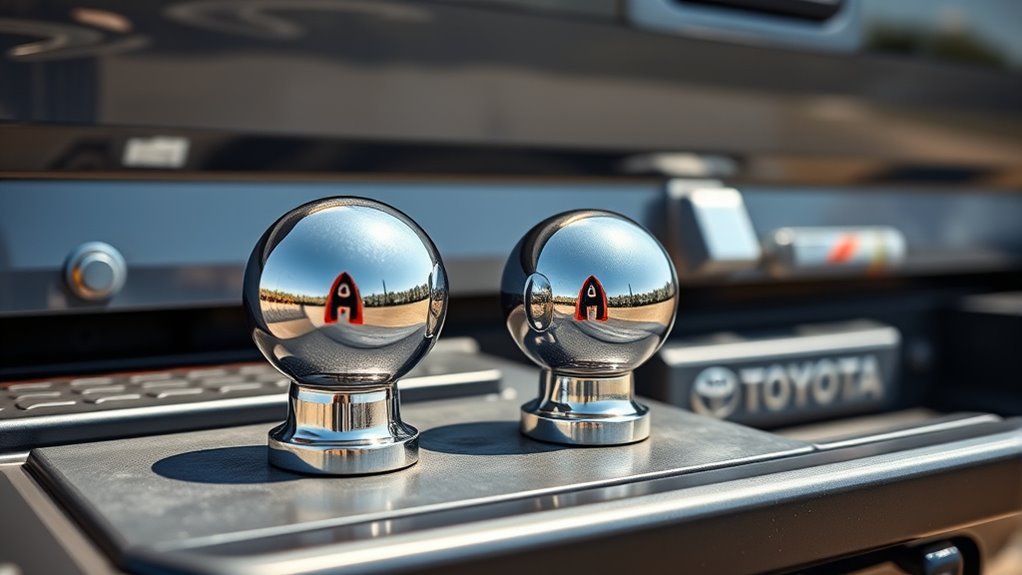
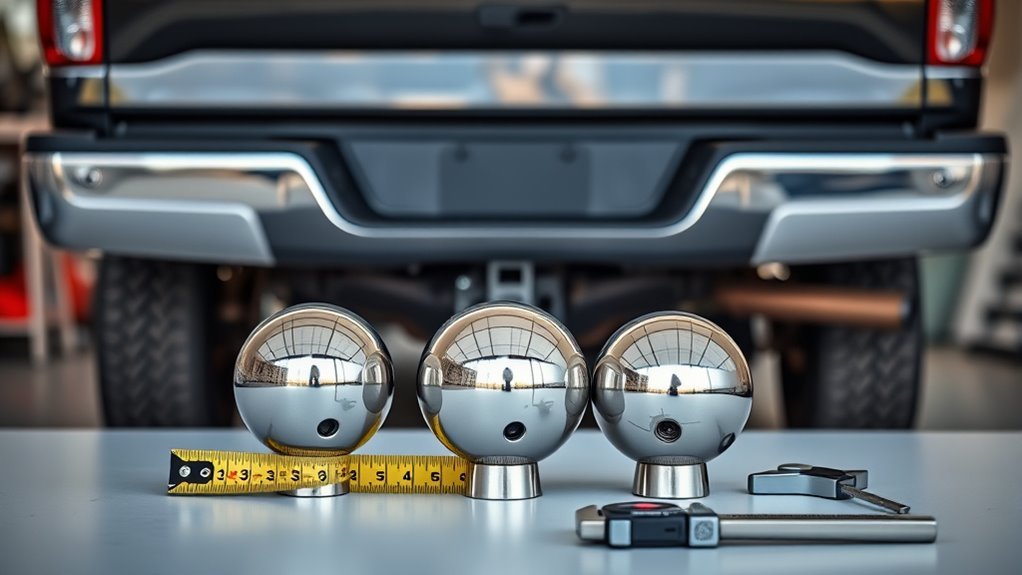
When you’re deciding between a 2” and a 2‑5/16″ ball, match the ball to the trailer type: use 2″ for light and medium trailers and 2‑5/16″ for heavy trailers like horse, fifth‑wheel, or large travel trailers. Check Gross Trailer Weight and Tongue Weight to confirm the chosen ball meets or exceeds the required ratings. If you need flexibility, use an adjustable hitch that accepts both diameters to maintain proper fit and safety.
Light Trailers & 2
If you’re towing a light trailer—think small utility, jet-ski, or compact camping trailers—you’ll usually use a 2-inch hitch ball rated up to about 8,000 lb; match the ball to the trailer coupler and confirm your Tundra’s GTW and tongue weight limits before hitching. You’ll choose a 2-inch ball when trailer weight stays under the ball’s rating and within your truck’s towing specs. Verify coupler size; a loose or forced fit compromises towing safety and risks detachment. Check gross trailer weight and tongue weight on the trailer or scale, and select a ball and hitch with equal or higher ratings. Use quality hardware, torque the ball nut to spec, and inspect connections before each trip to maintain control and personal freedom on the road.
Heavy Trailers & 2‑5/16
For heavy trailers—think loads over 10,000 lb—you’ll want a 2‑5/16‑inch hitch ball because it’s engineered for the higher GTW and tongue weight those rigs impose. You’ll choose 2‑5/16″ for heavy duty towing and when the trailer coupler calls for it; many couplers are stamped with required ball size. Match ball size to the coupler for trailer compatibility and inspect parts for wear before every trip. If GTW tops ~8,000 lb, opt for 2‑5/16″ to maintain connection strength and stability. This choice frees you from guesswork and keeps your rig reliable under strain.
| Trailer Type | Recommended Ball |
|---|---|
| Fifth wheel tow | 2‑5/16″ |
| Equipment hauler | 2‑5/16″ |
| Car hauler | 2‑5/16″ |
| Travel trailer (heavy) | 2‑5/16″ |
Tongue Weight And Safety
Many towing problems trace back to incorrect tongue weight, so aim for 10–15% of GTW to keep the trailer stable and the hitch loaded correctly. You’ll monitor tongue weight to preserve towing stability and trailer safety: too little weight makes the trailer sway, too much overloads the rear axle and reduces steering control. Match coupler and ball size—2″ for most trailers up to 8,000 lb GTW, 2-5/16″ for heavier or travel trailers over roughly 10,000 lb—to prevent disengagement risk. Inspect the ball, coupler, and weight distribution hardware before every trip. If your Tundra tows varying trailers, carry both ball sizes and a calibrated scale. Prioritize measured checks and compliance with regulations to tow freely and safely.
Adjustable and Dual‑Ball Mounts for Towing Multiple Trailers
When you’re switching between trailers with different coupler sizes, an adjustable or dual‑ball mount like the B&W Tow & Stow lets you carry both 2‑inch and 2‑5/16‑inch balls and change hitch height quickly to optimize tongue weight and towing stability. You get towing versatility without swapping balls, so you can mobilize freely and reclaim time. Adjustable mounts let you set precise tongue height to maintain proper weight distribution and reduce sway, which improves control and confidence on the road.
Choose a mount with proven mount durability—heavy‑gauge steel, quality welds, and corrosion protection—to guarantee the assembly withstands frequent adjustments and heavy loads while meeting safety ratings. Inspect pivot points, locking pins, and ball mounts before each trip; lubricate moving parts and torque fasteners to spec. Proper maintenance preserves performance and safety, letting you tow multiple trailers with predictable behavior. This approach keeps your Tundra ready, responsive, and liberated for varied towing tasks.
When to Use Weight‑Distribution or Higher‑Rated Hitches on a Tundra
If you’re towing over about 5,000 lb GTW or hauling trailers with high or shifting tongue weights, fit a weight‑distribution hitch or step up to a higher‑rated 10,000‑lb class hitch to keep the Tundra stable and within safety margins. You’ll choose between hitch types based on load behavior: fixed-ball for predictable loads, adjustable or weight‑distribution for heavy or dynamic trailers. Match the hitch rating to or above the Gross Trailer Weight — an under‑rated hitch invites failure.
Use weight‑distribution hitches when tongue weight shifts or approaches the upper portion of your towing capacity; they transfer load to the truck’s axles, reduce sag, and restore steering and braking balance. Adjustable hitches help align trailer and truck for efficient force transfer. Inspect components regularly for wear, fit, and secure attachment; maintenance preserves capability and personal freedom on the road. If you plan future heavier towing, opt for the higher‑rated 10,000‑lb options now to avoid constraints later.
Quick Buying & Installation Checklist for Your Tundra Trailer Ball
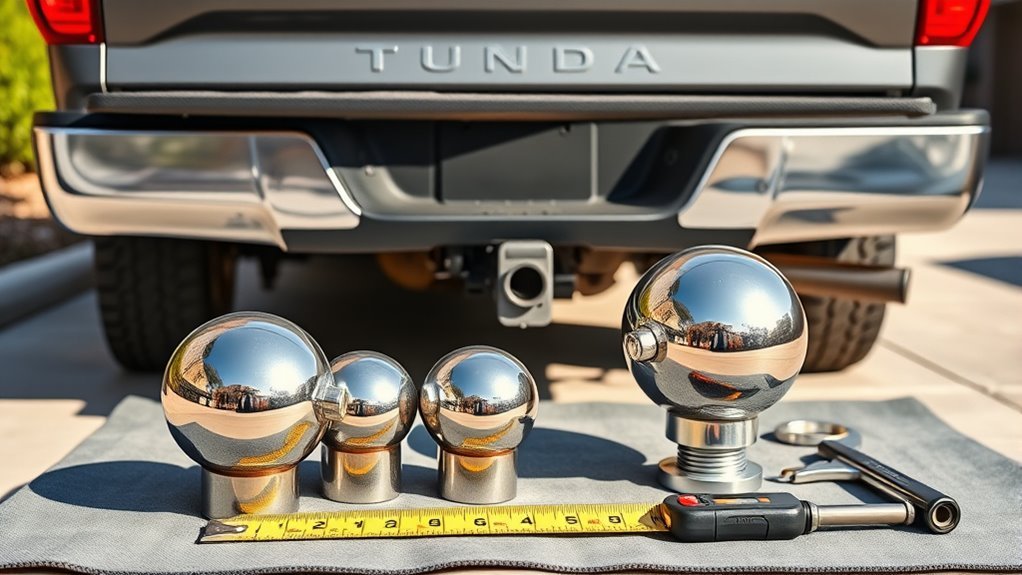
Because a correct trailer ball is fundamental to safe towing, start by matching the ball diameter to your trailer coupler—Tundras most commonly use 2.000″ or 2-5/16″ balls—and verify the shank fits your hitch receiver with no gaps. Confirm your receiver size (usually 2″) and select a shank that seats flush to prevent movement. Check torque specs: a 2″ shank should be tightened to 160 ft-lbs; use a calibrated torque wrench and a measured procedure.
Choose a ball rated above your trailer gross tongue weight and consider an adjustable ball mount for flexible ride height and trailer compatibility. Buy from reputable brands and include locking hardware to deter theft. Inspect threads, welds, and chrome for wear as part of trailer ball maintenance; replace components showing deformation or corrosion. Pack a compact tool kit and keep spare towing accessories—pins, clips, and a secondary ball—in the truck. Verify compliance with local towing regulations before each trip.
Frequently Asked Questions
How Do I Know What Size Trailer Ball I Need?
Check your coupler stamp or measure the ball diameter and shank; match trailer weight to your truck’s towing capacity, pick a ball with proper diameter and shank, and confirm its rated capacity exceeds GTW for safe liberation.
Conclusion
You now know the Tundra commonly uses either a 2″ or 2‑5/16″ trailer ball, how to measure couplers and tongue weight, and when to step up to weight‑distribution gear. Remember: about 34% of light‑truck towing setups actually use the larger 2‑5/16″ ball, so picture one in a truck bed ready for heavier loads. Use the correct shank fit and torque, verify tongue weight, and choose dual or adjustable mounts when you tow different trailers.