Extend your Tundra’s tow mirrors before hitching, then use the instrument‑panel selector and four‑way pad to set the upper glass so the horizon sits near the center and the lower convex lens so you can see the rear tires and ground while backing. Fold or retract with the fold button for daily driving. Use heater/turn‑signal features as needed, apply steady pressure for stiff lenses, and recheck mirrors with the trailer hitched — keep going to learn finer tips and options.
Adjust Your Tundra Tow Mirrors : Quick Steps

Start by fully extending the tow mirrors and settling into the driver’s seat. You’ll start with mirror maintenance: inspect lenses and housings for damage, clean with a mild cleaner, and confirm the mirrors extend fully for towing. Use adjustment techniques deliberately: the upper mirror moves with the four-way switch on the left of the instrument panel—set it so the horizon aligns to reduce blind spots or shows approaching lanes. The bottom lens is manual; apply firm pressure on both sides to position it so you see your rear wheels when backing or eliminate remaining blind spots. Recheck both mirrors with a trailer hitched, making small incremental changes until side coverage is balanced and rear wheel visibility is clear. Avoid moving mirrors while driving. When you’re done, note any need for repairs and keep a brief maintenance schedule to preserve clear sightlines and freedom on the road.
Use Power Controls and the Fold Button on Tundra Mirrors
When you need to fold or extend the Tundra’s towing mirrors, use the power controls on the left side of the instrument panel—press the mirror selector, then the fold button to tuck them in for tight parking or use the four-way pad to extend and fine-tune each mirror for towing. You’ll engage the power folding mechanism quickly, preserving mirror integrity and freeing space. Use the four-way adjustment control to set the large mirror surfaces for maximum side visibility; this reduces blind spots while towing. Activate the heater when mist or fog appears, and rely on integrated turn signals for added safety during lane changes. These mirror features give you control and confidence.
| Control | Function |
|---|---|
| Fold button | Tuck mirrors for parking |
| Four-way pad | Extend and adjust mirrors |
| Heater/Signal | Clear visibility / alert drivers |
Follow these adjustment tips to claim freedom on the road.
When to Extend Mirrors: Towing vs Daily Driving
If you’re towing a trailer, extend the Tundra’s towing mirrors so you can see the trailer’s sides and rear wheels; for everyday driving without a trailer, retract them to improve aerodynamics and avoid damage in tight spaces. When towing, use the mirror selector rocker switch to extend mirrors quickly—this basic towing strategy opens up sightlines and reduces blind spots. Position the mirrors to capture the trailer’s rear wheels and adjacent lanes so you can change lanes and judge clearance confidently.
For daily driving, retracting mirrors minimizes wind drag and lowers the chance of knocks in parking lots or narrow streets. Check and adjust mirror position each trip: load size affects required extension and angle, so refine your visibility techniques whenever you hitch a different trailer. You’re in control—use manual extension when needed and keep mirrors tucked when free, applying clear, deliberate towing strategies that protect your freedom on the road.
Aim the Lower Convex Lens for Backing and Tire View
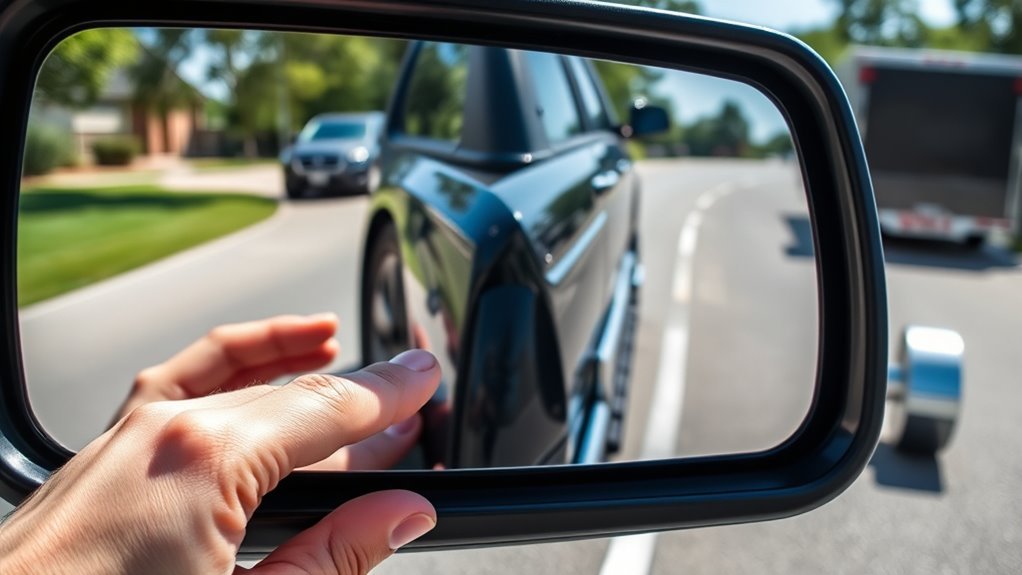
Now that you’ve set mirror extension for towing, fine-tune the lower convex lens so you can see the rear tires and ground while backing. Use firm, even pressure on both sides of the lens to change its angle; that tactile method gives immediate feedback and is the simplest lens adjustment technique. Aim the lens slightly downward so the rear wheel edges and the ground just behind the bumper sit in view—this helps you judge clearance and avoid obstacles when reversing. Adjust until you can consistently see a portion of the vehicle’s edge; that frame of reference increases spatial awareness and freedom to maneuver. Try small incremental moves, testing by backing slowly and reworking the tilt as needed. Some drivers prefer a subtle upward tilt for highway lane awareness, but for backing focus on downward aim. Keep experimenting—individual posture and habits affect the ideal position—so use these visibility enhancement tips until the lens position matches your driving style and gives you confident control.
Best Positions to Reduce Blind Spots for Lane Changes
Although you’ve already set the mirrors for towing, tweak the upper and lower lenses so they work together to eliminate side blind spots during lane changes. Use mirror alignment strategies: aim the upper mirror slightly outward to capture peripheral lanes, letting you spot approaching vehicles sooner. Set the lower convex lens to show the rear wheels or the ground; that grounds your spatial awareness and reduces blind spots effectively. Position the convex mirror so it includes the edge of your truck—this helps judge how close another car is beside you without turning your head.
Practice blind spot techniques by making small, deliberate angle changes and testing them on a quiet road; slight adjustments make a big difference. Reassess settings whenever load or conditions change to keep visibility sharp. These concise, actionable steps free you from uncertainty and let you change lanes with confident control.
Common Problems (Stiff Lenses, Limited Travel) and Fixes
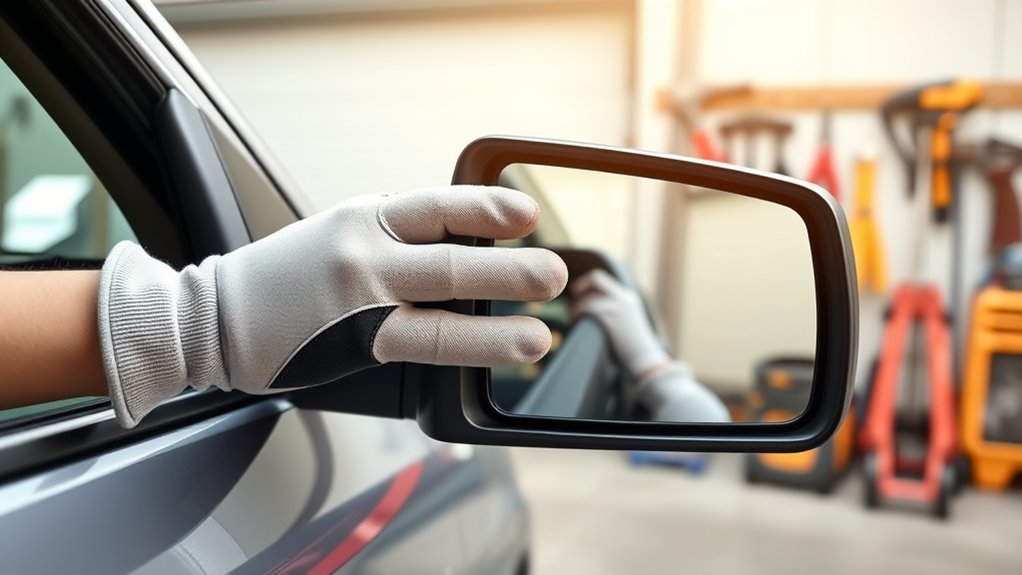
Because towing mirrors are built tougher and with limited range, you’ll often need firm, even pressure on both sides of the lower lens to get the angle you want—take care not to flex the housing. Expect stiff lenses; apply steady, balanced force and adjust slowly. Mirror stiffness solutions include using gloved hands for better grip, seating yourself in your usual driving position, and pressing both left and right edges simultaneously to avoid twisting the assembly.
Limited travel of the bottom lens reduces adjustment range; counter this by experimenting with angles that trade a little side view for more rearward visibility. Visibility enhancement techniques include tilting the lower lens incrementally while checking sightlines from the driver seat and using a helper to confirm blind-spot coverage. Remember many Tundra towing mirrors require manual tweaks when backing up; be patient, avoid forcing components, and repeat small refinements until the view frees your driving.
Owner Tips: Pressure, Reference Points, and Test Drives

When you adjust the lower towing lens, press firmly and evenly on both sides to get precise positioning without twisting the housing; use a gloved hand if you need extra grip. That firm, balanced pressure yields finer control and cleaner visibility techniques. Use simple adjustment tools if a lens resists, but rely mostly on hand pressure to avoid over-torquing fasteners.
Pick clear reference points—vehicle edges, lane lines, parked objects—and align the mirror so those points sit where your blind spot should be minimized. After each change, take a short test drive that includes lane changes, merging, and backing; small shifts on the road reveal what static checks miss.
Revisit settings when your load or towing setup changes. Engage community feedback for techniques that match your driving style and promote independent decision-making.
- Use firm, even pressure first.
- Confirm alignment with external reference points.
- Validate with varied test drives and iterative tweaks.
Aftermarket and Sport Mirror Options (When to Replace)
If you’re noticing persistent blind spots, poor visibility when towing, or damaged mirror housings, it’s time to contemplate replacement with aftermarket or sport options. Sport mirrors can improve aerodynamics and side visibility for everyday driving, while aftermarket towing mirrors give larger, more adjustable glass for safer lane changes and backing when hauling. Check compatibility with your Tundra’s wiring and controls so power features work without extra hassle.
When To Replace
Although you can put up with minor imperfections, replace your towing mirrors as soon as visibility is compromised or blind spots can’t be fixed by adjustment—this is especially true if you need the expanded field of view for towing. Prioritize mirror safety and visibility enhancement; don’t accept obscured sightlines or cracked glass. Choose aftermarket or sport options that match your Tundra’s electrical system if you want power folding, heating, or indicators.
- Replace if glass is cracked, fogged, or pitted.
- Replace when blind spots remain after proper adjustment.
- Replace if desired features need wiring or compatibility changes.
Act decisively to regain freedom on the road: a clear, reliable mirror setup protects you and simplifies towing.
Sport Mirror Benefits
Once you’ve decided to replace compromised towing mirrors, consider sport or aftermarket options that boost everyday visibility and style. You’ll gain sport mirror features like superior vertical field of view and convex surfaces that shrink blind spots and expand side coverage. Those visibility enhancements help you change lanes, park, and back up with confidence by letting you see rear wheels and surrounding traffic more precisely. Many drivers swap to sport mirrors for improved aesthetics and daily functionality when towing isn’t a priority. Choose models that offer adjustable mounts and durable finishes so you control sightlines and maintain a liberated, purposeful ride. Install and fine-tune them to match driving habits, and you’ll reclaim safety and clarity on every trip.
Frequently Asked Questions
Can Towing Mirrors Be Heated to Clear Ice and Fog?
Yes — you can heat towing mirrors to clear ice and fog. You’ll activate heating elements that provide fog resistance and faster defrosting, letting you reclaim visibility and freedom to drive without waiting for nature to cooperate.
Do Mirror Adjustments Affect Automatic Lane-Change Cameras?
Yes — your mirror adjustments can impair mirror functionality and alter camera calibration, so check alignment and recalibrate cameras after major adjustments. You’ll preserve lane-change automation and reclaim reliable, liberated control of your drive.
Can I Add Blind-Spot Sensors to Tundra Towing Mirrors?
Yes — like adding lanterns to a scout’s staff, you can outfit towing mirrors with blind spot technology; you’ll choose compatible sensor installation kits, mount sensors, wire to power and displays, then calibrate for reliable alerts.
How Do Towing Mirrors Impact Garage Parking Clearance?
Towing mirrors increase vehicle width, so you’ll need extra clearance; adjust or fold them to protect towing mirror safety and preserve garage space, letting you maneuver confidently without sacrificing freedom or practicality.
Are Mirror Housings Painted to Match Truck Color?
Yes — many mirror housings come painted to match factory color, while others offer contrasting mirror color options or unpainted aftermarket accessories. You’ll choose finishes that free you from stock conformity and express personal style.
Conclusion
You’ll drive away with mirrors set like a pro: picture clear glass slicing through glare, the lower convex lens revealing tire and curb like a second pair of eyes. Use the power controls, fold when parked, and extend for towing so the trailer sits centered in your sightline. Fix stiff lenses, note reference points, and take a short test drive to fine‑tune. With small adjustments, you’ll regain confidence and reduce blind spots on every lane change.