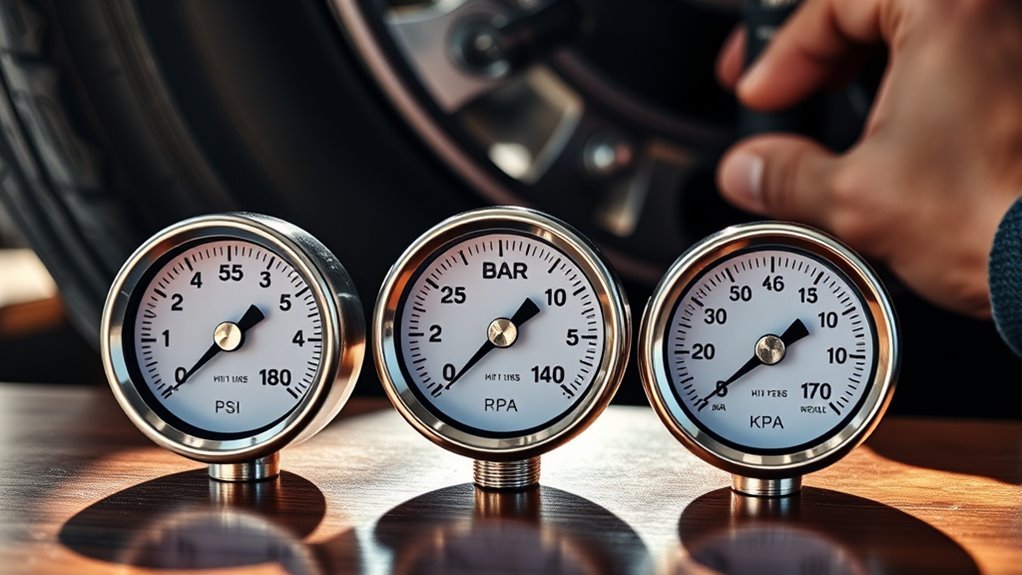
Maintaining proper tire inflation is crucial for maximizing fuel efficiency. Even a drop of 1 PSI can reduce gas mileage by 0.2%, leading to increased fuel costs and safety risks. Underinflated tires increase rolling resistance, forcing your engine to work harder, which burns more fuel. Keeping your tires at the recommended pressure can save you up to 3% on fuel annually. Stay tuned to discover essential tire maintenance tips that can help you optimize efficiency even further.
The Importance of Maintaining Proper Tire Pressure

Tire pressure is a crucial factor in vehicle performance and fuel efficiency. Maintaining proper tire pressure is essential; underinflated tires can decrease fuel economy by 0.2% for every 1 PSI drop, leading to 5-10% more fuel usage. Properly inflated tires can improve fuel efficiency by up to 3%, saving you approximately $90 a year. To achieve ideal performance, check the recommended tire pressure found on a sticker inside your driver’s door or in the owner’s manual monthly. Regular tire pressure checks are critical, as even minor drops considerably impact fuel consumption and vehicle handling. By investing in tire services to keep your tires properly inflated, you enhance not only fuel economy but also safety and longevity.
Understanding the Risks of Incorrect Tire Pressure
Incorrect tire pressure greatly impacts your vehicle’s performance and safety. Underinflated tires increase stopping distances, particularly in adverse conditions, while overinflated tires raise the risk of blowouts. Additionally, improper pressure leads to uneven tire wear, ultimately increasing your maintenance costs.
Increased Stopping Distance
When your tires are underinflated, you noticeably increase your vehicle’s stopping distance, particularly in adverse conditions like wet or icy roads. Low tire pressure can reduce grip on the road surface, leading to an increase in stopping distance by up to 10%. This diminished traction not only hampers effective braking but also poses significant safety risks; the National Highway Traffic Safety Administration (NHTSA) estimates that low tire pressure contributes to around 7% of all crashes. Maintaining proper tire pressure enhances traction, ensuring ideal vehicle handling and stability. By prioritizing tire inflation, you boost safety and fuel efficiency, empowering you to drive with confidence and reducing the likelihood of accidents on the road.
Heightened Blowout Risk
Maintaining proper tire pressure is essential, as underinflated or overinflated tires considerably increase the risk of blowouts. The safety of your journey hinges on how well your tires are maintained. Here are key points to remember:
- Under-inflated tires generate excessive heat, leading to structural weaknesses.
- A small pressure drop can decrease fuel consumption by 0.2% and increase engine workload.
- Overinflated tires reduce rolling resistance but compromise traction.
- Regularly checking your tire pressure helps mitigate blowout risks.
- A Tire Pressure Monitoring System (TPMS) provides early warnings for pressure issues.
Uneven Tire Wear
While proper tire pressure is essential for ideal vehicle performance, neglecting it can lead to uneven tire wear, which poses significant risks. Under-inflated tires wear more on the outer edges, while over-inflated tires increase center tread wear. This uneven wear not only shortens tire lifespan but also amplifies safety risks and fuel inefficiency. Regular tire maintenance, including checking recommended PSI and performing tire rotation, is vital to mitigate these issues.
| Tire Condition | Effect on Performance |
|---|---|
| Under-inflated | Outer edges wear faster |
| Over-inflated | Center tread wears quicker |
| Uneven Wear | Indicates possible misalignment |
| Poor Grip | Increases stopping distances |
| Shortened Lifespan | Higher replacement costs |
How Tire Pressure Affects Fuel Efficiency?
Tire pressure directly impacts your vehicle’s fuel efficiency, with underinflated tires increasing rolling resistance and forcing your engine to work harder. Even a drop of just 1 PSI can reduce gas mileage by 0.2%, showcasing how essential proper inflation is for maximum performance. Regularly checking and adjusting your tire pressure can lead to significant savings and enhance your vehicle’s lifespan.
Impact of Underinflation
When your tires are underinflated, fuel efficiency takes a noticeable hit. The connection between tire pressure and fuel consumption is critical. Here’s how under-inflated tires impact your driving experience:
- A 1 PSI drop can decrease gas mileage by 0.2%.
- At 75% of the recommended PSI, you may see a 2-3% dip in fuel economy.
- At 50% PSI, fuel consumption can increase by 5-10%.
- Low tire pressure raises rolling resistance, forcing your engine to work harder.
- Regular tire pressure checks are essential for maintaining peak fuel efficiency.
Benefits of Proper Inflation
Maintaining proper tire inflation is vital for optimizing fuel efficiency. Tire pressure matters greatly; keeping your tires properly inflated can improve fuel economy by up to 3%. Conversely, for every 1 PSI drop in tire pressure, you risk a fuel economy decrease of approximately 0.2%. Underinflated tires create excessive rolling resistance, forcing your engine to work harder, which can increase fuel consumption by 5-10%. By ensuring your tires are at recommended levels, you can save around $90 a year on gas—money on fuel you’d rather keep in your pocket. Regular tire checks are essential; they enhance safety by improving handling and reducing the risk of blowouts, proving that proper inflation is not just about efficiency, but also about safety.
Seasonal Pressure Adjustments
Given that seasonal temperature fluctuations can greatly impact tire pressure, it’s crucial to adjust your tires accordingly to maintain ideal fuel efficiency. Proper tire pressure guarantees that you minimize rolling resistance, which can enhance your gas mileage. To optimize fuel efficiency, consider the following:
- Monitor tire pressure regularly, especially during seasonal changes.
- Adjust pressure by approximately 1 PSI for every 10°F drop in temperature.
- Check tire pressure when tires are cold for accurate readings.
- Maintain manufacturer-recommended PSI throughout the year.
- Recognize that under-inflated tires can decrease fuel efficiency by 0.2% for every 1 PSI drop.
The Science of Rolling Resistance and Fuel Consumption
Understanding the relationship between rolling resistance and fuel consumption is essential for improving vehicle efficiency. Rolling resistance, the force opposing tire motion, greatly affects fuel consumption. Under-inflated tires increase this resistance, leading to energy loss and reduced fuel efficiency. Maintaining proper tire pressure can lower rolling resistance by up to 3%, translating into considerable savings at the pump. For instance, a mere 1 PSI drop in tire pressure can decrease fuel economy by 0.2%. Additionally, selecting tires designed for low rolling resistance can enhance fuel economy by up to 9%. Regular tire maintenance, including consistent checks on tire inflation, guarantees peak performance, reduces wear, and maximizes your fuel savings, empowering you to drive efficiently and sustainably.
Essential Tire Maintenance Tips for Fuel Efficiency
Proper tire maintenance plays a pivotal role in enhancing fuel efficiency and guaranteeing your vehicle operates at its best. By following these essential tips, you can optimize performance and save money:
Proper tire maintenance is crucial for fuel efficiency and optimal vehicle performance, leading to savings and enhanced driving experience.
- Regularly check tire pressure at least once a month, aiming for proper inflation to reduce rolling resistance.
- Measure tire pressure when tires are cold for accurate readings, avoiding the pitfalls of under-inflated tires.
- Rotate your tires every 5,000 to 10,000 km to guarantee even wear and prolong their lifespan.
- Maintain proper wheel alignment to minimize drag and improve overall fuel efficiency.
- Invest in well-maintained tires, as they directly influence your vehicle’s performance and fuel consumption.
Implementing these strategies will not only enhance fuel efficiency but also contribute to significant savings.
Economic and Environmental Benefits of Tire Care
While many drivers overlook the importance of tire care, it offers substantial economic and environmental advantages. Maintaining correct tire pressure boosts fuel efficiency by up to 3%, which translates to approximately $90 in annual savings on fuel costs. Regular tire maintenance not only enhances vehicle performance but also helps reduce traction issues, ensuring safer driving. Additionally, well-maintained tires contribute to lower CO₂ emissions, fostering environmental sustainability by minimizing fuel consumption. By switching from low-efficiency (Class G) to high-efficiency (Class A) tires, you can save up to 440 liters of fuel over their lifespan. Ultimately, investing time in tire care means saving money and supporting a healthier planet, making it a win-win for both your wallet and the environment.
Signs of Low Tire Pressure and Their Implications?

Maintaining ideal tire pressure is vital for both vehicle performance and safety. Recognizing signs of low tire pressure can save you from costly repairs and enhance fuel efficiency. Look out for these indicators:
- Uneven tire wear patterns
- Bulging sidewalls
- Activation of the TPMS warning light
- Poor fuel economy
- Increased stopping distances
Under-inflated tires not only diminish fuel efficiency but also pose significant safety risks, especially in adverse conditions. When tire pressure drops, the risk of sluggish handling may lead you to believe major repairs are necessary. Regular inspections are important to guarantee your tires remain at peak levels, safeguarding your vehicle’s performance and your safety on the road. Stay vigilant and proactive about tire maintenance.
Frequently Asked Questions
Do You Get Better Gas Mileage With More Inflated Tires?
You won’t necessarily get better gas mileage with overinflated tires. While ideal inflation boosts fuel savings, excessive pressure raises safety concerns, increases tire wear, and can negatively impact your driving habits, especially during seasonal changes.
What Is the 3% Tire Rule?
The 3% Tire Rule states that maintaining ideal tire pressure can yield fuel savings, enhance vehicle performance, and reduce tire wear. Regular checks and adapting to seasonal changes are essential maintenance tips for better driving habits.
Does 10 Lbs per Tire Make a Difference?
Yes, 10 lbs per tire makes a significant difference. It affects tire wear, driving habits, and safety concerns. Regular maintenance, inflation tips, and using pressure gauges help maintain ideal load capacity and minimize fuel costs.
How Much Does Tire Pressure Affect Efficiency?
Tire pressure greatly impacts fuel savings, tire wear, and overall vehicle maintenance. Seasonal changes and road conditions alter efficiency. Ideal tire types and driving habits can enhance performance, reducing cost implications over time.
Conclusion
In conclusion, maintaining proper tire pressure isn’t just about safety; it’s essential for optimizing fuel efficiency. Imagine the savings piling up at the pump—every PSI counts, and neglecting it could cost you more than you think. As you drive, consider this: are your tires performing at their best? Ignoring signs of low pressure can lead to increased fuel consumption and unnecessary expenses. So, take a moment to check your tires; your wallet—and the environment—will thank you.