What’s in This Article
- Is Your Tundra Affected? Check Your VIN Now
- Models and VINs Covered by Recalls 26TB02 and 26TA02
- How the Panoramic Rearview Camera Can Fail
- What Toyota Will Do: Free Dealer Repair and Software Update
- Before Your Dealer Visit: What to Bring and What to Ask
- Common Owner Concerns: Warranty, Loaners, and Engine Recalls
- Where to Get Help: Toyota, NHTSA, and Legal Resources
Your Tundra‘s rearview camera could go dark the moment you shift into reverse, and Toyota has confirmed a software defect that causes exactly that. Recalls 26TB02 and 26TA02 cover about 161,268 Tundra and Tundra Hybrid trucks from the 2024–2025 model years equipped with a Panoramic View Monitor (PVM). Toyota mailed notification letters to affected owners through March 2026 and will fix the issue for free at authorized dealers.
Quick Answer
If your 2024 or 2025 Toyota Tundra or Tundra Hybrid has a Panoramic View Monitor, check your VIN now at toyota.com/recall or call 1-800-331-4331. Recalls 26TB02 and 26TA02 cover about 161,268 trucks where faulty parking assist ECU software can blank the rearview camera when you shift into reverse. Toyota will update the ECU software at no charge at any authorized dealer — no parts replacement needed.
Key Takeaways
- Recalls 26TB02 and 26TA02 cover about 161,268 Toyota Tundra and Tundra Hybrid trucks from the 2024–2025 model years that have a Panoramic View Monitor system.
- A parking assist ECU software fault can cause the rearview camera display to go blank when you shift into reverse, putting the vehicle out of compliance with federal safety standard FMVSS No. 111.
- Check your VIN at toyota.com/recall or the NHTSA database, or call 1-800-331-4331 to confirm whether your truck is affected.
- Toyota will update the parking assist ECU software at no charge at any authorized dealer — no hardware replacement is required for this specific recall.
- If you haven’t scheduled service yet, contact your dealer now; the fix is quick, free, and protects you from a real crash risk.
Is Your Toyota Tundra Affected? Check Your VIN Now
The fastest way to confirm your truck is affected: run a VIN lookup on Toyota’s official site at toyota.com/recall or the NHTSA database at nhtsa.gov/recalls. Reference recall numbers 26TB02 and 26TA02 to speed the search. About 161,268 Tundra and Tundra Hybrid pickups fall under these codes.
Note: Use only Toyota’s official site or NHTSA’s database to check your VIN. Third-party sites may show outdated or inaccurate recall data.
If your VIN matches, call Toyota at 1-800-331-4331 to book a service appointment and confirm repair timelines. Toyota mailed notification letters to affected owners through March 2026, so check your mail if you haven’t already.
Document every communication with your dealer: note names, dates, and next steps. That record protects you if repairs get delayed or disputed.
Models and VINs Covered by Recalls 26TB02 and 26TA02
According to NHTSA, recalls 26TB02 and 26TA02 cover about 161,268 Toyota Tundra and Tundra Hybrid pickups from the 2024–2025 model years fitted with the Panoramic View Monitor (PVM) system. The affected group includes approximately 99,767 non-hybrid Tundra trucks and 61,501 Tundra Hybrid trucks.
Only vehicles with the PVM system fall under this recall. If your Tundra doesn’t have that feature, these recall numbers don’t apply. Verify your exact trim and options on your window sticker or by running your VIN through the official channels above.
Once your VIN confirms inclusion, schedule service right away. Toyota will notify your dealer and make the repair at no cost to you.
How the Panoramic Rearview Camera Can Fail
Warning: According to NHTSA, 100% of recalled vehicles are estimated to contain this defect. If your VIN is on the list, treat the camera as unreliable until the ECU software update is applied.
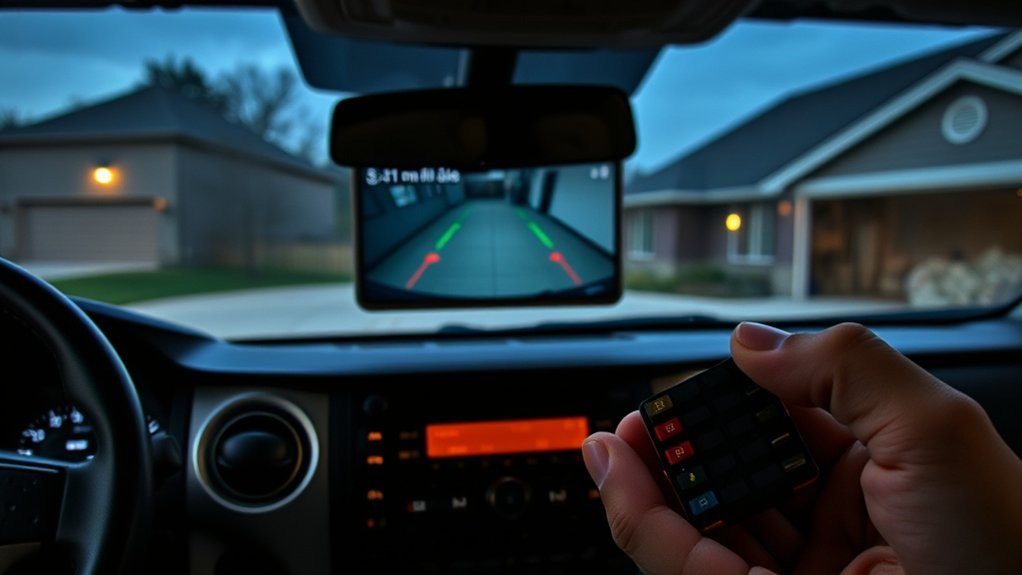
The parking assist ECU, part of the Panoramic View Monitor system, controls which camera feed shows on your display. According to NHTSA recall documents, a software fault can cause the ECU to get stuck on one camera view. When you then shift into reverse, the rearview image may not appear — leaving you with a blank screen or a wrong camera angle.
This failure violates FMVSS No. 111, the federal standard for rear visibility. It creates a blind zone behind your truck — a serious hazard for pedestrians and obstacles you can’t see any other way. The table below breaks down how the failure moves through the system.
| Component | Failure Mode | Safety Impact |
|---|---|---|
| Parking Assist ECU | Software gets stuck on wrong camera view | Wrong or no feed sent to display |
| Camera feed | Rearview image blocked by stuck ECU | Blank or incorrect image on shift to reverse |
| Display | Black screen or wrong camera angle shown | Reduced rear visibility, increased crash risk |
As of this recall’s filing, Toyota reported no known warranty claims, accidents, or injuries tied to this defect. But the risk is real and the fix is free — schedule it now.
What Toyota Will Do: Free Dealer Repair and Software Update
Toyota will fix the defect by updating the parking assist ECU software at no cost to you. Dealers will flash new firmware to the ECU, verify camera functionality, and log the repair in Toyota’s service records. No hardware replacement is needed for this specific recall.
The procedure follows a standard sequence: diagnostic confirmation, ECU reflash, and post-update validation tests that check signal integrity and camera alignment. You can expect the appointment to be straightforward and relatively quick.
Call 1-800-331-4331 to confirm your dealer has parts and firmware ready. If you haven’t received a notice letter, that doesn’t mean your truck isn’t affected — check your VIN first and call to schedule regardless.
Before Your Dealer Visit: What to Bring and What to Ask
Pro tip: Ask your dealer to confirm the repair in writing before you leave — request a copy of the repair order showing the recall number, the ECU firmware version installed, and the technician’s sign-off.
Bring your VIN, any prior service records, and your recall notice letter if you received one. Confirm at booking whether you need a scheduled appointment or if walk-ins are accepted. Ask these questions before your visit:
| What to Bring | What to Ask |
|---|---|
| VIN and service records | Estimated repair timeline |
| Recall notice letter (if received) | Interim safety precautions while you wait |
| Government-issued ID | Loaner vehicle or rental reimbursement availability |
Record the names of the staff you speak with, the dates of your visit, and any commitments they make. If your dealer can’t schedule you in a reasonable time, escalate to Toyota customer service at 1-800-331-4331 and ask for a dealer with faster availability in your area.
Common Owner Concerns: Warranty, Loaners, and Engine Recalls
Recall repairs always come at no charge to the owner — that’s federal law. But you may still have questions about how the recall affects your warranty, loaner coverage, and any other open recall on your truck.
Warranty Coverage Questions
This recall’s ECU software update won’t cost you anything and won’t affect your existing warranty. Ask your dealer to confirm in writing that the recall repair won’t void or limit any active coverage. If any ancillary issues turn up during the service visit, ask the technician to document them separately so you can evaluate warranty eligibility for those items.
If your factory warranty has expired, the recall repair is still free — recall fixes are covered regardless of mileage or age. Keep copies of all repair orders and authorizations for your records.
Loaner Vehicle Availability
Loaner availability varies by dealership. Ask your dealer about loaner vehicles or rental reimbursement when you book your appointment — don’t wait until you arrive. Get the policy in writing, including duration limits and any fees.
If your dealer can’t provide a loaner for this recall, ask Toyota customer service at 1-800-331-4331 whether rental reimbursement applies. Log every exchange and request escalation contacts if responses are vague or inconsistent.
Engine-Related Recalls: A Separate Issue
Warning: The 3.4L twin-turbo V6 engine recall (Toyota recall numbers 25TB14 and 25TA14) is a separate recall from the camera/ECU issue covered by 26TB02 and 26TA02. Confirm which recall your dealer is scheduling you for before your visit.
Some Tundra owners face a separate engine-related recall (25TB14/25TA14) covering certain 2022–2024 models with V35A engine defects. That recall may involve longer timelines, engine replacement, and more complex parts logistics than the camera ECU update.
If you have both open recalls, confirm your dealer schedules the correct service for each. Track both VIN matches, get separate repair orders, and verify the status of each fix independently at nhtsa.gov/recalls.
Where to Get Help: Toyota, NHTSA, and Legal Resources

Call Toyota customer service at 1-800-331-4331 for scheduling, repair logistics, and status updates on recalls 26TB02 and 26TA02. Representatives can confirm your VIN status and connect you to approved repair centers.
Verify your VIN independently on the NHTSA database at nhtsa.gov/recalls. NHTSA provides impartial recall data, the full technical notice, and government-verified remedy information — use it alongside Toyota’s channels, not instead of them.
If the defect caused damage or unresolved safety risk before the recall was filed, consult an automotive attorney. Many firms handle recall-related claims and offer free initial consultations. Use community forums to gather peer experiences, but weigh anecdotal reports against official Toyota and NHTSA guidance.
Frequently Asked Questions
How do I know if my Tundra is on the recall list?
Check your VIN at toyota.com/recall or nhtsa.gov/recalls, or call 1-800-331-4331. You’ll get confirmation of your recall status, the remedy details, and scheduling guidance. Don’t rely on recall notice letters alone — run the VIN yourself to be sure.
What exactly causes the camera to go blank?
According to NHTSA recall documents, the parking assist ECU can get stuck on the wrong camera view. When you then shift into reverse, the system fails to switch to the rearview image, so the screen shows a black image or the wrong angle instead of what’s behind you.
What is recall code 24TA07?
Code 24TA07 is a different recall number from an earlier action and is not part of the 26TB02/26TA02 camera recall. If your dealer references 24TA07, ask them to clarify which recall they’re scheduling and confirm it matches your VIN’s open recall records on NHTSA.
What does a recall notice letter look like?
A Toyota recall letter identifies the affected model and VIN range, describes the safety issue, explains the required remedy, and gives contact information for scheduling. It will reference the recall numbers (26TB02 or 26TA02) and confirm the repair is free of charge.
Do I need to stop driving my Tundra until the fix is done?
Toyota has not issued a stop-drive order for this recall. But treat the rearview camera as potentially unreliable until the ECU update is applied. Use your mirrors and physically check your surroundings when backing up until you’ve had the software updated.
Safety Disclaimer: This article is for informational purposes only and does not constitute legal or professional safety advice. Always verify recall status through official Toyota and NHTSA channels, and consult a qualified automotive attorney if you believe the defect caused damage or injury.
Check your VIN today. If recalls 26TB02 or 26TA02 show up for your Tundra, book the ECU software update now — it’s free, takes minimal time, and restores the rear visibility your truck was designed to provide. Bring your VIN, your service records, and any open recall notice when you visit. Ask your dealer for a written repair order, confirm it references the correct recall number, and verify your status again on nhtsa.gov after the fix. If you also have the separate engine recall (25TB14) on your truck, handle both separately and track them independently. You have the right to a safe, fully functional vehicle — and in this case, Toyota is on the hook to deliver it at no cost to you.
References
- NHTSA Recalls Database — Recalls 26TB02 and 26TA02 — National Highway Traffic Safety Administration, 2026
- Toyota Recall Lookup by VIN — Toyota Motor North America, 2026
- Toyota Recalls Tundra Trucks Over Backup Camera Issue — Kelley Blue Book, February 2026