If your Toyota Camry’s turn signals aren’t working, start by checking the 15 amp fuse in the under-hood fuse box; a blown fuse is a common culprit. Inspect wiring for damage, ensuring good connections at the kick panels. Test the bulbs and flasher unit for faults. If you’ve replaced fuses and found no obvious issues, you might have a short or grounding problem. Continue exploring these steps to troubleshoot and restore functionality efficiently.
Top Causes of Turn Signal Failure and How to Fix Them
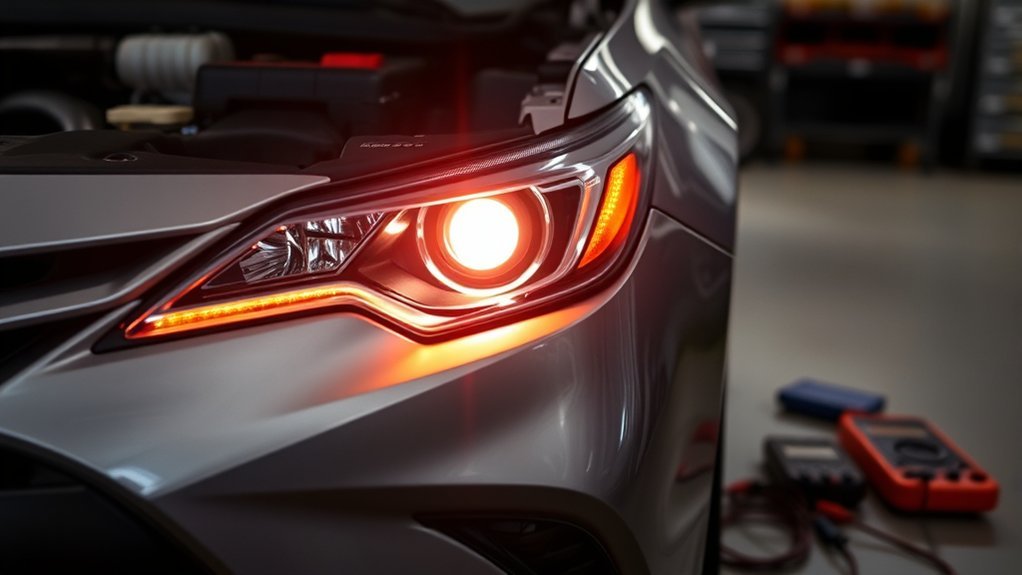
When your Toyota Camry’s turn signals fail, it can often be traced back to a few common issues. First, perform some turn signal troubleshooting by checking the fuse; a blown 15 amp fuse in the under-hood fuse box is a frequent culprit. Use a test light to confirm power flow. Next, inspect the wiring for damage or shorts to ground, as these can disrupt functionality. Don’t overlook bulb failure; visually check the bulbs since they can appear intact yet still be faulty. Additionally, the turn signal flasher unit is essential; if it’s malfunctioning, replacing it may restore your signals. Finally, verify proper grounding at points like the kick panels—corrosion can cause issues here. Regular electrical system maintenance can help prevent these problems from recurring, guaranteeing your turn signals operate smoothly when you need them.
How to Check Fuses for Your Toyota Camry Turn Signals
To check the fuses for your Toyota Camry’s turn signals, start by locating the under-hood fuse box where the relevant fuses are housed. Inspect the condition of the 15 amp fuse marked for hazards; if it’s blown, replace it with the correct ATM – LP fuse. After replacing, verify that both left and right turn signals are operational to confirm proper function.
Check Fuse Location
Checking the fuse is an essential step if your Toyota Camry’s turn signals aren’t working. Start by locating the under-hood fuse box, where you’ll find the 15 amp fuse designated for hazards. Use a test light to check power on both sides of the fuse—if one side isn’t lit, it’s likely blown. Replace it with the correct fuse type (ATM – LP). After replacing the fuse, test both left and right turn signals to confirm they operate correctly. If the new fuse blows again, you’ll need to conduct further investigation. For troubleshooting, always consult circuit diagrams to trace connections and verify integrity in the electrical system. This methodical approach guarantees accurate diagnostics and repair.
Inspect Fuse Condition
While inspecting the fuse condition for your Toyota Camry’s turn signals, start by locating the under-hood fuse box where the 15 amp fuse for hazards is placed. Check for any visible damage or blown fuses. Use a test light to confirm power on both sides of the fuse; if one side lights up and the other doesn’t, the fuse is likely blown. Make sure you’re using the correct fuse type (ATM – LP) for replacements, as using the wrong size can lead to further electrical issues. Regular fuse maintenance is essential, as blown fuses may signal underlying circuit problems, like wiring shorts. After addressing the fuse, verify that the turn signals operate correctly and check for any additional circuit issues.
Replace Blown Fuses
Before replacing blown fuses in your Toyota Camry’s turn signal circuit, verify you’ve identified the correct 15 amp fuse in the under-hood fuse box, as this fuse also controls the hazard lights. Here’s how to check and replace it effectively:
- Locate the under-hood fuse box and find the 15 amp fuse marked for hazards.
- Use a test light to check for power on both sides of the fuse.
- If one side lights up and the other doesn’t, replace the fuse with the same type.
- After replacement, test both left and right turn signals for functionality.
Remember these fuse maintenance tips to avoid future issues: inspect wiring regularly, check for common fuse types, and look for damaged wires.
Inspecting Wiring for Shorts or Damage
Inspecting the wiring for shorts or damage is essential for diagnosing issues with your Toyota Camry’s turn signals. Start by examining the wiring for any signs of frayed or melted insulation, particularly around the turn signal and hazard light circuits. A wiring diagram can help you trace the system accurately. Utilize a multimeter to check for continuity and identify any short circuits affecting the turn signal operation. Pay close attention to ground connections at the left and right kick panels, as poor grounding can lead to malfunctions. Also, trace the wiring back to the turn signal bulbs, checking for loose connections or corrosion that could impede functionality. If you have aftermarket modifications, scrutinize those areas, as they may introduce faults. Verify all electrical connectors are secure and free from damage to maintain circuit integrity and restore your turn signals to proper working order.
Replacing Blown Fuses: Step-by-Step
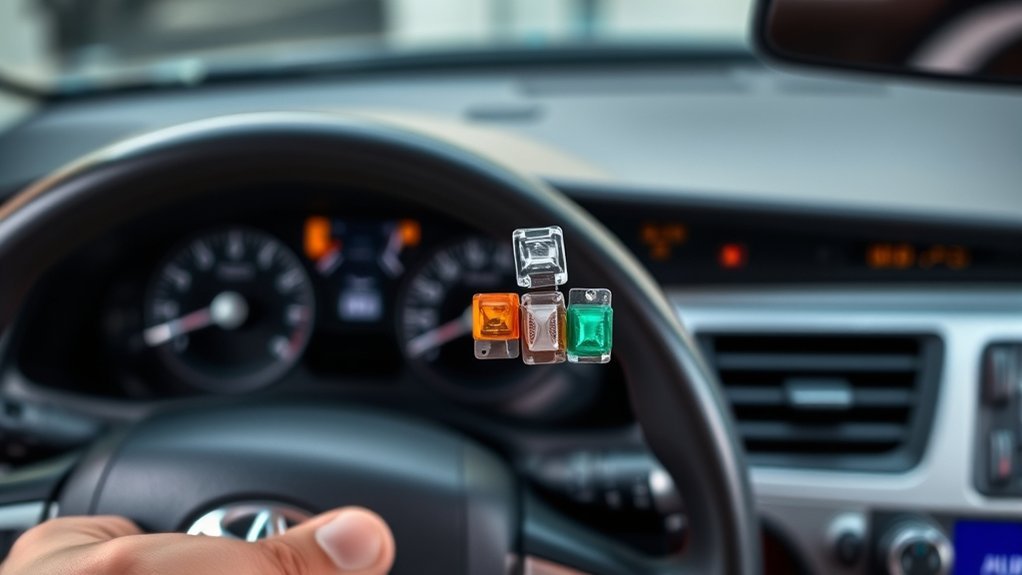
To effectively address turn signal issues in your Toyota Camry, replacing a blown fuse is often an essential step. Follow these instructions to guarantee electrical safety and proper function:
- Locate the fuse box: Check your vehicle’s manual to find the fuse box and identify the 15 amp fuse for hazards and turn signals.
- Test the fuse: Use a test light to check for power on both sides of the fuse. If one side lights up and the other doesn’t, it’s likely blown.
- Replace the fuse: Use the correct fuse type, such as an ATM – LP fuse, to avoid further electrical issues.
- Confirm functionality: After installing the new fuse, test your turn signals and hazards to guarantee everything’s working correctly.
If the new fuse blows immediately, investigate the wiring for shorts or damaged connections.
Testing Your Toyota Camry Turn Signals: What to Look For?
When troubleshooting your Toyota Camry’s turn signals, it’s essential to systematically check several components to pinpoint the issue. Start by inspecting the turn signal and hazard light fuses; a blown 15 amp fuse is a common culprit that can halt functionality. Use a test light to verify power on both sides of the fuse—if one side lights up and the other doesn’t, the fuse is blown. Next, check the turn signal bulbs for any damage, as faulty bulb types can disrupt the circuit and cause failure. Trace the wiring back to the rear turn signal for potential shorts or damage, focusing on grounding issues. If you’ve made repairs, thoroughly test both left and right turn signals to guarantee consistent functionality. Don’t overlook the signal relay, as it can also play a role in the operation of your turn signals.
Troubleshooting the Flasher Unit for Toyota Camry Turn Signals
After checking the fuses and bulbs, the next step in troubleshooting your Toyota Camry’s turn signals involves examining the flasher unit. This component controls both your turn signals and hazard lights, so a malfunction can cause both systems to fail.
Follow these steps for effective troubleshooting:
- Check for Power: Use a test light or multimeter to verify voltage at the input terminals of the flasher unit.
- Evaluate Functionality: If there’s power but the signals don’t flash, the flasher unit may need replacing.
- Use the Correct Unit: Confirm you’re installing the right type of flasher unit to avoid improper operation.
- Inspect Wiring: Perform a thorough wiring inspection around the flasher unit for any damage or corrosion that could impair its performance.
How to Repair Damaged Wiring in Your Turn Signal Circuit
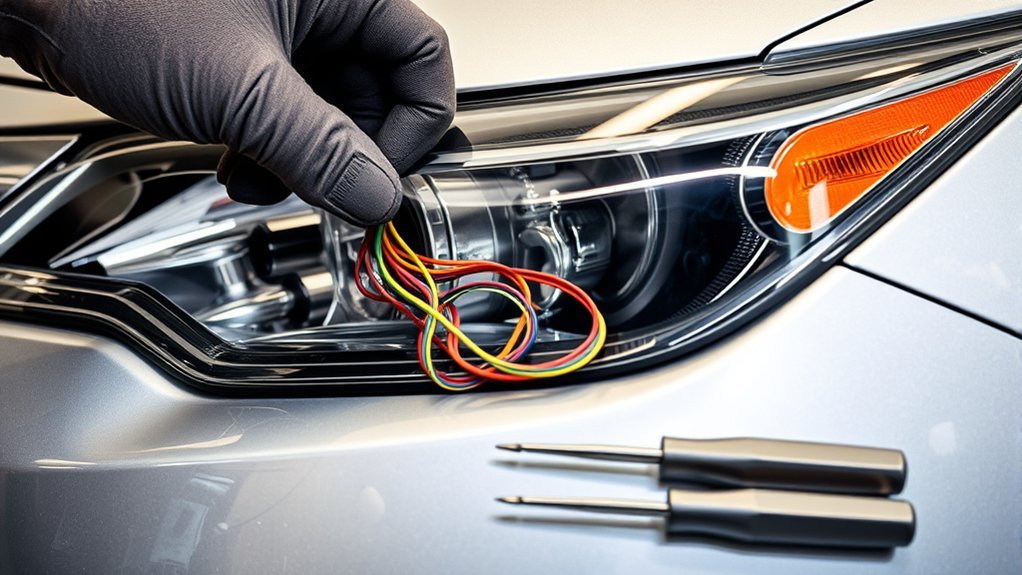
To repair damaged wiring in your turn signal circuit, start by identifying the location of any wiring damage, especially near connectors and tail lights. Use proper splicing techniques with suitable connectors to guarantee a reliable connection. Finally, test the circuit’s functionality to confirm that your repairs have restored proper operation.
Identify Wiring Damage Location
Identifying wiring damage in your Toyota Camry’s turn signal circuit is essential for restoring functionality. Start with effective wiring inspection techniques to pinpoint issues. Follow these steps:
- Visually inspect the turn signal bulbs and wiring for damage or corrosion, especially near connections.
- Use a multimeter or test light to check power at connection points, ensuring the fuse works and power flows.
- Trace the wiring back to the turn signal circuit, looking for shorts, fraying, or damaged insulation indicative of common wiring issues.
- Replace any damaged wiring with high-quality connectors, like butt connectors with heat shrink, for a durable repair.
After completing these steps, verify all components function correctly to avoid future problems.
Proper Splicing Techniques
When repairing damaged wiring in your Toyota Camry’s turn signal circuit, using proper splicing techniques is essential for maintaining circuit integrity. Start by selecting a butt connector with heat shrink for secure splicing, ensuring moisture resistance. Strip the insulation carefully, exposing just enough copper without damaging the strands. Always match the wire gauge to prevent increased resistance or overheating. After splicing, wrap the connection with electrical tape for added insulation and protection.
| Step | Description | Tools Needed |
|---|---|---|
| Strip Wire | Carefully remove insulation | Wire stripper |
| Connect Wires | Use butt connector and heat shrink | Butt connector, heat gun |
| Wrap Connection | Secure with electrical tape | Electrical tape |
| Test Circuit | Confirm functionality after repairs | Multimeter |
Testing Circuit Functionality
After confirming secure splicing and insulation of the wiring, it’s time to test the circuit functionality of your Toyota Camry’s turn signals. Start by checking for circuit continuity and any voltage drop issues. Follow these steps:
- Inspect the 15 amp fuse for blown connections, as turn signals and hazards share the same circuit.
- Use a test light to verify power on both sides of the fuse; one side lit indicates a blown fuse.
- Trace the wiring from the bulbs to the combination switch, looking for damage or shorts, especially around splice connections.
- When repairing, use quality butt connectors with heat shrink and insulate properly to avoid grounding issues.
Finally, verify all turn signal and hazard functions to confirm consistent operation.
Using the Correct Fuse Ratings for Your Toyota Camry
Ensuring your Toyota Camry’s turn signals function properly hinges on using the correct fuse ratings. Typically, you’ll need a 15 amp fuse marked for hazard lights. Always check both sides of the fuse; a blown fuse will show power on one side but not the other, indicating its failure. Using incorrect fuse types or sizes can cause circuit malfunctions, so stick to the designated ATM – LP fuse for reliable operation.
A blown fuse often signals underlying circuit issues, like damaged wiring or a short, which requires thorough inspection before you replace it. Regular fuse maintenance is essential; inspect fuses and wiring connections periodically to prevent future electrical problems. By ensuring fuse compatibility and maintaining your system, you keep all components functioning correctly, enhancing your driving experience and safety.
Final Tests for Complete Turn Signal Functionality
Replacing a blown fuse is just the beginning; it’s crucial to conduct thorough tests to confirm that your turn signals are operating correctly. Follow these steps for final adjustments and complete testing:
- Test Both Signals: Activate the left and right turn signals separately, guaranteeing stable operation.
- Inspect Wiring: Examine the wiring for damage or shorts, especially around tail light connections, as issues here can disrupt functionality.
- Use a Test Light: Check for power and continuity at the turn signal bulbs and connectors to confirm the circuit is complete.
- Verify Fuse Type: Make sure you’ve installed the correct fuse type (ATM – LP), as using an incorrect fuse can lead to further electrical problems.
Frequently Asked Questions
Why Is the Blinker Not Working in My Toyota Camry?
Your blinker might not work due to fuse issues, a faulty blinker relay, bulb failure, or wiring problems. Inspect these components to identify the exact cause and make certain your signals function properly.
What Causes Both Turn Signals to Stop Working?
Both turn signals can stop working due to faulty electrical connections or damaged wiring. Inspect the circuit for shorts, blown fuses, or malfunctioning components like the flasher to resolve these turn signal issues effectively.
Conclusion
In summary, addressing your Toyota Camry’s turn signal troubles can transform your driving experience. By systematically checking fuses, inspecting wiring, and ensuring the flasher unit functions flawlessly, you’ll restore reliable signaling. Remember, using the right fuse ratings and repairing damaged circuits is essential for safety. Stay savvy and secure on the streets by tackling these technical tasks with confidence. With diligence and determination, you’ll drive with dependable direction once more!